Restaurants & Gastronomy
The restaurant world has transformed dramatically in recent years, evolving from simple sustenance into a complex ecosystem where culinary art, business acumen, and cultural expression intersect. Whether you’re a passionate home cook seeking to understand professional techniques, a diner wanting to maximize your fine dining experiences, or simply curious about what happens behind kitchen doors, understanding modern gastronomy opens up an entirely new appreciation for the meals we share.
This landscape encompasses far more than recipes and plating. It includes the mentality shifts reshaping professional kitchens, the technical innovations pushing boundaries in plant-based cuisine, the economic realities that determine what appears on your plate, and the service dynamics that transform a meal into a memorable experience. From understanding why certain ingredients command premium prices to navigating the increasingly complex world of tasting menus, these interconnected elements form the foundation of contemporary restaurant culture.
How Professional Kitchens Are Reshaping Modern Dining
The contemporary chef operates in a radically different environment than their predecessors. What was once a hierarchical, militaristic structure built on intimidation and endurance has evolved into a more collaborative, creative space. This shift reflects broader cultural changes and a growing understanding that sustainable creativity requires mental well-being, not just technical prowess.
Professional kitchen workflows now emphasize efficiency through systems rather than chaos. Mise en place—the practice of preparing and organizing all ingredients before service—has become a philosophy extending beyond cooking into life management. Chefs increasingly adopt methodologies borrowed from other industries: batch processing for prep work, standardized recipes that ensure consistency, and station-based specialization that allows team members to develop deep expertise in specific areas.
This evolution extends to how chefs view their role in the broader food system. Many now see themselves as educators, advocates for sustainable sourcing, and cultural ambassadors. They’re sharing techniques once guarded as trade secrets, collaborating across borders, and using their platforms to address issues like food waste, fair labor practices, and ingredient traceability. The result is an industry that’s simultaneously more transparent and more sophisticated than ever before.
Mastering Flavor: Techniques That Define Great Cooking
At the heart of exceptional cooking lies flavor layering—the deliberate building of taste complexity through sequential techniques. Think of it like constructing a song: a single note is pleasant, but harmonies, rhythms, and dynamics create something memorable. Professional chefs achieve this through careful application of heat, fat, acid, and salt at different stages of preparation.
Cooking methods fundamentally alter how we experience ingredients. Consider a simple carrot: boiled, it becomes soft and mild; roasted at high heat, it caramelizes and develops concentrated sweetness; fermented, it gains tangy complexity. Understanding these transformations allows you to make intentional choices rather than following recipes blindly.
Modern kitchens have also embraced molecular techniques once considered avant-garde. Alginates, for instance, enable chefs to create spheres that burst with liquid—a technique that’s migrated from high-end molecular gastronomy labs into more accessible restaurants. Optimized extraction methods pull maximum flavor from ingredients: pressure infusions that might take days through traditional methods now happen in minutes. These aren’t gimmicks but tools that, when properly applied, deliver flavors impossible to achieve through conventional means.
The Art of Service: What Makes or Breaks a Restaurant Experience
Exceptional food can be undermined by poor service, while attentive, knowledgeable service can elevate even simple dishes. The most common service mistakes often stem from misreading guest expectations rather than intentional neglect. Over-attentiveness can feel intrusive during an intimate conversation; excessive formality can create discomfort in a casual setting.
Professional service requires constant calibration. Skilled servers read body language, pace courses according to the table’s rhythm, and anticipate needs without hovering. They understand that their role isn’t to perform but to facilitate—creating an environment where guests feel cared for without being managed.
The perception risk in service is significant. A guest who waits two extra minutes for water may forgive it completely if the server acknowledges the delay with genuine warmth, or may fixate on it if met with indifference. Training now emphasizes emotional intelligence alongside technical knowledge, recognizing that human connection often matters more than perfect execution of formalities.
Navigating Fine Dining: From Reservations to Tasting Menus
The fine dining experience begins long before you sit down. Strategic booking means understanding that popular restaurants often release reservations at specific times—typically 30 days in advance, sometimes at midnight or early morning. Third-party platforms can help, but calling directly often reveals last-minute cancellations or bar seating that doesn’t appear online.
Selecting the right establishment requires alignment between your expectations and what the restaurant actually offers. A three-Michelin-star temple of molecular gastronomy will frustrate someone seeking generous portions of familiar comfort food. Research menus, read recent reviews focusing on descriptions rather than ratings, and consider the occasion—celebrations, business dinners, and casual explorations each call for different environments.
Tasting menus represent the chef’s vision in its purest form but require specific mindset adjustments:
- Pace yourself—multi-course experiences can span 3-4 hours; arrive neither hungry to the point of impatience nor immediately after eating
- Embrace the unfamiliar—dishes may challenge your preferences; approach them with curiosity rather than judgment
- Ask questions—servers expect and welcome inquiries about ingredients, preparation methods, and wine pairings
- Dietary restrictions—communicate these when booking, not upon arrival, to allow kitchen preparation time
Managing expectations is crucial. Fine dining isn’t universally “better” than casual dining—it’s different, emphasizing creativity, technique, and experience over volume or familiarity. Understanding this distinction helps you appreciate what’s offered rather than measuring it against incompatible standards.
The Rise of Plant-Based Gastronomy and Culinary Innovation
High-end plant-based restaurants face a unique value proposition challenge. Without expensive proteins like wagyu beef or wild-caught fish, how do they justify comparable prices? The answer lies in technique intensity and ingredient sourcing. Creating compelling plant-based dishes often requires more labor, more steps, and more creativity than conventional cooking.
Technology is pushing vegan gastronomy into previously impossible territory. Precision fermentation produces dairy proteins without animals. High-pressure processing creates textures that mimic meat. Vegetable-based gels can encapsulate flavors that release at specific temperatures. These aren’t simply substitutions—they’re entirely new culinary languages.
The most successful plant-based fine dining doesn’t attempt to replicate meat but rather reimagines traditional concepts through a plant-forward lens. A “vegetable degustation” might feature heirloom carrots prepared five different ways, each showcasing distinct techniques: raw and shaved, sous vide, charred, turned into a gel, and transformed into a powder. This approach celebrates vegetables as primary ingredients worthy of the same attention traditionally reserved for animal proteins.
Understanding Restaurant Economics: Ingredients, Pricing, and Value
The cost of ingredients tells only part of the pricing story. A dish featuring a rare, foraged mushroom priced at $45 might use $8 worth of that mushroom—but also requires someone to forage it, another person to clean and prep it, a chef to develop the recipe through multiple trials, and skilled execution during service. Labor, expertise, and creativity form the bulk of restaurant costs, not raw materials.
Seasonal gaps present both challenges and opportunities. When local produce isn’t available, restaurants face a choice: import ingredients at premium prices with reduced freshness, preserve items at peak season for later use, or redesign menus around what’s currently available. The most thoughtful establishments do all three strategically, maintaining signature dishes while rotating seasonal specials.
Understanding this economic reality helps diners evaluate value more accurately. A $28 pasta dish at a high-end restaurant might seem expensive compared to a $12 version elsewhere, but if the former uses house-made pasta, properly sourced cheese, and represents the culmination of years of technique refinement, the price reflects genuine value rather than arbitrary markup. Value in dining isn’t about cheapness—it’s about fair exchange between what you receive and what you pay.
Seeking Authenticity: The Quest for Local and Traditional Cuisine
Authentic local dining presents unique logistical challenges. The most genuine establishments often don’t have English menus, sophisticated booking systems, or locations in tourist-friendly areas. They serve regulars who know the unwritten rules, order off-menu items, and eat at local meal times rather than international dining hours.
Building relationships with servers, owners, or even regular customers can transform these experiences. A simple gesture—learning a few phrases in the local language, showing genuine interest in regional specialties, returning for multiple visits—signals respect and often unlocks recommendations and preparations not offered to one-time visitors.
Sourcing risks are real but manageable. Street food and small establishments in some regions may not meet the food safety standards you’re accustomed to. The solution isn’t avoidance but intelligent observation: look for high turnover (indicating fresh ingredients), clean preparation areas, and locals eating there—particularly families with children. Trust your instincts; if something feels questionable, it probably is.
Timing matters significantly. Visiting during local off-seasons, eating at unconventional hours, or exploring neighborhoods after major tourist sites close can reveal entirely different restaurant landscapes. The bistro packed with locals at 2 PM on a Tuesday likely offers a more authentic experience than the one prominently featured in guidebooks, even if both serve similar food.
Modern gastronomy exists at the intersection of tradition and innovation, economics and creativity, service and substance. Whether you’re seeking cutting-edge plant-based cuisine, trying to understand why certain meals command premium prices, or simply wanting to navigate a tasting menu with confidence, these foundational concepts provide the framework for deeper appreciation. The restaurant world welcomes curious diners willing to look beyond menus and into the complex, fascinating systems that transform ingredients into experiences.

Haute Plant-Based Innovation: Molecular Techniques for Vegetables
Molecular gastronomy isn’t about making plants unnatural; it’s a scientific method to unlock their deepest, most authentic essence. Techniques like spherification and essence extraction are tools to deconstruct and reveal hidden flavors and textures, not to merely create novelty. The…
Read more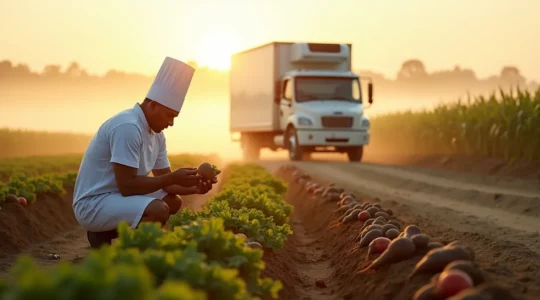
The Logistics of Farm-to-Table Menus: What Does It Really Take?
True farm-to-table isn’t a marketing slogan; it’s a high-stakes logistical operation where authenticity is proven by navigating supply chain friction, not just by proximity. The term “local” is unregulated, and a lack of organic certification often points to economic barriers…
Read more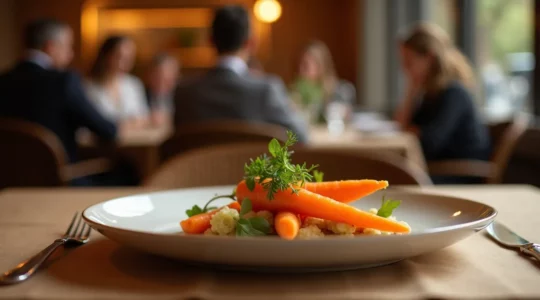
Is Vegan Fine Dining Worth the Price Tag for Non-Vegans?
The high price of a vegan tasting menu isn’t for the raw ingredients, but for the extreme labor and technical artistry required to transform them into something extraordinary. Top-tier plant-based chefs focus on innovating with vegetables through complex techniques, not…
Read more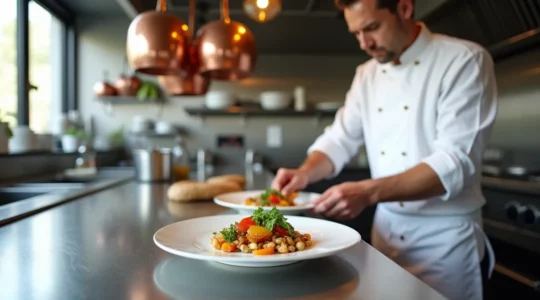
The Chef’s Playbook: 8 Unseen Trends Redefining the Modern Menu
The biggest trend in professional kitchens isn’t a new ingredient; it’s a new mindset where chefs operate as meticulous systems thinkers, not just creators of luxury. Ethical considerations are now actively dismantling classic dishes like foie gras in favor of…
Read more