
Preventing age-related muscle loss on a plant-based diet is less about total protein and more about strategically triggering muscle synthesis with targeted leucine intake at every meal.
- Seniors experience “anabolic resistance,” requiring a higher dose of leucine (around 3g) per meal to activate the body’s muscle-building signals.
- Evenly distributing protein intake (25-30g per meal) is far more effective for maintaining muscle mass than consuming one large, protein-heavy dinner.
Recommendation: Focus on a leucine-rich breakfast to halt overnight muscle breakdown and spread high-quality plant protein intake evenly across three main meals.
For many older adults, the decision to adopt a plant-based diet is a powerful step towards better heart health and longevity. Yet, this admirable choice often comes with a nagging concern: “Am I getting enough protein to protect my muscles?” This fear of frailty and age-related muscle loss, known as sarcopenia, is entirely valid. The common advice to simply “eat more beans and nuts” or combine certain foods often feels too generic and doesn’t address the unique physiological changes that occur with aging.
The truth is, our bodies become less efficient at using protein as we age. We develop a condition known as anabolic resistance, meaning our muscles need a stronger signal to grow and repair. Simply eating a large volume of plant protein at the end of the day is not the answer. The key isn’t just *what* you eat, but a far more precise strategy of *how*, *when*, and in what combinations you consume your protein.
But what if the solution was not a mystery, but a science? What if you could turn your plant-based meals into a powerful, targeted system for preserving strength and vitality? This guide moves beyond the basics. We will explore the specific role of key amino acids, particularly leucine, as the “on-switch” for muscle growth. We will provide a clear, evidence-based framework for structuring your meals to overcome anabolic resistance and ensure your body gets precisely what it needs to thrive for decades to come.
In the following sections, we will delve into the science-backed strategies that make a plant-based diet not just viable, but optimal for seniors. This article provides a clear roadmap to maintaining strength and vitality, meal by meal.
Table of Contents: A Strategic Guide to Plant-Based Strength for Seniors
- Why Leucine Is the Most Critical Amino Acid for Seniors?
- How to Use BCAA Supplements to Bridge the Gap for Vegan Seniors?
- Lentils or Tofu: Which Provides More Lysine Per Serving?
- The Risk of Low Protein Intake for Hip Fracture Recovery
- How to Spread Protein Intake Over 3 Meals for Best Absorption?
- How to Maintain a Balanced Vegan Diet for 10+ Years Without Fatigue?
- Are You Getting Enough Essential Dietary Fiber for Heart Health?
- Can a Whole Food Diet Reduce Chronic Inflammatory Markers in 8 Weeks?
Why Leucine Is the Most Critical Amino Acid for Seniors?
While all essential amino acids are important, for older adults, one stands out as the master regulator of muscle health: leucine. Think of leucine as the primary ignition switch for muscle protein synthesis (MPS), the process through which your body builds and repairs muscle tissue. As we age, our bodies develop what is known as “anabolic resistance.” This means the “ignition” becomes less sensitive, and a larger dose of leucine is required to flip the switch and start the muscle-building engine.
For younger adults, a small amount of leucine might suffice. However, for seniors, the game changes. To overcome this resistance and effectively stimulate muscle growth, it’s crucial to hit the “leucine threshold” at each meal. Extensive research shows that seniors require a higher stimulus, with studies indicating that 2.8-3g of leucine per meal is the minimum threshold needed to maximize the MPS response. Falling short of this target means you could be eating enough total protein, but your body isn’t getting the clear signal it needs to use that protein for muscle maintenance.
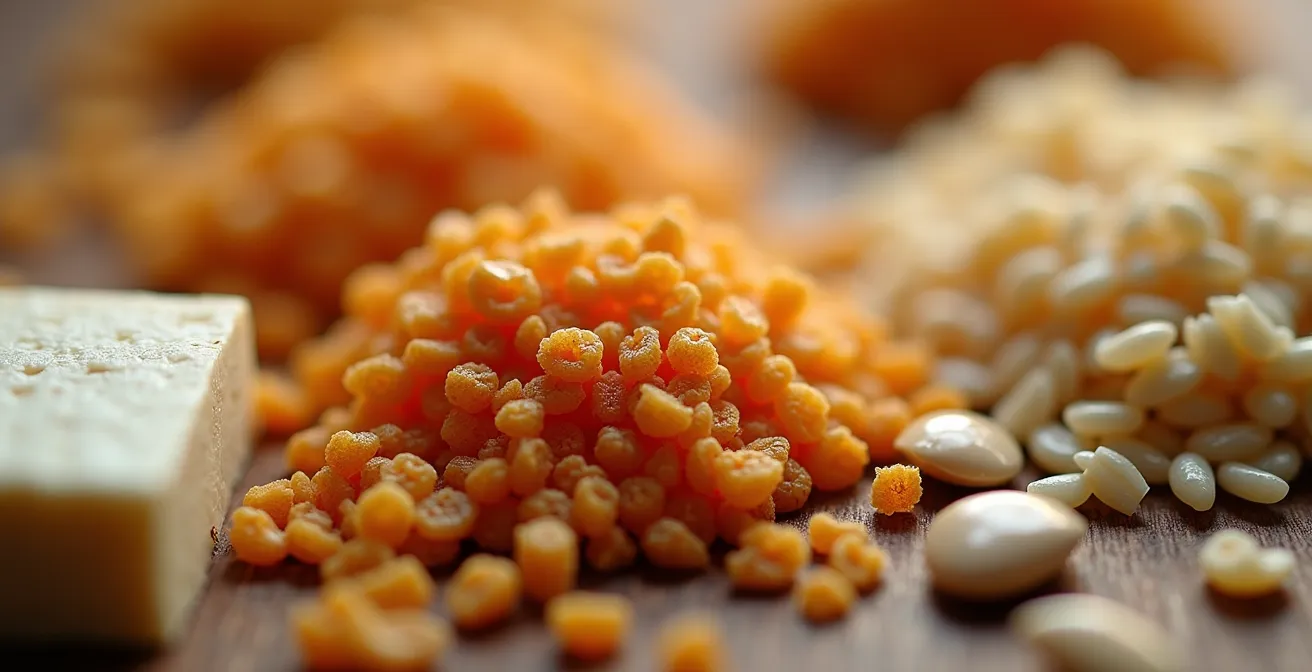
This is why a food strategy focused on leucine is paramount. Prioritizing foods rich in this specific amino acid at every meal is more effective than just tracking total protein. For example, a breakfast of oats and fruit might be healthy, but it’s likely low in leucine. Adding a scoop of soy protein isolate or a side of tofu scramble can make all the difference in starting your day with a strong anabolic signal. Here are some strategic ways to ensure you meet this threshold:
- Start with a leucine-rich breakfast containing at least 2.8g to counteract overnight muscle breakdown.
- Space protein intake evenly across 3 meals rather than loading it all at dinner.
- Add leucine “boosters” like pumpkin seeds (0.7g per ounce) to moderate-protein meals.
- Time your highest leucine meal within 3 hours after resistance exercise for enhanced muscle synthesis.
- Focus on realistic serving sizes, such as a half-cup of cooked lentils (providing 1.3g of leucine), and build your meal around it.
How to Use BCAA Supplements to Bridge the Gap for Vegan Seniors?
The supplement aisle can be a confusing place, especially with branched-chain amino acids (BCAAs) and essential amino acids (EAAs) often marketed as a quick fix for muscle growth. As a nutritionist dedicated to your well-being, my first duty is to protect you from unnecessary expenses and guide you toward what truly works. The evidence suggests that for most seniors, a food-first approach combined with exercise is significantly more effective than relying on isolated amino acid supplements.
Supplements can seem like an easy insurance policy, but they often fail to deliver on their promises when a solid dietary foundation isn’t in place. They should be seen as a targeted tool for specific situations, not a replacement for a well-planned diet.
Case Study: Diet and Exercise Outperform Leucine-Only Supplementation
A revealing 2025 study focused on pre-frail elderly women (average age 77.5) provides crucial insight. One group underwent resistance training and optimized their dietary protein to a robust 1.2g per kilogram of body weight. Another group did the same but also added a 7.5g daily leucine supplement. After 12 weeks, the results were clear: the added leucine supplement provided no additional benefit over diet and exercise alone. The group that focused on adequate dietary protein and resistance training saw significant improvements in muscle synthesis and a remarkable 64% reduction in frailty criteria. This underscores that a well-formulated diet is the most powerful tool at your disposal.
So, when might a supplement be considered? The most appropriate use is for seniors who struggle with poor appetite, have difficulty chewing, or are unable to consume adequate food volume to meet their protein needs. In these cases, an EAA (Essential Amino Acid) powder, which contains all nine essential amino acids, is generally superior to a BCAA-only supplement. BCAAs only provide three amino acids, and your body needs all nine to build muscle effectively. If choosing a supplement, consider a powder form that can be easily mixed into smoothies or soft foods, which is often easier for those with swallowing difficulties.
Lentils or Tofu: Which Provides More Lysine Per Serving?
After leucine, lysine is another critical amino acid that can be less abundant in some plant-based diets. It plays a vital role in calcium absorption, collagen formation for skin and joints, and immune function. Cereal grains like wheat and rice are typically low in lysine, making it important to consciously include lysine-rich foods. The two powerhouses in this category are lentils and tofu. But which one delivers more per serving?
When looking at labels, it’s easy to get lost in numbers based on 100-gram portions of dry ingredients. What matters is the nutritional content in a realistic serving size you’d actually put on your plate. For seniors, a half-cup serving is a very practical and achievable portion. And in this head-to-head comparison, there’s a slight but clear winner. While both are excellent sources, when comparing realistic senior-friendly portions, a half-cup of cooked lentils provides 624mg of lysine, edging out the 582mg of lysine found in a half-cup of firm tofu.
While lentils have a slight edge in lysine, the best strategy is not to pick one over the other but to incorporate both into your diet regularly. Tofu offers a softer texture that may be easier for those with dental issues, while lentils are a fantastic source of fiber. The real magic happens when you practice nutrient synergy—combining different plant foods to create a complete amino acid profile and enhance nutrient absorption. This ensures you’re not missing any of the essential building blocks your body needs.
- Combine lentil soup with a drizzle of tahini (from sesame seeds) to balance its amino acid profile.
- Serve soft, silken tofu in a miso soup for a meal that’s both protein-rich and easy to digest.
- Mix a puree of red lentils with cooked quinoa to create a protein-complete porridge.
- Pair hummus (made from chickpeas, another lysine star) with whole-grain pita bread for a classic lysine-methionine balance.
- Blend white beans into a creamy dip with nutritional yeast to enhance both flavor and lysine content.
The Risk of Low Protein Intake for Hip Fracture Recovery
A hip fracture is one of the most serious health events an older adult can face, and recovery is a demanding process that requires immense physical and nutritional support. During this critical healing period, the body’s need for protein skyrockets. Protein is the fundamental building block for repairing bone, rebuilding muscle that atrophies during immobility, and supporting the immune system to prevent post-operative infections. Tragically, low protein intake is common among hospitalized seniors and can severely impede recovery, leading to longer hospital stays and a greater risk of future falls.
Your body is in a state of high metabolic stress, working overtime to heal. Underestimating its nutritional requirements is a significant risk. For someone on a plant-based diet, it’s absolutely vital to have a proactive strategy to meet these elevated needs. This is not the time for small, light meals. The focus must be on nutrient-dense, protein-rich foods that are easy to consume, even when appetite is low.

The science is unequivocal on this matter. The standard protein intake is simply not enough during fracture recovery. In fact, clinical studies show that hip fracture patients receiving an additional 30-40g protein per day through supplementation experience better outcomes, including improved muscle retention and faster functional recovery. For a plant-based individual, this could be achieved with concentrated sources like soy or pea protein shakes, tofu puddings, lentil soups, or high-protein soy yogurts. This aggressive nutritional support should be considered a non-negotiable part of the recovery plan, discussed with the medical team to ensure it’s implemented from day one.
How to Spread Protein Intake Over 3 Meals for Best Absorption?
One of the most common and detrimental dietary patterns, especially among older adults, is “protein backloading”—consuming the vast majority of daily protein in one large evening meal. While it may seem like you’re hitting your daily target, this approach works against your body’s physiology. Due to anabolic resistance, your body has a limit to how much protein it can effectively use for muscle building at any one time. Excess protein from a single large meal is more likely to be oxidized for energy rather than used for repair. A far superior strategy is protein pacing.
Protein pacing involves distributing your protein intake evenly across at least three meals throughout the day. The goal is to provide your muscles with a steady supply of amino acids, keeping them in a constant state of repair and synthesis. This prevents the long periods of muscle breakdown that occur between a low-protein breakfast and a high-protein dinner. Aiming for approximately 25-30 grams of high-quality protein at breakfast, lunch, and dinner keeps the muscle-building signal consistently “on.”
This might sound challenging on a plant-based diet, but it is entirely achievable with careful planning. The key is to anchor each meal with a primary protein source and supplement it with other protein-containing foods. The following table provides a tangible example of what a day of effective protein distribution can look like, ensuring you also meet the critical leucine threshold at each meal.
| Meal | Plant Protein Sources | Total Protein | Leucine Content |
|---|---|---|---|
| Breakfast | Tofu scramble (150g) + hemp hearts (2 tbsp) | 26g | 2.9g |
| Lunch | Lentil soup (1.5 cups) + quinoa (3/4 cup) | 27g | 2.8g |
| Dinner | Tempeh (100g) + brown rice (1 cup) + almonds (1/4 cup) | 28g | 3.1g |
| Evening Snack | Soy yogurt (200g) + pumpkin seeds (1 oz) | 15g | 1.8g |
How to Maintain a Balanced Vegan Diet for 10+ Years Without Fatigue?
Committing to a vegan diet is a long-term journey, and maintaining vitality for over a decade requires more than just focusing on protein. Fatigue and low energy are common complaints that can arise if the diet isn’t well-rounded, often stemming from micronutrient deficiencies rather than a lack of calories or protein. A truly sustainable plant-based diet is a diverse one, paying close attention to the nutrients that are less abundant in plants: Vitamin B12, Vitamin D, iron, zinc, iodine, and omega-3 fatty acids.
While a varied diet is the foundation, some supplementation is non-negotiable for long-term health. Vitamin B12, for example, is not reliably found in plant foods and must be supplemented. Vitamin D is synthesized from sunlight but is a common deficiency, especially in older adults and those in colder climates, making supplementation a wise choice. As the Life Extension Editorial Team noted in Life Extension Magazine:
The body requires 20 different amino acids. Of those 20, nine are essential and need to be consumed through your diet
– Life Extension Editorial Team, Life Extension Magazine
Beyond the basics, a strategic approach to nutrient intake can prevent deficiencies before they start. Instead of trying to get every nutrient every day, a “nutrient cycling” strategy can be highly effective. This involves focusing on specific nutrient-rich foods on different days of the week, ensuring a broad spectrum of intake over time without feeling overwhelmed.
- Monday/Thursday (Selenium): Focus on selenium by including just 2-3 Brazil nuts.
- Tuesday/Friday (Omega-3s): Emphasize omega-3s with 2 tablespoons of ground flaxseed or chia seeds in your morning meal.
- Wednesday/Saturday (Zinc): Boost your zinc intake with a handful of pumpkin seeds and cashews.
- Sunday (Iron): Make it an iron-rich day by pairing lentils or spinach with a Vitamin C source like bell peppers or citrus to maximize absorption.
- Daily Essentials: Take a reliable Vitamin B12 supplement (2.4-250mcg) and a Vitamin D supplement (1000-2000 IU), and ensure you’re getting about 150mcg of iodine from iodized salt or seaweed.
Are You Getting Enough Essential Dietary Fiber for Heart Health?
One of the celebrated benefits of a plant-based diet is its high fiber content, which is fantastic for heart health, blood sugar control, and digestive regularity. However, for a senior focused on maximizing protein intake, there’s a potential paradox to manage. Very high-fiber foods can sometimes work against protein goals by increasing satiety—making you feel full faster and thus eat less—and by speeding up digestive transit time, which can slightly reduce the absorption window for amino acids.
This doesn’t mean you should avoid fiber! It simply means a strategic approach is needed to balance these two crucial nutrients. The solution is not to eliminate fiber but to be smart about when you consume your highest-fiber foods and which protein sources you choose on days when protein needs are paramount. There are two main types of fiber, and both are important for senior health:
| Fiber Type | Best Sources | Benefits for Seniors | Serving Size |
|---|---|---|---|
| Soluble | Oats, beans, apples | Lowers cholesterol, stabilizes blood sugar | 1/2 cup cooked |
| Insoluble | Whole grains, nuts, vegetables | Prevents constipation, promotes regularity | 1/4-1/2 cup |
| Mixed | Chia seeds, psyllium | Both benefits plus satiety control | 1-2 tablespoons |
To navigate this balance effectively, consider the source of your protein. Some plant proteins are naturally lower in fiber, making them ideal for post-exercise meals or on days when you are struggling to meet your protein target.
Case Study: Strategically Balancing Protein and Fiber
Analysis of vegan diets highlights the “fiber-protein” challenge. To overcome this, one effective strategy is to use lower-fiber protein sources like tofu, seitan, or soy protein isolate on days with higher protein requirements, such as after a workout. High-fiber meals, like a large bean and whole-grain salad, can be timed for other parts of the day. Another advanced technique is using sprouted legumes (like sprouted lentils or chickpeas), as the sprouting process can reduce some of the fiber and anti-nutrient content while preserving the protein, making it more digestible.
Key Takeaways
- Target the Leucine Threshold: Aim for ~3g of the amino acid leucine at each meal to overcome age-related “anabolic resistance” and effectively trigger muscle protein synthesis.
- Embrace Protein Pacing: Distribute your protein intake evenly across 3 meals (25-30g each) instead of one large dinner to provide a constant supply for muscle repair.
- Practice Nutrient Synergy: Combine different plant foods (e.g., lentils with tahini) to create complete amino acid profiles and use lower-fiber protein sources like tofu when protein needs are highest.
Can a Whole Food Diet Reduce Chronic Inflammatory Markers in 8 Weeks?
Beyond muscle health, a well-structured, whole-food plant-based diet offers a profound benefit that contributes to overall well-being and longevity: the ability to combat chronic low-grade inflammation. This type of inflammation is a silent driver behind many age-related conditions, from arthritis to heart disease. Unlike the acute inflammation of an injury, this is a persistent, systemic irritation. The good news is that your plate is one of the most powerful tools you have to control it. A diet rich in colorful fruits, vegetables, nuts, and legumes is packed with antioxidants and phytonutrients that actively work to cool this internal fire.
Making this shift doesn’t require an overnight overhaul. It can be achieved through small, consistent habits that build upon each other over time. The cumulative effect of these simple changes can lead to measurable reductions in inflammatory markers, like C-reactive protein (CRP), in as little as eight weeks. This isn’t about a restrictive diet; it’s about crowding out pro-inflammatory processed foods with vibrant, life-giving whole foods. By focusing on adding one positive habit each week, you can transform your diet into a powerful anti-inflammatory force.
This journey is about building a foundation of health that supports every system in your body. Lowering inflammation not only eases joint pain and protects your heart but also creates a better internal environment for muscle health and energy production. Ready to begin? Here is a simple, step-by-step plan to get you started.
Your 8-Week Anti-Inflammatory Habit Challenge
- Week 1: Berry Boost: Add 1 cup of fresh or frozen berries (like blueberries or strawberries) to your breakfast each day.
- Week 2: Oil Upgrade: Replace your primary cooking oils with extra virgin olive oil, especially for drizzling and light sautéing.
- Week 3: Nut Power: Incorporate one serving of anti-inflammatory nuts, such as walnuts or almonds, into your daily routine as a snack or meal topping.
- Week 4: Spice It Up: Add turmeric to at least one meal daily. Be sure to include a pinch of black pepper to dramatically increase its absorption.
- Week 5: Go Green (Tea): Include two servings of green tea, a potent source of antioxidants, into your daily hydration schedule.
- Week 6: Fermented Foods: Incorporate fermented foods rich in probiotics, such as tempeh or miso, into your meals at least three times this week.
- Week 7: Flaxseed Focus: Add 2 tablespoons of ground flaxseed to your meals daily for a boost of omega-3 fatty acids.
- Week 8: Gentle Movement: Implement 20 minutes of daily gentle exercise, like walking or chair yoga, to enhance the diet’s anti-inflammatory effects.
Now that you have a comprehensive plan, the next step is to put this knowledge into practice consistently. Start by focusing on one key area, like redesigning your breakfast for optimal leucine, and build from there. Your strength and vitality are in your hands.
Frequently Asked Questions About Amino Acids for Vegan Seniors
Should seniors with kidney issues take amino acid supplements?
Consult your nephrologist first. Excessive protein/amino acids can strain kidneys, especially if function is already compromised. Your doctor may recommend modified doses or specific formulations.
Can BCAA supplements interact with blood pressure medications?
Some amino acids may affect blood pressure. Always inform your healthcare provider about all supplements, as timing and dosage adjustments may be needed with certain medications.
When is the best time to take EAA supplements for muscle maintenance?
Take EAAs either with a low-protein meal to boost its amino acid profile, or between meals on an empty stomach for rapid absorption. Avoid taking within 2 hours of a high-protein meal to prevent competition for absorption.