
The common advice to simply “eat more fiber” is critically incomplete for heart health; the key is deploying specific *viscous soluble fibers* as a targeted tool to actively lower LDL cholesterol.
- Soluble fiber forms a thick gel in your digestive tract that traps and removes cholesterol-carrying bile, forcing your body to pull LDL from the bloodstream to make more.
- Common mistakes, like drinking fruit juice, strip away this essential fiber, while a gradual increase and proper hydration are crucial to avoid digestive distress.
Recommendation: Prioritize foods high in viscous soluble fiber like oats, psyllium, and beans, and consider adding plant sterols to create a powerful, natural cholesterol-lowering strategy.
As a cardiologist specializing in preventative nutrition, I see many patients who are understandably concerned about their cholesterol levels. They’ve often tried to “eat healthier” by cutting back on saturated fats or red meat, which are valid steps. However, they frequently overlook one of the most powerful and scientifically validated tools available in their own pantry: dietary fiber. The conversation around fiber is often simplified to “eat more of it for regularity,” but this misses the crucial point for cardiovascular health.
The truth is, not all fiber is created equal when it comes to combating high cholesterol. The real power lies in a specific type of fiber that functions less like a simple bulking agent and more like a prescribed medication. It’s a targeted intervention that can produce measurable results. While general advice focuses on eating more fruits and vegetables, it fails to distinguish between the fibers that primarily aid digestion and those that actively wage war on your LDL “bad” cholesterol.
This is where our approach must become more strategic. The key isn’t just about the quantity of fiber, but the *quality* and *type*. The real secret weapon is viscous soluble fiber, which forms a gel in your gut and acts as a veritable cholesterol trap. Understanding how to harness this specific mechanism—choosing the right sources, preparing them correctly, and avoiding common pitfalls like the “healthy” juice trend—is what transforms a vague dietary guideline into a potent, heart-protective protocol.
In this article, we will dissect the science behind fiber’s role in heart health. We will move beyond the generic advice to provide a clear, actionable plan for using dietary fiber as a primary tool to manage your cholesterol, blood sugar, and inflammation, putting you back in control of your cardiovascular future.
Contents: Are You Getting Enough Essential Dietary Fiber for Heart Health?
- Why Soluble Fiber Is the Most Effective Tool Against LDL Cholesterol?
- How to Increase Fiber Intake Without Severe Bloating?
- Soluble vs. Insoluble Fiber: Which One Does Your Body Need More?
- The “Healthy” Juice Mistake That Removes 90% of Essential Fiber
- How Much Water Must You Drink When Doubling Your Fiber Intake?
- Lowering Cholesterol Levels Naturally: Which Plant Sterols Actually Work?
- Soluble Fiber Strategies to Manage Blood Sugar Spikes After Meals
- Can a Whole Food Diet Reduce Chronic Inflammatory Markers in 8 Weeks?
Why Soluble Fiber Is the Most Effective Tool Against LDL Cholesterol?
When we talk about lowering LDL cholesterol through diet, the most effective mechanism involves disrupting the body’s cholesterol recycling system. This is precisely where soluble fiber excels. Unlike insoluble fiber, which primarily adds bulk to stool, certain soluble fibers are “viscous”—they dissolve in water to form a thick, gel-like substance in your digestive tract. This gel is the key to its power.
This viscous gel acts like a cholesterol sponge. It traps bile acids, which are compounds made from cholesterol in your liver to aid in fat digestion. Normally, these bile acids are reabsorbed and recycled. However, when bound by the fiber gel, they are excreted from the body. This forces the liver to pull more LDL cholesterol from your bloodstream to produce new bile acids, effectively lowering your circulating LDL levels. It’s a direct, physical intervention.
The most potent of these fibers is beta-glucan, found abundantly in oats and barley. The evidence is compelling; clinical studies consistently show its effectiveness. For instance, research from 2022 indicates that as little as 3 grams of beta-glucan from oats can significantly reduce LDL cholesterol. This makes a daily bowl of oatmeal more than just a hearty breakfast; it’s a therapeutic dose of heart-protective medicine.

As you can see in the visualization, the fiber creates a complex matrix that physically ensnares cholesterol molecules, preventing their absorption. The most effective viscous fibers include psyllium, beta-glucans, pectin, and guar gum. Incorporating these into your diet provides a direct, non-pharmaceutical method for actively managing your cholesterol profile.
How to Increase Fiber Intake Without Severe Bloating?
One of the most common reasons patients abandon a high-fiber diet is the uncomfortable digestive side effects, namely gas and bloating. This reaction is not a sign that fiber is “bad” for you; rather, it’s a signal that your gut microbiome is not yet equipped to handle the new load. Your gut bacteria are responsible for fermenting fiber, and a sudden, massive increase can overwhelm the existing bacterial populations, leading to excess gas production.
The solution is not to avoid fiber, but to introduce it gradually. This gives your beneficial gut bacteria, such as Bifidobacterium and Lactobacillus, time to multiply and adapt. Think of it as training your digestive system. A successful approach involves incremental increases. For example, a dietary intervention study published in an American Society for Microbiology journal found that a gradual protocol was key. The study confirmed that participants who slowly increased intake by 5 grams per week were able to reach a high-fiber target of 40-50g per day with minimal distress and significant positive changes to their microbiome.
Starting with fibers that have lower gas production can also help. Psyllium husk, for instance, is highly viscous but tends to be fermented more slowly, resulting in less gas than fibers like inulin. The timing and preparation also matter. Cooking high-fiber foods like oats and beans thoroughly can make them easier to digest.
This table provides a practical guide for introducing different fiber types with greater tolerance.
| Fiber Type | Starting Dose | Gas Production | Best Timing | Preparation Tips |
|---|---|---|---|---|
| Psyllium | 1 tsp (3g) | Low | Morning with water | Mix thoroughly, drink immediately |
| Inulin | 2-3g | High initially | With meals | Start very small, increase slowly |
| Oat beta-glucan | 3-4g | Moderate | Breakfast | Cook thoroughly for easier digestion |
| Beans/Lentils | 1/4 cup cooked | High if not soaked | Lunch/Dinner | Soak overnight, rinse well |
Soluble vs. Insoluble Fiber: Which One Does Your Body Need More?
Patients often ask me which type of fiber they should focus on. The clinical answer is that your body requires both for optimal health, as they perform distinct and complementary roles. It’s not a matter of one being “better” than the other, but of understanding their unique benefits and ensuring you get an adequate supply of each.
Both soluble and insoluble forms of fiber are important and appear to have different health properties. Soluble fiber tackles cholesterol and blood sugar, while insoluble fiber improves insulin sensitivity via gut transit speed.
– American Heart Association, Circulation: Fiber, Lipids, and Coronary Heart Disease
As the American Heart Association points out, their functions diverge. Soluble fiber, as we’ve discussed, is your primary tool for lowering LDL cholesterol and managing blood sugar. Its gel-forming action slows digestion, preventing rapid glucose spikes after meals and trapping cholesterol. In contrast, insoluble fiber does not dissolve in water. It acts like a “roughage” or bulking agent, increasing stool weight and promoting regularity. This swift transit through the gut is also linked to improved insulin sensitivity, another crucial factor in metabolic and heart health.
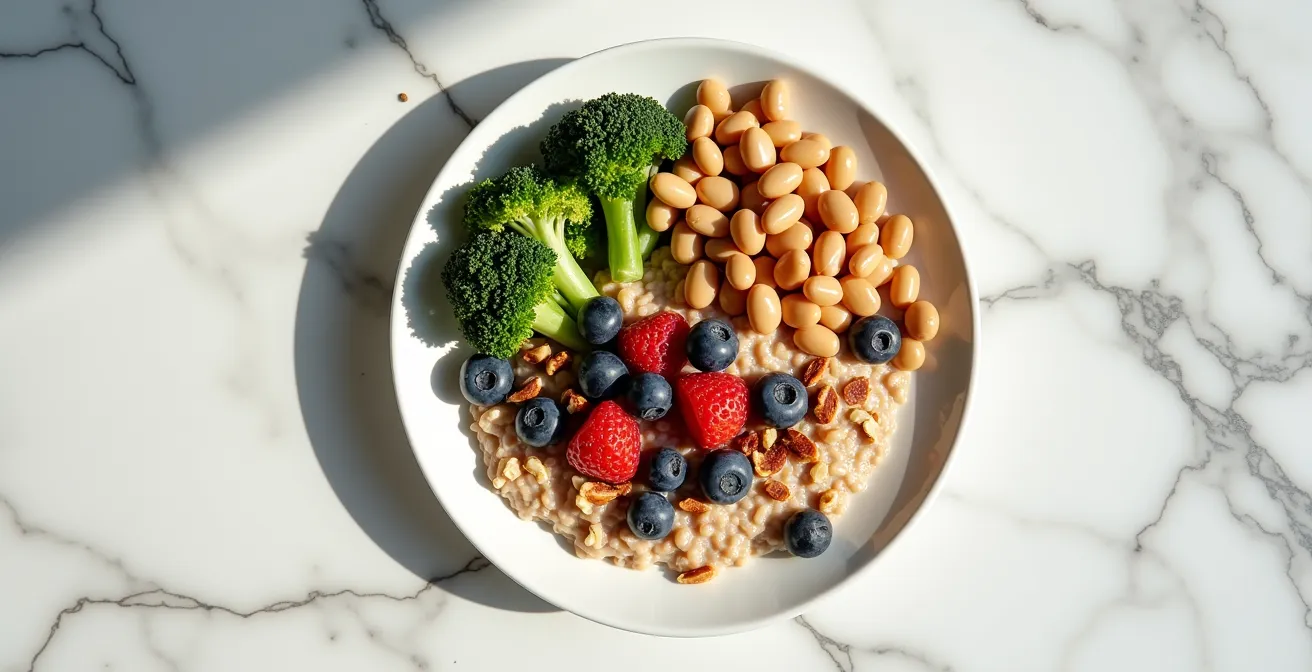
The best strategy is not to isolate one type but to build a diet rich in a variety of whole plant foods, which naturally contain a mix of both. For example, oats are famous for their soluble beta-glucan, but they also contain insoluble fiber. Apples have soluble pectin in their flesh and insoluble fiber in their skin. Beans are a powerhouse of both. By focusing on a diverse, whole-food diet, you ensure you’re getting the full spectrum of benefits without needing to track each type meticulously.
The “Healthy” Juice Mistake That Removes 90% of Essential Fiber
In the quest for better health, many people turn to juicing, believing it’s a fast and efficient way to consume more fruits and vegetables. While well-intentioned, this is one of the biggest mistakes you can make if your goal is to leverage fiber for heart health. The very process of juicing strips out the most valuable component.
A juicer works by extracting the liquid from a fruit or vegetable and discarding the pulp, skin, and seeds. This discarded material is where almost all the fiber resides. The result is a beverage high in sugar and water, but critically deficient in the fiber needed to manage cholesterol and blood sugar. In fact, nutrition experts at Harvard confirm that juicing removes up to 90% of the fiber content from whole fruits. You are essentially drinking sugar water and throwing the “cholesterol sponge” in the trash.
A far superior alternative is blending. A blender pulverizes the entire fruit or vegetable, retaining all the fiber in a smoothie. This ensures you get the full nutritional package: the vitamins and minerals from the juice, plus the essential soluble and insoluble fiber from the pulp and skin. A well-constructed smoothie can be a heart-healthy powerhouse, delivering fiber, healthy fats, and protein in one easy-to-consume meal.
Your Action Plan: Heart-Healthy Smoothie Blueprint
- Base: Start with 1/2 cup of berries (like blueberries or raspberries for 2g of soluble fiber) plus 1 cup of spinach (for 1g of insoluble fiber).
- Add Healthy Fat & Fiber: Include 1/4 of an avocado, which adds creaminess, healthy monounsaturated fats, and additional fiber.
- Boost with Seeds: Add 1 tablespoon of ground flaxseed for 3g of fiber and heart-healthy omega-3 fatty acids. For an extra 5g of fiber, also include 1 tablespoon of chia seeds.
- Choose Your Liquid: Use unsweetened almond milk or plain water as your liquid base to avoid added sugars.
- Blend Thoroughly: Blend until completely smooth to ensure all ingredients are incorporated and the fiber is well-distributed.
How Much Water Must You Drink When Doubling Your Fiber Intake?
Increasing your fiber intake without simultaneously increasing your fluid intake is a recipe for discomfort. As soluble fiber travels through your digestive system, it absorbs water to form its beneficial gel. If there isn’t enough water available, this process can backfire, leading to constipation, hardness, and bloating—the very symptoms you’re trying to avoid.
Think of it like mixing cement: without enough water, you get a hard, immovable lump. With the right amount, you get a smooth, flowing substance. The same principle applies in your gut. Water is the catalyst that allows soluble fiber to do its job effectively. It enables the formation of the soft gel that aids transit, traps cholesterol, and supports a healthy gut environment.
So, how much is enough? While individual needs vary, a clear clinical guideline has emerged from research. A study published in Nature on dietary fiber types found that hydration was critical for the beneficial effects of soluble fibers. The key takeaway for practical application is that for every 5-gram increase in daily fiber, you should aim to drink an additional 200-250ml (about 8 ounces) of water. This ensures the fiber has enough liquid to form its gel and move smoothly through your system.
Signs of insufficient hydration include hard or pellet-like stools, increased bloating, or a feeling of being “backed up.” It’s important to listen to your body. Remember that fluids don’t just have to come from plain water. Herbal teas, clear broths, and even water-rich vegetables like cucumber and celery all contribute to your overall hydration status. And when taking a concentrated fiber supplement like psyllium, it is mandatory to take it with a full glass of water.
Lowering Cholesterol Levels Naturally: Which Plant Sterols Actually Work?
Beyond fiber, another powerful natural tool for lowering LDL cholesterol is a group of compounds called plant sterols and stanols. These are substances found naturally in small amounts in many plant-based foods like nuts, seeds, and vegetable oils. Structurally, they are very similar to cholesterol. This similarity is the key to their effectiveness.
When you consume them, plant sterols compete with actual cholesterol for absorption in your digestive tract. Because they “look” like cholesterol, they can block the absorption sites in your intestines. As a result, less cholesterol from your food (and from bile) enters your bloodstream. The unabsorbed cholesterol is simply excreted. This mechanism provides a complementary strategy to soluble fiber; while fiber traps bile, sterols block cholesterol absorption directly.
The amounts found naturally in foods are too low to have a therapeutic effect. To achieve a meaningful reduction in LDL, you need to consume them in fortified foods or as supplements. The clinical evidence is clear on the required dosage: comprehensive research demonstrates that a daily intake of 2 grams of plant sterols can reduce LDL cholesterol by up to 10%. This effect is additive to the benefits of a low-saturated-fat diet and soluble fiber intake.
When choosing a source, it’s important to be practical. While nuts and seeds contain sterols, you would need to eat impractically large amounts to reach the 2-gram target. Fortified foods and supplements are the most reliable methods, as this table illustrates.
| Source | Sterol Content | Daily Serving | Pros | Cons |
|---|---|---|---|---|
| Fortified Spreads | High (8-10%) | 2 tbsp | Easy to measure, consistent dose | Added calories, may contain trans fats |
| Fortified Yogurt | Medium (0.5-1g/serving) | 2 cups | Probiotic benefits, protein | Need multiple servings |
| Nuts/Seeds | Low (100-300mg/100g) | Would need 600g+ | Natural source, other nutrients | Impractical amounts needed |
| Supplements | Concentrated | 2 capsules | Precise dosing, convenient | May reduce carotenoid absorption |
Soluble Fiber Strategies to Manage Blood Sugar Spikes After Meals
Managing heart health extends beyond cholesterol. Controlling blood sugar levels is equally critical, as frequent post-meal glucose spikes can damage blood vessels and increase cardiovascular risk over time. Soluble fiber is an exceptionally effective tool for blunting these spikes through a strategy known as “fiber sequencing.”
The principle is simple: the order in which you eat your macronutrients matters. By consuming a viscous soluble fiber source *before* the rest of your meal, you create a gel lining in your digestive tract. This gel slows down the absorption of glucose from the carbohydrates you eat subsequently, leading to a more gentle, gradual rise in blood sugar instead of a sharp spike. A meta-analysis of dietary fiber studies confirmed that just 10g of soluble fiber daily, especially from viscous sources like psyllium, significantly reduced post-meal glucose spikes by slowing absorption by 25-30%.
Implementing this in practice is straightforward. It involves strategically front-loading your meal with fiber. This simple sequencing can have a profound impact, with some protocols showing a reduction in post-meal glucose spikes by up to 40%. Here is a clinically tested protocol:
- 15-20 minutes before your meal: Consume your primary fiber source. This could be 5-10 grams of psyllium husk mixed in a large glass of water, or a small, fiber-rich food like an apple.
- Start the meal with vegetables: Begin eating with your non-starchy vegetables or a salad (aim for at least one cup). This adds another layer of fiber.
- Follow with protein and fats: Next, eat your protein source (such as fish, chicken, tofu, or eggs) and healthy fats.
- End with starches: Save your starchy carbohydrates (like potatoes, rice, or bread) for the very end of the meal. By this time, the fiber gel is well established, and their glucose will be absorbed much more slowly.
This methodical approach turns your meal into a tool for blood sugar management, leveraging the physical properties of fiber to protect your vascular system from the damaging effects of rapid glucose surges.
Key Takeaways
- Focus on viscous soluble fiber (oats, psyllium, beans, apples) as your primary tool; it forms a gel that actively traps and removes LDL cholesterol.
- Increase fiber intake gradually (by ~5g per week) and increase water intake (by ~8oz for every 5g of fiber) to prevent bloating and constipation.
- Never juice your fruits for fiber; blend them into smoothies to retain 100% of their heart-healthy fiber content.
Can a Whole Food Diet Reduce Chronic Inflammatory Markers in 8 Weeks?
Chronic, low-grade inflammation is a key driver of atherosclerosis (the hardening and narrowing of arteries) and is a major risk factor for heart attacks. A critical question, then, is whether dietary changes can quell this inflammation. The evidence overwhelmingly says yes, and fiber plays a starring role through its interaction with our gut microbiome.
When you consume a diverse range of plant fibers, you are feeding the beneficial bacteria in your gut. In return, these bacteria ferment the fiber and produce powerful anti-inflammatory compounds called short-chain fatty acids (SCFAs). These SCFAs enter your bloodstream and help reduce systemic inflammation. A diet rich and varied in plant foods directly translates to a healthier, more diverse microbiome capable of producing more of these protective compounds. The impact is measurable; a 2022 study in JAMA Network Open found that even a 5-gram increase in daily fiber was tied to significantly lower levels of C-reactive protein (CRP), a key inflammatory marker in the blood.
The timeframe for these changes can be surprisingly short. A study focusing on patients with type 2 diabetes demonstrated significant results within months. Patients who adopted a high-fiber diet, specifically aiming for 30 or more different plant foods per week, showed a marked increase in SCFA-producing bacteria. Within the 3-month study period, they experienced not only lower glucose and cholesterol but also reduced markers of systemic inflammation. This highlights that a whole-food, high-fiber diet doesn’t just manage risk factors—it actively reduces the underlying inflammatory processes that cause heart disease.
The goal is not just more fiber, but more diversity of fiber. Eating a wide variety of vegetables, fruits, legumes, whole grains, nuts, and seeds ensures you are nourishing the broadest possible range of beneficial gut microbes. This diversity is the cornerstone of an effective anti-inflammatory diet and a resilient cardiovascular system.
By systematically incorporating these evidence-based strategies—prioritizing viscous soluble fiber, ensuring adequate hydration, using fiber sequencing, and embracing a diverse whole-food diet—you are not just passively hoping for better health. You are actively implementing a multi-faceted medical nutrition therapy to take control of your cardiovascular future.
Frequently Asked Questions About Dietary Fiber for Heart Health
What’s the ideal soluble to insoluble fiber ratio?
For a specific focus on heart health and lowering cholesterol, a ratio of approximately 60% soluble to 40% insoluble fiber is often recommended. For general digestive health and regularity, a balanced 50/50 ratio is considered optimal.
Can I get both types of fiber from the same foods?
Yes, absolutely. Most plant foods contain a mix of both fiber types. For example, foods like oats, beans, apples, and carrots are excellent sources of both soluble and insoluble fiber, though the proportions may differ.
How do I know if I’m getting the right balance of fiber?
The best indicators are your own health markers and digestive feelings. If you see improvements in your cholesterol and blood sugar levels (indicating sufficient soluble fiber) and are also experiencing regular, comfortable bowel movements (indicating sufficient insoluble fiber), you likely have a good balance.
Do herbal teas count toward hydration goals when increasing fiber?
Yes, non-caffeinated herbal teas, clear broths, and water-rich foods like cucumbers and melons all contribute to your daily fluid needs, which are essential when upping your fiber intake.
What are signs I need more water with my fiber?
The most common signs of insufficient hydration with a high-fiber diet are hard or pellet-like stools, increased bloating, gas, or a general slowing of bowel movements. These are signals to increase your fluid intake.
Should I drink water with fiber supplements?
Always. It is crucial to take any fiber supplement, such as psyllium husk or methylcellulose, with at least a full 8-ounce (250ml) glass of water to allow it to form its gel properly and prevent it from becoming a choking hazard or causing blockages.