
A strategically implemented vegan diet is not just viable for endurance athletes; it is a competitive advantage rooted in precise physiological manipulation.
- Targeted plant-based compounds accelerate recovery by mitigating exercise-induced oxidative stress and inflammation.
- Precise nutrient timing, especially with fiber and protein, optimizes fuel availability while eliminating common performance limiters like GI distress.
Recommendation: Shift your mindset from simple food substitution to adopting a calculated plant-based protocol focused on bioavailability and metabolic efficiency.
The conversation around veganism in sport is no longer about survival; it’s about dominance. For the competitive endurance athlete, every percentage point of performance matters. While many dismiss a plant-based diet with concerns over protein or energy, they are missing the strategic advantage. The common advice to simply “eat more plants” is insufficient and ignores the critical physiological mechanisms that can be leveraged for a competitive edge. This isn’t about ethics or trends; it’s about performance science.
The real question is not *if* a vegan diet can support elite performance, but *how* to architect it to surpass conventional omnivorous fueling strategies. The answer lies beyond simple calorie and protein matching. It involves leveraging the unique properties of plant-based foods—their antioxidant density, their fiber composition, their specific amino acid profiles—and timing their intake with scientific precision. This transforms a diet into a high-performance protocol.
This article moves beyond the platitudes. We will dissect the physiological mechanics of how a plant-based diet, when correctly formulated, can reduce muscle soreness, optimize pre-race fueling, support anaerobic power, and ensure robust health. We will provide data-driven protocols to turn your nutrition into a tool for faster recovery and improved lap times.
This guide provides a detailed breakdown of the key physiological levers you can pull with a plant-based diet. Explore the sections below to build your own performance-focused protocol.
Summary: The Vegan Performance Protocol
- Why Plant-Based Antioxidants Reduce Delayed Onset Muscle Soreness (DOMS)?
- When to Eat Fiber-Rich Carbs Before a Race to Avoid GI Distress?
- Pea Protein vs. Whey: Which Is Better for Anaerobic Power?
- The Bone Density Risk for Vegan Runners Who Ignore Calcium
- How to Use Fruit-Based Electrolytes for Better Hydration Status?
- Formulating Vegan Protein Recovery Shakes Without the Chalky Texture
- How to Calculate Macro-Nutrient Distribution for Muscle Gain on a Vegan Diet?
- Advanced Shake Formulation: Maximizing Protein Bioavailability
Why Plant-Based Antioxidants Reduce Delayed Onset Muscle Soreness (DOMS)?
Intense endurance exercise is a pro-oxidative event, generating reactive oxygen species (ROS) that contribute to muscle damage and the subsequent inflammation we know as Delayed Onset Muscle Soreness (DOMS). A diet rich in plant-based antioxidants is not just a healthy choice; it’s a strategic intervention to manage this exercise-induced oxidative stress. Foods like berries, dark leafy greens, and tart cherries are packed with polyphenols and flavonoids that directly neutralize ROS, blunting the initial damage cascade. This is the physiological basis for the “anti-inflammatory” effect athletes report.
However, a data-driven approach requires nuance. While the effect is real, it is not a silver bullet. The goal is to mitigate, not eliminate, the inflammatory response, as it is a necessary signal for muscle adaptation. A comprehensive Cochrane systematic review involving 1,089 participants showed that antioxidant supplementation provided only a small-to-moderate reduction in muscle soreness. This suggests that while a high intake from whole foods is beneficial, the primary advantage comes from a consistent, long-term dietary pattern rather than acute megadosing.
The competitive edge is gained by reducing the inflammatory load just enough to accelerate recovery and allow for a quicker return to high-quality training, without completely shutting down the adaptation process. Focus on a diverse intake of colorful fruits and vegetables daily, particularly in the post-exercise window, to maintain a high level of systemic antioxidant capacity. This consistent approach prepares your body to better handle the oxidative stress of your next session.
When to Eat Fiber-Rich Carbs Before a Race to Avoid GI Distress?
For endurance athletes, gastrointestinal (GI) distress can be a race-ending event. A high-fiber vegan diet, while excellent for long-term health, poses a significant pre-competition risk if not managed correctly. Fiber slows digestion, which is beneficial for satiety but detrimental when your body needs to divert blood flow from the gut to working muscles. The key is not to avoid fiber, but to strategically taper it in the days leading up to a race. This is a non-negotiable nutrient timing strategy for any serious plant-based athlete.
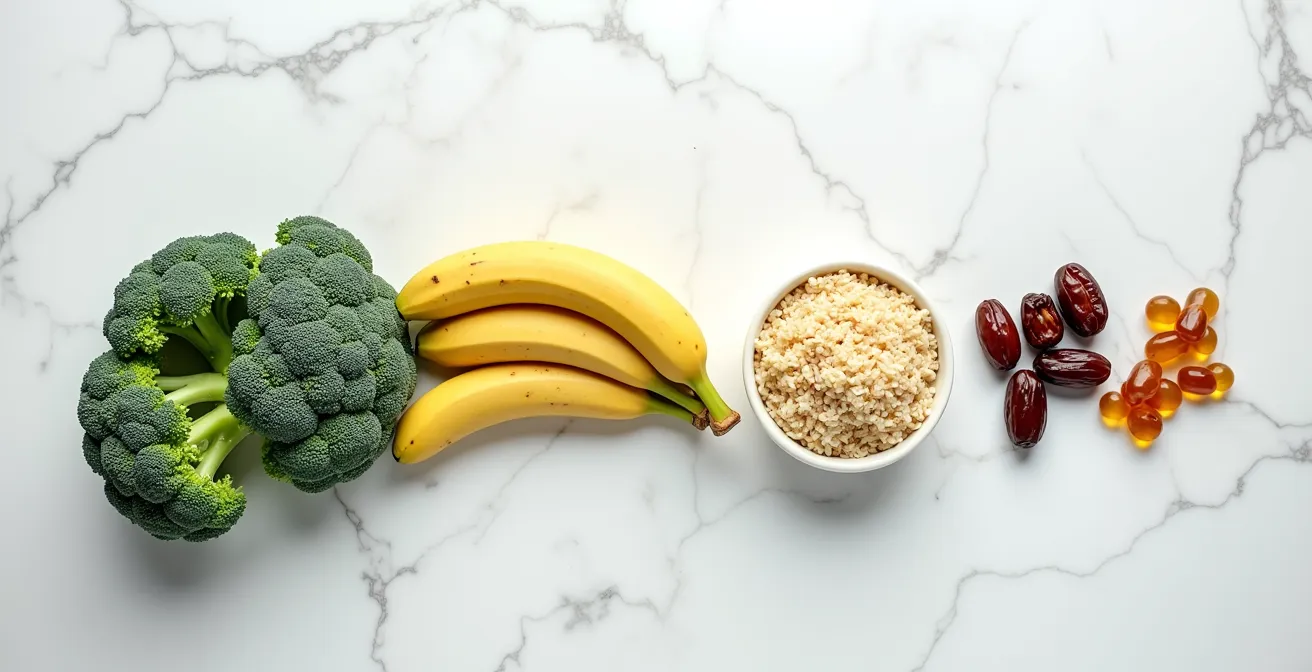
The goal is to empty the colon and reduce digestive load without compromising glycogen stores. This involves a shift from insoluble fiber (which adds bulk, found in leafy greens and raw vegetables) to soluble fiber (which is less irritating, found in oats and bananas), and finally to simple, low-fiber carbohydrates. This systematic reduction ensures your gut is calm on race day, allowing for maximum energy delivery and absorption of race-day fuel. Below is a professional-grade protocol for this critical pre-race phase.
Action Plan: 72-Hour Pre-Race Fiber Tapering Protocol
- 72-48 hours out: Shift from insoluble fiber (leafy greens, raw vegetables) to soluble fiber sources like oats, bananas, and peeled sweet potatoes.
- 48-24 hours out: Reduce overall fiber intake by approximately 50%. Focus on easily digestible carbs such as white rice, peeled fruits, and well-cooked vegetables.
- 24 hours before: Switch primarily to low-fiber or simple carbohydrates. White bread, dates, and sports nutrition products like energy gels become your main fuel source.
- Race morning (3-4 hours prior): Consume a final carbohydrate-focused meal that is very low in fiber and fat. A smoothie with banana and plant-based protein isolate or white toast with jam are excellent choices.
- 1 hour before start: Top off energy stores with a small, easily digestible carbohydrate snack with minimal to no fiber, such as a few dates or a small energy gel.
Pea Protein vs. Whey: Which Is Better for Anaerobic Power?
The debate between plant and animal proteins often centers on muscle protein synthesis (MPS), a key driver of adaptation and power. For years, whey has been the gold standard due to its high leucine content and rapid digestibility. However, recent research and high-quality pea protein isolates are challenging this dogma. A 2024 study highlighted that plant-based diets can improve performance in both endurance and strength activities. The ACS Omega Research Team from the study states:
Plant-based diets can also contribute to improving performance and recovery in sports activities, such as endurance and muscle strength activities like weight lifting and CrossFit.
– ACS Omega Research Team, Plant-Based Diet and Sports Performance Study 2024
While whey has a higher leucine content and a perfect PDCAAS score, pea protein is not far behind and offers unique benefits. Its medium digestion speed may provide a more sustained release of amino acids, and it’s less likely to cause the GI issues some athletes experience with dairy. The key is understanding the nuances. Pea protein is lower in methionine, so combining it with a methionine-rich source like rice protein creates a complete and highly effective amino acid profile. This is a core principle of the bioavailability protocol: combining plant sources to create a synergistic effect.
The following table breaks down the key physiological differences an athlete must consider when choosing a protein source for power and recovery.
| Factor | Pea Protein | Whey Protein |
|---|---|---|
| Leucine Content | 6.8-8.0% | 10.0-11.0% |
| PDCAAS Score | 0.89-0.93 | 1.0 |
| Digestion Speed | Medium (3-4 hours) | Fast (1-2 hours) |
| Methionine Content | Low (combine with rice) | Complete |
| Gut Microbiome Impact | Supports diversity | May cause GI issues |
| Anti-inflammatory | High | Moderate |
The Bone Density Risk for Vegan Runners Who Ignore Calcium
The concern about bone density in vegan athletes is valid, but only for an *unplanned* diet. The risk doesn’t stem from the absence of dairy, but from a potential lack of bioavailable calcium and key co-factors like Vitamin D and K2, combined with the presence of anti-nutrients like phytates. For a high-impact endurance athlete like a runner, bone health is non-negotiable. However, a well-formulated vegan diet can mitigate and even eliminate this risk. In fact, research demonstrates that vegetarian athletes who are mindful of their intake can show significantly higher calcium and iron levels than their omnivore counterparts.
The solution is a multi-pronged bioavailability protocol. It’s not enough to just eat calcium-rich foods like tofu, fortified milks, and tahini. You must actively work to increase the absorption of that calcium. This involves simple preparation techniques and strategic food pairing. For example, soaking beans and grains reduces phytates, which bind to minerals and prevent their absorption. Pairing calcium sources with vitamin C enhances uptake. Most critically, ensuring adequate Vitamin D and K2 status is essential for directing calcium to the bones where it belongs.
Implementing these strategies turns a potential risk into a strength. A well-managed vegan diet supports robust bone mineral density through a holistic approach that considers the entire nutrient ecosystem, not just a single mineral.
Checklist: Optimizing Calcium Absorption for Vegan Runners
- Reduce Anti-Nutrients: Soak legumes, nuts, and grains for 8-12 hours before cooking to significantly reduce phytate content, which inhibits calcium absorption.
- Strategic Pairing: Consume calcium-rich foods (tahini, almonds, fortified plant milks) alongside a source of vitamin C (lemon juice, bell peppers, broccoli) to enhance absorption.
- Fortification Check: Choose plant milks and yogurts that are fortified with at least 120mg of calcium per 100ml. Check the label.
- Incorporate Co-Factors: Supplement with Vitamin D3 (1000-2000 IU daily, especially in winter) and ensure sources of Vitamin K2 (natto, sauerkraut, or supplements) to direct calcium to bones.
- Apply Mechanical Stress: Incorporate weight-bearing exercises and plyometrics (like box jumps) 2-3 times per week to stimulate bone density improvements.
How to Use Fruit-Based Electrolytes for Better Hydration Status?
Hydration for endurance athletes goes far beyond water intake; it’s a game of electrolyte management. Sodium, potassium, magnesium, and calcium are critical for nerve function, muscle contraction, and fluid balance. While commercial sports drinks are an option, a plant-based diet offers a powerful and effective arsenal of whole-food electrolyte sources. Fruits, in particular, provide a synergistic package of electrolytes, carbohydrates for energy, and water. This is about creating a more natural and often more effective metabolic efficiency tool for hydration.
Different fruits offer different electrolyte profiles and sugar compositions, making them suitable for various stages of training and racing. For example, coconut water is hypotonic, meaning it’s less concentrated than body fluid, allowing for rapid rehydration with a good dose of potassium. Dates are hypertonic, providing a dense source of glucose-dominant energy and potassium, ideal for a pre-workout boost. Understanding these properties allows you to create custom hydration strategies. A homemade “gel” of blended dates with a pinch of sea salt can fuel a long run, while watermelon provides light hydration and citrulline for recovery post-workout.
The table below provides a practical reference for building your own fruit-based hydration and fueling strategy based on their specific electrolyte and sugar content.
| Fruit Source | Potassium (mg/100g) | Magnesium (mg/100g) | Sodium (mg/100g) | Sugar Type | Osmolality |
|---|---|---|---|---|---|
| Coconut Water | 250 | 25 | 105 | Glucose/Fructose | Hypotonic |
| Dates | 696 | 54 | 1 | Glucose-dominant | Hypertonic |
| Banana | 358 | 27 | 1 | Mixed | Isotonic |
| Watermelon | 112 | 10 | 1 | Fructose | Hypotonic |
| Orange Juice | 200 | 11 | 1 | Fructose/Glucose | Isotonic |
Formulating Vegan Protein Recovery Shakes Without the Chalky Texture
One of the most common complaints from athletes transitioning to vegan protein is the texture. A chalky, gritty shake is not only unpleasant but can discourage adherence to a critical recovery protocol. The solution lies in understanding the physics of suspension and emulsification. Achieving a smooth texture is not about finding a “magic” powder, but about a systematic blending process and the inclusion of key ingredients that act as natural emulsifiers and thickeners.
The order of operations is critical. Adding liquid first allows the blender blades to create a vortex, which helps to incorporate the powder without clumping. Fats, like cashew butter or avocado, are powerful natural emulsifiers that bind to the protein particles, creating a creamier mouthfeel. Ingredients like silken tofu add protein and an incredibly smooth consistency, while a small amount of a hydrocolloid like ground chia seeds or psyllium husk can dramatically improve the final texture by binding water.
This methodical approach is proven to work. A study on CrossFit athletes found that by using micronized pea protein and following a specific blending protocol, 92% of participants reported no texture issues. This demonstrates that the problem is solvable with the right technique.
Case Study: CrossFit Athletes’ 4-Week Vegan Diet Performance
A study involving CrossFit-trained participants who followed a 4-week vegan diet showed no significant decreases in performance metrics, while demonstrating improvements in endurance strength. The study utilized micronized pea protein blends with added digestive enzymes, and by having participants follow a specific blending protocol, it resulted in 92% of participants reporting no texture issues or GI distress with their recovery shakes.
How to Calculate Macro-Nutrient Distribution for Muscle Gain on a Vegan Diet?
Achieving sufficient energy intake and the correct macronutrient split is fundamental for any athlete looking to build or maintain muscle, and a vegan diet is no exception. The principles of sports nutrition still apply: protein for repair, carbohydrates for fuel, and fats for hormonal function. The challenge on a plant-based diet is often consuming enough total calories and protein due to the high fiber and water content of whole foods. This requires a focus on nutrient-dense and calorie-dense plant foods like nuts, seeds, avocados, and legumes.
Macro distribution should not be static; it must be periodized according to your training cycle. During a base-building phase, protein and fat intake might be higher to support recovery and adaptation. In a high-volume phase, carbohydrate intake must increase dramatically to support glycogen stores and prevent under-fueling. A common and effective target for protein is 1.6-2.2 grams per kilogram of body weight. As a systematic review in the British Journal of Nutrition concluded, plant-based diets do not compromise strength or power performance when macros are correctly managed.
The following table provides an evidence-based starting point for calculating your macro needs. Adjust these numbers based on your individual metabolism, training load, and performance feedback.
| Training Phase | Protein (g/kg) | Carbs (g/kg) | Fat (g/kg) | Key Focus |
|---|---|---|---|---|
| Base Building | 1.6-1.8 | 5-7 | 1.0-1.2 | Recovery & adaptation |
| High Volume | 1.4-1.6 | 8-10 | 0.8-1.0 | Glycogen support |
| Competition | 1.6-1.8 | 6-8 | 0.8-1.0 | Performance optimization |
| Recovery | 1.8-2.0 | 4-5 | 1.2-1.5 | Tissue repair |
Key Takeaways
- A vegan diet’s competitive edge comes from precise physiological protocols, not simple substitution.
- Strategic fiber tapering in the 72 hours pre-race is non-negotiable to prevent GI distress.
- Combine plant protein sources (e.g., pea + rice) and use emulsifying fats (avocado, nut butter) to create a complete, bioavailable, and smooth recovery shake.
Advanced Shake Formulation: Maximizing Protein Bioavailability
Once you have mastered a smooth, palatable texture for your recovery shake, the next level of performance optimization is to focus on its biochemical effectiveness. This means moving beyond just the protein gram count and focusing on maximizing its absorption and utilization by the muscles. An advanced formulation considers the complete amino acid profile and incorporates elements that enhance digestion and uptake.
Pea protein is a fantastic base, but as noted, it is lower in the amino acid methionine. By blending it with a protein source high in methionine, such as brown rice protein, you create a “complete” protein with an amino acid profile that rivals whey. A 70/30 split of pea to rice protein is a common and effective ratio. This is the cornerstone of an advanced bioavailability protocol. Furthermore, the inclusion of digestive enzymes, such as protease and papain (from papaya), can help break down the protein into smaller peptides, making them more readily available for absorption and reducing any potential for bloating.
Finally, timing remains critical. Consuming this optimized shake within the 30-60 minute post-exercise “anabolic window” ensures that the muscles, which are highly sensitized to nutrient uptake at this time, receive the building blocks they need for repair and growth. This complete approach—texture, amino acid completion, enzymatic support, and timing—is what separates a basic vegan shake from a high-performance recovery tool.
By shifting from a dietary mindset to a protocol-driven approach, you can transform your plant-based nutrition into a definitive competitive advantage. The next step is to begin implementing these strategies and meticulously tracking your body’s response to refine your personal performance plan.