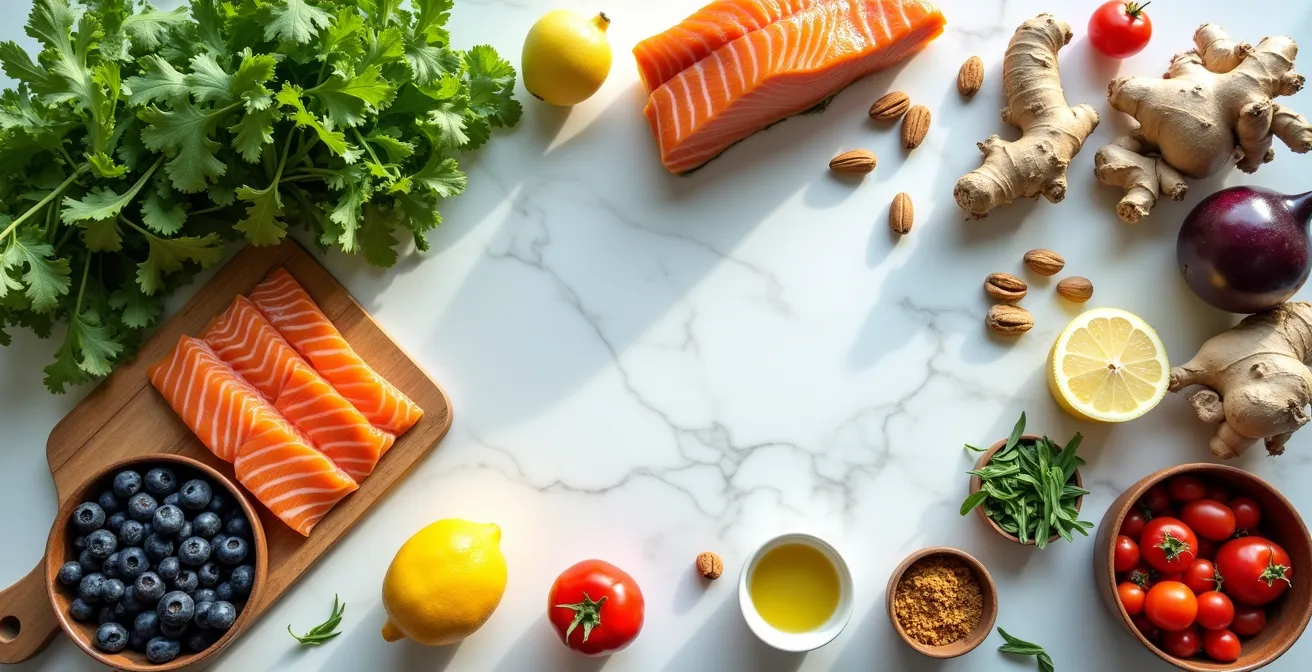
Yes, a strategic whole food diet can significantly reduce chronic inflammatory markers in as little as 8 weeks by focusing on biochemical synergy, not just simple food avoidance.
- Identify and remove personal inflammatory triggers like gluten and dairy using a structured elimination diet.
- Maximize the potency of botanicals like turmeric and ginger by combining them correctly to enhance bioavailability.
- Correct the pro-inflammatory imbalance of Omega-6 to Omega-3 fats by swapping common vegetable oils for healthier alternatives.
Recommendation: Start by understanding your baseline C-Reactive Protein (CRP) level and implement one strategic oil swap this week to begin your journey.
Living with chronic pain, brain fog, or the persistent fatigue of an autoimmune condition can feel like a daily battle against your own body. You follow the standard advice, but the underlying inflammation persists, a silent fire that a simple blood test can reveal. The good news, and the central promise of functional medicine, is that you hold significant power to quench that fire. The answer lies not in a pharmacy, but in your kitchen.
Many people know they should “eat healthy,” which often translates to vague goals like eating more vegetables or avoiding sugar. While these are good starting points, they barely scratch the surface of what’s possible. They don’t address the specific biochemical pathways that drive the inflammatory cascade. What if the key wasn’t just *what* you eat, but *how* you combine foods to unlock their full medicinal potential? What if a simple oil you use for cooking is undermining all your other efforts?
This guide moves beyond generic advice. We are going to explore a targeted, results-oriented approach to systematically lowering your body’s inflammatory burden. Over the next eight weeks, you can start to see real, measurable changes in your inflammatory markers and, more importantly, in how you feel. This isn’t about a diet of deprivation; it’s about a strategy of empowerment, giving you the precise tools to reclaim your health. We will deconstruct the science, from understanding your blood tests to activating the full power of anti-inflammatory superfoods.
This article provides a structured roadmap to transform your diet into a powerful anti-inflammatory tool. Below, the table of contents outlines the key strategies we will cover, from decoding your lab results to mastering specific food combinations for maximum effect.
Table of Contents: A Strategic Plan to Reduce Inflammation
- Why Your Doctor Tests C-Reactive Protein and What It Means?
- How to Start an Elimination Diet to Identify Inflammatory Triggers?
- Ginger vs. Turmeric: Which Root Fights Inflammation Better?
- The “Vegetable Oil” Mistake That Increases Inflammation
- How to Combine Black Pepper and Fat to Activate Turmeric?
- Mastering Anti-Inflammatory Golden Lattes for Deep Sleep and Joint Relief
- How Environmental Pollutants Cause Oxidative Stress and What to Eat to Fight It
- Beyond Berries: Unconventional Powerful Antioxidant Sources for Skin Health
Why Your Doctor Tests C-Reactive Protein and What It Means?
When your doctor orders a blood test for C-Reactive Protein (CRP), they are essentially measuring the level of systemic inflammation in your body. Produced by the liver, CRP is an acute-phase reactant, meaning its levels rise dramatically in response to inflammation from any source—be it an infection, an injury, or the low-grade, chronic inflammation associated with autoimmune conditions and lifestyle diseases. Think of it as your body’s internal fire alarm. A standard CRP test can show a general inflammatory state, while a high-sensitivity CRP (hs-CRP) test is more precise, often used to assess cardiovascular risk.
Understanding your CRP number is the first step toward taking control. It provides a concrete, measurable baseline. According to guidelines from the CDC and the American Heart Association, these levels are generally interpreted for cardiovascular risk, but they offer valuable insight into your overall inflammatory burden. Consistently elevated CRP, even at a moderate level, is a signal that your immune system is in a state of constant, low-level activation, which can contribute to joint pain, fatigue, and long-term health issues.
While CRP is the most common marker, a full picture of the inflammatory cascade might also include tests for Erythrocyte Sedimentation Rate (ESR), which provides a less specific but complementary view, and specific cytokines like IL-6 and TNF-alpha, which are key players in autoimmune responses. However, for tracking the impact of dietary changes, CRP remains the gold standard because it responds relatively quickly and predictably to interventions.
This table breaks down the common interpretations of CRP levels, helping you understand where you stand and what your target should be. The goal of a functional nutrition plan is to move from a high or moderate-risk category to the optimal low-risk zone.
| CRP Level | Risk Category | Clinical Significance | Action Needed |
|---|---|---|---|
| <1.0 mg/L | Low Risk | Optimal cardiovascular health | Maintain healthy lifestyle |
| 1.0-3.0 mg/L | Moderate Risk | Average inflammation levels | Consider diet and lifestyle changes |
| 3.0-10.0 mg/L | High Risk | Elevated chronic inflammation | Medical evaluation recommended |
| >10.0 mg/L | Acute Phase | Possible infection or acute condition | Immediate medical attention |
How to Start an Elimination Diet to Identify Inflammatory Triggers?
While general anti-inflammatory foods are beneficial for everyone, chronic inflammation is often driven by specific, personal food triggers. A food that is perfectly healthy for one person can be highly inflammatory for another. The most effective way to identify these culprits is a structured elimination diet. This isn’t a long-term eating plan but a short-term diagnostic tool to connect the dots between what you eat and how you feel. It involves removing common inflammatory foods for a set period, then systematically reintroducing them one by one to observe your body’s reaction.
The core principle is to give your immune system a “rest” by removing potential agitators. The most common triggers include gluten, dairy, eggs, soy, corn, nuts, seeds, nightshade vegetables (tomatoes, peppers, eggplant), and all processed foods and sugars. By removing them completely for 3-4 weeks, you establish a non-reactive baseline. During this phase, many people already experience a significant reduction in symptoms like joint pain, brain fog, skin issues, and digestive distress. This initial relief is a powerful motivator and a sign that you’re on the right track.
The reintroduction phase is where the real detective work happens. You will reintroduce a single food group over 2-3 days and then wait another 3-4 days, carefully monitoring for any return of symptoms. Keeping a detailed food and symptom journal is non-negotiable here. A reaction might not be an immediate digestive issue; it could be a headache two days later, a flare-up of joint pain, or a sudden dip in energy. This process requires patience but provides invaluable, personalized data that no lab test can offer.
Visualizing the process of mindful eating and tracking can be a powerful motivator. The image below captures the essence of this journey: taking control of your health through careful observation and whole, natural foods.

This journey of self-discovery empowers you to build a diet that is truly customized to your unique biology, removing the specific fuels for your personal inflammatory fire. The following checklist provides a clear, step-by-step protocol to guide you through the process safely and effectively.
Your Action Plan for Food Trigger Discovery
- Elimination Phase (Weeks 1-4): Completely remove gluten, dairy, eggs, nightshades, nuts, seeds, and processed foods from your diet. Focus on whole, unprocessed vegetables, fruits, and clean proteins.
- Reintroduction Phase (Starting Week 5): Reintroduce ONLY ONE food group. Consume it 2-3 times over 3 days, then stop and wait 3-4 days to monitor for any delayed reactions.
- Symptom Tracking: Keep a detailed daily diary. Rate joint pain, fatigue, brain fog, skin reactions, digestive issues, and mood changes on a scale of 1-10.
- Analyze Reactions: If any symptoms appear or worsen after reintroducing a food, you’ve likely found a trigger. Remove that food again immediately and wait until you return to your baseline before testing the next one.
- Confirm and Proceed: If no symptoms occur after the waiting period, you can keep that food in your diet in moderation. Proceed to test the next food group, starting with those least likely to cause reactions (e.g., specific vegetables before reintroducing dairy).
Ginger vs. Turmeric: Which Root Fights Inflammation Better?
In the world of natural anti-inflammatories, ginger and turmeric are superstars. Both are rhizomes from the same plant family and have been used in traditional medicine for centuries. While both are potent, they work through slightly different mechanisms, making them a powerful team rather than competitors. Understanding their individual strengths helps you use them more strategically.
Turmeric’s power comes from its main active compound, curcumin. Curcumin is a formidable anti-inflammatory that primarily works by inhibiting the NF-kB pathway, a master protein complex that triggers the production of inflammatory cytokines. This makes it particularly effective for dampening the chronic, systemic inflammation seen in conditions like arthritis and autoimmune disease. The challenge with curcumin is its poor bioavailability, a problem we’ll solve in a later section.
Ginger, on the other hand, gets its potent effects from compounds like gingerols and shogaols. These compounds are particularly effective at inhibiting COX-2, the same enzyme targeted by many non-steroidal anti-inflammatory drugs (NSAIDs). This makes ginger excellent for acute pain and inflammation, such as muscle soreness or menstrual cramps. Its action is often faster and more noticeable for immediate relief.
The real magic happens when they are combined. Their different mechanisms of action create a synergistic effect, attacking inflammation from multiple angles. In fact, a 2024 triple-blind randomized controlled trial demonstrated that a ginger-turmeric combination, particularly at a 5:2 ratio, showed an optimal synergistic effect in reducing inflammatory markers. By using both, you get comprehensive coverage for both acute and chronic inflammation.
The following table provides a clear comparison of their properties, highlighting why using them together is the most effective strategy for a robust anti-inflammatory plan.
| Property | Ginger | Turmeric | Combined Effect |
|---|---|---|---|
| Active Compounds | Gingerols, Shogaols | Curcumin (2-8%) | Enhanced when combined |
| Primary Target | COX-2 inhibitor | NF-kB pathway | Multiple pathways |
| Absorption | 45-60 minutes peak | <1% without enhancers | Ginger aids turmeric absorption |
| Best For | Acute pain relief | Chronic inflammation | Comprehensive coverage |
| Optimal Ratio | 5 parts | 2 parts | 5:2 ginger to turmeric |
The “Vegetable Oil” Mistake That Increases Inflammation
You’ve switched to a whole food diet, you’re eating plenty of vegetables, but you could be unknowingly fanning your inflammatory flames with every meal simply by using the wrong cooking oil. The term “vegetable oil” is a misleading marketing catch-all for a variety of highly processed seed oils like soybean, corn, sunflower, and safflower oil. The problem with these oils lies in their fatty acid composition, specifically their sky-high levels of Omega-6 fatty acids.
While Omega-6 fats are essential in small amounts, they are pro-inflammatory when consumed in excess, especially relative to anti-inflammatory Omega-3 fats. The ideal dietary ratio of Omega-6 to Omega-3 is thought to be around 4:1 or less. However, due to the prevalence of processed foods and seed oils, research indicates the inflammatory impact of this dietary fat imbalance is massive, with the typical Western diet reaching a staggering ratio of 20:1 or even higher. This constant surplus of Omega-6 provides the raw materials for your body to produce inflammatory compounds.
Making a strategic oil swap is one of the highest-impact changes you can make. The goal is twofold: dramatically reduce your intake of high-Omega-6 oils and increase your intake of fats rich in monounsaturated fats and Omega-3s. This means clearing your pantry of generic “vegetable oil,” margarine, and shortening, and replacing them with oils suited for specific purposes. Not all healthy oils are created equal; their suitability depends on their smoke point—the temperature at which they begin to break down and create harmful, inflammatory compounds.
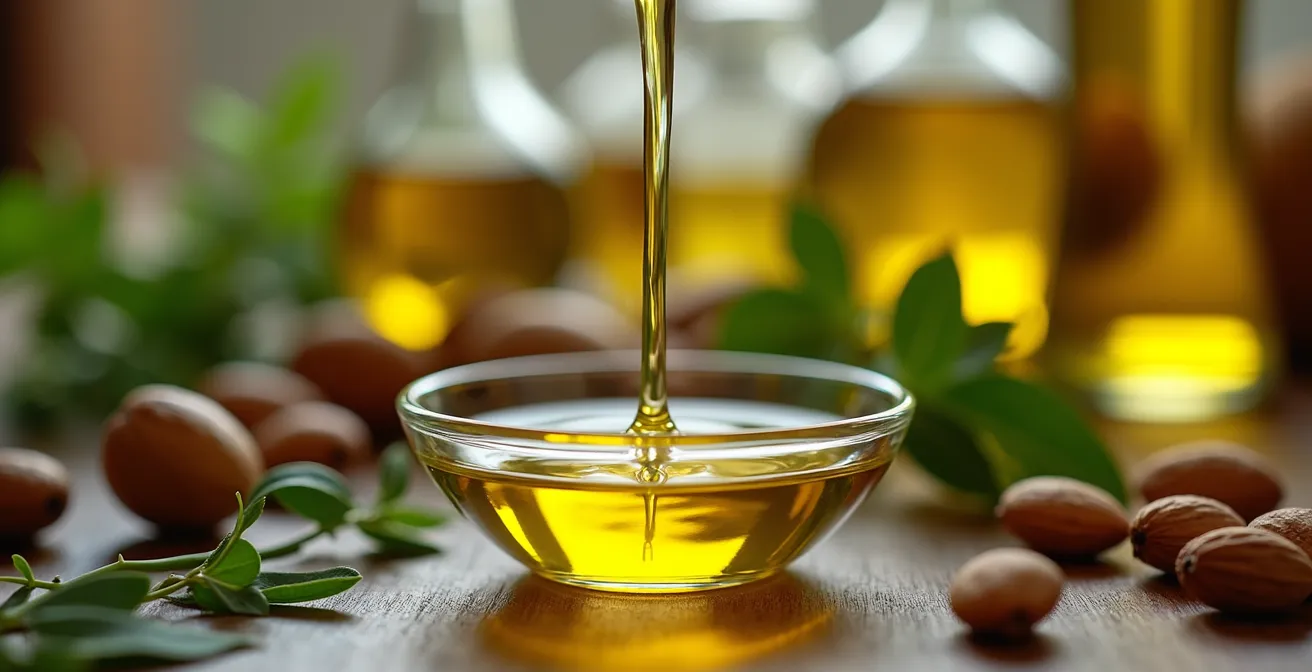
The selection of cooking oils on a kitchen counter below represents the kind of anti-inflammatory toolkit you should aim for, with different oils ready for different culinary tasks.
To make this practical, the following guide breaks down which oils to use for which cooking methods, ensuring you’re not only avoiding inflammatory fats but also preserving the integrity of your healthy ones.
| Cooking Method | Recommended Oils | Oils to Avoid | Smoke Point |
|---|---|---|---|
| High-heat cooking | Avocado oil, Ghee | Seed oils, Corn oil | 450-520°F |
| Low-heat sautéing | Olive oil, Coconut oil | Soybean oil, Sunflower oil | 320-410°F |
| Salad dressings | Extra virgin olive oil, Flaxseed oil | Vegetable oil blends | Not heated |
| Baking | Coconut oil, Grass-fed butter | Margarine, Shortening | 350°F typical |
How to Combine Black Pepper and Fat to Activate Turmeric?
Simply adding turmeric to your food is not enough to unlock its profound anti-inflammatory benefits. The star compound, curcumin, suffers from extremely poor bioavailability. This means that when consumed alone, very little of it is actually absorbed from your gut into your bloodstream where it can go to work. Most of it is rapidly metabolized by the liver and intestinal wall and then excreted. Fortunately, nature has provided a simple and elegant solution to this problem: nutrient activation through combination.
The first key to unlocking curcumin’s power is a compound found in black pepper called piperine. Piperine works by inhibiting the metabolic process in the liver and intestinal wall that would normally break down curcumin before it can be absorbed. The effect is not minor; Harvard Health reports on turmeric absorption enhancement, noting that piperine can increase the bioavailability of curcumin by an astonishing 2000%. Just a small pinch of black pepper is enough to make a world of difference.
The second key is fat. Curcumin is lipophilic, which means it is “fat-soluble.” When you consume turmeric with a source of dietary fat, the curcumin can bind to the fat molecules. This allows it to be more easily absorbed through the lymphatic system, effectively bypassing the first-pass metabolism in the liver that would normally neutralize it. Healthy fats like coconut oil, ghee, olive oil, or avocado oil are all excellent choices for this purpose.
Therefore, the golden rule for using turmeric is to always combine it with both black pepper and a source of healthy fat. This trinity—turmeric, piperine, and fat—transforms a simple spice into a potent, systemically available medicinal compound. Gently heating the mixture can further enhance the activation of these compounds. Whether you’re adding it to a curry, a smoothie, or a golden latte, following this simple formula ensures you are getting the full therapeutic dose, not just the flavor.
- Base Ratio: For every 1 teaspoon of turmeric powder, add at least 1/4 teaspoon of freshly ground black pepper.
- Fat Component: Incorporate 1 teaspoon of a healthy fat like coconut oil, olive oil, or ghee per teaspoon of turmeric.
- Gentle Heat: Whenever possible, gently warm the mixture (e.g., in a saucepan for a latte or at the start of a curry). This helps the compounds meld and become more active.
- Meal Timing: Consume your activated turmeric with a meal that contains additional dietary fats to further support absorption through the lymphatic system.
- Add a Quercetin Boost: For even greater effect, include foods rich in quercetin, like onions or apples, in your meal. Quercetin is another natural compound that helps inhibit the enzyme that deactivates curcumin.
Mastering Anti-Inflammatory Golden Lattes for Deep Sleep and Joint Relief
A golden latte, or “turmeric milk,” is more than just a comforting beverage; it’s a perfect vehicle for delivering a synergistic blend of anti-inflammatory compounds in a highly absorbable format. When crafted correctly, it can be a powerful daily ritual to support joint health and even promote deeper, more restorative sleep. It brings together the principles we’ve discussed: the power of ginger and turmeric, the necessity of fat and piperine for activation, and the ability to layer in other compounds for targeted benefits.
The base of a therapeutic golden latte combines full-fat coconut or almond milk (providing the necessary fat for absorption) with turmeric, ginger, and a pinch of black pepper. This core blend provides a broad-spectrum anti-inflammatory effect. To optimize it for evening consumption and joint relief, we can add a few more strategic ingredients. Magnesium glycinate is an easily absorbed form of magnesium that helps relax muscles and calm the nervous system, while adaptogens like ashwagandha can lower cortisol levels, preparing the body for sleep. Adding a scoop of hydrolyzed collagen peptides can provide the building blocks for cartilage repair overnight.
It’s also crucial to consider blood sugar. A spike in blood sugar from sweeteners like honey or maple syrup can be inflammatory and disrupt sleep. Opt for a zero-glycemic sweetener like monk fruit or stevia, and add Ceylon cinnamon, which is known to help stabilize blood sugar levels. Consuming this warm, nourishing beverage 30-60 minutes before bed can become a powerful signal to your body to wind down, reduce inflammation, and begin its nightly repair processes.
Case Study: Herbal Combination Matches Drug Effectiveness
The power of these natural compounds is not just theoretical. A 2020 randomized controlled trial gave 60 patients with knee osteoarthritis either a combination of turmeric, ginger, and black pepper or the NSAID Naproxen for four weeks. The results were remarkable: both groups showed a significant reduction in prostaglandin E2 (PGE2), a key inflammatory marker, with the herbal combination demonstrating comparable effectiveness to the conventional anti-inflammatory drug. This provides strong evidence that a well-formulated natural blend can provide powerful, measurable relief.
Here is a blueprint for building the ultimate sleep-optimized golden latte:
- Base: 1 cup unsweetened, full-fat coconut or almond milk.
- Anti-inflammatory Blend: 1 tsp turmeric powder, 1/2 tsp ginger powder (or 1 inch fresh, grated), and a generous pinch of black pepper.
- Sleep Enhancers: 200mg magnesium glycinate powder and 1/2 tsp ashwagandha powder.
- Blood Sugar Control: 1/2 tsp Ceylon cinnamon and monk fruit or stevia to taste.
- Joint Support Add-in (Optional): 1 scoop of hydrolyzed collagen peptides.
- Preparation: Gently heat all ingredients in a small saucepan to about 160°F, whisking thoroughly. Do not boil. Consume 30-60 minutes before bedtime for best results.
How Environmental Pollutants Cause Oxidative Stress and What to Eat to Fight It
Our inflammatory burden doesn’t come just from the food we eat, but also from the environment we live in. We are constantly exposed to a low-level barrage of environmental pollutants from pesticides, heavy metals, air pollution, and plastics. These toxins generate free radicals in the body, leading to a state of oxidative stress. This cellular damage is a major driver of inflammation and a root cause of many chronic diseases. While we can’t eliminate all exposure, we can equip our bodies with the dietary tools to neutralize these threats effectively.
Our bodies have a powerful, built-in detoxification system orchestrated by a protein called Nrf2. When activated, the Nrf2 pathway turns on a suite of antioxidant and detoxification enzymes, including the master antioxidant, glutathione. The most potent natural activators of this pathway are found in specific whole foods. A diet rich in these foods essentially “upgrades” your body’s ability to defend itself against environmental toxins.
The star player in Nrf2 activation is sulforaphane, a compound found in abundance in cruciferous vegetables, especially broccoli sprouts. Other key foods include the allium family (garlic, onions) which provide sulfur compounds necessary for glutathione production, and green tea, rich in EGCG. As we’ve seen, curcumin from turmeric is also a powerful Nrf2 activator. Adopting a diet rich in these plant compounds can have a measurable impact; some research shows a significant inflammatory marker reduction, including a 30% drop in C-reactive protein, in those following a whole food, plant-based diet.
To systematically support your body’s detox capabilities, focus on incorporating these Nrf2-activating foods daily. Rotating a wide variety of colorful plants ensures you’re getting a broad spectrum of protective compounds.
- Daily Sulforaphane: Aim for 1/2 cup of broccoli sprouts or 2 cups of mature broccoli daily.
- Allium Family: Include 2-3 cloves of garlic and at least half an onion in your cooking each day to support glutathione.
- Cruciferous Rotation: Regularly eat other cruciferous vegetables like kale, cabbage, and Brussels sprouts (1-2 cups daily).
- Green Tea: Drink 3-4 cups of high-quality green tea per day for its EGCG content.
- Natural Binders: Consider adding 1 teaspoon of chlorella or spirulina powder to water 30 minutes before meals. These can act as binders, helping to trap toxins in the gut and prevent their reabsorption.
Key Takeaways
- Chronic inflammation is measurable via markers like CRP and can be significantly reduced with targeted dietary strategies.
- The most effective anti-inflammatory plan is personalized; an elimination diet is the gold-standard tool for identifying your unique food triggers.
- Food synergy is critical: combining turmeric with black pepper and fat increases its potency by up to 2000%, and pairing it with ginger creates a broader effect.
- The balance of fats is crucial; swapping high-Omega-6 vegetable oils for healthier fats like olive and avocado oil is a high-impact change.
Beyond Berries: Unconventional Powerful Antioxidant Sources for Skin Health
When we think of antioxidants for healthy, glowing skin, our minds often jump to berries. And for good reason—they are packed with powerful compounds like anthocyanins that fight oxidative stress. As Dr. Rupy Aujla of The Doctor’s Kitchen notes, “A handful of berries a day can fight inflammation more than most supplements.” But to build a truly resilient, anti-inflammatory defense system, we should look beyond the usual suspects. Some of the most potent antioxidant sources on the planet are likely already sitting in your spice rack.
The antioxidant power of food is measured by its ORAC (Oxygen Radical Absorbance Capacity) score. When we compare common berries to dried herbs and spices on this scale, the results are astounding. Spices like cloves, oregano, and rosemary contain exponentially higher concentrations of antioxidants than even the most celebrated fruits. These herbs are not just for flavor; they are concentrated medicinal powerhouses.
For example, cloves, which have the highest ORAC score of any food, are rich in eugenol, a compound with potent anti-inflammatory and anti-aging properties. Oregano and rosemary contain rosmarinic acid and carnosic acid, which have been shown to help protect the skin from UV damage and preserve collagen. Thyme contains thymol, a powerful antimicrobial that can help maintain a healthy skin microbiome. Incorporating a wide variety of these herbs and spices into your daily cooking is a simple yet incredibly effective strategy to dramatically boost your antioxidant intake without adding significant calories or volume to your diet.
This table puts the antioxidant power of these unassuming kitchen staples into perspective, demonstrating how they dwarf even antioxidant-rich blueberries.
| Food Source | ORAC Score per 100g | Key Antioxidants | Skin Benefits |
|---|---|---|---|
| Cloves (ground) | 314,446 | Eugenol | Anti-aging, wound healing |
| Oregano (dried) | 200,129 | Rosmarinic acid | UV protection |
| Rosemary (dried) | 165,280 | Carnosic acid | Collagen protection |
| Thyme (fresh) | 27,426 | Thymol | Antimicrobial |
| Blueberries | 4,669 | Anthocyanins | General antioxidant |
The journey to reducing chronic inflammation is one of strategic, consistent action. It’s about shifting from a passive consumer to an active participant in your own health, armed with the knowledge of how specific foods and their combinations work biochemically. By understanding your CRP, identifying your triggers, mastering nutrient activation, and balancing your fats, you are no longer just “eating healthy”—you are practicing precision nutrition. This is how you systematically dismantle the inflammatory cascade and build a foundation for lasting vitality. Start today by making one small, strategic change. Your body will thank you.