In summary:
- Making whole foods taste great isn’t about complex recipes, but mastering core techniques that transform the ingredients themselves.
- Understanding the science of whole grains—from their impact on gut health to how they cook—is key to avoiding bland results.
- Strategic meal prep, including batch cooking grains and legumes, is the most effective way to make whole-food cooking practical for a busy lifestyle.
- Proper storage is non-negotiable to protect the delicate fats in whole grains from rancidity, preserving both flavor and nutrition.
- Elevating simple ingredients to gourmet status involves applying classic culinary arts techniques like layering flavors and creating textural contrast.
You’ve made the switch. Your pantry is stocked with brown rice, quinoa, and whole wheat pasta. You’re committed to a healthier, whole-food lifestyle. Yet, a nagging frustration persists: your meals taste… healthy. They lack the satisfying, deep flavor you crave, and you find yourself missing the effortless deliciousness of more processed options. You follow recipes, add herbs and spices, but the results often feel flat, one-dimensional, or worse, like you’re eating cardboard.
The common advice to “buy fresh, high-quality ingredients” is a good start, but it’s only a fraction of the story. The truth that seasoned chefs understand is that incredible flavor from simple ingredients doesn’t come from a secret spice blend. It comes from technique. The real key to unlocking gourmet taste is not what you add to the food, but how you transform the food itself through the masterful application of heat, time, and culinary science.
This is where you stop being a recipe-follower and start becoming a true home cook. This guide will move beyond the basics and empower you with the foundational knowledge and techniques of a culinary instructor. We will explore the “why” behind whole ingredients’ unique properties, master efficient prep strategies, and learn to apply professional methods to turn your everyday cooking into something truly inspiring. It’s time to make your healthy meals the most delicious meals on the table.
This article provides a structured path to mastering whole-food flavor. Below, you will find a summary of the key areas we will cover, from the foundational science to advanced culinary applications.
Table of Contents: A Guide to Unlocking Whole Food Flavor
- Why Your Body Reacts Differently to Whole Grains vs. Refined Flours?
- How to Prep a Week of Whole Grains and Legumes in Under 2 Hours?
- Quinoa or Brown Rice: Which Whole Grain Is Best for Post-Workout Recovery?
- The Overcooking Mistake That Makes Whole Wheat Pasta Taste Like Cardboard
- How to Store Bulk Whole Grains to Prevent Rancidity for Over 6 Months?
- How to Store and Prep Versatile Dried Legume Bases for Weekly Meal Prep?
- How to Incorporate More Dark Leafy Greens into Breakfast Without Ruining the Taste?
- Elevating Home Cooking with Plant-Based Culinary Arts Techniques for Dinner Parties
Why Your Body Reacts Differently to Whole Grains vs. Refined Flours?
The first step in mastering whole foods is understanding their fundamental difference from their refined counterparts. It goes far beyond a simple calorie count. A whole grain contains the entire kernel—the bran, germ, and endosperm. A refined grain has had the bran and germ stripped away, removing most of the fiber, vitamins, and minerals. This structural difference dictates not only its nutritional profile but also how your body processes it. The high fiber content in whole grains slows down digestion, which helps stabilize blood sugar levels and provides a sustained release of energy, preventing the sharp spikes and crashes associated with refined carbohydrates.
This slower digestion has a profound effect on your gut microbiome. The fiber in whole grains acts as a prebiotic, or food for your beneficial gut bacteria. In fact, research from a multi-ethnic study shows that a higher intake of whole grains is associated with an increase in beneficial bacteria like Faecalibacterium prausnitzii and Bifidobacterium. These microbes play a critical role in everything from immune function to mood regulation. Refined flours, lacking this fiber, are quickly broken down into sugar, offering little to nourish this vital internal ecosystem. Choosing whole grains is not just about what you’re avoiding, but about what you are actively cultivating for your long-term health.
How to Prep a Week of Whole Grains and Legumes in Under 2 Hours?
The single biggest hurdle for many home cooks adopting a whole-food diet is time. Whole grains and dried legumes take significantly longer to cook than their refined or canned counterparts. The solution isn’t to spend an hour in the kitchen every night; it’s to adopt the professional strategy of batch cooking. By dedicating a short window of time—less than two hours on a Sunday, for example—you can prepare a versatile base of grains and legumes that will form the backbone of your meals all week.
The process is simple. Choose two or three different grains (like brown rice, farro, or quinoa) and one or two legumes (like chickpeas or lentils). Cook large batches of each simultaneously on your stovetop or in a pressure cooker, which can dramatically reduce cooking time. Once cooked and cooled, portion them into airtight containers. This “ingredient bank” allows you to assemble diverse, flavorful meals in minutes. A scoop of cooked quinoa can become a grain bowl for lunch, farro can be tossed into a soup for dinner, and chickpeas can be roasted with spices for a quick, protein-rich snack. This method transforms a chore into a strategic asset.
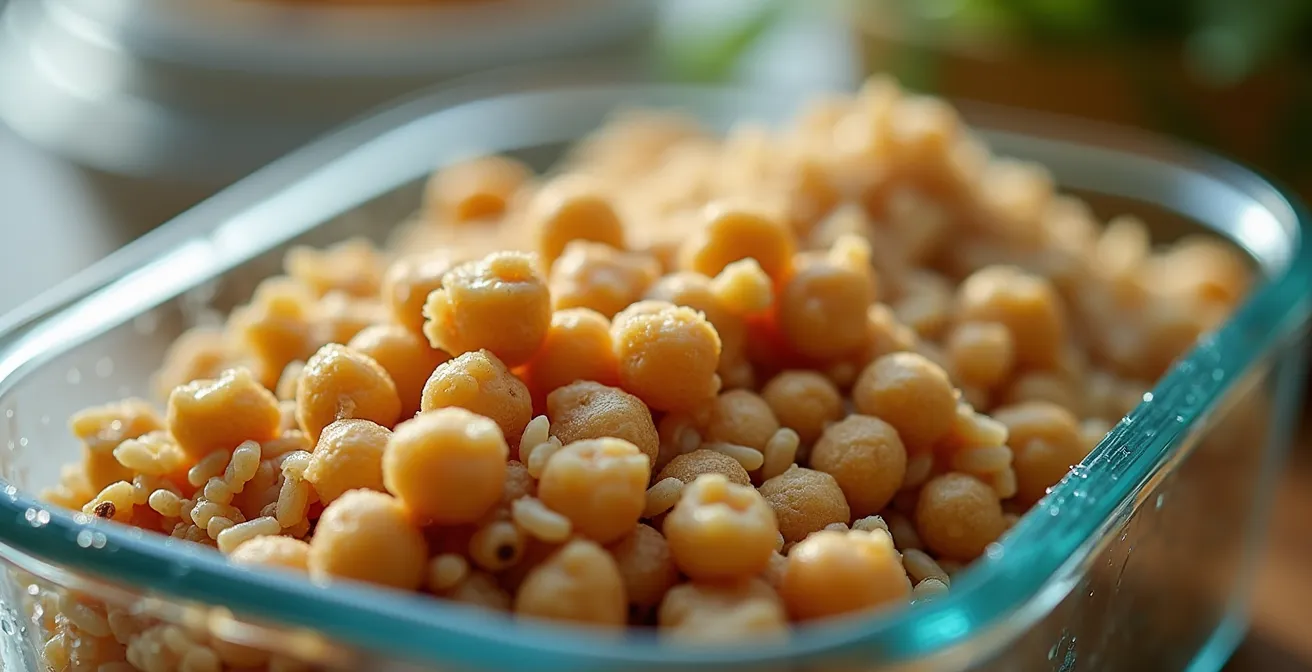
As you can see, having these components ready makes building a healthy, satisfying meal as easy as assembling blocks. The initial time investment pays dividends throughout the week, eliminating the temptation to reach for less healthy convenience foods. It’s about working smarter, not harder.
Your Weekly Grain Batch Cooking Plan
- On your prep day, cook about 3 cups of dry grains (which yields roughly 6 cups cooked).
- Once cooled, store the cooked grains in airtight containers in the refrigerator for up to 4 days.
- For each meal, portion out 1/2 to 3/4 cup of cooked grains as your base.
- Combine with your choice of prepped proteins (like baked tofu or shredded chicken) and vegetables.
- When ready to serve, reheat the grains with a splash of water or broth to restore moisture and texture.
Quinoa or Brown Rice: Which Whole Grain Is Best for Post-Workout Recovery?
Once you’ve mastered basic prep, you can start making more strategic choices about which grains to use and when. For athletes or anyone leading an active lifestyle, the post-workout meal is critical for muscle repair and energy replenishment. Both quinoa and brown rice are excellent whole-food choices, but they offer slightly different recovery benefits. Understanding these nuances allows you to tailor your nutrition for optimal results. Your body needs carbohydrates to replenish glycogen stores and protein to repair muscle tissue after exercise.
Quinoa is often hailed as a “superfood” for a reason. It is one of the few plant-based foods that is a complete protein, meaning it contains all nine essential amino acids your body needs for muscle synthesis. It also boasts a higher content of key minerals like magnesium, which aids in muscle relaxation. Brown rice, while a fantastic source of complex carbohydrates and fiber, is not a complete protein. It is, however, higher in manganese, an antioxidant that helps combat exercise-induced oxidative stress. For immediate recovery, quinoa’s complete amino acid profile gives it an edge.
The following table, based on nutritional data for common grains, breaks down the key differences for a one-cup serving.
| Nutrient (per cup, cooked) | Quinoa | Brown Rice | Recovery Benefit |
|---|---|---|---|
| Protein | 8g | 5g | Muscle synthesis |
| Magnesium | 118mg | 86mg | Muscle relaxation |
| Manganese | 1.2mg | 1.8mg | Antioxidant support |
| Complete Amino Acids | Yes | No | Immediate recovery |
Ultimately, both are great choices. A practical approach could be to prioritize quinoa immediately post-workout and incorporate brown rice into other meals for its sustained energy release and antioxidant support. The best diet is a varied one, and rotating your whole grains ensures a broader spectrum of nutrients.
The Overcooking Mistake That Makes Whole Wheat Pasta Taste Like Cardboard
Perhaps no whole food has a worse reputation for texture than whole wheat pasta. Many home cooks try it once, end up with a plate of mushy, gritty, or cardboard-like noodles, and swear it off forever. The problem isn’t the pasta; it’s the cooking method. Whole wheat pasta behaves fundamentally differently from its refined white counterpart due to the presence of the bran and germ. These components interfere with the formation of a strong gluten network and absorb water at a different rate, making the pasta far less forgiving.
The cardinal sin is boiling it to the point of “doneness” in the pot. By the time it feels soft in the boiling water, the starches have over-gelatinized, leading to that dreaded mushy texture. The professional technique to avoid this is to cook the pasta until it is significantly underdone—what Italians call “molto al dente.” It should still have a very firm, almost crunchy bite. You then drain the pasta (reserving a cup of the starchy cooking water) and finish cooking it directly in the pan with your sauce for the final 1-2 minutes. This method, known as finishing pasta in the sauce, allows the noodles to absorb the flavorful sauce while they cook to a perfect al dente texture. The reserved pasta water is used to adjust the sauce’s consistency, its starch content helping to emulsify and thicken the sauce so it clings beautifully to every noodle.
How to Store Bulk Whole Grains to Prevent Rancidity for Over 6 Months?
Buying whole grains in bulk is a fantastic way to save money and reduce packaging waste. However, unlike refined grains that can sit in your pantry for years, whole grains have a limited shelf life. The reason lies in the very part that makes them so nutritious: the germ. The grain germ contains natural oils, which are rich in healthy unsaturated fats. When exposed to heat, light, and oxygen, these oils can oxidize and become rancid, producing a bitter, stale, or paint-like off-flavor that can ruin any dish.
Proper storage is therefore not just about neatness; it’s about flavor and nutrient preservation. The key is to create a barrier against those three enemies: heat, light, and air. The best practice is to transfer your bulk grains from their bags into airtight containers as soon as you get them home. Glass jars with tight-sealing lids are ideal because they are non-porous and won’t leach flavors or chemicals. Store these containers in a cool, dark place like a pantry or cupboard, away from the stove or any heat-producing appliances.
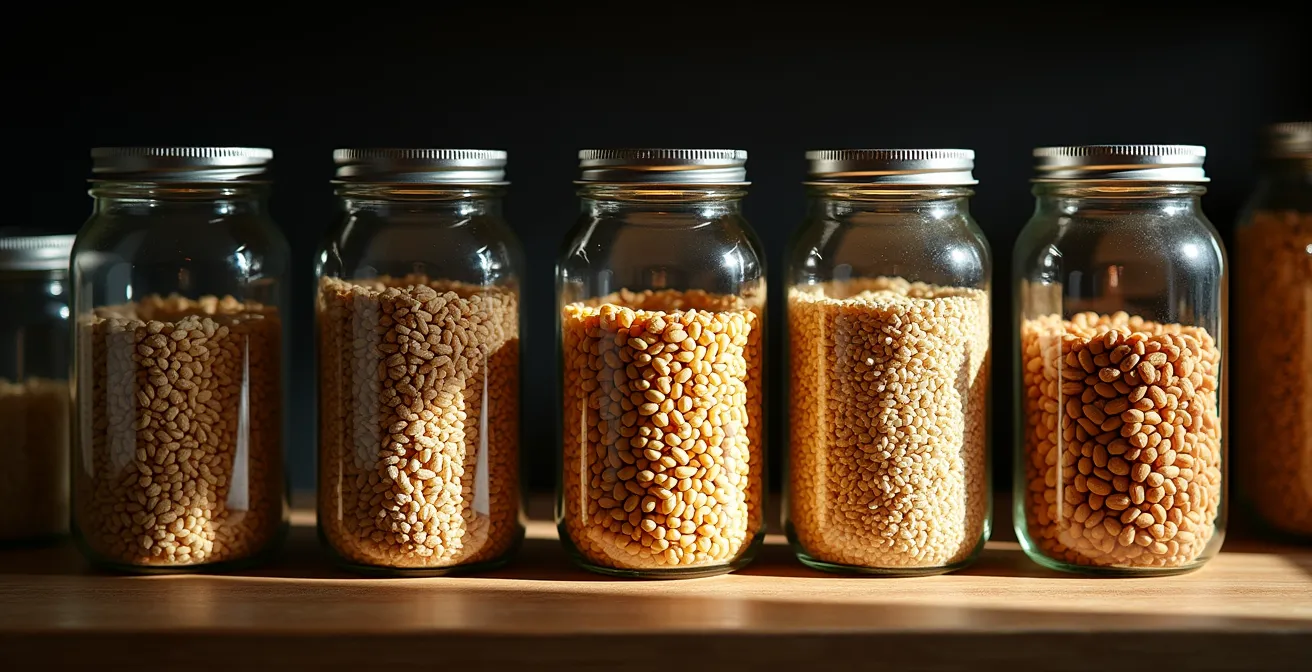
For even longer-term storage (over 6 months), especially for oil-rich grains like brown rice, oat groats, or quinoa, consider storing them in the refrigerator or freezer. The cold temperature dramatically slows down the oxidation process, keeping the grains fresh and flavorful for a year or more. This small effort ensures your investment in quality ingredients pays off in every meal.
How to Store and Prep Versatile Dried Legume Bases for Weekly Meal Prep?
Alongside grains, dried legumes like chickpeas, lentils, and black beans are pillars of a whole-food pantry. They are inexpensive, shelf-stable, and packed with protein and fiber. Just like grains, their cooking time can be a barrier to weekday use. The solution is the same: batch prep. Cooking a large pot of beans from scratch on the weekend provides a far superior texture and flavor compared to canned versions, and it costs a fraction of the price. Simply soak the beans overnight (for larger varieties like chickpeas or black beans), then simmer them until tender.
Once cooked, you have a versatile base for countless meals. Store the cooked legumes in their cooking liquid in the refrigerator for up to five days. The liquid helps keep them moist and flavorful. From here, the possibilities are endless. You can mash them into a quick hummus or bean dip, toss them into salads for a protein boost, or stir them into soups and stews. One of the best ways to use them is in a vibrant grain bowl, which combines your prepped grains and legumes into a complete, satisfying meal.
Action Plan: Mediterranean Chickpea Bowl Prep
- Cook a batch of dried chickpeas until tender; season the cooking water with salt and a bay leaf for flavor.
- In a separate pot, cook a batch of quinoa with oregano, salt, and pepper.
- On a baking sheet, toss some of your cooked chickpeas with chopped vegetables (like bell peppers and zucchini) and a little olive oil; roast until the vegetables are tender and the chickpeas are slightly crispy.
- Portion the cooked quinoa, roasted vegetables, and remaining chickpeas into meal prep containers.
- Store a container of hummus or a lemon-tahini dressing separately to add just before serving to maintain freshness.
How to Incorporate More Dark Leafy Greens into Breakfast Without Ruining the Taste?
We all know we should eat more dark leafy greens like spinach, kale, and chard, but incorporating them into breakfast can be a challenge. Their often-bitter flavor profile doesn’t always mesh well with typical morning fare. A poorly made green smoothie can taste like lawn clippings and turn you off the idea for good. The secret to success lies in two principles: choosing the right green and balancing the flavors.
For beginners, baby spinach is the perfect entry point. It has a very mild, almost neutral flavor that gets easily masked in smoothies or wilted into eggs. Kale, especially curly kale, is much more assertive and bitter. If using kale, it’s best to pair it with strong, sweet flavors to counteract the bitterness. A smoothie with kale, banana, and pineapple will be far more palatable than one with just kale and apple. Additionally, incorporating a source of healthy fat, like half an avocado or a spoonful of almond butter, can create a creamier texture and mellow out any harsh flavors. Another easy method is to finely chop spinach or chard and fold it into scrambled eggs or an omelet during the last minute of cooking; it wilts down and is barely noticeable, providing a nutrient boost without altering the taste.
Key takeaways
- The biggest flavor gains come from mastering techniques like finishing pasta in its sauce, not from just adding more spices.
- Batch cooking is the non-negotiable strategy for making a whole-food lifestyle practical and sustainable, turning long cook times into an asset.
- Proper storage in airtight, dark containers is crucial for preserving the flavor and nutrients of whole grains by preventing the oils in the germ from going rancid.
Elevating Home Cooking with Plant-Based Culinary Arts Techniques for Dinner Parties
Once you’ve mastered the fundamentals of cooking individual whole-food components, you can begin to orchestrate them into truly elegant, dinner-party-worthy dishes. This is where you elevate your cooking from simple sustenance to culinary art. The principles are the same as in any high-end kitchen: building layers of flavor and creating contrasting textures. It’s about applying intentional techniques to make plant-based ingredients the star of the show.
Instead of just serving a grain, think about its “flavor architecture.” Toasting grains like quinoa or farro in a dry pan before adding liquid awakens their nutty aromas, a result of the Maillard reaction. Create a flavorful puree as a base for your plate—a creamy cauliflower and cashew blend or a vibrant sweet potato and ginger puree adds color, flavor, and a luxurious texture. Develop deep, savory notes by slowly caramelizing onions or roasting mushrooms until their umami flavor is concentrated. A simple lentil dish can be transformed by finishing it with a drizzle of high-quality olive oil, a squeeze of fresh lemon juice for acidity, and a sprinkle of toasted nuts for a crunchy textural contrast. These small, deliberate steps are what separate a basic meal from a memorable culinary experience.
By embracing these techniques—understanding the science, prepping strategically, and building flavor with intention—you transform whole ingredients from a health-conscious choice into a source of deep culinary pleasure. Your next step is to get into the kitchen and start experimenting, applying these rules to your own favorite dishes.