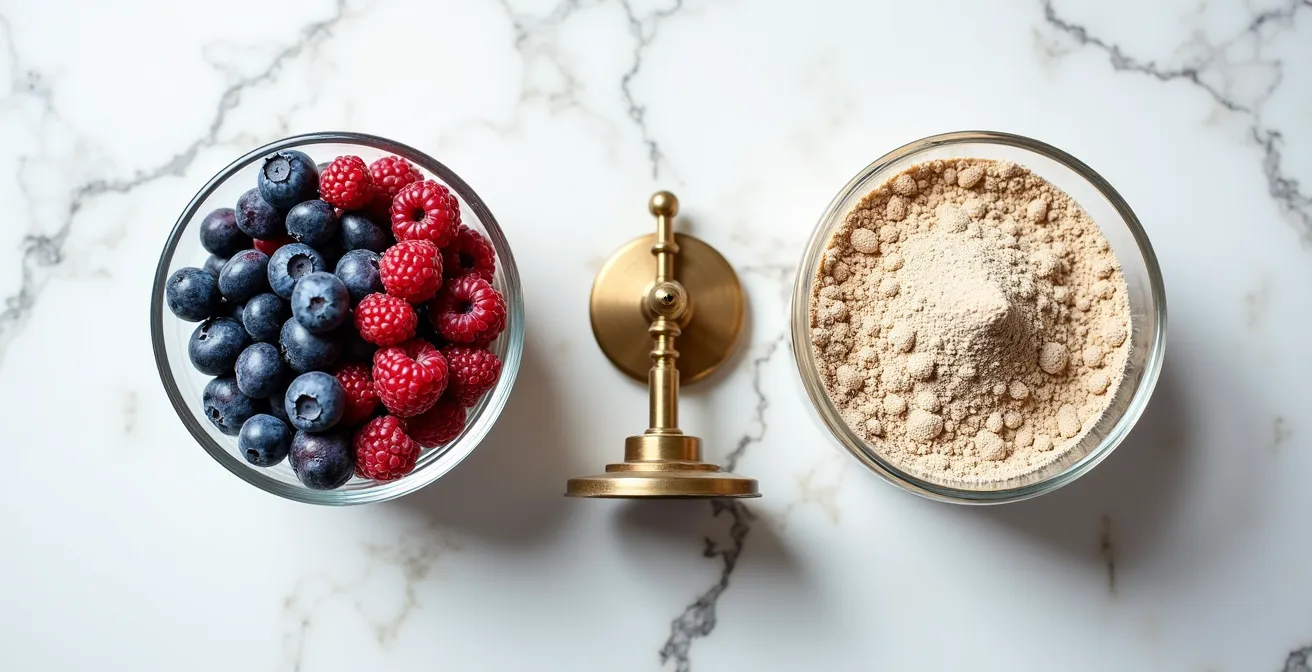
The premium price of store-bought superfood powders doesn’t guarantee superior nutrient potency; it often buys you convenience at the cost of degraded, less effective ingredients.
- A strategic DIY blend can save over $40 monthly by focusing on high-yield, cost-effective ingredients like frozen produce.
- Nutrient potency is critically undermined by oxygen, light, and humidity, making proper storage more important than the initial price tag.
Recommendation: Calculate your “cost-per-active-gram” to make financially sound health decisions, rather than relying on marketing claims.
The wellness market is saturated with vibrant, beautifully packaged superfood powders, each promising a convenient shortcut to optimal health. These products come with a premium price tag, leading any budget-conscious consumer to a critical question: is the financial outlay justified by the nutritional payoff? The common advice is to either invest in a high-end brand or to simply throw a few “superfoods” into a blender at home. Both approaches, however, are often flawed and ignore the fundamental principles of nutrient stability and bioavailability.
This is not another recipe guide. This is a consumer analyst’s report on the real value of antioxidant blends. We will move beyond the marketing hype to conduct a rigorous cost-potency analysis. The true advantage of a do-it-yourself approach isn’t just about saving money; it’s about seizing control over ingredient quality and preventing the significant potency decay that is endemic to the commercial supply chain. The goal is to maximize your Nutrient ROI—the actual health benefit you receive for every dollar you spend.
This investigation will dissect the true cost of commercial powders versus their DIY counterparts, analyze which ingredient forms retain the most nutrients, and expose the critical formulation and storage mistakes that render expensive antioxidants ineffective. By understanding these factors, you can build a blend that is not only more affordable but also demonstrably more potent than many options on the shelf.
To navigate this analysis, we will break down the key financial, scientific, and practical considerations. The following sections provide a complete framework for evaluating and creating antioxidant blends that deliver real results without draining your bank account.
Summary: A Consumer Analyst’s Guide to Antioxidant Blends
- Why Making Your Own Berry Blend Saves $40 Per Month?
- Frozen vs. Fresh vs. Powdered: Which Retains More Antioxidants?
- The Storage Mistake That Kills Nutrient Potency in Open Bags
- How to Pair Superfood Blends with Fats for Better Uptake?
- When to Avoid High-Dose Antioxidants After Strength Training?
- Beyond Berries: Unconventional Powerful Antioxidant Sources for Skin Health
- Achieving Optimal Wellness: Balancing Diet, Sleep, and Stress Management
- Are Raw Green Detox Elixirs Safe for Daily Consumption?
Why Making Your Own Berry Blend Saves $40 Per Month?
The most immediate and quantifiable benefit of shifting from commercial to DIY superfood blends is the financial impact. A surface-level comparison is compelling, but a deeper analysis reveals an even greater disparity in value. The market is flooded with products where the price is dictated more by marketing and packaging than by the quality or quantity of active ingredients. An analysis from Fresh Harvest shows that commercial green powders cost between $70-$100 for a one-month supply.
In stark contrast, a DIY approach allows for bulk purchasing of high-potency ingredients at a fraction of the cost. A cost comparison highlights that while premium superfood powders range from $0.50 to $4 per serving, a homemade version using fresh or frozen produce can drastically lower this figure. The key is to move beyond the sticker price and adopt an analytical mindset, focusing on the cost-per-active-gram. This metric strips away the brand prestige and reveals the true cost of the nutrition you’re consuming.
Commercial blends are often diluted with fillers, flavorings, and less expensive ingredients to increase profit margins. A homemade powder, on the other hand, contains 100% whole food ingredients, giving you complete control over its composition and concentration. While there is an initial investment in equipment like a dehydrator, this cost is typically recouped within just a few months of use, making the long-term financial benefits undeniable.
Action Plan: Calculate Your Cost-Per-Active-Gram
- Track the cost of organic bulk ingredients like kale, spinach, and berry powders from local sources.
- Calculate yield: Remember that one cup of fresh leafy greens typically makes about one tablespoon of powdered greens.
- Compare active ingredient concentration: Note that DIY powders contain 100% whole food ingredients versus commercial blends which may have fillers.
- Factor in equipment costs: A basic dehydrator ($50-100) pays for itself within 2-3 months of regular use.
- Document your monthly savings by comparing your DIY cost per serving to the commercial alternatives you were considering.
Are Raw Green Detox Elixirs Safe for Daily Consumption?
The enthusiasm for DIY blends, particularly raw green elixirs, must be tempered with a critical analysis of potential risks. While nutrient-dense, many raw greens contain anti-nutrients—compounds that can interfere with nutrient absorption or cause adverse effects with chronic, high-dose consumption. For instance, raw spinach and chard are high in oxalates, which can contribute to kidney stone formation in susceptible individuals. Kale contains goitrogens, which may interfere with thyroid function if consumed in very large quantities.
This doesn’t mean these foods are unhealthy; it means that a strategic approach is required. The principle of ingredient cycling is crucial for mitigating risk. Instead of consuming the same high-oxalate greens daily, rotating them with low-oxalate options like lettuce and cucumber can prevent accumulation. This analytical approach to formulation ensures you get the benefits without the potential long-term drawbacks.
Furthermore, sourcing is paramount, especially for concentrated powders like chlorella and spirulina. These algae are known to absorb heavy metals from their environment. Consuming powders from unverified sources poses a significant safety risk. Always opt for products that provide third-party testing for contaminants. DIY green powders from known, clean produce sources offer an advantage here, as you control the starting material, noting that one cup of fresh leafy greens yields approximately one tablespoon of powder.
The following table provides a clear safety comparison for common green ingredients, offering a framework for responsible daily consumption.
| Green Type | Anti-Nutrient Content | Daily Safety | Recommended Cycling |
|---|---|---|---|
| Raw Spinach/Chard | High oxalates | Moderate risk | Rotate weekly |
| Raw Kale | Goitrogens | Low-moderate risk | 2-3 times per week |
| Lettuce/Cucumber | Low oxalates | Safe daily | No cycling needed |
| Chlorella/Spirulina Powders | Heavy metal risk if unverified | Safe with third-party testing | Cycle monthly |
Ultimately, a successful supplementation strategy is not about blindly following trends but about applying a critical, analytical lens to your health choices. By calculating your nutrient ROI, controlling for potency decay, and formulating strategically, you can create a DIY antioxidant blend that outperforms expensive commercial products both financially and nutritionally. Start by implementing one of these principles today to take command of your wellness and your wallet.
Frozen vs. Fresh vs. Powdered: Which Retains More Antioxidants?
A common assumption in nutrition is that “fresh is best.” However, from a cost-potency analysis perspective, this platitude is often misleading. The nutritional value of produce, particularly its delicate antioxidant content, begins to decline the moment it is harvested. Research indicates that the nutritional content of leafy greens is highest right after picking. Produce that spends days or weeks in transit and on store shelves undergoes significant potency decay before it even reaches your kitchen.
This is where frozen produce emerges as a strong contender for the highest Nutrient ROI. Fruits and vegetables destined for freezing are typically picked at their peak ripeness and “flash-frozen” within hours, a process that locks in a high percentage of their vitamins and antioxidants. For the budget-conscious consumer building a DIY blend, using frozen berries, spinach, or kale is often a more nutritionally and financially sound decision than using “fresh” produce that has degraded over time.
Pre-made commercial powders represent the third option, but they come with their own set of drawbacks. The process of drying and pulverizing produce exposes it to heat, light, and oxygen—all of which accelerate nutrient degradation. While convenient, you are often paying a premium for a product with a significantly diminished antioxidant profile compared to what could be achieved with carefully selected frozen ingredients.
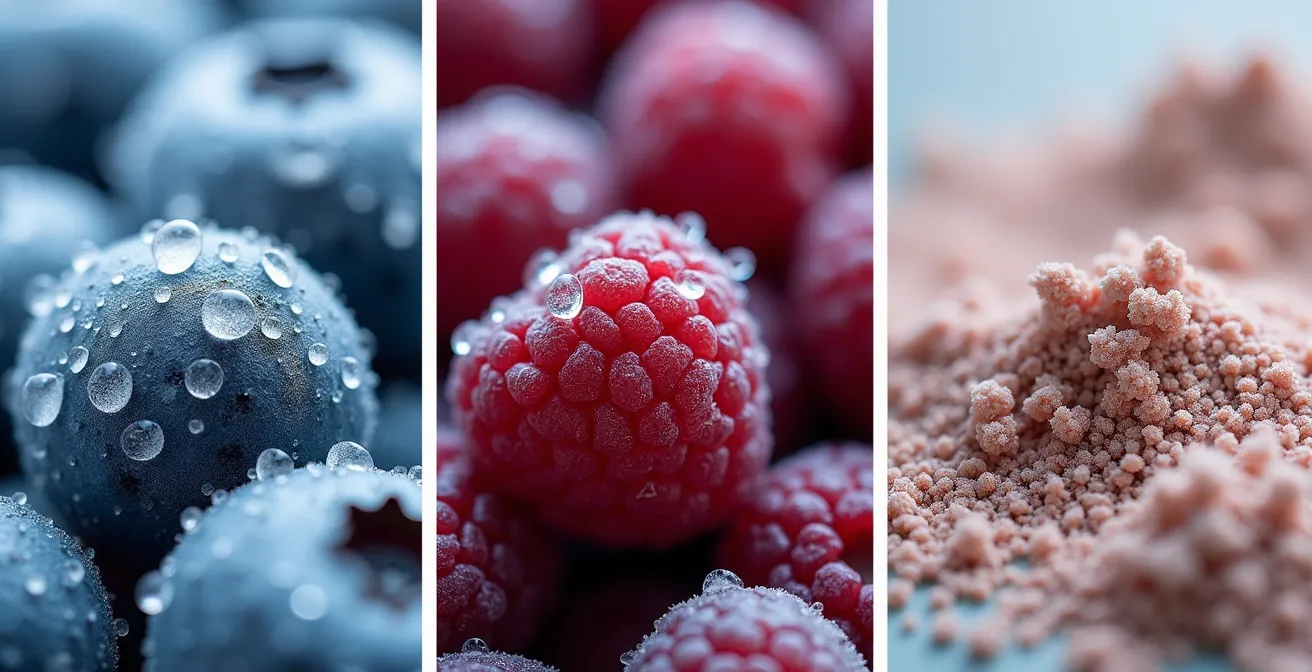
As the visual comparison suggests, the integrity of the food’s structure is a strong indicator of its nutrient retention. The crystalline structure of frozen produce maintains cellular integrity well, while the fine-particle nature of powders indicates extensive processing and potential for oxidation. For a DIY blend, frozen ingredients offer the best balance of peak-harvest potency, cost-effectiveness, and year-round availability.
The Storage Mistake That Kills Nutrient Potency in Open Bags
Investing in high-quality ingredients or a premium commercial powder is a complete waste of money if the product is not stored correctly. The most significant factor in potency decay is exposure to the environment. Antioxidants, by their very nature, are chemically reactive. They work by neutralizing free radicals, but this also means they are easily degraded by oxygen, light, and humidity. Vitamin C (ascorbic acid) is a prime example and a common ingredient in antioxidant blends.
A comprehensive review in the journal *Molecules* confirms that Vitamin C is unstable in aqueous environments, at high pH, and in the presence of oxygen. Every time you open a flimsy, non-airtight bag of superfood powder, you expose the contents to these degrading elements. The original packaging, often a simple plastic pouch or tub, offers minimal protection and is designed for shipping, not long-term preservation.
For a consumer focused on Nutrient ROI, transferring any powdered blend—whether DIY or store-bought—into a proper storage container is a non-negotiable step. The ideal container should offer an excellent oxygen barrier, UV protection, and a tight seal to block humidity. Failing to do so means that a powder that was 90% potent on day one could be less than 50% potent by the end of the month, effectively nullifying your financial and health investment.
The table below provides a clear, data-driven comparison of different storage container types and their effectiveness in preserving nutrient potency over a three-month period. The difference in outcomes is a stark reminder that the container is just as important as the contents.
| Container Type | UV Protection | Oxygen Barrier | Humidity Control | Estimated Potency After 3 Months |
|---|---|---|---|---|
| Miron Violet Glass | Excellent | Excellent | Good | 90-95% |
| Amber Glass | Very Good | Excellent | Good | 85-90% |
| Vacuum-Sealed Pouch | Good | Excellent | Excellent | 85-90% |
| Original Plastic Bag | Poor | Poor | Poor | 50-60% |
How to Pair Superfood Blends with Fats for Better Uptake?
A truly effective antioxidant blend goes beyond a simple list of ingredients. A core principle of strategic formulation is understanding and leveraging nutrient synergy to enhance bioavailability. Many powerful antioxidants are fat-soluble, meaning they require the presence of fats to be absorbed effectively by the body. Consuming a superfood blend mixed only with water can significantly reduce its impact, leading to a poor Nutrient ROI.
Vitamins A, D, E, and K, as well as carotenoids like lutein and astaxanthin, all fall into this category. Simply adding a source of healthy fat—such as avocado, a spoonful of nut butter, chia seeds, or a drizzle of olive oil—to your smoothie or elixir can dramatically increase the absorption of these key compounds. This small, simple step transforms an ingredient from being merely present to being fully utilized by your body.
The synergy between turmeric and black pepper is another classic example of this principle. The active compound in turmeric, curcumin, has low bioavailability on its own. As the Cooking For Peanuts Research Team notes in “Simple Recipes for Antioxidant-Rich Meals”:
Pair turmeric with a pinch of black pepper or a healthy fat for the best absorption of its active compound, curcumin.
– Cooking For Peanuts Research Team, Simple Recipes for Antioxidant-Rich Meals
The piperine in black pepper is known to boost curcumin absorption by up to 2,000%. This is not just a marginal gain; it is a game-changing enhancement that costs virtually nothing. Furthermore, compounds like piperlongumine found in long pepper have their own benefits, selectively targeting and eliminating aged or damaged cells. This demonstrates that strategic pairing is a cornerstone of intelligent DIY formulation, maximizing the potency of every ingredient included.
When to Avoid High-Dose Antioxidants After Strength Training?
The prevailing “more is better” mentality surrounding antioxidants is a dangerous oversimplification. From an analytical perspective, timing and dosage are critical variables that determine whether a supplement is beneficial or detrimental. A key scenario where high-dose antioxidants should be avoided is immediately following a strength training session. This concept may seem counterintuitive, as exercise is known to produce oxidative stress.
However, this short-term, exercise-induced oxidative stress is not a problem to be solved; it’s a vital biological signal. This process, known as hormesis, triggers the body’s natural adaptive responses. It stimulates the release of growth factors, enhances insulin sensitivity, and prompts the body to build up its own endogenous antioxidant defense systems. Flooding your system with a high dose of external antioxidants right after a workout can blunt this crucial signaling pathway, effectively short-circuiting the very benefits you trained to achieve.
As a landmark study in the *Proceedings of the National Academy of Sciences* explains, this adaptive response is essential for metabolic health.
Exercise-induced oxidative stress ameliorates insulin resistance and causes an adaptive response promoting endogenous antioxidant defense capacity.
– Michael Ristow et al., Proceedings of the National Academy of Sciences
The practical takeaway for a savvy consumer is to be strategic with timing. It is more effective to consume your antioxidant-rich blend several hours before your workout or well after the initial recovery window (e.g., 2-3 hours post-exercise). This allows the hormetic signal to do its job unimpeded. Ignoring this principle means you could be spending money on supplements that are actively working against your fitness goals—the definition of a negative Nutrient ROI.
Beyond Berries: Unconventional Powerful Antioxidant Sources for Skin Health
While berries and leafy greens are the staples of most antioxidant blends, a truly strategic formulation looks beyond the obvious to include unconventional sources with targeted benefits. For a goal like improving skin health and resilience, certain compounds offer a significantly higher Nutrient ROI than generic blends. These ingredients often work through mechanisms like hormesis, activating the skin’s own defense and repair pathways.
Many of these powerful compounds are found in deeply pigmented plants, which produce them as a defense against environmental stressors like UV radiation. When we consume them, we can co-opt some of these protective benefits. For example, astaxanthin, a carotenoid from microalgae that gives salmon its pink hue, is known to accumulate in the skin and act as a form of “internal sunscreen,” helping to mitigate damage from UV exposure.
Expanding your DIY ingredient portfolio to include these specialized items allows for a highly customized and effective blend. Instead of a generic “greens powder,” you can create a targeted “skin resilience elixir.” Here are some potent, unconventional sources to consider:
- Purple corn and purple potatoes: These are rich in C3G anthocyanins, a type of antioxidant that is more stable and potent than many found in common berries.
- Astaxanthin from microalgae: It functions as an internal sunscreen, directly protecting skin cells against UV-induced damage.
- Polypodium leucotomos fern extract: A growing body of research supports its ability to protect skin DNA from sun damage when taken orally.
- Cloves: According to analysis, cloves contain the highest antioxidant content of all common herbs and spices, making a small amount a potent addition.
- Marjoram: This common herb surprisingly contains 50% more antioxidant power than its more famous cousin, oregano.
This approach requires more research than simply buying a pre-made mix, but it allows you to create a product that is perfectly aligned with your specific health goals, maximizing the functional value of every gram.
Key takeaways
- DIY offers significant financial savings AND superior potency control over commercial powders.
- Frozen produce often provides the best “Nutrient ROI” over fresh or pre-made powders due to flash-freezing at peak ripeness.
- Potency decay is real; airtight, UV-protective storage is a non-negotiable investment to protect the value of your ingredients.
Achieving Optimal Wellness: Balancing Diet, Sleep, and Stress Management
From a product analyst’s perspective, it is critical to evaluate any supplement within the context of the system it’s meant to support. Antioxidant blends are not a foundational pillar of health; they are a targeted tool to fill gaps and provide support. Relying on a superfood powder to compensate for poor sleep, chronic stress, or a nutrient-poor diet is like trying to inflate a punctured tire. The supplement is a small patch, but the real problem remains unaddressed, leading to a negligible Nutrient ROI.
Chronic stress is a particularly potent antagonist. It elevates cortisol levels, which in turn generates a massive and sustained wave of free radicals throughout the body. This constant oxidative load can easily overwhelm both the body’s natural defenses and any supplemental antioxidants you consume. In this state, your expensive blend is rendered far less effective, as its resources are depleted just managing the baseline damage from stress.
Similarly, sleep is when the body undertakes its most critical repair and detoxification processes. Without adequate, high-quality sleep, cellular repair is impaired, and inflammation rises. No amount of antioxidant supplementation can replace this fundamental biological function. A truly optimal approach aligns antioxidant intake with healthy lifestyle habits, creating a synergistic effect.
The most effective strategy is to view supplements as performance enhancers for an already well-maintained system. For example, using calming agents like magnesium or reishi mushroom blends before bed can help lower cortisol and improve sleep quality. This, in turn, makes your body more receptive to a morning antioxidant smoothie, allowing the nutrients to support growth and protection rather than just playing defense. This holistic view is essential for achieving true wellness and maximizing the value of any supplement.
Frequently Asked Questions on DIY vs. Store-Bought: Which Antioxidant Superfood Blends Actually Work?
How does chronic stress affect antioxidant supplements?
Chronic stress elevates cortisol, generating massive amounts of free radicals that overwhelm the body’s natural antioxidant defenses, rendering supplements far less effective.
Can supplements replace good lifestyle habits?
Supplements act as ‘gap fillers,’ not foundational pillars – like trying to inflate a punctured tire, supplements are small patches while sleep and stress management fix the hole.
What is the optimal approach to wellness?
Align antioxidant intake with lifestyle factors – take magnesium/reishi blends before bed to lower cortisol and improve sleep, making morning antioxidant smoothies more effective.