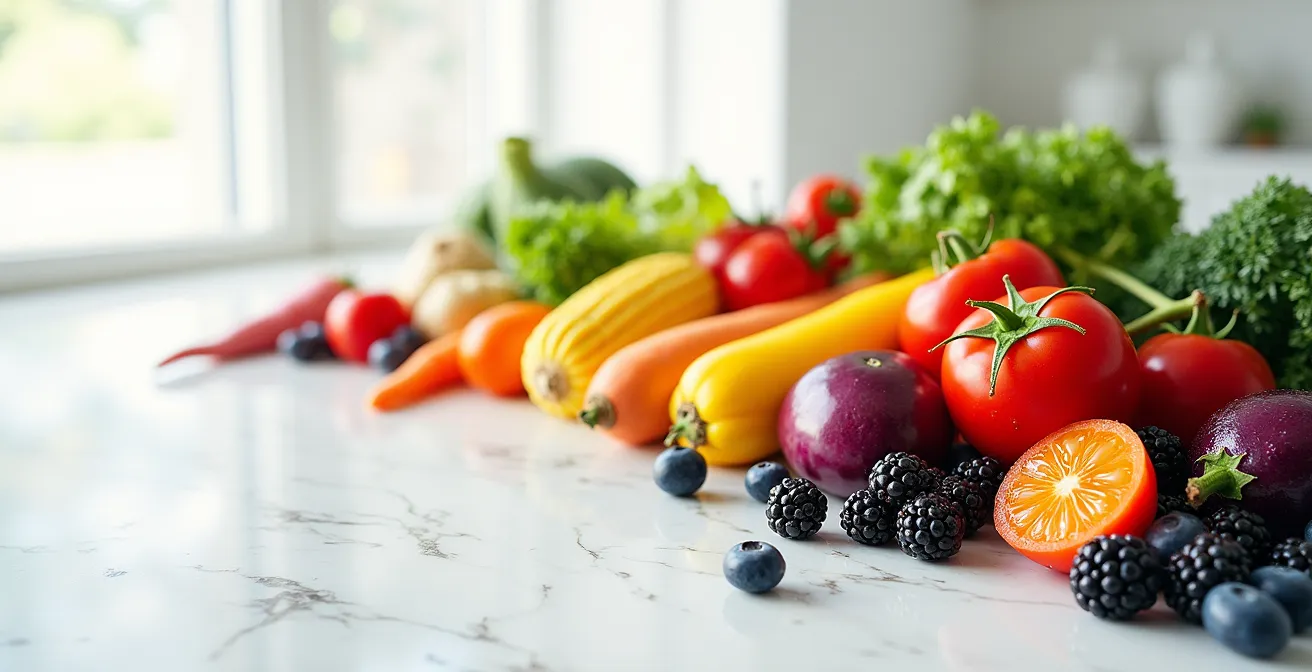
The real benefit of “eating the rainbow” isn’t just about color variety, but about understanding how to prepare and combine foods to maximize the bioavailability of their powerful phytonutrients.
- Your cooking method is critical; gentle techniques like steaming and microwaving preserve delicate compounds, while others like sautéing with oil can dramatically increase absorption.
- Pairing vegetables with a source of healthy fat is non-negotiable for absorbing an entire class of powerful fat-soluble nutrients like carotenoids.
Recommendation: Start by auditing one meal a day. Focus on adding 2-3 different colors and using the right cooking technique for each vegetable to unlock its full potential.
The advice to “eat the rainbow” has become a cornerstone of modern nutritional wisdom. We instinctively know that a plate bursting with vibrant reds, deep purples, and rich greens is healthier than a monotonous sea of beige. We’ve heard the simplified refrains: red foods for heart health, orange for vision, and greens for, well, everything. This is a beautiful and useful starting point, a simple map to guide our choices in the produce aisle.
But for those of us looking to truly optimize our health, this map only shows the surface. The real treasure lies deeper, in the intricate world of plant biology and chemistry. The true power of these colorful foods comes from thousands of unique compounds called phytonutrients. These are not vitamins or minerals, but the very molecules that plants create to protect themselves from sunlight, pests, and disease. When we consume them, we inherit a piece of that protective power.
The crucial, often-missed piece of the puzzle is that this power isn’t automatically transferred. The way we chop, cook, and combine our foods can either unlock these compounds, making them fully available to our bodies—a concept known as bioavailability—or inadvertently destroy them before they ever have a chance to work their magic. This guide moves beyond the color chart and into the kitchen. We will explore the specific actions of these phytonutrients, how to preserve them during cooking, and the essential food pairings that turn a simple colorful meal into a symphony of synergistic health benefits.
To help you navigate this fascinating world, this article breaks down the essential strategies for unlocking the full potential of a phytonutrient-rich diet. We’ll explore everything from the best cooking methods to the critical role of fats in nutrient absorption.
Summary: The Science of Unlocking Phytonutrients for Peak Health
- Why Purple Foods Are Essential for Brain Health?
- How to Cook Veggies Without Destroying Heat-Sensitive Phytonutrients?
- Lycopene vs. Beta-Carotene: Which Protects Vision Better?
- The “Beige Diet” Error: Why Pasta and Bread Leave You Nutrient Starved
- Why You Must Eat Fats with Your Salad to Absorb Phytonutrients?
- How to Incorporate More Dark Leafy Greens into Breakfast Without Ruining the Taste?
- Cooking with Whole Food Ingredients: 5 Rules for Maximum Flavor Retention
- Beyond Berries: Unconventional Powerful Antioxidant Sources for Skin Health
Why Purple Foods Are Essential for Brain Health?
The deep, luxurious pigments of purple and blue foods—from blueberries and blackberries to purple cabbage and black rice—are a sign of their potent concentration of phytonutrients called anthocyanins. While widely known as powerful antioxidants, their benefits for the brain are far more specific and profound. Anthocyanins have the unique ability to cross the blood-brain barrier, allowing them to exert their protective effects directly on neural tissues. They help combat oxidative stress and inflammation, two key drivers of age-related cognitive decline.
But the story gets even more interesting when we look at how our bodies process them. It’s not just the anthocyanins themselves, but their byproducts, or metabolites, that deliver many of the benefits. For example, research shows that gallic acid, a key metabolite from purple foods, shows a 3-fold better absorption in the gut compared to other anthocyanin byproducts. This enhanced bioavailability means more of the protective compound reaches your brain to support memory and learning.
Not all purple foods are created equal in their potency. To truly harness their brain-boosting power, focusing on the most concentrated sources is key. The diversity within this color family is stunning, offering unique compounds and benefits:
- Black currants: These tiny gems are an anthocyanin powerhouse, boasting up to 700 mg per 100g of fresh fruit, one of the highest concentrations available.
- Black rice: Often called “forbidden rice,” its anthocyanins exhibit superior stability and bioavailability compared to those in many common berries.
- Purple corn: A staple in the Andes, it contains unique, complex anthocyanins not found in more common fruits, offering a broader spectrum of benefits.
- Elderberries: Particularly rich in cyanidin-3-glucoside, an anthocyanin known for its rapid absorption into the bloodstream.
- Purple sweet potatoes: Their pigments not only protect against oxidative stress but also enhance the diversity of beneficial gut bacteria, which plays a role in brain health.
How to Cook Veggies Without Destroying Heat-Sensitive Phytonutrients?
You’ve meticulously selected a rainbow of beautiful vegetables, but how you cook them is the critical step that determines whether their phytonutrients make it to your plate. Heat, water, and time are the three variables that can either preserve or decimate these delicate compounds. Boiling, for instance, is often the biggest offender. Water-soluble nutrients and phytonutrients leach out into the cooking water, which is then discarded, taking the nutrition with it. You can see the evidence as the vibrant green of broccoli fades to a dull olive in the pot.
The goal is to cook vegetables until they are tender-crisp, which softens them enough for digestion while retaining their color, texture, and, most importantly, their phytonutrient payload. Gentle methods that use minimal water and time are your best allies. Steaming is a fantastic option, as the vegetables aren’t submerged in water. Microwaving, often unfairly maligned, is surprisingly one of the best methods. In fact, a comprehensive study of 20 vegetables found microwaving preserved 97.3% of antioxidants on average, due to its incredibly short cooking times and minimal water usage.
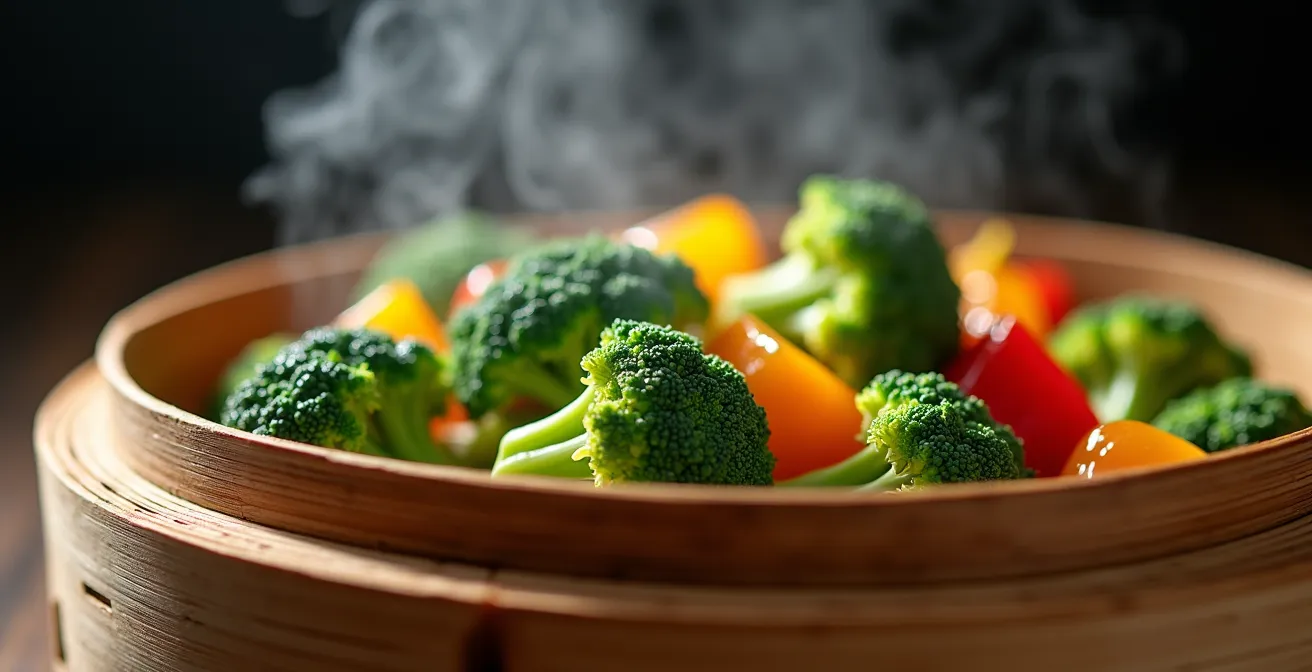
However, the optimal cooking method can be highly specific to the phytonutrient you want to enhance. Some compounds are surprisingly heat-stable, and their bioavailability even increases with certain types of cooking, especially when paired with oil. This chart breaks down the best approaches for some of the most sought-after phytonutrients.
| Phytonutrient | Food Source | Best Method | Retention Rate |
|---|---|---|---|
| Glucosinolates | Broccoli, Cabbage | Steaming (3-5 min) | 80-85% |
| Allicin | Garlic | Hack & hold, then sauté | 70-75% |
| Anthocyanins | Red Cabbage | Microwaving | 97.3% |
| Lutein | Leafy Greens | Light steaming | Actually increases |
| Lycopene | Tomatoes | Sauté with oil | Increases bioavailability |
Lycopene vs. Beta-Carotene: Which Protects Vision Better?
Within the vibrant red, orange, and yellow spectrum of foods lies a family of phytonutrients called carotenoids. Two of the most famous members are lycopene, which gives tomatoes and watermelon their brilliant red hue, and beta-carotene, responsible for the bright orange of carrots and sweet potatoes. Both are potent antioxidants, but they play distinct and complementary roles in our health, particularly when it comes to vision.
Beta-carotene is a “provitamin A,” meaning our bodies can convert it into Vitamin A, a nutrient absolutely essential for maintaining good eyesight, particularly for night vision and protecting the cornea. Lycopene, on the other hand, is not converted to Vitamin A but acts as a powerful antioxidant in its own right, accumulating in the tissues of the eye to protect them from light-induced damage.
However, the carotenoid family is vast, and two other crucial members for vision are lutein and zeaxanthin. These are concentrated in the macula, the central part of the retina, where they act like internal sunglasses, filtering out harmful high-energy blue light. While we associate them with yellow and orange foods like corn and bell peppers, they are also incredibly abundant in dark leafy greens like kale and spinach, where their yellow pigment is masked by green chlorophyll. The difference in concentration can be staggering; for instance, studies show that broccoli contains approximately 50 times more lutein than cauliflower. So for direct macular protection, focusing on lutein-rich foods is a superior strategy.
Ultimately, it’s not a question of which single carotenoid is “better,” but how to ensure you’re getting a diverse range and, crucially, absorbing them effectively. Here’s how to optimize their bioavailability:
- Cook tomatoes with olive oil: This classic pairing maximizes lycopene absorption, as the heat breaks down cell walls and the fat carries the nutrient into your system.
- Lightly steam orange vegetables: Gentle cooking makes the beta-carotene in carrots and sweet potatoes more available than when raw.
- Add a fat source to raw carrots: If you’re eating raw carrots or a salad, pair them with nut butter, avocado, or an oil-based dressing.
- Combine lutein-rich foods with healthy fats: Eat your kale, spinach, and corn with a source of fat to ensure you absorb these vital eye-protective compounds.
- Consume egg yolks: They are a unique food, containing both lutein and the fat needed for its absorption in one perfect package.
The “Beige Diet” Error: Why Pasta and Bread Leave You Nutrient Starved
In our modern food environment, it’s easy to fall into the “beige diet” trap. Meals dominated by white pasta, white bread, crackers, and plain rice are common. While they provide calories and energy, they are a nutritional desert. These foods have been highly processed, stripping them of the fiber, vitamins, minerals, and—most importantly—the thousands of protective phytonutrients found in their whole-food counterparts. This reliance on refined carbohydrates is a major reason why, according to CDC data, a staggering 91% of Americans do not meet the daily recommended intake for vegetables.
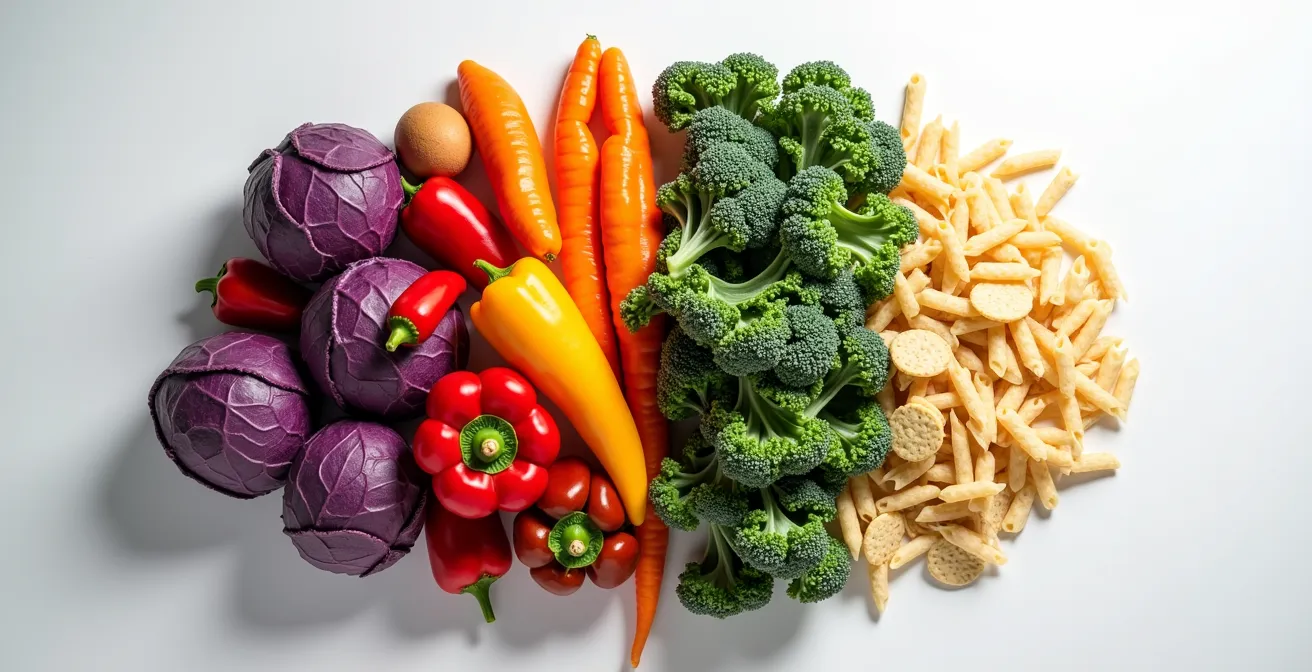
Living on a beige diet leaves your body’s cells starved of the very compounds they need to defend against chronic inflammation and oxidative stress. Each color in the plant kingdom represents a different family of phytonutrients with unique functions. By limiting your palate to a single, pale color, you are missing out on the entire synergistic army of protective molecules that a rainbow diet provides. The contrast is not just visual; it’s biological. A plate of plain pasta offers simple energy, while a bowl of quinoa mixed with red peppers, black beans, and green kale offers energy plus a complex array of antioxidants, anti-inflammatory agents, and cellular protectors.
Moving from a beige diet to a vibrant one doesn’t require a radical, overnight overhaul. It’s about making a series of small, strategic upgrades that systematically infuse color and nutrients back into your meals. Every swap is a step toward a more resilient, well-nourished body.
Your Action Plan: The Beige to Rainbow Upgrade Path
- Assess your plate: For your next meal, identify all the “beige” components. The goal is to see where color can be injected.
- Swap the base: Replace white pasta with red lentil or chickpea pasta. Swap white rice for colorful quinoa or black rice.
- Fortify your staples: Add a handful of spinach or finely chopped kale to scrambled eggs or pasta sauce. Top toast with mashed avocado and sliced tomatoes instead of just butter.
- Add a “crunch” of color: Mix shredded purple cabbage or grated carrots into sandwiches, wraps, and salads for an easy nutrient and texture boost.
- Commit to a “plus two” rule: For every lunch and dinner, make it a goal to include at least two different colored vegetables, no matter how small the portion.
Why You Must Eat Fats with Your Salad to Absorb Phytonutrients?
You’ve assembled the perfect salad, a vibrant mix of leafy greens, deep red tomatoes, and bright orange carrots. You’re proud of your healthy choice, but if you top it with a fat-free dressing, you may be unknowingly sabotaging your efforts. A huge category of essential vitamins (A, D, E, K) and a vast array of powerful phytonutrients, including the entire carotenoid family (beta-carotene, lycopene, lutein), are fat-soluble. This means they cannot be absorbed into the bloodstream from your intestine without the presence of dietary fat to act as a transport vehicle.
Without fat, these precious molecules simply pass through your digestive system, their benefits unrealized. Adding a source of healthy fat to your meal is not just about flavor; it’s a non-negotiable biological requirement for absorption. The effect is not minor; research shows that adding fat can increase the absorption of these nutrients by several hundred percent.
This principle extends beyond salads. Any meal rich in colorful vegetables needs a fat component to unlock its full potential. The synergy between vegetables and healthy fats is a cornerstone of many traditional food cultures, like the Mediterranean diet, for good reason. It’s a perfect example of food wisdom that science is now confirming at a molecular level.
Case Study: The Mediterranean Synergy of Olive Oil and Vegetables
The practice of cooking vegetables in olive oil is more than just a culinary tradition; it’s a scientifically validated method for boosting nutrition. A 2015 study highlighted that sautéing Mediterranean vegetables like tomatoes and eggplant in extra-virgin olive oil not only helped carry fat-soluble nutrients but also significantly increased the total level of antioxidants that can protect against cellular damage. The combination of the vegetables’ phytonutrients with the unique polyphenols in high-quality olive oil created a synergistic effect, making the whole dish more powerfully protective than the sum of its parts.
The key is to choose high-quality, unrefined fats. Excellent choices include extra-virgin olive oil, avocados or avocado oil, nuts (like walnuts and almonds), and seeds (like flax, chia, and sunflower). A simple vinaigrette, a handful of nuts, or a few slices of avocado is all it takes to transform your salad from a collection of unabsorbed nutrients into a bioavailable feast.
How to Incorporate More Dark Leafy Greens into Breakfast Without Ruining the Taste?
Dark leafy greens like spinach, kale, and collards are nutritional superstars, packed with vitamins, minerals, and an incredible density of phytonutrients. We know we should eat more of them, but the idea of a kale salad for breakfast can be unappealing for many. The challenge is to integrate these powerful foods into the first meal of the day without making it feel like a chore or overwhelming the flavors of your favorite breakfast dishes.
The secret lies in “stealth health” methods and understanding how to balance their sometimes bitter or earthy flavors. A common mistake is adding too much raw green material to a smoothie, resulting in a grassy, fibrous drink. By pre-processing and pairing them with the right ingredients, you can seamlessly boost the nutritional profile of your breakfast. It’s also reassuring to know that these greens are remarkably resilient; for example, even collard greens boiled for 10 minutes retain twice as much vitamin C as raw broccoli, so a light wilting or blending doesn’t negate their benefits.
The goal is to make the addition of greens so simple and delicious that it becomes an effortless habit. Here are some of the most effective methods for making greens a welcome part of your morning routine:
- Create “Green Pucks”: Pre-blend a large batch of spinach or kale with a little water or coconut milk and freeze the puree in ice cube trays. Simply pop one or two of these frozen pucks into your morning smoothie, oatmeal, or even pancake batter for an instant, hassle-free nutrient boost.
- Wilt into Eggs: In the last minute of cooking scrambled eggs or an omelet, toss in a large handful of fresh spinach. It will wilt down to almost nothing, adding moisture and nutrients without significantly altering the taste.
- Build a Savory Breakfast Bowl: Move beyond sweet breakfasts and create a savory bowl with a base of quinoa or brown rice, topped with sautéed kale, a poached or fried egg, and a few slices of avocado.
- Try a “Breakfast Salad”: A small side salad can be a refreshing start to the day. Use a light lemon vinaigrette with a handful of tender greens, nuts, and seeds.
- Master the Flavor Triangle: To counteract any bitterness from greens like kale, always balance them with the other three corners of the flavor triangle: fat (avocado, olive oil), acid (lemon juice, vinegar), and a touch of salt.
Cooking with Whole Food Ingredients: 5 Rules for Maximum Flavor Retention
The most profound secret of healthy cooking is that what is best for nutrition is often what is best for flavor. When you learn to cook in a way that respects the integrity of whole food ingredients, you naturally preserve their phytonutrients and create dishes that are deeply satisfying. Maximum flavor isn’t achieved by adding processed sauces or powders, but by unlocking the inherent taste within the vegetables themselves through strategic cooking.
This approach transforms cooking from a chore into a creative process of coaxing out sweetness, depth, and vibrancy. For example, understanding how to properly brown a heartier vegetable develops its complex, umami flavors through the Maillard reaction, a process that also makes some of its nutrients more accessible. The goal is to build layers of natural flavor that make the food so delicious it needs little else.
A perfect illustration of this principle is cooking with tomatoes. While delicious raw, their full potential is unlocked with heat and oil.
The Tomato Transformation: Enhancing Lycopene and Flavor
Lightly sautéing or roasting tomatoes in oil does more than just cook them; it transforms them. This process dramatically increases the bioavailability of both lycopene and other carotenoids. As you cook, you’ll see the evidence: the skins start to wrinkle, the color deepens, and the natural sweetness intensifies as the flavors concentrate. This simple technique takes a single ingredient and elevates both its nutritional power and its taste profile simultaneously, proving that flavor and health go hand-in-hand.
By following a few core principles, you can consistently create dishes that are both nutrient-dense and bursting with flavor. These five rules are the foundation of great whole-food cooking:
- Rule 1 – Layer Umami-Rich Foods: Build a deep, savory foundation using ingredients like tomato paste, mushrooms, or miso. These add a complexity that satisfies the palate.
- Rule 2 – Finish with Freshness: Add delicate components at the very end of cooking to preserve their bright, volatile aromas. A drizzle of high-quality olive oil, a sprinkle of fresh herbs, or the zest of a lemon can elevate an entire dish.
- Rule 3 – Control Water for Better Browning: Moisture is the enemy of browning. For heartier vegetables, consider salting them lightly and letting them sit for a few minutes to draw out excess water before cooking. This ensures a beautiful sear rather than a soggy steam.
- Rule 4 – Use Heat Strategically: Use high, direct heat to brown and caramelize robust vegetables like carrots or Brussels sprouts. Use gentle, quick heat (like steaming or a light sauté) for more delicate items like spinach or asparagus.
- Rule 5 – Steam, Don’t Boil: Whenever possible, choose steaming over boiling to keep vegetables tender-crisp and brightly colored, which is a visual indicator of retained nutrients.
Key Takeaways
- Cooking method is critical: Gentle heat like steaming or microwaving preserves most phytonutrients, while some (like lycopene) are enhanced by cooking with oil.
- Fat is your friend: Many powerful phytonutrients (carotenoids) are fat-soluble and require a source of healthy fat for your body to absorb them.
- Go beyond the basics: The most potent phytonutrients are often found in unconventional sources like herbs, spices, and deeply colored foods like black rice and purple corn.
Beyond Berries: Unconventional Powerful Antioxidant Sources for Skin Health
When we think of antioxidants for healthy, glowing skin, our minds often jump to berries and other colorful fruits. While they are indeed fantastic sources, the world of phytonutrients is vastly larger and more exciting. Some of the most potent protective compounds for skin health are hiding in plain sight in your spice rack, herb garden, and pantry. These unconventional sources offer a diverse array of molecules that protect the skin from UV damage, reduce inflammation, and support its structural integrity.
The mechanism of these phytonutrients goes far beyond simply neutralizing free radicals. They are involved in complex cellular signaling, actively telling your cells to ramp down inflammation. For example, studies show anthocyanin metabolites like cyanidin-3-O-glucoside significantly reduce inflammatory markers such as VCAM-1 and interleukin-6 (IL-6), which are involved in skin aging and inflammatory conditions. By incorporating a wider variety of these foods, you provide your body with a more sophisticated toolkit to maintain skin health from the inside out.
Expanding your antioxidant repertoire is a powerful strategy for building resilient skin. Here are some of the most potent, yet often overlooked, sources of skin-protective phytonutrients:
- Oregano: This common herb is rich in carvacrol, a compound with potent antibacterial properties that can benefit acne-prone skin.
- Rosemary: Contains carnosic acid, a phytonutrient that has been shown to help protect skin cells from damage caused by UV radiation.
- Turmeric: Its active compound, curcumin, is one of the most powerful natural anti-inflammatory agents known, helping to calm skin inflammation from within.
- Salmon & Algae: These are sources of astaxanthin, a unique red-pink carotenoid that acts as an “internal sunscreen,” helping to protect the skin against sun damage.
- Cacao: The raw, unprocessed form of chocolate is rich in theobromine and flavanols, which improve skin hydration and circulation, leading to a healthier glow.
- Flaxseeds: A top source of lignans, phytonutrients that can help balance hormones that affect skin health, such as in cases of hormonal acne.
- Walnuts: Contain ellagic acid, a polyphenol that research suggests may help inhibit the breakdown of collagen, the protein that keeps skin firm.
Start today by auditing one of your daily meals. Can you add one more color? Can you swap a boiling method for steaming? The journey to unlocking the full power of your food begins with these small, strategic changes, transforming every meal into an opportunity for profound nourishment.