In summary:
- Prioritize heat: Thoroughly cooked food is almost always safer than raw or lukewarm dishes.
- Become an observer: Your eyes are your best tool for judging a stall’s hygiene, freshness, and safety practices.
- Communicate visually: A translation card explaining your dietary needs is more reliable than memorizing phrases.
- Follow the local crowd: A long line of locals is the strongest indicator of a stall’s quality and safety.
The sizzle of a hot wok, the vibrant colors of fresh produce, the intoxicating aroma of spices—street food is the lifeblood of travel, offering a direct taste of a new culture. For a vegan backpacker, it’s a paradise of plant-based discovery. But this adventure comes with a nagging fear, a quiet whisper of “Bali Belly” or “Delhi Belly” that can turn a dream trip into a nightmare spent hugging a toilet. You’re an adventurous eater, but you’re not reckless. You want to dive into those local flavors without spending your vacation recovering.
Common advice often feels generic and unhelpful. “Only eat at busy stalls” or “avoid the water” are repeated so often they lose their meaning. These tips scratch the surface but fail to equip you for the complex reality of a bustling market in Bangkok or a roadside stand in Mexico City. They don’t teach you the subtle differences between a safe, delicious meal and a gamble with your gut. What if the busy stall handles money and food with the same hand? What if the “fresh” salad was washed in tap water?
This is where we shift from following rules to developing a skill. The real key to eating safely isn’t a memorized checklist; it’s mastering the art of food safety forensics. It’s about learning to read the subtle cues of a stall—the clarity of the cooking oil, the shape of the ice, the workflow of the vendor—to make an informed decision. This guide will move beyond the clichés and empower you to become a street-smart food detective. We’ll dissect the real risks, show you how to bypass language barriers effectively, and teach you to identify the hallmarks of a safe and trustworthy vendor, so you can explore the world one delicious, worry-free bite at a time.
To help you navigate this culinary landscape, we’ve structured this guide to build your expertise step-by-step. You’ll learn the non-negotiable items to avoid, how to communicate your needs effectively, and ultimately, how to develop the keen eye of a seasoned, healthy traveler.
Summary: A Street-Smart Vegan’s Guide to Eating Safely Abroad
- Ice and Salad: The 2 Things to Avoid in Street Food Stalls
- How to Ask “Does This Have Shrimp Paste?” in 5 Asian Languages?
- Fried vs. Fresh: Which Street Food Is Safer for Your Stomach?
- Night Markets vs. Morning Markets: When Is the Food Freshest?
- How to Spot the Stall Where Locals Eat (And Why It Matters)?
- Balinese Sanctuaries: The Ethics of Digital Nomad Living in Bali
- Planning Costa Rican Retreats: Jungle Logistics for City Dwellers
- Mastering Pulled Jackfruit Tacos: How to Get the Meaty Texture?
Ice and Salad: The 2 Things to Avoid in Street Food Stalls
In the sweltering heat of a Southeast Asian afternoon, an ice-cold drink or a crisp, fresh salad seems like the ultimate refreshment. But for the cautious traveler, these are two of the biggest red flags. The core issue is water. Many travel-related stomach illnesses stem from consuming tap water contaminated with bacteria or parasites your body isn’t used to. Salads, fresh herbs, and uncooked vegetables are often washed with this very water, and ice is frequently made from it, creating perfect vectors for illness.
This doesn’t mean all ice is off-limits. You just need to learn to spot the difference between safe, commercially produced ice and risky, homemade ice. Commercially produced ice, made in a factory with filtered water, is typically uniform in shape—often cylindrical with a hole through the middle. Homemade or tap-water ice is usually irregular, cloudy, and sold in large, broken-up blocks.

As the image above illustrates, the visual difference is stark. Safe ice is clear and consistent, while risky ice is cloudy and uneven. When in doubt, always opt for bottled or canned drinks that are refrigerated, or order your beverage “mai ao namแข็ง” (no ice) in Thailand. For salads, unless you are at a reputable restaurant catering to tourists where you can confirm they use purified water for washing produce, it’s safest to stick to cooked vegetables.
How to Ask “Does This Have Shrimp Paste?” in 5 Asian Languages?
The biggest challenge for a vegan traveler isn’t finding vegetable-based dishes; it’s navigating the world of hidden animal products. Fish sauce, oyster sauce, lard, and shrimp paste are fundamental building blocks of flavor in many cuisines. The common advice is to learn phrases like “Is there shrimp paste in this?” However, this approach is often flawed. Your pronunciation might be misunderstood, the vendor may not understand the full scope of veganism, or they might simply forget a minor ingredient.
A far more effective strategy is the Language Barrier Bypass: using clear, visual aids. A written card in the local language that says something like, “I am a vegetarian/vegan. I do not eat any meat, poultry, fish, seafood, eggs, or milk products. I also do not eat fish sauce, oyster sauce, or shrimp paste,” is incredibly effective. This method removes the risk of mispronunciation and provides a clear, physical reference for the vendor.
Case Study: Visual Communication Success in Japan
This approach is validated by real-world experience. For instance, one vegan traveler successfully navigated rural Japan for a month using a written note in Japanese explaining their dietary restrictions. Complemented by visual cards showing prohibited ingredients, this demonstrated that clear visual communication bridges language gaps far more effectively than memorized phrases, especially when ordering complex dishes like vegan street food.
To help you identify these ingredients before they end up in your meal, it’s useful to know what you’re looking for. Many sauces and pastes have distinct appearances and are often visible on the stall’s counter.
| Ingredient | Common Uses | How to Identify |
|---|---|---|
| Fish Sauce | Thai curries, Vietnamese pho, pad thai | Dark brown liquid in bottles, fishy smell |
| Oyster Sauce | Chinese stir-fries, vegetable dishes | Thick, dark brown sauce, sweet smell |
| Shrimp Paste | Malaysian, Thai, Indonesian dishes | Purple-grey paste, strong seafood odor |
| Chicken/Beef Powder | Instant noodles, soup bases | Yellow or brown powder packets |
Fried vs. Fresh: Which Street Food Is Safer for Your Stomach?
It’s a common dilemma: on one side, a vibrant, fresh-looking spring roll; on the other, a deep-fried, sizzling samosa. While “fresh” sounds healthier, when it comes to street food safety, heat is your most reliable friend. The principle is simple: high temperatures kill the harmful bacteria that cause traveler’s diarrhea. This concept is what food safety experts call the “thermal kill zone.”
Most pathogenic bacteria thrive in the “temperature danger zone.” In fact, food safety experts warn that bacteria multiply rapidly between 40°F-140°F (4°C-60°C). Food that is piping hot—freshly boiled, grilled, or deep-fried right in front of you—has been heated well above this range, effectively sterilizing it. A “fresh” dish that has been sitting out, on the other hand, could be lingering in this danger zone, allowing bacteria to flourish. This is why a steaming bowl of noodle soup is generally a safer bet than a pre-made salad or a plate of cut fruit.
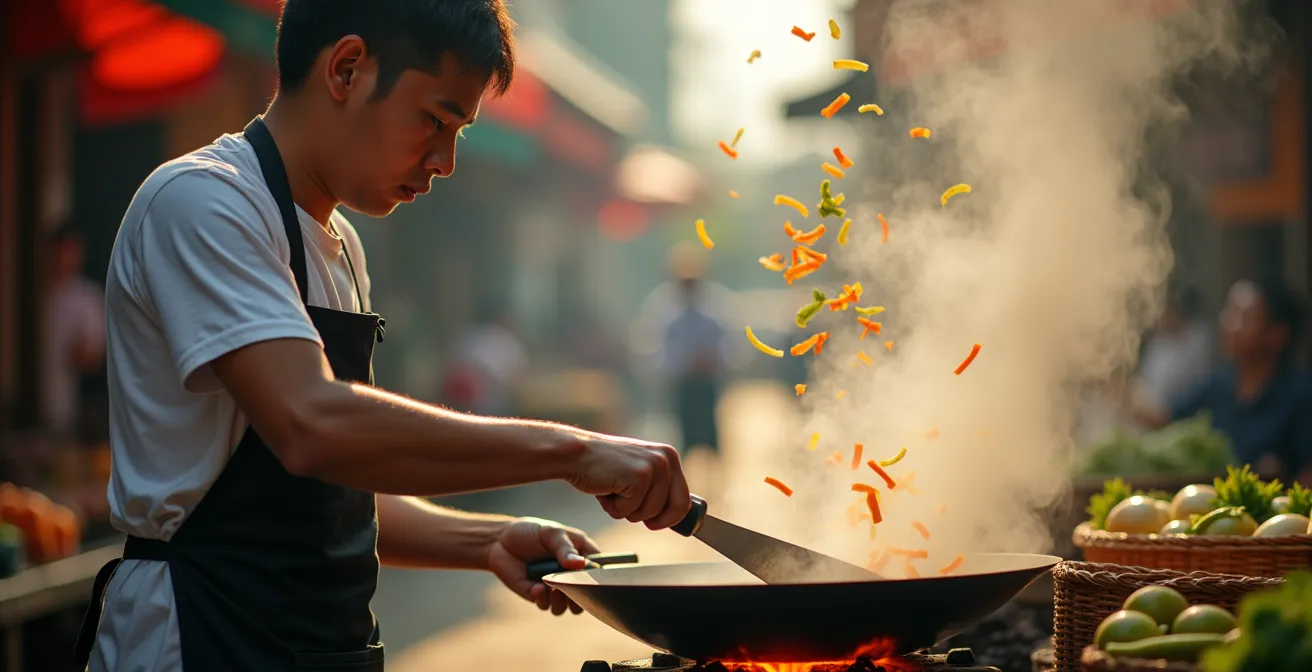
When opting for fried foods, a quick quality check of the oil is also a smart move. Look for oil that is clear or light golden; dark, murky oil is a sign it’s old and has been reused too many times. Vigorous bubbling around the food indicates the oil is hot enough, while excessive smoke or a rancid smell are red flags. Ultimately, watching your food being cooked to order in a clean wok with fresh ingredients, as shown above, is one of the most reassuring sights for any traveling foodie.
Night Markets vs. Morning Markets: When Is the Food Freshest?
Not all markets are created equal, and the time of day you eat can dramatically impact the freshness and safety of your food. Understanding the “freshness timeline” of a market’s ecosystem is a key forensic skill. Morning markets and night markets often serve entirely different purposes, which dictates the quality of the ingredients used.
Morning markets are typically where locals, including restaurant owners and other food vendors, shop for their daily supplies. The focus is on raw, fresh ingredients: vegetables, fruits, tofu, and spices. The turnover is incredibly high, meaning the produce you see is likely just hours from the farm. A stall in a morning market that’s also cooking food is often using these peak-freshness ingredients, making it an excellent choice for a safe and flavorful meal.
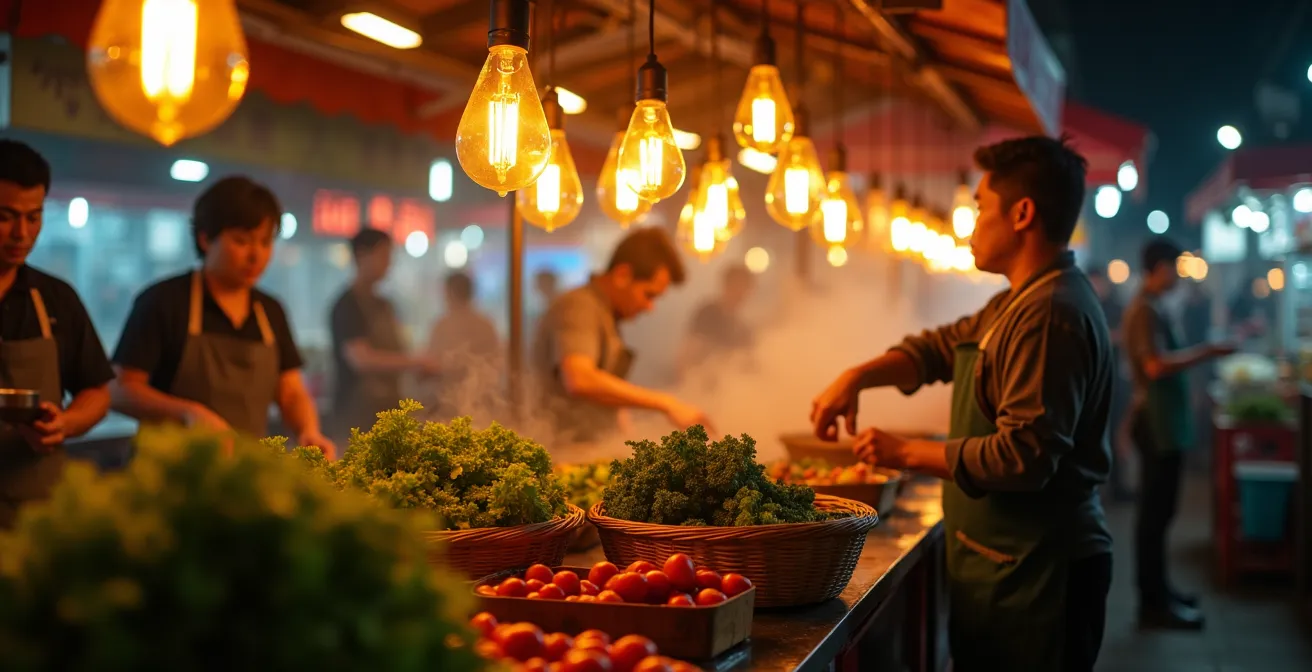
Night markets, conversely, are more about social dining and entertainment. The food is the main event. While delicious, the ingredients may have been prepped many hours in advance, or even the day before, to handle the evening rush. This increases the time food spends potentially sitting in the temperature danger zone. This doesn’t mean night markets are unsafe, but it does require you to be more selective, prioritizing stalls that cook to order over those with pre-made dishes sitting under heat lamps.
Case Study: Hong Kong Market Dynamics
A study of street food dynamics in Hong Kong highlights this difference perfectly. It revealed that morning markets are logistical hubs for fresh ingredients with high turnover, catering to daily cooking needs. In contrast, night markets focus on prepared foods for a social atmosphere, with ingredients often prepared well in advance to meet demand. This reinforces the idea that timing is a crucial factor in assessing food freshness and safety.
How to Spot the Stall Where Locals Eat (And Why It Matters)?
The single most-repeated piece of street food advice is “eat where the locals eat,” and for good reason. A long queue of local customers is more than a sign of delicious food; it’s the most reliable, real-time indicator of a stall’s safety and quality. Locals wouldn’t repeatedly risk getting sick from a neighborhood vendor, so their patronage acts as a public seal of approval. This high traffic also ensures a critical food safety component: high ingredient turnover.
A busy stall is constantly using up its ingredients and replenishing them, meaning the food you’re served is much fresher than at a stall where ingredients have been sitting out for hours. As food safety experts recommend choosing stalls where high customer turnover is evident, it’s a key sign of quality and freshness. But beyond just spotting a queue, you should also perform your own quick “forensic” audit. A few seconds of observation can reveal a lot about a vendor’s hygiene practices.
Look at the vendor’s workflow. Are they using different utensils for raw vegetables and cooked items? Do they handle money and then touch food without washing their hands? Are the ingredients covered and protected from flies? A clean and organized workstation, even in a rustic setting, is a sign of a professional and conscientious vendor. Trust your gut instinct; if a stall feels “off,” it probably is. There will always be another, better option just a few steps away.
Your 30-Second Stall Safety Checklist
- Green Flag: Observe the vendor’s tools. Are they using separate cutting boards and utensils for vegetables and any raw meat being served to other customers?
- Green Flag: Look for a handwashing station. A visible source of water and soap is a strong positive sign of good hygiene practices.
- Green Flag: Note their food handling. Does the vendor use utensils, tongs, or gloves instead of their bare hands to plate food?
- Red Flag: Watch the money. Is the same hand used to handle cash and then directly touch food without being washed in between?
- Red Flag: Check for pests and cleanliness. Are flies landing on uncovered ingredients, or is the dishwater murky and close to the food prep area?
Beyond the Sanctuaries: Applying Safety Rules in Popular Vegan Hubs like Bali
Places like Bali, Chiang Mai, or Tulum have become vegan sanctuaries, destinations where plant-based options are not just available but abundant and celebrated. It’s easy to let your guard down in these “vegan-friendly” bubbles, assuming that every smoothie bowl and jackfruit curry is inherently safe. However, this sense of security can lead to complacency, and the fundamental rules of food safety are just as critical here as they are anywhere else.
A trendy cafe in Canggu might have a beautiful Instagram feed, but its salad greens could still be washed in tap water. The friendly vendor at a vegan-only market stall might be a master of plant-based cooking but still have lax hygiene practices. The popularity of a destination among vegans doesn’t automatically grant it a food safety pass. The same bacteria that can make you sick in a remote village can exist in a bustling tourist town.
Therefore, you must apply the same food safety forensics with equal rigor. Is the food at that all-vegan buffet piping hot, or has it been sitting lukewarm for an hour? Is the ice in your kombucha made from purified water? Is the vendor at the vegan festival following the same hygiene standards you’d look for anywhere else? Don’t let the “vegan” label lull you into a false sense of security. The principles of heat, hygiene, and high turnover are universal and remain your most trusted guides, even in paradise.
From Urban Markets to Jungle Logistics: Adapting Your Strategy
Your food safety strategy must be adaptable, shifting with your environment. The clues you look for in a sprawling urban market in Ho Chi Minh City will be different from those you seek at a roadside fruit stand on the way to a Costa Rican jungle. The core principles remain the same—heat, cleanliness, turnover—but their indicators change. Mastering this adaptability is the mark of a truly street-smart traveler.
In a dense urban setting, crowds are your best friend. You can use the “follow the locals” rule, observe dozens of stalls to compare hygiene, and have a wide variety of choices. You can easily spot high turnover and watch for vendors cooking to order. The sheer volume of activity provides a wealth of data for your “forensic” analysis. You have the luxury of choice and can afford to be highly selective.
In a more remote or rural setting, the calculus shifts. There may only be one or two stalls available, and no significant crowds to guide you. Here, your observation skills must become even sharper. Instead of looking for a queue, you might look for a small, family-run stall that appears to be cooking for themselves as well as for customers—a good sign the food is fresh. You might prioritize simple, thoroughly cooked items like grilled corn or roasted plantains over more complex dishes. The key is to simplify your choices and heighten your observation, focusing on the most basic and reliable indicators of safety when a wealth of options isn’t available.
Key takeaways
- Heat is your ultimate ally; food that is cooked hot in front of you is the safest bet.
- Your observation skills are your best defense. Learn to read the signs of hygiene and freshness.
- Effective communication goes beyond words. Use visual aids to ensure your dietary needs are understood.
From Theory to Tacos: Putting Your Safety Knowledge into Practice
We’ve journeyed from the bustling night markets of Asia to the remote jungles of Central America, dissecting the science and art of safe vegan street food. We’ve moved beyond generic advice and armed you with a new way of seeing: the mindset of a food safety detective. You now understand that heat is a powerful sterilizer, that visual communication trumps fumbled phrases, and that a line of local customers is the most honest review a stall can get.
You know how to tell safe ice from risky ice, why a sizzling wok is more trustworthy than a “fresh” salad, and how the time of day impacts the entire market ecosystem. This knowledge is not meant to make you fearful, but to make you confident and empowered. It’s designed to remove the anxiety and guesswork from one of travel’s greatest joys, allowing you to engage with local culture on a deeper, more delicious level.
The goal was never to master the texture of pulled jackfruit tacos specifically, but to give you the skills to confidently order them—or any other tantalizing dish—from a street vendor anywhere in the world. You are now equipped to step out of the tourist traps and into the authentic heart of a place’s culinary scene. So go ahead, be adventurous. Trust your newly honed instincts, seek out that busy stall, and enjoy that meal. You’ve earned it.
Your next adventure awaits. Start planning your culinary journey today by applying these street-smart strategies to your travel research.