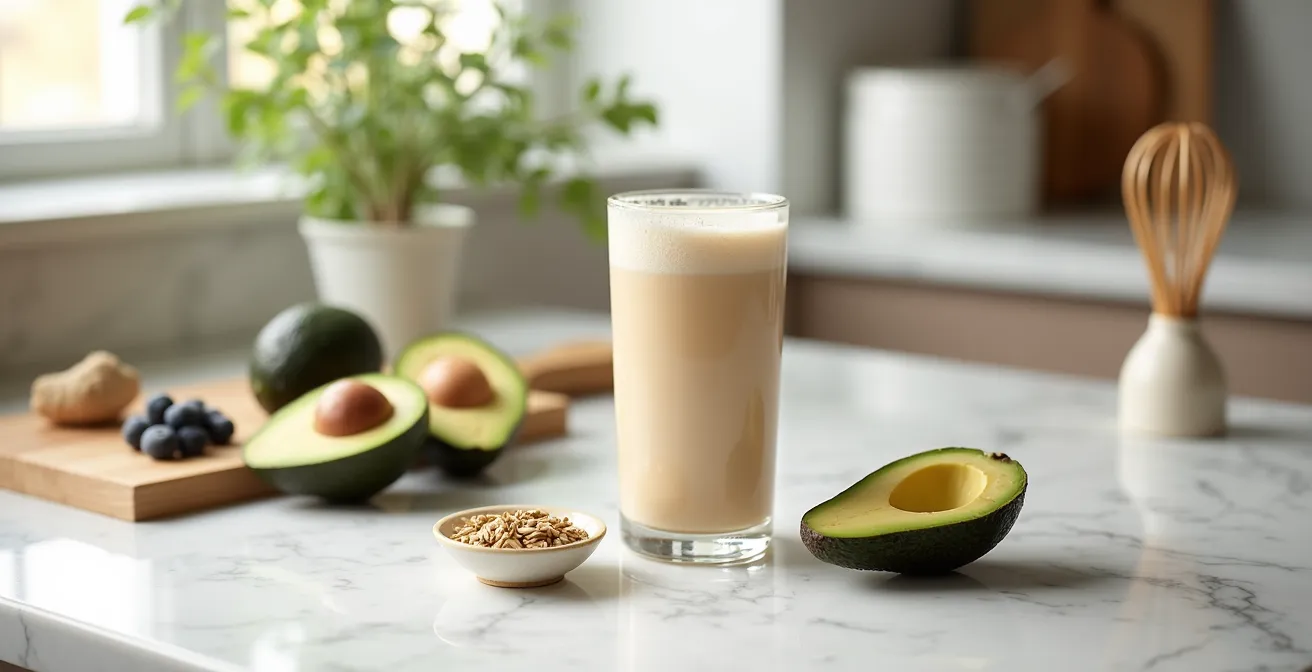
The chalky, gritty texture of vegan protein shakes is not an inevitable flaw but a solvable problem of formulation and chemistry.
- Digestive comfort begins with sprouted proteins, which reduce the “digestive load” by breaking down anti-nutrients like phytates and lectins.
- Creaminess is achieved through “mouthfeel engineering” using hydrocolloids like xanthan gum or natural emulsifiers like frozen banana to ensure proper particle suspension.
Recommendation: Combine a 70/30 pea-rice protein blend with 1/8 teaspoon of xanthan gum per 10oz of liquid for a complete amino acid profile and a silky-smooth texture.
The switch to a plant-based diet for athletic performance is a rewarding journey, but it often comes with a frustrating, gritty roadblock: the vegan protein shake. For many gym-goers, the promise of rebuilding muscle without animal products is overshadowed by a daily ritual of choking down a chalky, poorly-dissolving concoction that leads to bloating and digestive discomfort. The common advice—add a banana, use a better blender, mix with almond milk—are merely surface-level fixes that mask the underlying issue without solving it. These tips fail to address the fundamental science of why plant proteins behave so differently from whey.
The truth is, achieving that coveted smooth, creamy texture is not about brute force blending or masking flavors. It’s a matter of food technology. The core problem lies in the inherent structure of plant proteins and their interaction with liquid. Overcoming it requires a shift in perspective, from a cook to a food scientist. It demands an understanding of concepts like molecular hydration, where each protein particle must be fully saturated, and particle suspension, the technique of keeping those particles from settling and creating that dreaded gritty mouthfeel. This isn’t about finding the one “magic” powder; it’s about understanding how to engineer the perfect shake from the ground up.
This guide deconstructs the challenge from a technologist’s viewpoint. We will move beyond the platitudes to explore the scientific principles of protein selection, texture modification, and nutrient synergy. You will learn not just what to do, but why it works, empowering you to build a recovery shake that is not only effective for muscle growth but is also genuinely enjoyable to drink.
To guide you through this formulation process, this article breaks down the science into manageable steps. From tackling digestive issues at the source to mastering the art of creaminess and optimizing your nutrient timing, you will find a clear roadmap to crafting the perfect plant-based recovery shake.
Summary: A Food Technologist’s Blueprint for the Perfect Vegan Shake
- Why Sprouted Protein Powders Cause Less Bloating Than Isolate?
- How to Use Xanthan Gum or Bananas to Creamify Plant Protein?
- Rice vs. Pea Protein: Which Profile Completes the Amino Spectrum?
- The Artificial Sweetener Trap in “Low Carb” Vegan Shakes
- How Soon After Training Should You Drink Your Plant Protein?
- Can a Vegan Diet Improve Athletic Performance in Endurance Sports?
- How to Calculate Macro-Nutrient Distribution for Muscle Gain on a Vegan Diet?
- How to Calculate Macro-Nutrient Distribution for Muscle Gain on a Vegan Diet?
Why Sprouted Protein Powders Cause Less Bloating Than Isolate?
For many athletes, the primary complaint against plant-based proteins isn’t taste, but the significant bloating and digestive distress that can follow. This discomfort is often caused by anti-nutrients, such as phytates and lectins, which are naturally present in legumes and grains. Protein “isolates” reduce these compounds but don’t eliminate them. Sprouted protein powders offer a superior solution by tackling the problem at its source through enzymatic activation. The sprouting process is essentially a form of pre-digestion, reducing the digestive load on your gut.
During germination, dormant enzymes within the seed are activated. These enzymes systematically break down the very components that cause digestive issues. Here’s how it works:
- Phytate Reduction: Sprouting activates the enzyme phytase, which can break down phytates. These compounds bind to minerals like iron, zinc, and calcium, preventing their absorption. By reducing phytates, sprouting not only eases digestion but also increases the mineral bioavailability of the protein.
- Lectin Degradation: The germination process degrades lectins, which are proteins that can bind to the intestinal wall and cause irritation or inflammation in sensitive individuals, leading to bloating and discomfort.
- Enhanced Bioavailability: Sprouted proteins exhibit enhanced amino acid bioavailability. This means your body can absorb and utilize the protein more completely and with less digestive effort, maximizing muscle repair and minimizing waste.
Athletes who switch to sprouted proteins, like sprouted brown rice protein, often report a significant reduction in Delayed Onset Muscle Soreness (DOMS). This is partly attributed to the anti-inflammatory properties of certain plant compounds and the fact that a happier gut allows for more efficient nutrient absorption and recovery. By choosing a sprouted protein, you are not just selecting a powder; you are choosing a smarter, gentler foundation for your recovery shake.
How to Use Xanthan Gum or Bananas to Creamify Plant Protein?
With the digestive base sorted, the next challenge is texture—the infamous chalkiness. This gritty sensation is a problem of physics: the plant protein particles are not fully hydrated and are failing to stay suspended in the liquid. This is where mouthfeel engineering comes in, using thickeners and emulsifiers to create a smooth, creamy consistency. While a frozen banana is a classic choice, a food technologist’s toolkit includes more precise instruments like xanthan gum.
Xanthan gum is a hydrocolloid, meaning it binds with water to form a gel-like network. This network increases the viscosity of the liquid, effectively trapping the protein particles and preventing them from settling. This process ensures perfect particle suspension. The key is technique; simply dumping it in will create clumps. For optimal results, start by whisking a tiny amount (1/8 teaspoon per 10oz of liquid) into your cold liquid *before* adding the protein powder. This creates a smooth slurry that will evenly incorporate the powder.
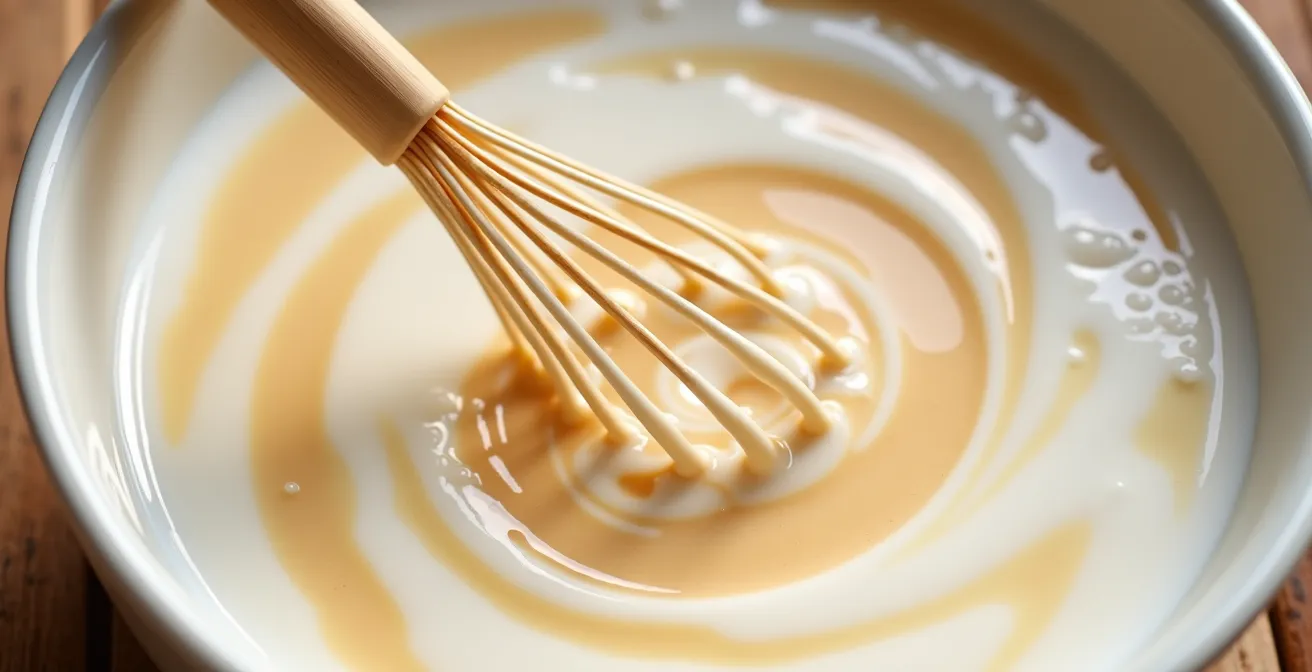
For those preferring a whole-food approach, frozen bananas or avocados are excellent emulsifiers. The freezing process for bananas breaks down their cellular structure, which, when blended, creates a thicker, icier creaminess than a fresh banana without diluting the shake. Avocado adds healthy fats and a luxurious, velvety texture. A quarter of an avocado is usually sufficient to achieve creaminess without a noticeable flavor. For best results, always blend in stages: liquid first, then powder, and finally your texture-enhancing ingredients like fruit or gums.
Rice vs. Pea Protein: Which Profile Completes the Amino Spectrum?
Once texture and digestion are managed, the focus shifts to nutritional efficacy: ensuring your protein provides all the building blocks for muscle repair. Not all plant proteins are created equal. Their value is determined by their amino acid profile, particularly the presence of all nine essential amino acids (EAAs). The two most popular choices, pea and rice protein, are individually incomplete. However, when combined, they create a powerful amino acid synergy that rivals animal-based proteins.
Pea protein is rich in lysine but low in methionine. Conversely, brown rice protein is high in methionine but lacks sufficient lysine. By blending them, typically in a 70/30 pea-to-rice ratio, you create a complete protein source that provides a robust profile of all EAAs, including the crucial Branched-Chain Amino Acids (BCAAs) needed for triggering Muscle Protein Synthesis (MPS). The goal is to get 2.5-3g of the BCAA leucine per serving, the scientifically recognized threshold to initiate muscle repair, which a well-formulated blend easily achieves. The table below illustrates how these two proteins complement each other.
| Protein Source | Leucine Content | Key Strength | Key Limitation | Digestibility Score |
|---|---|---|---|---|
| Pea Protein | High in Lysine | Rich in BCAAs, especially lysine for muscle repair | Lower in methionine | 0.89 PDCAAS |
| Rice Protein | Moderate | High in methionine, neutral taste | Low in lysine | 0.47 PDCAAS |
| 70/30 Pea-Rice Blend | 2.5-3g per scoop | Complete amino profile, hits MPS threshold | None significant | Near 1.0 PDCAAS |
This blending strategy is not just theoretical; it’s a proven commercial success. The following example shows how brands leverage this principle.
Sunwarrior’s Triple Protein Formula Success
Sports nutrition brand Sunwarrior achieved a higher Protein Digestibility-Corrected Amino Acid Score (PDCAAS), as referenced in a comprehensive guide on vegan proteins, by combining brown rice, pea, and pumpkin proteins. This triple-source approach not only completes the amino spectrum but also provides additional benefits: the pumpkin adds minerals and healthy fats while improving the overall texture and reducing the earthy taste common in single-source pea protein products.
The Artificial Sweetener Trap in “Low Carb” Vegan Shakes
In the quest for a better-tasting shake, many turn to “low-carb” or “zero-sugar” protein powders, which rely heavily on artificial sweeteners and sugar alcohols. While these solve the calorie problem, they can introduce a new set of issues related to both digestion and, surprisingly, texture. From a food technologist’s perspective, sweeteners don’t just add sweetness; they fundamentally alter the mouthfeel of the final product, sometimes for the worse.
Many popular sugar alcohols, while non-caloric, are known to cause gas and bloating in a large portion of the population as they are fermented by gut bacteria. But their impact extends beyond digestion. As one nutrition research team points out, the choice of sweetener has a direct physical effect:
Sugar alcohols like erythritol can sometimes have a ‘cooling’ or drying effect on mouthfeel, affecting shake texture beyond just taste.
– Nutrition Research Team, Casa de Sante Protein Guide
This “cooling” sensation can clash with warm flavors like chocolate or vanilla and contribute to a thin, watery perception, undermining efforts to create a creamy shake. Instead of falling into this trap, it’s better to use natural sweeteners that also contribute positively to the texture and nutritional profile. These alternatives work with your formula, not against it.
- Dates or Date Paste: Provide a rich, caramel-like sweetness along with fiber, which aids in creating a thicker body.
- Lucuma Powder: A low-glycemic fruit powder from Peru that adds a creamy, maple-like sweetness without a sugar spike.
- Frozen Fruit: Beyond bananas, fruits like mangoes or cherries add natural sweetness and their own fibrous structure to enhance viscosity.
- A Pinch of Salt: For powders sweetened with stevia, a tiny pinch of mineral salt can help neutralize its characteristic bitter aftertaste.
How Soon After Training Should You Drink Your Plant Protein?
With a perfectly formulated shake in hand, the final question is one of timing: when should you drink it for maximum benefit? The old concept of a rigid 30-minute “anabolic window” has been largely debunked. Modern research suggests the window is much more flexible, extending for several hours post-workout. However, the more pressing issue for those using plant-based shakes is not the window itself, but the speed of digestion and absorption. The goal is to get those amino acids to your muscles efficiently, and that depends on gastric emptying—how quickly the shake leaves your stomach.
A shake composed solely of protein and water can sometimes sit heavily in the stomach. The key to accelerating its journey into the intestines for absorption is to include carbohydrates and a small amount of fat. This balanced macronutrient profile stimulates a more efficient digestive response. In fact, a 2018 study showed combining protein with carbohydrates and fats accelerated gastric emptying, leading to less bloating and faster nutrient delivery.
Therefore, the ideal post-workout shake isn’t just protein; it’s a balanced meal. The carbohydrates (from fruit or oats) help replenish depleted muscle glycogen stores, while the protein (your pea/rice blend) goes to work on repair. The fats (from avocado or nut butter) aid in hormone regulation and improve the shake’s texture. Consuming this balanced shake within two hours of finishing your training session ensures your body gets everything it needs for optimal recovery, without the rush or the digestive backlash. It shifts the focus from a frantic “anabolic window” to a more sustainable and effective “recovery period.”
Can a Vegan Diet Improve Athletic Performance in Endurance Sports?
While much of the discussion around protein centers on muscle gain for strength athletes, the benefits of a well-formulated vegan diet extend powerfully into endurance sports. For runners, cyclists, and triathletes, the key to performance is not just fuel, but recovery and consistency. A plant-based diet, particularly one incorporating smart protein choices, can offer significant advantages in this domain primarily by reducing inflammation and enhancing recovery.
Intense endurance exercise is inherently inflammatory. While some inflammation is a necessary signal for adaptation, chronic or excessive inflammation can impede recovery, increase muscle soreness, and compromise the immune system. Plant-based diets are naturally rich in anti-inflammatory compounds like antioxidants and polyphenols found in fruits, vegetables, nuts, and seeds. When combined with easily digestible proteins, such as the sprouted varieties discussed earlier, the effect is compounded. This dietary approach helps manage the inflammatory response, allowing athletes to recover faster between sessions and train more consistently.
Furthermore, a diet centered around whole plant foods is typically higher in complex carbohydrates, the primary fuel source for endurance activities. This ensures that muscle glycogen stores are consistently topped off, providing sustained energy during long training bouts. By easing the digestive load and reducing systemic inflammation, a thoughtful vegan diet allows an athlete’s body to dedicate more resources to repair and adaptation rather than just managing digestive stress. This leads to less downtime, reduced risk of overtraining-related illness, and ultimately, improved performance on race day.
Key takeaways
- The solution to chalky protein is not a better blender, but better science: focusing on particle suspension and molecular hydration.
- Combine a 70/30 pea and rice protein blend to create a complete amino acid profile that rivals whey for muscle protein synthesis.
- Use hydrocolloids like xanthan gum or natural emulsifiers like frozen fruit to engineer a smooth, creamy texture and eliminate grittiness.
How to Calculate Macro-Nutrient Distribution for Muscle Gain on a Vegan Diet?
For athletes focused on muscle hypertrophy, protein is paramount, but it doesn’t work in a vacuum. Calculating the right macronutrient distribution is critical for creating an anabolic environment where muscle tissue can actually be built. On a vegan diet, this means strategically pairing your high-quality protein with adequate carbohydrates and healthy fats. Each macro plays an irreplaceable role in the muscle-building process, and neglecting any one of them can sabotage your efforts.
Protein provides the amino acids for repair, but carbohydrates are the fuel that powers the process. Consuming carbs post-workout creates an insulin spike, which is highly anabolic. Insulin acts as a transport system, shuttling amino acids and glucose directly into your muscle cells to kickstart muscle protein synthesis and replenish glycogen stores depleted during your workout. Aiming for a carb-to-protein ratio of roughly 2:1 in your post-workout meal or shake is an effective strategy.
Fats are equally essential, though their timing is less critical. Healthy fats from sources like avocado, nuts, and seeds are crucial for regulating hormone production, including testosterone, which plays a key role in muscle growth. They also aid in the absorption of fat-soluble vitamins and help manage inflammation. A common macro split for vegan muscle gain is approximately 40% carbohydrates, 30% protein, and 30% fats throughout the day, with an emphasis on carbs and protein around your workout window. This framework ensures your body has all the resources it needs not just to recover, but to grow stronger.
How to Calculate Macro-Nutrient Distribution for Muscle Gain on a Vegan Diet?
Translating macronutrient theory into a tangible, delicious shake is the final step in mastering your plant-based recovery. You now have the tools to control digestion, texture, and protein quality. The last piece of the puzzle is to build your shake as a complete, macro-balanced meal tailored to your specific muscle gain goals. This isn’t about a rigid recipe, but a flexible formula that you can adjust based on your training intensity and dietary needs.
Using the principles we’ve covered, you can construct a shake that delivers a precise dose of protein, replenishing carbohydrates, and essential fats. The formula below serves as a starting point. It integrates all the key learnings: a complete protein base, carb sources for glycogen replenishment, and fats for hormonal support and texture enhancement. This framework allows you to easily tune your macros up or down. Need more carbs after a grueling leg day? Add more oats or a larger banana. Need to increase healthy fats? Add an extra tablespoon of almond butter.
By thinking of your shake as a customizable formula rather than a fixed recipe, you take full control of your nutrition. This approach ensures that every shake you make is perfectly optimized for your body’s needs at that specific moment, maximizing your recovery and accelerating your progress toward your muscle-building goals.
Action Plan: Your Macro-Tunable Vegan Shake Formula
- Base Protein: Start with 1.5-2 scoops of a 70/30 pea-rice plant protein blend to ensure you get 30-40g of complete protein.
- Carbohydrate Component: Adjust your energy source by adding 1/2 to 1 cup of rolled oats or 1 large frozen banana, providing 25-50g of carbs for glycogen replenishment.
- Fat & Texture Component: Include 1-2 tablespoons of nut butter or 1/4 avocado. This adds 10-20g of healthy fats and acts as a natural emulsifier for a creamier texture.
- Liquid Base & Fine-Tuning: Begin with 12oz of cold plant milk or water. If using, whisk in 1/8 tsp of xanthan gum at this stage before adding other ingredients. Adjust liquid for desired thickness.
- Optimal Timing for Integration: Consume your fully formulated, macro-balanced shake within two hours of your workout to maximize the absorption and muscle repair process.
Start applying these food science principles today to transform your recovery. Move beyond the gritty shakes and begin formulating a smooth, powerful, and effective plant-based protein drink that truly works for your body and your goals.