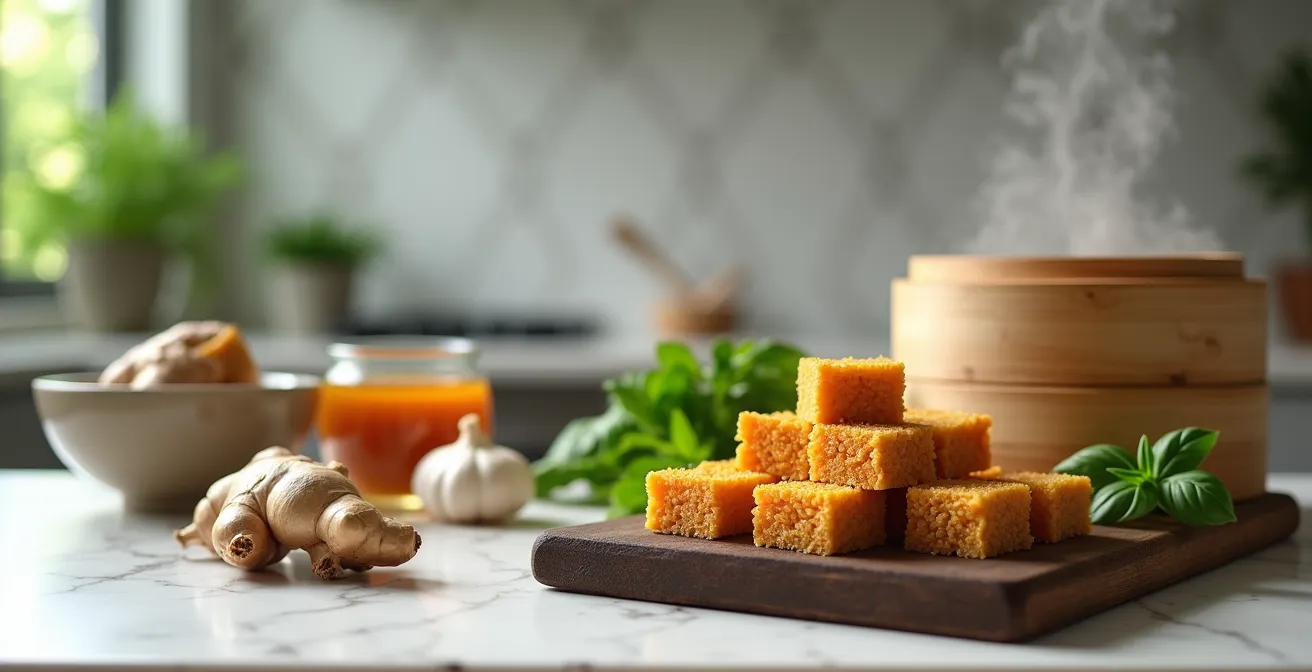
In summary:
- Tempeh’s bitterness is a soluble compound from fermentation that can be easily removed with a simple pre-cooking step: steaming.
- Steaming not only eliminates bitterness but also softens the tempeh, opening its protein matrix to absorb marinades more effectively.
- Mastering pan-frying—using moderate heat and sufficient oil—is crucial to achieve a crispy exterior without creating a dry, leathery texture.
- Nutritionally, tempeh is a powerhouse, offering double the protein of tofu and a significant amount of fiber, making it a superior choice for digestive health and muscle building.
For many embarking on a plant-based journey, the transition from the familiar softness of tofu to the dense, firm block of tempeh can be jarring. The most common complaint? A distinct, sometimes overwhelming, bitter aftertaste that masks its potential for nutty, savory, and mushroom-like flavors. Many online guides offer a simple solution: just marinate it longer or fry it harder. While these steps are part of the process, they often fail to address the root cause of the problem, leading to disappointing, tough, and still-bitter results.
This isn’t just a matter of taste; it’s a matter of technique. The common advice often skips over the fundamental culinary science of this fermented food. The key to unlocking tempeh’s incredible flavor and nutritional benefits doesn’t lie in masking its character, but in understanding and transforming it. The bitterness you taste is a direct result of the fermentation process, but it’s a characteristic that you, the cook, have complete control over.
But what if the secret wasn’t about more aggressive flavoring, but about a gentle, preparatory step that changes the very structure of the protein? This guide moves beyond the kitchen platitudes to give you the chef’s perspective. We will delve into the ‘why’ behind the ‘how,’ exploring the science of steaming, the art of marination, and the techniques for achieving that perfect, crispy-yet-tender texture. By understanding the protein matrix and fermentation byproducts, you will learn to consistently create delicious, nutrient-dense tempeh dishes that are entirely free of any bitter notes.
This article provides a complete roadmap, from understanding its nutritional superiority to mastering the final cooking process. Follow these sections to transform your tempeh from a challenging ingredient into a star protein on your plate.
Summary: Mastering the Art and Science of Cooking Tempeh
- Why Tempeh Contains More Protein Per Gram Than Tofu?
- How to Steam Tempeh Before Marinating to Open the Pores?
- Soy vs. Chickpea Tempeh: Which One Is Easier on the Stomach?
- The Frying Error That Turns Tempeh into Dry Leather
- How Long to Marinate Tempeh for Maximum Flavor Penetration?
- Why Organic Fermented Protein Sources Are Superior for Sensitive Digestion?
- How to Calculate Macro-Nutrient Distribution for Muscle Gain on a Vegan Diet?
- The Truth About Complete Vegetal Sources: Do You Really Need to Combine Proteins?
Why Tempeh Contains More Protein Per Gram Than Tofu?
When comparing plant-based proteins, tempeh and tofu are often mentioned in the same breath, but nutritionally, they exist in different leagues. The primary reason for tempeh’s superior protein density lies in its production method. Tofu is made from coagulated soy milk, a process that involves adding a significant amount of water. In contrast, tempeh is created by fermenting whole, cooked soybeans. This “whole food” approach means that the final product is far less diluted and retains the full nutritional integrity of the soybean, resulting in a denser block packed with protein and fiber.
The numbers clearly illustrate this difference. A detailed nutritional analysis shows that tempeh contains double the protein of its counterpart, offering around 19-20 grams per 100g serving compared to tofu’s 8-10 grams. This makes it an incredibly efficient source of protein for anyone, especially those on a vegan diet looking to meet their fitness goals. But the benefits don’t stop at protein. The fermentation process also makes the nutrients within the soybeans more bioavailable, meaning your body can absorb and utilize them more effectively.
From a culinary and nutritional standpoint, the differences are stark, particularly when it comes to fiber, a key component for digestive health that is almost entirely absent in tofu.
| Nutrient | Tempeh | Tofu | Difference |
|---|---|---|---|
| Protein | 20g | 10g | +100% |
| Fiber | 9g | 0.4g | +2150% |
| Calories | 192 | 144 | +33% |
| Fat | 11g | 9g | +22% |
This dense nutritional profile is why tempeh is not just a “meat alternative” but a genuine nutritional powerhouse. Its substantial texture and high protein content provide a satisfying, satiating quality that is often hard to achieve with other plant-based foods. Embracing tempeh is a direct upgrade to the quality and quantity of protein in your diet.
How to Steam Tempeh Before Marinating to Open the Pores?
Steaming tempeh is the single most important step to transform it from a potentially bitter block into a flavor-absorbing sponge. This non-negotiable technique is the foundation of good tempeh cooking. The bitterness often found in packaged tempeh comes from compounds produced during fermentation and packaging. Steaming uses gentle, moist heat to effectively dissolve and wash away these bitter notes. More importantly, it fundamentally changes the tempeh’s structure. The heat and moisture soften the dense protein matrix of fermented soybeans, opening up microscopic pores across its surface.
An un-steamed block of tempeh is like a tightly closed fist; a marinade can only coat the outside. A steamed block is an open hand, ready to welcome and absorb every drop of flavor you introduce. This preparatory step ensures that your marinade penetrates deep into the center, flavoring the tempeh from the inside out. For a visual representation, consider the process below, where the steam tenderizes and prepares the tempeh for its flavor bath.
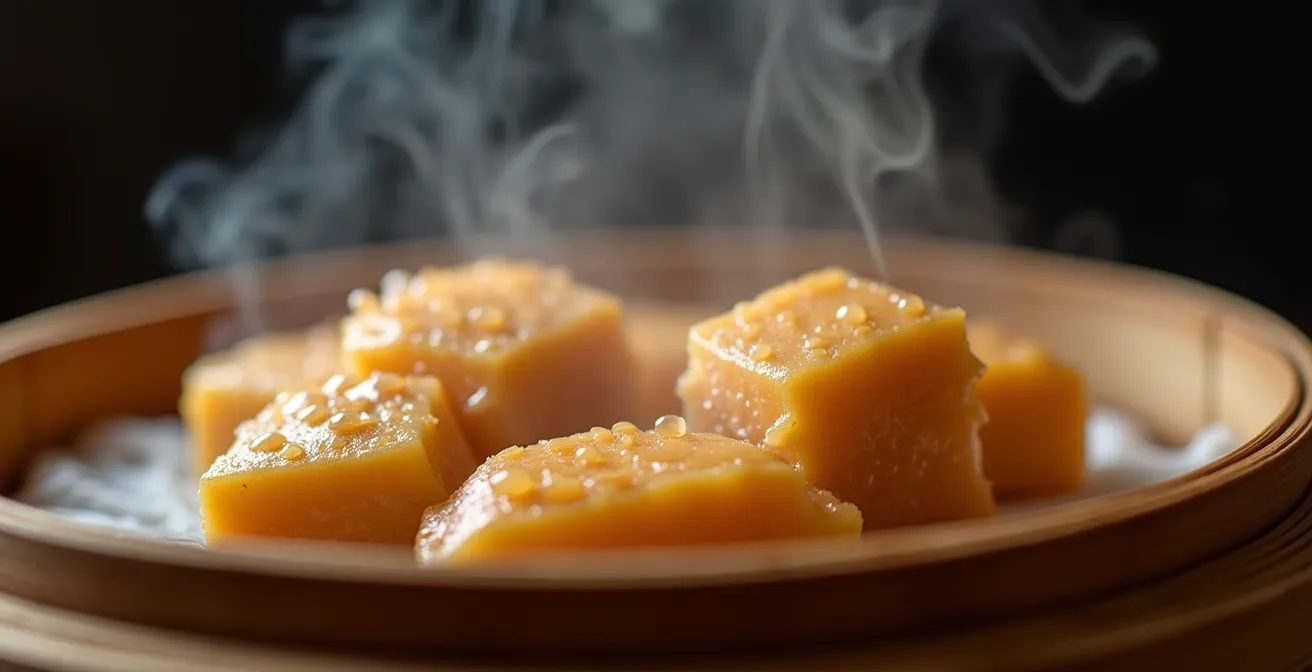
The process is simple and requires minimal equipment. A dedicated steamer basket is ideal, but a metal colander set inside a pot with a lid works just as well. The goal is to elevate the tempeh above the boiling water, allowing the steam to circulate freely. You’ll know it’s ready when the tempeh has softened slightly and lost its raw, sharp aroma, replaced by a milder, nuttier scent. As a testament to its effectiveness, one culinary resource outlines a straightforward three-step method for perfect steaming every time.
- Prepare the Steamer: Fill a pot with about 1-2 inches of water. Place a steamer basket inside, making sure the water level is below the bottom of the basket.
- Position the Tempeh: Cut your tempeh into the desired shape for your recipe (cubes, slabs, or triangles). Arrange the pieces in a single layer within the basket, leaving some space between them for even steam circulation.
- Steam to Perfection: Bring the water to a boil, then reduce the heat to a steady simmer. Cover the pot and steam the tempeh for 10 to 15 minutes. Afterward, the tempeh is perfectly primed for marination.
Soy vs. Chickpea Tempeh: Which One Is Easier on the Stomach?
While traditional tempeh is made from soybeans, the world of fermented foods is expanding, with alternatives like chickpea, black bean, or multigrain tempeh becoming more available. For individuals with sensitive digestion or concerns about soy, the choice between them is significant. Generally, all tempeh is considered easier to digest than its unfermented counterparts because the fermentation process breaks down complex compounds like phytic acid and oligosaccharides, which can cause gas and bloating. This pre-digestion by the mycelium culture makes the nutrients more accessible and the food gentler on the gut.
Between soy and chickpea tempeh, the “easier” option often comes down to individual tolerance. However, soy-based tempeh has a distinct advantage due to the nature of the fermentation process on soybeans. As one of the most well-researched fermented foods, it’s known for its robust probiotic and prebiotic benefits. As a prominent health publication notes, tempeh provides beneficial prebiotics, which are non-digestible fibers that act as food for the healthy bacteria in your gut. This fosters a thriving gut microbiome, which is linked to everything from improved regularity to reduced inflammation.
One distinct difference between tofu and tempeh is that tempeh provides beneficial prebiotics. Prebiotics are natural, non-digestible fibers that promote the growth of healthy bacteria in your digestive tract. They’re linked to regular bowel movements, reduced inflammation, lower cholesterol levels, and even improved memory.
– Healthline Editorial Team, Healthline Nutrition Review
Chickpea tempeh is an excellent soy-free option and is also very digestible for most people. It offers a slightly milder, earthier flavor. However, if soy is not a dietary concern, traditional soy tempeh often provides a more complex nutritional profile and a more significant dose of these beneficial gut-friendly fibers. For those new to tempeh, starting with a high-quality, organic soy tempeh is often the best way to experience its full range of health benefits.
The Frying Error That Turns Tempeh into Dry Leather
After perfectly steaming and marinating your tempeh, the final cooking stage is where many cooks make a critical error: treating it like tofu. Because tempeh has a much lower water content and a dense, meaty structure, it can go from golden and crispy to dry and leathery in an instant. The most common mistake is using too high a heat with too little oil. This combination aggressively sears the outside while rapidly pulling all the moisture from the interior, leaving you with a tough, chewy product.
The goal is a pan-fry, not a deep-fry or a dry-fry. The secret is to use a moderate heat (medium to medium-high) and a generous layer of cooking oil. The oil serves two purposes: it conducts heat evenly for a beautiful golden-brown crust, and it creates a barrier that helps lock moisture inside the tempeh. Don’t crowd the pan; cooking in batches ensures each piece has direct contact with the hot surface, allowing it to crisp up rather than steam. A properly fried piece of tempeh should have a satisfyingly crunchy exterior that gives way to a tender, flavorful, and moist center.
Achieving this perfect texture requires attention to a few key details that prevent moisture loss and promote a crispy crust. From pre-treatment to temperature control, each step plays a role in the final outcome. The following checklist distills professional techniques into an actionable plan.
Action Plan: Achieving Perfectly Moist and Crispy Tempeh
- Pre-Treatment is Key: Always steam or boil the tempeh for 10 minutes before frying. This hydrates the protein matrix and is the first line of defense against dryness.
- Employ a Starch Coating: After marinating and just before frying, lightly dust the tempeh pieces with cornstarch or arrowroot powder. This creates a protective crust that seals in moisture.
- Master Temperature Control: Heat your pan over medium heat, not high. Add enough oil to coat the bottom of the pan generously. The tempeh should sizzle gently when added, not smoke and spit violently.
- Consider the Freezing Hack: For an even meatier, chewier texture that holds moisture exceptionally well, freeze the tempeh block overnight and then thaw it before steaming and marinating. This process creates small ice crystals that open up the structure further.
- Don’t Rush the Marinade: Even after steaming, allow the tempeh to marinate for at least 30 minutes. This step is as much about adding moisture and flavor as it is about taste.
By avoiding the high-heat, low-oil trap and embracing these techniques, you can ensure your tempeh is consistently delicious. Air frying is also an excellent alternative for crispier edges, typically at around 400°F (200°C) for 10-15 minutes, which uses less oil while achieving a similar result.
How Long to Marinate Tempeh for Maximum Flavor Penetration?
Marination is where tempeh’s flavor profile is truly born. After steaming has opened up the protein structure, the tempeh is primed to absorb the tastes of your chosen marinade. The question of “how long” is crucial, and the answer depends on your desired flavor intensity and available time. Unlike meat, tempeh doesn’t have fat to carry flavor, so it relies entirely on liquid absorption. A quick 30-minute marinade at room temperature is the minimum for noticeable flavor. During this time, the slightly warmer temperature increases molecular activity, allowing the marinade to penetrate more quickly than it would in the refrigerator.
For deeper, more complex flavor, a longer marination time is beneficial. Refrigerating tempeh in its marinade for 2 to 24 hours allows for slow, steady absorption, resulting in a richer taste throughout the block. However, there is a method that offers the best of both worlds: speed and deep penetration. The vacuum sealing technique, often used in professional kitchens, dramatically accelerates the process. By placing the marinated tempeh in a vacuum-sealed bag, the air pressure forces the liquid into every crevice, achieving in under an hour what might otherwise take overnight.
Case Study: The Vacuum Sealing Method for Rapid Marination
Frustrated by the long wait times for traditional marination, some culinary enthusiasts have adopted vacuum sealing. The process is simple: slice steamed tempeh to your desired thickness (around 5-10mm is ideal), place it in a vacuum-seal bag with a liquid marinade, and seal it. The negative pressure created inside the bag forces the marinade into the tempeh’s porous structure. By letting it rest in the fridge for just 30 to 60 minutes, you can achieve a level of flavor penetration that is comparable to an overnight soak.
The effectiveness of each method is a trade-off between time, temperature, and technique. Understanding these variables allows you to choose the best approach for your schedule and culinary goals.
| Method | Time Required | Temperature | Flavor Absorption |
|---|---|---|---|
| Room Temperature | 30 minutes | 68-72°F | Good – increased molecular activity |
| Refrigerated | 2-24 hours | 35-40°F | Moderate – slower penetration |
| Vacuum Sealed | 20-60 minutes | Any | Excellent – forced penetration |
| Traditional Overnight | 8-12 hours | 35-40°F | Very Good – time compensates |
Why Organic Fermented Protein Sources Are Superior for Sensitive Digestion?
For individuals with sensitive digestive systems, the world of plant-based proteins can be a minefield. Many legumes and grains contain anti-nutrients like phytates and lectins, which can interfere with nutrient absorption and cause discomfort. This is where fermentation becomes a game-changer. Fermented protein sources like tempeh are, by their nature, “pre-digested.” The fermentation culture (the Rhizopus mycelium in tempeh) breaks down these problematic compounds before they ever reach your stomach, unlocking the food’s full nutritional potential and making it significantly easier to digest.
Choosing organic sources adds another layer of digestive assurance. Organic farming prohibits the use of synthetic pesticides, herbicides, and genetically modified organisms (GMOs). Traces of these chemicals can be irritants for a sensitive gut. By opting for organic fermented proteins, you are choosing a product that is not only free from these potential irritants but is also created from ingredients grown in healthier, more nutrient-rich soil. This results in a cleaner, more wholesome final product that your body can process more easily.
The science behind this is clear. Fermentation doesn’t just add probiotics; it fundamentally transforms the food. This process is also key to removing the bitterness we’ve discussed. As one tempeh producer explains, the bitter taste is a natural byproduct of specific bacteria that can arise during fermentation.
Simply put, gently heating it helps to reawaken the tempeh’s flavours while also removing that bitter taste. Lactic acid bacteria and acetobacter can create bitter tastes in fermented foods. Luckily, throwing tempeh into a steam bath before cooking with it helps to purge the flavours these food-fermenting organisms can leave behind.
– Henry’s Tempeh, Tempeh Production and Fermentation Guide
This synergy of fermentation and organic sourcing creates a protein source that is not just tolerable but actively beneficial for digestive health. It delivers high-quality protein without the digestive distress often associated with other plant-based options, making it a superior choice for anyone looking to nourish their body gently and effectively.
How to Calculate Macro-Nutrient Distribution for Muscle Gain on a Vegan Diet?
Building muscle on a vegan diet requires a strategic approach to macronutrient distribution, with a keen focus on protein intake. While the principles are the same as any other diet—consuming enough calories and protein to support muscle protein synthesis—the sources require more careful planning. The general guideline for muscle gain is to consume approximately 1.6 to 2.2 grams of protein per kilogram of body weight. For a 70kg (154 lbs) individual, this translates to a target of 112 to 154 grams of protein per day.
Once your protein target is set, the remaining calories are distributed between carbohydrates and fats. A common split for muscle gain (anabolism) is 40% carbohydrates, 30% protein, and 30% fat. Carbohydrates are crucial for providing the energy needed for intense workouts, while healthy fats are essential for hormone production, including those involved in muscle growth. Calculating this begins with determining your Total Daily Energy Expenditure (TDEE), which is the number of calories you burn per day. Online calculators can provide a good estimate based on your age, gender, weight, height, and activity level. If your TDEE is 2,500 calories, your macro targets would be approximately 250g of carbs, 188g of protein, and 83g of fat.
This is where high-quality, dense protein sources like tempeh become invaluable. Incorporating foods that deliver a significant amount of protein per serving makes hitting these targets far more achievable. Authoritative nutritional guides confirm the impressive profile of tempeh for this purpose. For instance, clinical nutritionists confirm that tempeh provides a balanced mix of macros ideal for athletes, with a single 3oz (85g) serving containing around 18 grams of protein alongside healthy fats and carbohydrates. By strategically including tempeh in meals, you can easily boost your protein intake while also benefiting from its fiber and micronutrients, making it a cornerstone ingredient for any vegan athlete’s meal plan.
Key Takeaways
- Steaming is the non-negotiable first step to remove bitterness and prepare tempeh for flavor absorption.
- Nutritionally, tempeh is superior to tofu, containing roughly double the protein and significantly more dietary fiber per serving.
- Proper cooking technique—specifically, using moderate heat and adequate oil when pan-frying—is essential to prevent a dry, leathery texture.
The Truth About Complete Vegetal Sources: Do You Really Need to Combine Proteins?
One of the most persistent myths in plant-based nutrition is the idea of “protein combining”—the belief that you must eat different plant foods together at every meal (like rice and beans) to form a “complete protein.” A complete protein is one that contains all nine essential amino acids that the human body cannot produce on its own. While it’s true that many plant foods are low in one or more of these amino acids, the concept of mandatory combining at each meal has long been debunked by the nutrition community.
The modern understanding is that the body maintains a “pool” of amino acids throughout the day. As long as you consume a variety of plant-based protein sources—legumes, grains, nuts, and seeds—over a 24-hour period, your body can pull the necessary amino acids from this pool to build complete proteins as needed. This makes vegan meal planning far less restrictive and more intuitive than the old model suggested. The focus should be on overall dietary variety, not on rigid meal-by-meal combinations.
Furthermore, some plant-based foods defy this myth entirely by being complete proteins on their own. Tempeh, like tofu and quinoa, is a perfect example. As it’s made from whole soybeans, which are themselves a complete protein source, tempeh naturally provides all nine essential amino acids in sufficient quantities. According to a guide comparing plant-based proteins, both tofu and tempeh are considered complete, making them exceptionally valuable and convenient for a vegan diet. This eliminates any need for protein combining when they are the centerpiece of a meal.
Ultimately, the fear of incomplete protein on a vegan diet is largely unwarranted, especially when high-quality sources like tempeh are included. The key is variety over the course of a day, not complicated calculations at every meal. By focusing on a diverse intake of whole plant foods, you can easily meet all your body’s protein requirements.
Frequently Asked Questions on How to Cook Nutrient-Rich Tempeh Without the Bitter Aftertaste?
Does tempeh provide all essential amino acids without combining with grains?
Yes, tempeh is a complete protein containing all nine essential amino acids in adequate proportions, making grain combining unnecessary for completeness.
How does the 24-hour amino acid pool concept change meal planning?
Your body maintains an amino acid pool throughout the day, meaning you don’t need to combine proteins at each meal but rather ensure variety over 24 hours.
What makes fermented soy superior to other plant proteins?
Fermentation increases protein bioavailability, reduces anti-nutrients, adds beneficial probiotics, and creates a complete amino acid profile with better digestibility.