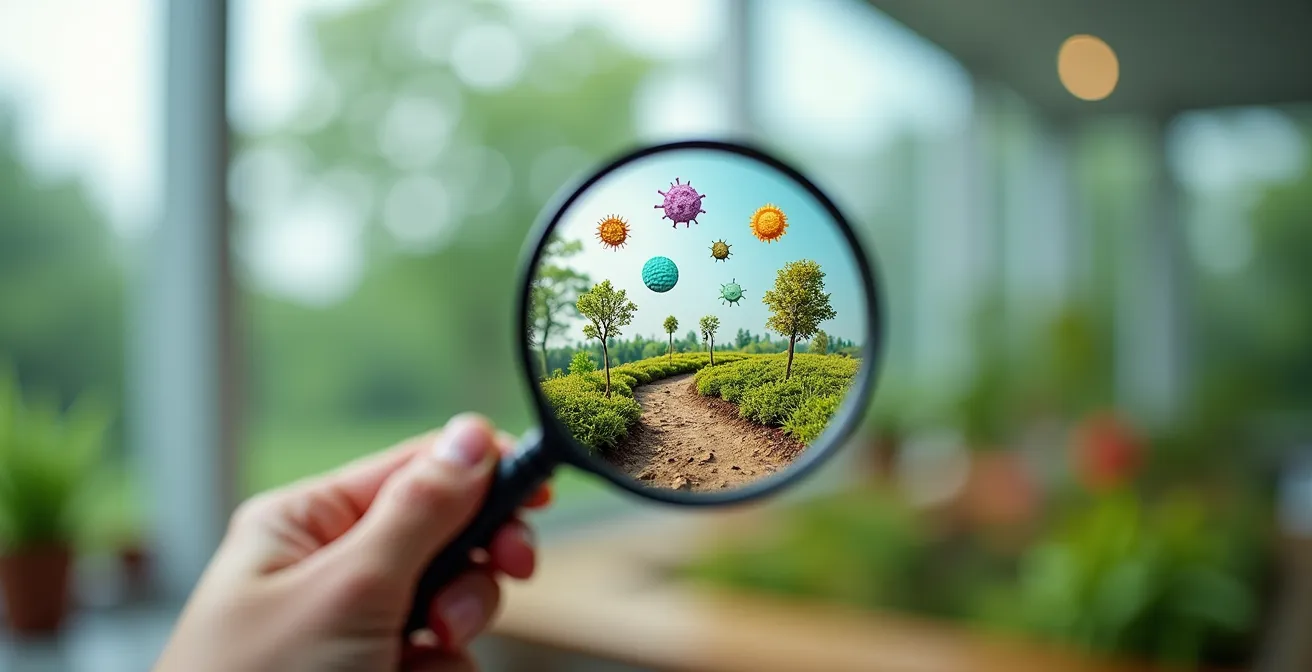
The key to post-antibiotic recovery isn’t just taking probiotics; it’s a strategic, phased approach to rebuilding your entire gut ecosystem.
- Focus first on calming inflammation and preparing the “microbial terrain” with gentle, cooked foods.
- Sequentially introduce diverse prebiotics and fermented foods to nourish and repopulate beneficial bacteria.
Recommendation: Prioritize a “low and slow” reintroduction of fiber and fermented foods to support recovery while minimizing digestive distress and the risk of complications like SIBO.
That familiar feeling of digestive unease after a course of necessary antibiotics is a sign of a profound internal shift. While these medications are lifesaving, they act like a broad-spectrum herbicide in the delicate garden of your gut, clearing out both harmful and beneficial bacteria. The conventional advice is often a simple prescription: “take some probiotics.” But this approach vastly oversimplifies a complex biological process. True recovery is not a race to repopulate, but a patient, strategic process of ecosystem reconstruction.
The journey to heal your gut goes far beyond a single pill. It involves understanding the microbial terrain you are working with, the sequence in which you should reintroduce nutrients, and the critical difference between various supportive foods. It requires a shift in perspective—from simply replacing what was lost to actively cultivating a resilient and diverse internal environment. This is about providing the right food, at the right time, for the right microbes.
This guide offers a different path. Instead of a simple checklist, it provides a healing framework based on the science of microbiome restoration. We will explore why your gut is so central to your immunity, how to properly nourish your returning bacteria, the nuanced debate between probiotic supplements and whole fermented foods, and the hidden risks to watch for. This is your patient, science-backed roadmap to not just recover, but to build a more robust microbiome for the long term.
To navigate this complex topic, this article is structured to guide you step-by-step through the process of microbiome restoration. The following summary outlines the key stages of your healing journey, from understanding the foundations to mastering advanced dietary techniques.
Summary: A Strategic Guide to Post-Antibiotic Gut Healing
- Why 70% of Your Immune System Lives in Your Gut Microbiome?
- How to Eat More Prebiotics: The Food Your Bacteria Actually Eat?
- Probiotic Pills vs. Fermented Food: Which Colonizes the Gut Better?
- The SIBO Risk: When “Good” Bacteria Grow in the Wrong Place
- How Long Does It Take to Rebuild Gut Flora After Antibiotics?
- Mastering Traditional Fermentation: How to Make Kimchi at Home Safely?
- Can a Whole Food Diet Reduce Chronic Inflammatory Markers in 8 Weeks?
- Why Organic Fermented Protein Sources Are Superior for Sensitive Digestion?
Why 70% of Your Immune System Lives in Your Gut Microbiome?
Understanding the “why” behind post-antibiotic care begins with a staggering fact. Your gut is not just a digestive tube; it is the central headquarters of your body’s defense system. Scientific research consistently shows that with 70-80% of immune cells being present in the gut, the health of your microbiome directly dictates your systemic immunity. These trillions of microbes form a living barrier, communicate with your immune cells, and help them distinguish between friend and foe. They are the gatekeepers that educate and train your immune response.
When antibiotics disrupt this delicate ecosystem, they do more than cause digestive upset; they temporarily dismantle a core component of your immunity. This can leave you more susceptible to other opportunistic pathogens and contribute to a state of low-grade, systemic inflammation. The communication lines between your gut bacteria and immune cells are disrupted, creating a period of vulnerability. This is why a strategic recovery is not just about comfort—it’s about rebuilding your primary line of defense.
The stakes for recovery are high. The goal is not just to feel better, but to restore the complex functions these microbes perform. The process is one of patient reconstruction, as the microbial community needs time and the right resources to rebuild its intricate architecture and re-establish its critical dialogue with your immune system. In fact, the consequences of disruption can be long-lasting.
Case Study: The Lingering Impact of Antibiotic Exposure
A landmark study published in Nature Microbiology highlighted the long-term effects of antibiotics on the gut. While the subjects’ gut microbiota recovered to a near-baseline composition within 1.5 months, the impact was not fully reversible. A critical finding was that nine common, beneficial species, which were present in all subjects before treatment, remained undetectable in most of the subjects even after 180 days. This demonstrates that antibiotic use can lead to a permanent loss of certain bacterial species, underscoring the importance of a proactive and thorough recovery strategy.
How to Eat More Prebiotics: The Food Your Bacteria Actually Eat?
If probiotics are the “seeds” you plant in your gut garden, then prebiotics are the “fertilizer” that nourishes them. Prebiotics are specific types of fiber that your own digestive system cannot break down but are the preferred food source for your beneficial gut bacteria. After an antibiotic course has cleared the terrain, providing ample prebiotic fuel is essential for encouraging the growth of the surviving beneficial microbes and any new ones you introduce. It’s the most fundamental step in ecosystem reconstruction.
The strategy isn’t just to eat fiber, but to eat a wide diversity of fibers. Different bacteria thrive on different types of prebiotics. Eating a “rainbow” of plant foods—from the inulin in garlic and onions to the resistant starch in cooled potatoes and green bananas—ensures you are feeding a wider range of beneficial species. A diet lacking in this diversity can slow down your recovery. Indeed, Stanford research demonstrates that a fiber-deficient diet exacerbated microbiota collapse and significantly delayed the recovery process in study models.
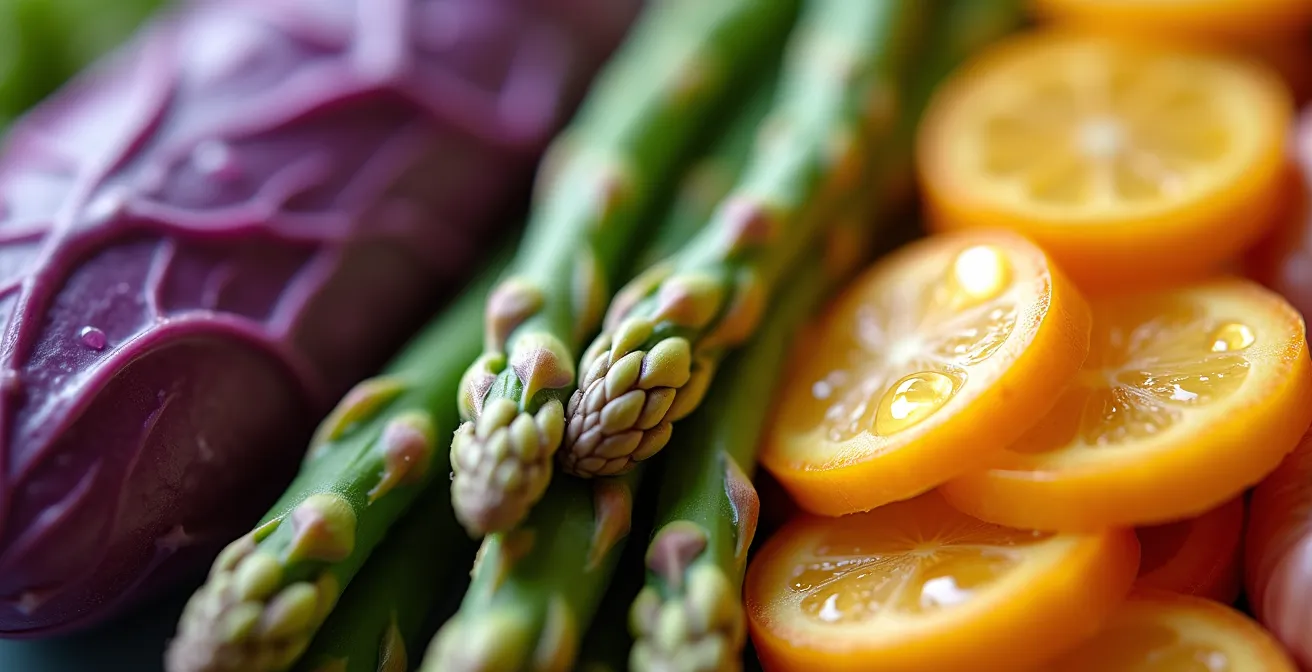
However, a gut that is raw from antibiotics can be sensitive. Rushing to eat large amounts of raw, fibrous vegetables can cause bloating, gas, and discomfort. The key is a gentle, sequential approach. Start with well-cooked, soft vegetables and stewed fruits, which are easier to digest, and slowly introduce more complex, raw fibers as your tolerance improves. This “low and slow” method respects the healing state of your microbial terrain.
Your Action Plan: Low and Slow Prebiotic Reintroduction
- Start Gentle: Begin with cooked vegetables (like steamed carrots or zucchini) and stewed fruits (like applesauce) to minimize digestive stress.
- Introduce Ferments Cautiously: Gradually add fermented foods in small portions, starting with just 1-2 tablespoons daily to introduce beneficial microbes.
- Diversify Your Fiber: Slowly incorporate diverse plant-based fibers from different sources (legumes, whole grains, nuts, seeds, various vegetables) to feed a wider range of bacteria.
- Add Polyphenols: Include polyphenol-rich foods like berries, dark chocolate, and green tea, which act as antioxidants and also support beneficial bacteria.
- Monitor and Increase: Pay close attention to your body’s tolerance and slowly increase portion sizes over a period of 2 to 4 weeks.
Probiotic Pills vs. Fermented Food: Which Colonizes the Gut Better?
The moment antibiotics are mentioned, the conversation inevitably turns to probiotics. But the choice between a targeted probiotic pill and a spoonful of sauerkraut is more nuanced than many realize. Neither is inherently superior; they simply serve different purposes at different stages of recovery. The concept of “colonization” itself is often misunderstood. Most probiotics, whether from a capsule or from food, are transient visitors. They pass through your gut, exerting beneficial effects along the way, but do not typically take up permanent residence.
Probiotic supplements offer a targeted, high-dose delivery of specific, well-researched strains. Strains like Saccharomyces boulardii and Lactobacillus rhamnosus GG are particularly effective when taken during and immediately after an antibiotic course to help prevent antibiotic-associated diarrhea and hold the space for beneficial bacteria to return. They act as powerful, temporary placeholders in the disrupted ecosystem.
Fermented foods, on the other hand, offer a different kind of advantage. While they may have a lower concentration of microbes, they provide a much greater diversity of species within a food matrix. This matrix also contains prebiotics (food for the microbes), enzymes that aid digestion, and beneficial postbiotics (metabolic byproducts created during fermentation). This makes fermented foods like kefir, kimchi, and miso an ideal long-term strategy for maintaining gut diversity and function, once the initial, acute recovery phase is over.
This balanced perspective is crucial, as eloquently stated by Dr. Will Bulsiewicz, a renowned gastroenterologist, on The Proof Podcast:
I’m not here to vilify antibiotics… they literally are what I would rank as the number one breakthrough in medicine of the last 100 years. But the choice is about risk and benefit, and we need to understand both sides of that equation in order to make a good choice.
– Dr Will Bulsiewicz, The Proof Podcast Episode #271
The following table, based on insights from leading microbiome resources, breaks down the strategic differences. An analysis of post-antibiotic strategies provides a clear framework for when to use each approach.
| Aspect | Probiotic Pills | Fermented Foods |
|---|---|---|
| Colonization | Transient visitors | Also transient but with food matrix benefits |
| Best Timing | During & immediately after antibiotics | Long-term maintenance strategy |
| Key Strains | S. boulardii, L. rhamnosus GG | Diverse Lactobacillus, Bifidobacterium |
| Additional Benefits | Targeted therapeutic effect | Prebiotics, vitamins, enhanced digestibility |
| Duration | Antibiotic course + 7 days | Ongoing consumption recommended |
The SIBO Risk: When “Good” Bacteria Grow in the Wrong Place
In the rush to repopulate the gut, there’s a significant but often overlooked risk: Small Intestinal Bacterial Overgrowth (SIBO). SIBO occurs when bacteria—even beneficial ones—overgrow in the small intestine, a part of the digestive tract that should be relatively sparsely populated. The large intestine is designed to host a dense microbial community, but the small intestine is not. When bacteria ferment food too early in the digestive process, it can lead to significant bloating, gas, pain, and nutrient malabsorption.
Antibiotic use is a known risk factor for developing SIBO. By disrupting the normal balance and, crucially, by potentially impairing gut motility (the coordinated muscular waves that move food along), antibiotics can create an environment where bacteria can stagnate and multiply in the wrong place. The “migrating motor complex” (MMC), the gut’s self-cleaning wave that sweeps debris from the small intestine between meals, can be impaired, raising the SIBO risk.

This is why an aggressive, high-dose reintroduction of probiotics and prebiotics is not always the best strategy for everyone, especially those with pre-existing digestive issues. For these individuals, a more cautious approach is warranted. It highlights the importance of not just what you add back, but also ensuring the fundamental mechanics of your gut, like motility, are functioning properly. It’s a delicate balance; you must cross the SIBO threshold with care.
Certain factors can increase an individual’s susceptibility to post-antibiotic SIBO. If you have several of these risk factors, it is even more critical to adopt a “low and slow” reintroduction protocol and potentially work with a healthcare practitioner:
- Prior diagnosis of Irritable Bowel Syndrome (IBS) or other digestive issues before the antibiotic course.
- Current or recent use of acid-blocking medications like proton pump inhibitors (PPIs).
- The use of broad-spectrum antibiotics (e.g., ciprofloxacin, amoxicillin-clavulanate).
- A long duration of antibiotic treatment.
- A personal history of slow gut motility, chronic constipation, or previous SIBO episodes.
How Long Does It Take to Rebuild Gut Flora After Antibiotics?
One of the most common questions from patients is, “When will I feel normal again?” The timeline for gut flora recovery is highly individual and depends on factors like the type and duration of antibiotic use, your baseline diet, and your age. While there is no single answer, research provides us with a general framework. Most studies indicate that the gut microbiota begins to return to its baseline composition within 1 to 2 months after a short course of antibiotics. However, “baseline composition” does not mean full recovery.
The deeper, more critical insight from research is that some bacterial species may never return. This long-term shift underscores the profound impact of antibiotics and the importance of a dedicated recovery effort. A powerful study provided a detailed look at this process.
Study: The Six-Month Recovery and Permanent Loss
In research highlighted by a study on young, healthy men, a 4-day course of three antibiotics caused an almost complete eradication of detectable gut bacteria. This was followed by a gradual recovery of most bacterial species over a period of six months. The critical takeaway, however, was what happened after that. Even after six months of recovery, the participants were still missing nine of their common, beneficial bacterial species, suggesting a potentially permanent alteration to their microbiome.
This reality can feel daunting, but it should instead be empowering. It emphasizes that what you do in the weeks and months following a course of antibiotics truly matters. It shifts the focus away from a passive waiting game to an active, daily practice of support. As microbiome researcher Dirk Gevers, Ph.D., wisely puts it:
The reality is that recovery looks different for everyone. Some bacteria bounce back quickly. Others take longer, and some may not return at all. What matters most is not the clock—it’s the consistency. Daily support through the foods you eat, your lifestyle, and targeted probiotics is what gives your gut the best chance to recover well.
– Dirk Gevers, Ph.D., Seed Health microbiome research
Mastering Traditional Fermentation: How to Make Kimchi at Home Safely?
Incorporating fermented foods is a cornerstone of long-term microbiome maintenance. Making them at home, especially a complex ferment like kimchi, can feel intimidating, but it is an empowering way to produce a potent, diverse, and cost-effective synbiotic—a food containing both probiotics and prebiotics. The key to safe home fermentation lies in understanding and controlling the microbial environment to favor beneficial bacteria, primarily Lactobacilli, while inhibiting pathogens.
The two most critical factors for safety are salt concentration and temperature. Salt is not just for flavor; it is a selective pressure. A proper salt concentration draws water out of the vegetables, creating a brine that inhibits the growth of spoilage microbes while allowing salt-tolerant Lactobacilli to thrive. As these beneficial bacteria consume the sugars in the vegetables, they produce lactic acid, which drops the pH of the environment. This acidic environment is the second layer of protection, as most pathogenic bacteria cannot survive in it. A pH below 4.6 is the gold standard for safety.
Controlling the process is simpler than it sounds. By following a clear protocol, you can reliably create a safe and delicious product. Cleanliness is paramount—sterilized jars and clean utensils prevent contamination from unwanted molds or bacteria. Keeping the vegetables fully submerged under the brine is also crucial, as exposure to air is what allows mold to grow. With these principles in mind, you can confidently embark on your fermentation journey.
- Use 2-3% Salt by Weight: This is the magic ratio. It’s enough to selectively inhibit pathogens while allowing beneficial Lactobacilli to flourish.
- Maintain Proper Temperature: Keep your fermenting kimchi between 65-75°F (18-24°C). This temperature is optimal for the succession of different beneficial bacteria.
- Monitor the pH Drop: For ultimate safety, the pH should drop below 4.6 within 3-5 days. This acidic environment prevents the growth of harmful bacteria.
- Ensure Cleanliness: Always use clean, sterilized equipment (jars, weights, bowls) to prevent unwanted microbial contamination from spoiling your batch.
- Keep it Submerged: Ensure all vegetables are kept completely under the surface of the brine. This anaerobic environment prevents mold growth.
- Taste and Refrigerate: Start taste-testing after day 3. Once it reaches a tanginess you enjoy (usually between 5 days and 2 weeks), move it to the refrigerator to slow fermentation.
Key Takeaways
- Post-antibiotic gut recovery is a strategic process of rebuilding, not just a simple replacement of bacteria.
- A “low and slow” sequential introduction of diverse prebiotic fibers is crucial to nourish beneficial microbes without causing distress.
- Probiotic pills are best for targeted, short-term support during antibiotic use, while fermented foods are a superior long-term strategy for microbial diversity.
Can a Whole Food Diet Reduce Chronic Inflammatory Markers in 8 Weeks?
The connection between diet, the gut microbiome, and systemic inflammation is profound and direct. After the disruption of antibiotics, the gut lining can become more permeable, a condition sometimes referred to as “leaky gut.” This can allow bacterial components, like lipopolysaccharides (LPS), to enter the bloodstream, triggering a low-grade, chronic inflammatory response throughout the body. A whole food, anti-inflammatory diet is a powerful tool to counteract this, helping to heal the gut lining and calm the immune system.
The principles are straightforward: focus on what you add, not just what you restrict. The goal is to flood the body with nutrients that actively fight inflammation and support the microbial ecosystem. This means prioritizing omega-3 fatty acids, found in fatty fish and walnuts, which are potent anti-inflammatory agents. It also means consuming a high intake of polyphenols—the vibrant compounds found in berries, dark leafy greens, and even dark chocolate. These compounds not only act as antioxidants but also serve as fuel for beneficial gut bacteria.
Conversely, it’s equally important to minimize foods that promote inflammation. Ultra-processed foods, refined sugars, and excessive omega-6 fatty acids (from certain vegetable oils and processed snacks) can fuel inflammatory pathways and feed less desirable microbes. Shifting the balance of your diet towards whole, unprocessed foods sends a clear signal to your body and your microbiome to move from a state of alarm to one of healing and repair. While an 8-week timeframe is a common benchmark in studies to see measurable changes, the benefits begin with your very next meal.
A truly holistic approach extends beyond the plate. Chronic stress and poor sleep are also significant drivers of inflammation. Therefore, a comprehensive anti-inflammatory protocol should include lifestyle practices that support your body’s recovery:
- Consume omega-3 rich foods like salmon, mackerel, or walnuts at least 3 times per week.
- Include a wide variety of polyphenol-rich berries, dark leafy greens, and colorful vegetables daily.
- Practice stress management, such as 10 minutes of daily meditation or gentle yoga.
- Prioritize 7-9 hours of quality sleep per night to support hormone regulation and cellular repair.
- Engage in 150 minutes of moderate exercise weekly to improve gut motility and reduce inflammation.
- Strictly limit ultra-processed foods, added sugars, and refined carbohydrates.
Why Organic Fermented Protein Sources Are Superior for Sensitive Digestion?
Protein is essential for recovery and repair, but for a gut compromised by antibiotics, digesting it can be a challenge. This is where the ancient wisdom of fermentation offers a modern solution. Fermented protein sources like kefir, tempeh, and miso are superior for sensitive digestion because they have been microbially pre-digested. The bacteria and yeasts used in the fermentation process break down complex proteins into simpler, more easily absorbed amino acids and bioactive peptides.
This pre-digestion process dramatically reduces the digestive burden on your body. Your gut doesn’t have to work as hard, freeing up energy for healing and repair. For example, the fermentation of dairy into kefir not only adds beneficial probiotics but also breaks down much of the lactose, making it tolerable even for many with lactose sensitivity. Similarly, fermenting soybeans into tempeh or miso reduces anti-nutritional factors like phytic acid, making the protein and minerals more bioavailable.
Choosing organic sources is an additional layer of support. An organic label ensures the original source (e.g., the milk for kefir, the soybeans for tempeh) was produced without synthetic pesticides or herbicides, which themselves can have a negative impact on the gut microbiome. By choosing organic fermented proteins, you provide your healing gut with the cleanest, most bioavailable form of this essential macronutrient. This is a critical detail in nurturing a sensitive digestive system back to robust health.
The Science of Fermented Protein
According to an analysis by the Canadian Digestive Health Foundation, the fermentation process does more than pre-digest protein. It creates unique bioactive peptides that have been shown to possess anti-inflammatory and immune-modulating properties. The enzymatic activity in foods like miso can also support your body’s own digestive processes. This makes fermented proteins a multi-faceted tool: they are easier to digest, provide probiotics, and deliver compounds that actively support gut health.
The journey of healing your microbiome is a testament to the body’s resilience and the power of thoughtful, consistent nourishment. By moving beyond simplistic advice and embracing a strategic, ecosystem-focused approach, you are not just recovering from a course of antibiotics—you are actively participating in the cultivation of long-term health. Begin today by incorporating one small, gentle change, and build from there.
Frequently Asked Questions on Restoring Gut Flora
How do I know if my kimchi has gone bad versus normal fermentation?
Normal fermentation produces a tangy, sour smell and taste. Bad kimchi will have fuzzy mold (especially if not submerged), an off-putting rotting smell, or a slimy texture. A white film on the surface (kahm yeast) is generally harmless but should be skimmed off for best flavor and texture.
Can fermented foods be problematic for histamine-sensitive individuals?
Yes, fermented foods can be high in histamines as they age. Individuals with histamine intolerance should start with very small amounts of fermented foods or opt for “fresh” ferments that are only 1-3 days old, as these have significantly lower histamine levels.
What’s the difference between kimchi as a probiotic versus a synbiotic food?
Kimchi is a perfect example of a synbiotic food. It provides both probiotics (the live beneficial bacteria created during fermentation) and prebiotics (the cabbage fiber that serves as food for the bacteria), creating a powerful synergistic effect for gut health.