
In summary:
- Transitioning to a plant-based diet succeeds when you treat it as a system upgrade, not a series of random recipe attempts.
- Focus on a strategic $100 pantry restock centered on bulk staples like beans, lentils, and grains to immediately lower costs.
- Prevent nutrient deficiencies by mastering “nutrient pairing,” such as combining iron-rich lentils with vitamin C-rich bell peppers.
- Gain family acceptance by “veganizing” familiar favorites—like tacos and pasta—focusing on flavor and texture, not just ingredient swaps.
- Save time and reduce stress with “component prep” and thematic meal nights, creating flexibility for busy schedules.
The decision to move your family toward a plant-based lifestyle often starts with the best intentions: better health, a lighter environmental footprint, and new culinary adventures. But for many, the reality quickly sets in. It feels like a constant battle against picky eaters, a confusing maze of nutritional worries, and a grocery bill that seems to inflate overnight. You’ve probably heard the common advice to try “Meatless Mondays” or just “eat more vegetables,” but these tips often fail to address the core challenges.
This approach falls short because it treats the transition as a series of isolated choices rather than what it truly is: a complete overhaul of your family’s food ‘operating system’. The initial enthusiasm wanes when you’re staring at a package of tofu with no idea how to make it taste good, or when your teenager declares they’re “over” lentils after three days. The secret isn’t just finding a few good vegan recipes; it’s about re-engineering your pantry, your meal prep, and even your family’s mealtime psychology from the ground up.
But what if the real key wasn’t about radical, overnight change but about building a sustainable, budget-friendly framework? What if you could make plant-based eating the default, easy, and enjoyable choice, not a daily source of friction? This guide moves beyond generic advice to give you a practical, step-by-step system for transitioning a family of four, proving that it can be done without breaking the budget or the family peace. We’ll deconstruct the process, from a strategic pantry restock to mastering flavor and planning meals that save you both time and money.
This article provides a complete roadmap to navigate the common pitfalls and build a lasting, healthy habit. Explore the sections below to master each component of your new plant-based family kitchen.
Summary: A System for a Successful Plant-Based Family Transition
- Why Most Families Quit Plant-Based Eating Within the First 30 Days?
- How to Restock Your Pantry for Plant-Based Cooking Without Spending Over $100?
- Flexitarian vs. Fully Vegan: Which Approach Suits a Busy Household Best?
- The Iron Deficiency Mistake That Worries 80% of New Plant-Based Parents
- How to “Veganize” Family Favorites So Even Teenagers Won’t Complain?
- How to Store and Prep Versatile Dried Legume Bases for Weekly Meal Prep?
- Cooking with Whole Food Ingredients: 5 Rules for Maximum Flavor Retention
- Strategic Meal Planning for Busy Professionals: Saving 5 Hours Per Week
Why Most Families Quit Plant-Based Eating Within the First 30 Days?
The first month of a dietary change is often called the “make or break” period, and for good reason. Most families abandon their plant-based goals not from a lack of desire, but from a collision of three major obstacles: decision fatigue, perceived deprivation, and a lack of a clear, gradual plan. Without a system, every meal becomes a high-stakes negotiation. What’s for dinner? Is it nutritious enough? Will the kids eat it? This constant questioning is exhausting and makes reverting to old habits incredibly tempting.
The second failure point is the feeling of restriction. Going from a familiar diet to a completely new one overnight can feel like a culinary punishment, especially for children and teenagers. When “plant-based” becomes synonymous with “what we can’t have,” resistance is inevitable. Families who succeed don’t just remove foods; they strategically replace and upgrade them. They don’t start with obscure superfoods but with plant-based versions of meals their family already loves.
Finally, many quit because they attempt an “all or nothing” approach without a structured phase-in. This leads to overwhelm and a sense that it’s too hard to maintain. A gradual, phased approach allows habits and palates to adjust, turning a daunting overhaul into a series of manageable, confidence-boosting wins. It’s about building momentum, not striving for immediate perfection. The key is to have a framework that anticipates these challenges and provides a clear path forward.
Your Action Plan: The Four-Week Family Transition Framework
- Weeks 1-2 (Familiarity First): Focus exclusively on making familiar meals plant-based. Think spaghetti with a rich lentil bolognese, hearty veggie burgers on familiar buns, or creamy mac and cheese with a cashew-based sauce. The goal is to change the ingredients, not the experience.
- Weeks 3-4 (Introduce and Pair): Introduce one new plant protein (like tempeh or edamame) or one new dish per week, but always serve it alongside a guaranteed “safe” and familiar food. Maintain at least a 50% familiarity rate on the dinner table.
- Week 5+ (Systemize Your Prep): Begin batch cooking versatile bases. Cook a large pot of brown rice, a batch of black beans, and a simple tomato sauce. This “component prep” becomes the foundation for quick weeknight meals.
- Ongoing (The 80/20 Rule): Once the new habits are forming, adopt an 80/20 mindset. Aim for 80% whole-food, plant-based eating at home, which allows for 20% flexibility for social events, birthday parties, or a Friday night pizza, eliminating social stress.
How to Restock Your Pantry for Plant-Based Cooking Without Spending Over $100?
One of the biggest myths about plant-based eating is that it’s inherently expensive. While specialty mock meats and gourmet vegan cheeses can be pricey, the foundation of a healthy, affordable plant-based diet is built on some of the most inexpensive ingredients in the grocery store. The key is to shift your spending from perishable, high-cost animal products to shelf-stable, low-cost bulk items. A strategic, one-time restock of your pantry is the single most effective step to set your family up for long-term savings. In fact, a 2021 Oxford University study found that a vegan diet can reduce grocery bills by up to 33%.
This isn’t about buying a hundred new, exotic ingredients. It’s about creating your “pantry operating system” with a tiered approach. The first tier, your Core Staples, should make up about half of your budget and will form the base of over 40 meals. These are your workhorses: dried beans, lentils, brown rice, and whole grains. The second tier is for Flavor Boosters—the items that turn those simple staples into delicious meals. This includes things like nutritional yeast for cheesy flavor, soy sauce or tamari for umami, and a good spice blend. The final, smallest tier is for Flex Items like tahini for hummus or creamy dressings, and chia seeds for puddings or egg replacement.
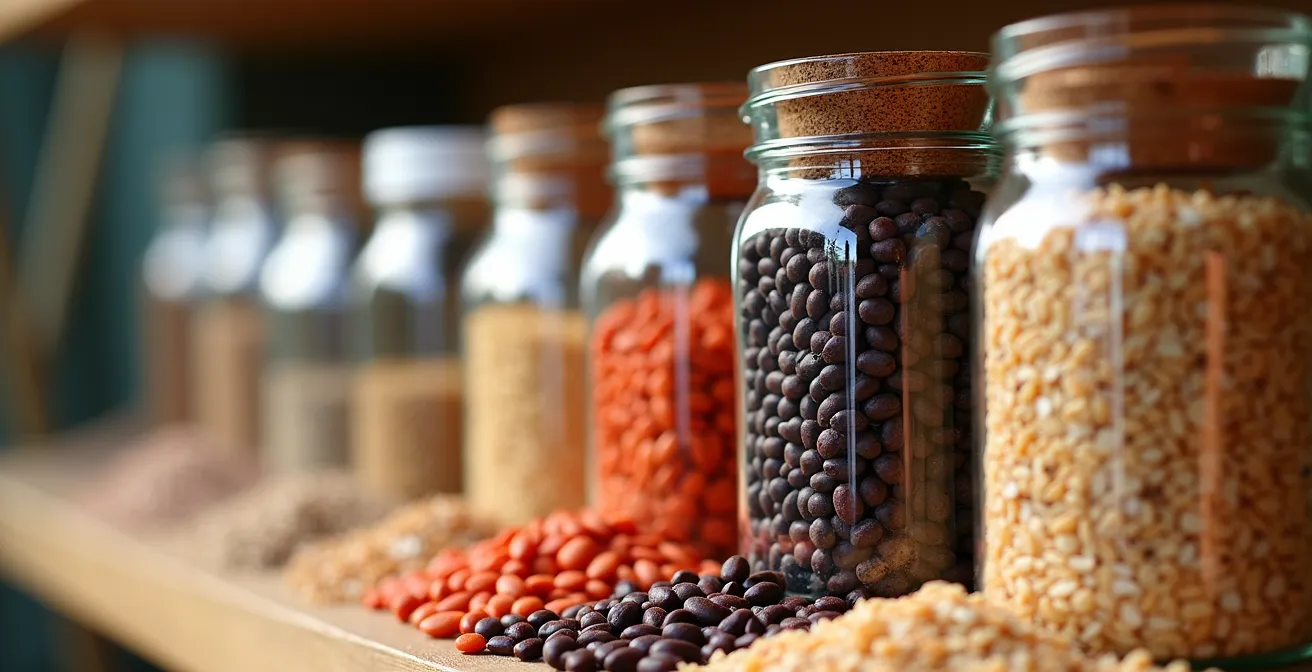
By investing in these staples, you create a pantry that works for you. You’ll always have the building blocks for a quick, nutritious meal on hand, drastically reducing the temptation for expensive takeout on busy nights. This initial $100 investment pays for itself within weeks, not just in money saved, but in stress eliminated.
The following table breaks down how to allocate your $100 budget to build a powerful plant-based pantry from scratch.
| Tier | Budget | Essential Items | Servings/Week |
|---|---|---|---|
| Core Staples | $50 | Brown rice (5lbs), dried lentils (3lbs), dried beans (3lbs), oats (3lbs), pasta (2lbs) | 40+ meals |
| Flavor Boosters | $30 | Nutritional yeast, soy sauce, miso paste, spice blend, garlic, tomato paste | Seasons all meals |
| Flex Items | $20 | Tahini/nut butter, chia seeds, coconut milk, specialty flour | 10-15 enhanced meals |
Flexitarian vs. Fully Vegan: Which Approach Suits a Busy Household Best?
The path to plant-based eating isn’t a single, one-size-fits-all highway. For families, two main approaches emerge: the fully vegan path (eliminating all animal products) and the flexitarian path (eating a predominantly plant-based diet with occasional inclusion of meat or dairy). Choosing the right approach for your busy household is less about rigid ideology and more about sustainable, long-term success and well-being. The “best” approach is the one your family can stick with consistently and joyfully.
A fully vegan diet offers the clearest health and environmental benefits and simplifies kitchen rules—there’s no gray area. However, it can present a steeper learning curve and require more careful planning to ensure all nutritional needs, like B12 and iodine, are met through supplementation and fortified foods. For some families, this clarity is motivating. For others, it can feel restrictive, especially in social situations or with very resistant family members.
The flexitarian approach, often an 80/20 or 90/10 model, provides a pragmatic and often more approachable entry point. It keeps the diet centered on whole plant foods while allowing for a piece of birthday cake at a party or a small portion of fish once a week. This built-in flexibility can dramatically reduce the social pressure on kids and the stress on parents. It allows the family to reap the majority of the benefits of plant-based eating while navigating the realities of a busy life. Critically, both paths can lead to excellent health outcomes when planned thoughtfully.
Case Study: Czech Family Health Outcomes
A 2024 cross-sectional study of 95 Czech families offered valuable insight. It compared vegan, vegetarian, and omnivore families and found that children in vegan households showed comparable growth characteristics to their peers, along with signs of better cardiometabolic health. The study, published in Nature Food, suggests that both fully vegan and other plant-forward approaches can be perfectly healthy for growing children, provided they are well-planned. The key takeaway for parents is that success hinges on nutritional awareness (like ensuring B12 and iodine intake for vegans) rather than the specific label you adopt.
The Iron Deficiency Mistake That Worries 80% of New Plant-Based Parents
Of all the nutritional concerns parents have when switching to a plant-based diet, iron deficiency is often at the top of the list. It’s a valid concern: iron is crucial for energy and cognitive development. The common mistake, however, is not a lack of iron in plant foods—lentils, beans, and spinach are packed with it—but a misunderstanding of how the body absorbs it. Plant-based iron, known as non-heme iron, is less bioavailable than the heme iron found in meat. Simply eating more iron-rich plants isn’t enough; you have to help your body absorb it effectively.
The solution is a simple yet powerful strategy called “nutrient pairing.” The most effective partner for iron is Vitamin C. When consumed in the same meal, Vitamin C can dramatically boost the absorption of non-heme iron. This isn’t a minor tweak; the effect is significant. Research shows that iron absorption from plant foods can increase from a mere 0.8% to as high as 7.1% when paired with a good source of Vitamin C. This means a bowl of lentil soup becomes a nutritional powerhouse when you add a squeeze of lemon or serve it with a side of red bell peppers.
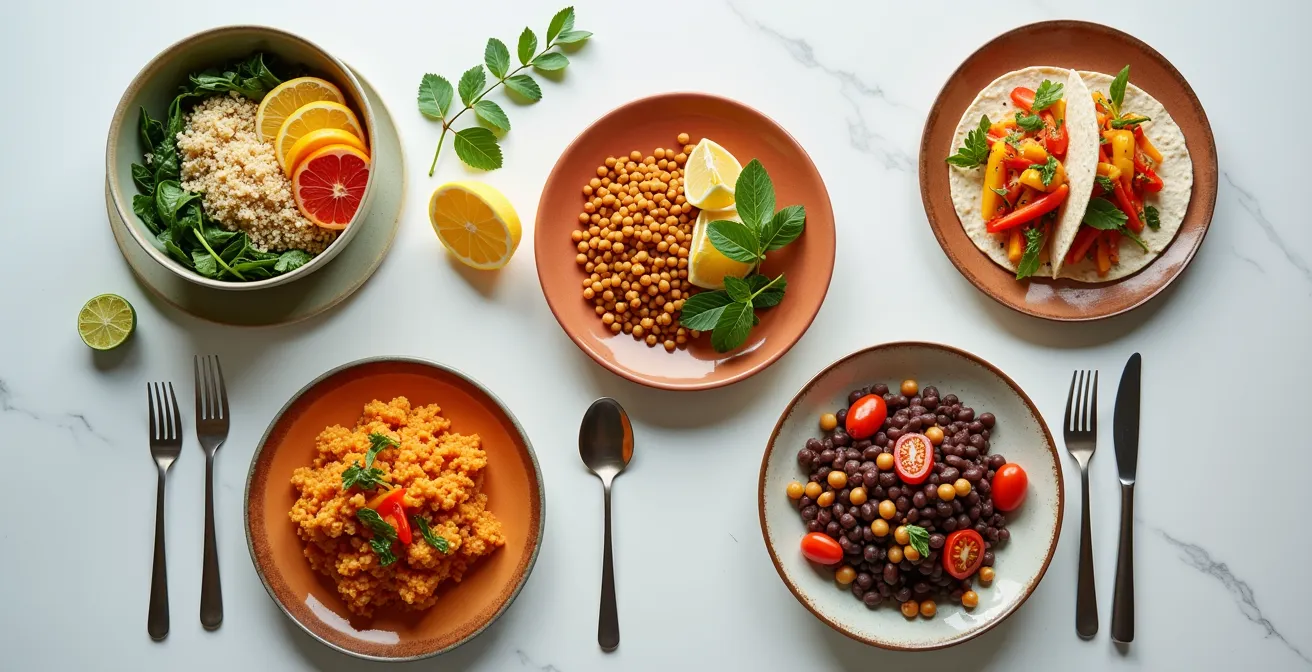
This principle turns meal planning into a fun, color-by-numbers game. Think of pairing dark leafy greens (iron) with strawberries (Vitamin C) in a smoothie, black beans (iron) with salsa (tomatoes are a Vitamin C source) in tacos, or oatmeal (iron) with a handful of citrus fruit (Vitamin C). It’s also important to be aware of what *hinders* absorption. Compounds in coffee and tea can block iron, so it’s wise to enjoy them at least an hour before or after an iron-rich meal. Mastering this one principle can alleviate one of the biggest anxieties of plant-based parenting.
How to “Veganize” Family Favorites So Even Teenagers Won’t Complain?
The secret to winning over a skeptical family, especially teenagers, isn’t to introduce a slew of strange new dishes. It’s to meet them where they are. The most successful strategy is to “veganize” the meals they already know and love: tacos, burgers, lasagna, mac and cheese. This approach minimizes the sense of loss and focuses on familiar comforts. The goal is not to create a pale imitation, but to deconstruct the flavors and textures of the original dish and rebuild them so convincingly with plant-based ingredients that the change feels like an upgrade, not a sacrifice.
This process, which I call “Flavor-First Veganizing,” goes beyond a simple ingredient swap. Instead of just replacing ground beef with lentils, you ask: what makes a great taco? It’s the savory umami, the hearty texture, and the juicy richness. You can recreate that with a mix of lentils and finely chopped mushrooms (for umami and texture), seasoned with smoked paprika and cumin (for savory depth). For a creamy lasagna, the key is to replicate the richness of ricotta and bechamel. A blend of cashews, nutritional yeast, and lemon juice can create a “ricotta” that’s just as satisfying, if not more so.
Success Strategy: The Power of Familiar Formats
Jenné Claiborne of Sweet Potato Soul demonstrates this principle perfectly. By focusing on veganizing comfort food classics, she maintains a stellar family approval rating. Her popular lentil tacos, for instance, take just 10 minutes to prepare and deliver the same hearty, satisfying experience as their traditional counterparts. This proves that sticking to familiar formats is the most effective way to reduce resistance from family members, particularly teenagers, who are often more wary of new food experiences.
Involving the family in the process can also transform skeptics into participants. A “build-your-own” burger or taco bar with a variety of plant-based toppings gives everyone a sense of control and creativity. The table below offers a guide for translating the core flavor elements of popular dishes into plant-based masterpieces.
| Original Dish | Key Flavor Elements | Plant-Based Recreation | Teen Approval Technique |
|---|---|---|---|
| Lasagna | Umami + Creaminess + Richness | Mushrooms/miso + Cashew bechamel + Nutritional yeast | Let them layer it themselves |
| Burgers | Savory + Char + Juiciness | Black beans/mushrooms + Smoked paprika + Moisture from onions | Build-your-own burger bar |
| Chicken Nuggets | Crispy + Tender + Mild | Tofu/cauliflower + Panko coating + Familiar dipping sauces | Involve in breading process |
How to Store and Prep Versatile Dried Legume Bases for Weekly Meal Prep?
The foundation of a budget-friendly plant-based kitchen is the humble dried legume. Beans, chickpeas, and lentils are nutritional powerhouses that cost a fraction of their canned counterparts. However, the biggest barrier for busy families is the prep time. The key to overcoming this is to shift your mindset: instead of cooking beans for a single meal, you “batch cook” them once a week to create a versatile base for multiple dishes. This “cook once, eat thrice” method transforms dried beans from a chore into your greatest time-saving asset.
The process is simple. On a Sunday, cook a large batch of your chosen legume. For example, cook two pounds of dried chickpeas. To elevate the flavor from the start, add aromatics to the cooking water, such as a strip of kombu seaweed (which also helps with digestibility), a few cloves of garlic, and a bay leaf. Once cooked and tender, you have a blank canvas ready to be deployed throughout the week. This is a core tenet of the “component prep” philosophy—preparing ingredients, not entire meals, for maximum flexibility.
Here’s how one batch of chickpeas can fuel three different meals:
- Monday (Curry): Use one-third of the tender, pre-seasoned chickpeas as the protein base for a quick coconut curry. The simmering time is cut in half.
- Wednesday (Salad Topper): Toss another third with olive oil and spices, then roast at 425°F until crispy. They become incredible, crunchy croutons for salads or bowls.
- Friday (Hummus): Blend the final third with tahini, lemon juice, and garlic for a fresh, homemade hummus that’s far superior to store-bought versions.
For ultimate convenience, you can flash-freeze the cooked legumes. Spread them on a baking sheet, freeze until solid, then transfer them to a freezer bag. This gives you the convenience of canned beans at the cost of dried beans. As the experts at the Whole Food Plant Based Cooking Show note, this small investment in time pays huge dividends.
Dry beans are so affordable and are a super filling nutrition powerhouse. We soak a pound overnight in water with 1/4 tsp baking soda, then pressure cook for 15-20 minutes.
– The Whole Food Plant Based Cooking Show, Plant Based on a Budget Blog
Cooking with Whole Food Ingredients: 5 Rules for Maximum Flavor Retention
One of the biggest hurdles for home cooks new to plant-based cuisine is creating deep, satisfying flavor. Many assume that without meat, dishes will inevitably be bland. This couldn’t be further from the truth. Flavor doesn’t come from a specific ingredient; it comes from technique. By applying a few fundamental culinary principles, you can unlock incredible taste from simple vegetables, grains, and legumes. It’s not about masking flavors, but about concentrating and layering them to create a result that is robust and delicious.
Professional chefs who transition to plant-based cooking don’t abandon their training; they apply it to new ingredients. They understand that techniques like the Maillard reaction—the chemical process of browning that creates hundreds of new flavor compounds—is just as applicable to a mushroom or a block of tofu as it is to a steak. The key is creating the right conditions: high heat and a dry surface. This means patting your tofu dry, not overcrowding the pan, and letting your vegetables get a good, deep sear before adding any liquids.
Case Study: Applying Classic Techniques for Modern Flavor
Chef Gaz Oakley of Avant Garde Vegan, who trained in traditional fine dining before embracing plant-based cooking, is a master of this approach. He demonstrates that classic culinary techniques are the key to unlocking restaurant-quality flavor at home. His methods for achieving a perfect sear on vegetables or creating umami bombs from mushrooms and walnuts have empowered millions of home cooks to move beyond steaming and boiling, proving that technique is the true source of incredible flavor.
To consistently create delicious plant-based meals, internalize these five essential rules:
- Master the Maillard Reaction: Always pat vegetables and tofu completely dry before cooking. Use high heat (400°F+ / 200°C+) and never overcrowd the pan. Browning equals flavor.
- Layer Your Acidity: Use acidity in two ways. Add a splash of vinegar at the beginning of cooking to help tenderize tough greens, and finish the dish with a squeeze of fresh lemon or lime juice to brighten and lift all the flavors.
- Build Umami Bombs: Umami is the savory, “meaty” flavor. Create a concentrate by slow-roasting tomatoes or blitzing mushrooms and walnuts into a paste. A spoonful of this can add immense depth to sauces, soups, and stews.
- Respect Water Content: Watery vegetables like zucchini or eggplant can make a dish soggy. Pre-salt them 20-30 minutes before cooking and pat them dry to draw out excess moisture, allowing for better browning.
- Create a Flavor Foundation: Never just dump everything in a pot. Always take the time to toast your spices in a dry pan until fragrant, fully caramelize your onions until sweet and golden, and char peppers to add a smoky depth.
Key takeaways
- System Over Recipes: Success comes from building a “food operating system” for your pantry and meal prep, not from chasing individual recipes.
- Budget is an Asset: A plant-based diet’s reliance on bulk staples like beans, rice, and lentils is a feature, not a bug. A $100 pantry restock can slash long-term grocery bills.
- Flavor is Technique: Deep, satisfying flavor in plant-based cooking comes from culinary techniques like browning and layering umami, not from expensive or exotic ingredients.
Strategic Meal Planning for Busy Professionals: Saving 5 Hours Per Week
For busy parents and professionals, the most valuable commodity is time. The idea of adopting a new way of eating can seem daunting precisely because it feels like it will consume more of this precious resource. However, with the right strategy, a plant-based diet can actually *give you time back*. The secret lies in shifting from a meal-by-meal planning approach to a more flexible “component-based” system. Instead of deciding on and prepping five distinct, complex meals, you prep versatile components that can be assembled in minutes.
This “component prep” approach focuses on cooking foundational elements at the beginning of the week: a large batch of a whole grain like quinoa, a pot of black beans or lentils, a tray of roasted vegetables, and a versatile sauce or dressing. With these building blocks in the fridge, a “Taco Tuesday” doesn’t require an hour of chopping and cooking; it’s a 10-minute assembly job. This method not only saves time but also provides variety, as the same components can be used for a burrito bowl on one night and a hearty salad the next. In fact, some reports show that families using component prep can save an average of 5 hours weekly compared to full meal-by-meal prep.
To streamline this even further, implement a “Thematic Meal Matrix.” Assigning a theme to each night of the week (e.g., Mediterranean Monday, Taco Tuesday, Asian-Inspired Wednesday) drastically reduces decision fatigue. You’re no longer staring into the fridge wondering “what’s for dinner?” but instead asking a much simpler question: “How will we do tacos tonight?” This structure provides predictability that kids often crave, while the component system allows for enough flexibility to keep adults from getting bored.
This matrix provides a framework for your week, combining the efficiency of a plan with the flexibility of component cooking.
| Day | Theme | Base Components | 15-Min Assembly Options |
|---|---|---|---|
| Monday | Mediterranean | Quinoa + Roasted vegetables | Bowl, wrap, or salad |
| Tuesday | Taco Night | Black beans + Salsa | Tacos, burrito bowl, nachos |
| Wednesday | Asian-Inspired | Brown rice + Stir-fry veggies | Stir-fry, spring rolls, rice bowl |
| Thursday | Comfort Classics | Lentils + Tomato base | Pasta, shepherd’s pie, soup |
| Friday | Pizza/Flatbread | Dough + Veggie toppings | Pizza, calzones, flatbread |
Frequently Asked Questions About a Plant-Based Family Diet
Can teenagers get enough protein on a flexitarian diet?
Yes, combining plant proteins like beans with whole grains provides complete proteins. A flexitarian approach allows occasional animal products during growth spurts if needed.
How do we handle birthday parties and school events?
The 80/20 flexitarian rule allows for flexibility at social events while maintaining plant-based eating at home, reducing social stress for children.
Is meal planning harder with a mixed approach?
Actually easier – you can prepare plant-based base meals and add optional animal proteins for family members still transitioning.