
The secret to enjoying greens at breakfast isn’t hiding them, it’s transforming their flavor and texture with simple culinary techniques.
- Cooking methods (like boiling spinach) and strategic pairing (with calcium) can neutralize bitterness and anti-nutrients like oxalates.
- Techniques like massaging kale and using the “Flavor Trinity” (sweet, fat, acid) in smoothies make greens genuinely delicious, not just tolerable.
Recommendation: Stop forcing down bitter greens and start using these chef-approved rules to unlock their true flavor potential in your morning routine.
The morning ritual often starts with a silent, virtuous struggle. You know dark leafy greens are a powerhouse of nutrition, so you dutifully toss a handful of raw spinach into the blender or fold some kale into your eggs. The result? A smoothie with a swampy, bitter aftertaste or eggs that are slightly watery and disappointing. You’re eating healthy, but it feels more like a punishment than a pleasure. The common advice to “just throw some greens in” ignores the most important part of a meal: the taste.
What if the goal wasn’t to *endure* the greens, but to actually *enjoy* them? What if you could make them an integral, delicious component of your breakfast? The secret lies not in masking their presence, but in mastering their properties. This isn’t about culinary trickery; it’s about flavor transformation. By understanding a few simple principles of food science and preparation, you can unlock the delicious potential hidden within these nutritional giants. You can learn to tame bitterness, perfect texture, and create a breakfast that is both incredibly healthy and genuinely crave-worthy.
This guide will move beyond the platitudes and give you the inventive, flavor-focused strategies of a recipe developer. We will explore the nuances between different greens, debunk common myths that cause unnecessary fear, and provide concrete techniques to turn your morning meal from a chore into a celebration of flavor and health. Get ready to rethink everything you thought you knew about breakfast greens.
To help you navigate these culinary secrets, this article breaks down the essential science and techniques into clear, actionable sections. Explore the topics below to master the art of the delicious green breakfast.
Summary: The Ultimate Guide to Making Breakfast Greens Taste Amazing
- Kale vs. Spinach: Which Green Wins for Iron Content?
- How to Massage Kale to Make It Tender in 2 Minutes?
- Raw or Cooked: Which Reduces Oxalates in Spinach Best?
- The Goitrogen Myth: Can You Eat Broccoli with Hypothyroidism?
- How to Hide 2 Cups of Spinach in a Berry Smoothie?
- Are Raw Green Detox Elixirs Safe for Daily Consumption?
- Eating the Rainbow: A Guide to Phytonutrients and Their Specific Health Benefits
- Cooking with Whole Food Ingredients: 5 Rules for Maximum Flavor Retention
Kale vs. Spinach: Which Green Wins for Iron Content?
For decades, spinach has been the poster child for iron, thanks to a certain cartoon sailor. While it’s true that spinach contains a notable amount of iron on paper, the real story is about bioavailability—how much your body can actually absorb. This is where the popular narrative gets interesting. Spinach is packed with a compound called oxalic acid (or oxalates), which binds to iron and significantly hinders its absorption. In fact, some research shows that only 2% of the iron from spinach is actually absorbed by the body. Kale, on the other hand, contains far fewer oxalates.
This means that even though kale might have less total iron per gram, the iron it does have is much more accessible to your body. But the comparison doesn’t stop there. When you look at the broader nutritional profile, kale often comes out on top in other key areas for a powerful breakfast, such as calcium and vitamin C, which ironically, helps with iron absorption itself. The key takeaway is not to abandon spinach, but to understand its properties and choose the right green for your specific goal.
| Nutrient | Kale | Spinach |
|---|---|---|
| Iron | 1.6mg | 2.7mg |
| Calcium | 254mg | 99mg |
| Vitamin C | 93.4mg | 28.1mg |
| Oxalates | 20mg | 970mg |
This data highlights a crucial point: nutritional value is more than just a single number. It’s about a synergistic relationship between different compounds. For a truly effective and delicious green breakfast, understanding these nuances is the first step toward culinary mastery.
How to Massage Kale to Make It Tender in 2 Minutes?
If you’ve ever tried to eat raw kale, you know it can be tough, fibrous, and aggressively bitter. It’s the kind of texture that can ruin a perfectly good salad or scramble. The secret to unlocking kale’s potential is a simple, transformative technique that sounds strange but works wonders: massaging it. This physical action breaks down the tough cellulose structure of the leaves, making them instantly more tender, less bitter, and much more pleasant to eat. It also gives the kale a deeper, more vibrant green color. This isn’t just cooking; it’s a form of texture alchemy.
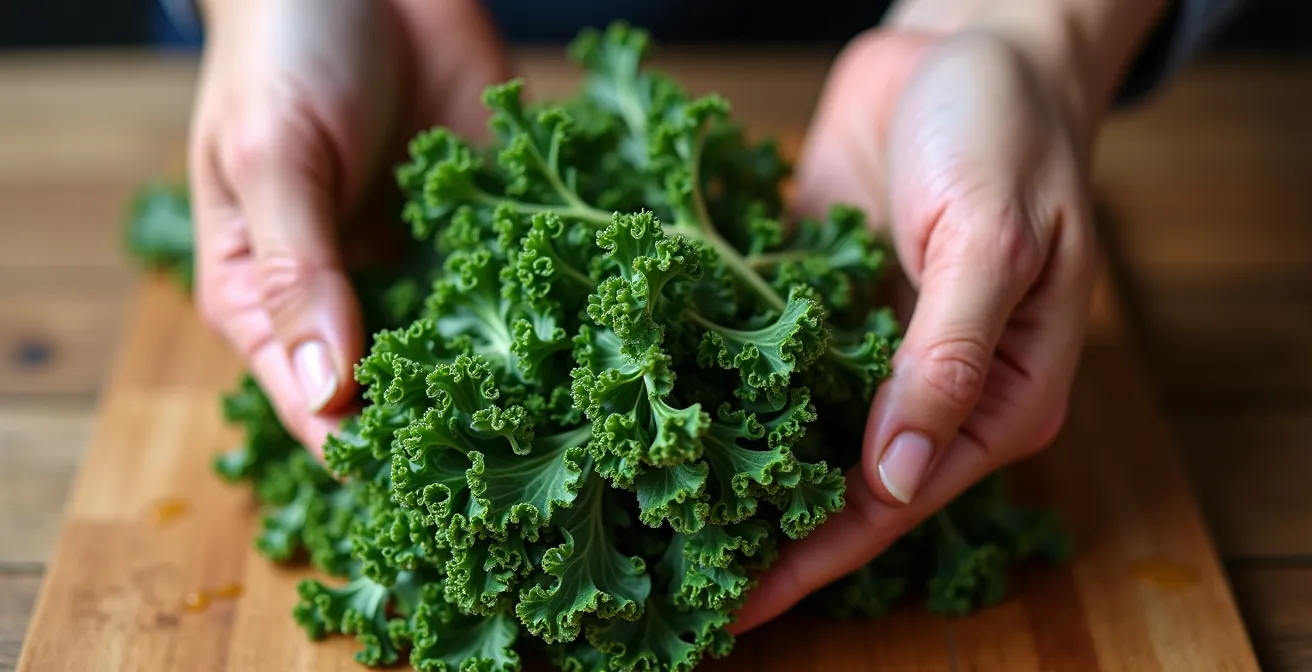
The process is incredibly simple and takes just a couple of minutes, making it a feasible step even on busy mornings. By adding a little fat (like olive oil or avocado) and acid (like lemon juice), you’re not just softening the leaves; you’re pre-seasoning them, creating a foundational layer of flavor for whatever dish you’re making. This technique is the single most important step to making raw or lightly wilted kale delicious.
Your Action Plan: Massaging Kale for a Tender Breakfast
- Strip the Leaves: Firmly grip the base of the kale stem with one hand and slide the fingers of your other hand down the stem to strip the leaves off. Discard the tough stems.
- Tear or Chop: Break the leaves into bite-sized pieces suitable for your recipe, whether it’s a scramble, a salad base, or a smoothie.
- Add Fat and Acid: Drizzle the leaves with a small amount of olive oil, a squeeze of lemon juice, or even a quarter of a mashed avocado.
- Massage Vigorously: Using your hands, begin to squeeze, rub, and toss the kale leaves for about 2-3 minutes. You will physically feel them soften and wilt under your fingers.
- Check for Transformation: The kale is ready when it has darkened in color, shrunk in volume, and feels significantly more tender and pliable. It’s now ready to eat raw or be quickly wilted into your dish.
Raw or Cooked: Which Reduces Oxalates in Spinach Best?
We’ve established that spinach’s high oxalate content can be a drawback, both for iron absorption and for its characteristic bitter, astringent taste that can feel “gritty” on the teeth. For people prone to kidney stones, high oxalate intake is also a concern. So, how do we tame this tricky compound? The answer lies in heat. While raw spinach is great for convenience, cooking is the most effective way to reduce oxalates. The process of boiling or steaming helps the oxalates leach out of the leaves and into the cooking water.
The reduction can be dramatic. Some studies demonstrate that boiling spinach reduces oxalates by 30% to 87%, depending on the cooking time. Simply blanching spinach for a few minutes before adding it to your eggs or smoothie can make a world of difference in both taste and nutritional availability. This is a perfect example of how a simple culinary technique can directly manipulate the chemical profile of an ingredient for a better result. It’s not about avoiding spinach; it’s about preparing it intelligently.
Practical Application: The Calcium-Pairing Strategy
Beyond cooking, another powerful strategy is pairing. Oxalates bind to minerals, and you can use this to your advantage. By pairing high-oxalate greens like spinach with calcium-rich foods, you can encourage the oxalates to bind with the calcium in your stomach. This forms a compound that is then excreted, rather than being absorbed into your bloodstream. For breakfast, this is incredibly easy to do: add your wilted spinach to a cheesy omelet, blend it into a smoothie made with Greek yogurt or milk, or stir it into a warm bowl of oatmeal topped with a splash of cream. This delicious pairing is also a smart, science-backed nutritional strategy.
This proves that you have more control over your ingredients than you think. A little heat or a smart pairing can completely transform the experience and health impact of eating your greens.
The Goitrogen Myth: Can You Eat Broccoli with Hypothyroidism?
A common fear that circulates in health forums is the topic of goitrogens. These are natural compounds found in cruciferous vegetables like kale, broccoli, and cabbage that, in very specific circumstances, can interfere with thyroid function. This has led many people, especially those with hypothyroidism, to avoid these incredibly healthy vegetables altogether. However, it’s time to debunk this breakfast fear. The concern over goitrogens is largely overblown for the average person.
The truth is, you would need to consume a truly massive and consistent amount of raw cruciferous vegetables for them to have a negative effect on a healthy thyroid. Furthermore, recent nutritional research clarifies that goitrogenic effects are only concerning with massive daily raw consumption combined with a pre-existing iodine deficiency. For most people, the immense benefits of these vegetables—their vitamins, minerals, and cancer-fighting phytonutrients—far outweigh any potential risk. It’s a classic case of losing the forest for the trees.
Moreover, the goitrogenic compounds in these vegetables are significantly reduced by cooking. Steaming or sautéing your kale or broccoli for breakfast effectively deactivates a large portion of these compounds, making them a non-issue for almost everyone. So, unless your breakfast consists of multiple pounds of raw kale every single day and you are iodine deficient, you can and should enjoy these vegetables. Don’t let a myth stand between you and a nutritious, delicious meal.
How to Hide 2 Cups of Spinach in a Berry Smoothie?
The H2 title is a bit of a trick question. As creative recipe developers, our goal isn’t to *hide* the spinach, but to *harmonize* it. A well-made green smoothie shouldn’t be an exercise in trickery, where you’re trying to choke down a green-tasting concoction just for the health benefits. It should be genuinely delicious. The secret to achieving this lies in the “Flavor Trinity”—a perfect balance of sweetness, fat, and acidity. This trio works together to round out the flavor profile, mask bitterness, and create a luxuriously creamy texture.
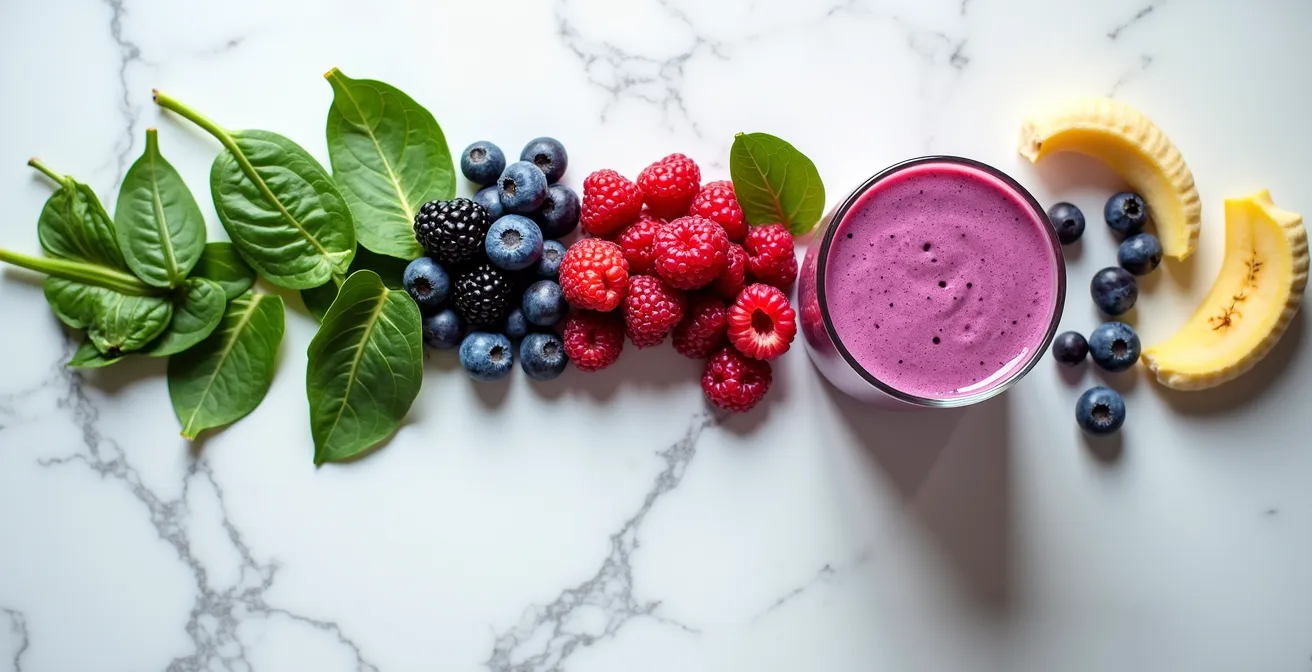
When you just add spinach and water, you’re left with a thin, vegetal drink. But when you build a flavor architecture around it, the spinach becomes a silent, nutrient-dense partner. The sweetness from fruit like banana or berries counteracts any bitterness. The healthy fats from avocado, nut butter, or chia seeds provide a rich mouthfeel that coats the palate, preventing the green flavor from lingering. Finally, a squeeze of acid from lemon or lime juice brightens the entire smoothie, cutting through the richness and making the fruit flavors pop. This is how you make a smoothie you actually want to drink.
Follow these principles to build a better smoothie:
- Sweetness is Your Base: Always include a source of natural sweetness. Frozen berries and very ripe bananas are excellent choices as they also contribute to a thick, cold texture.
- Fat Creates Creaminess: Add a tablespoon of almond butter, a quarter of an avocado, or a spoonful of chia seeds. This is non-negotiable for a silky, satisfying smoothie.
- Acid Brightens Everything: A small squeeze of fresh lemon or lime juice will elevate the other flavors and cut any “green” taste. Don’t skip this step!
- Technique Matters: For the smoothest possible texture, blend your spinach with the liquid (water, milk, etc.) first until it’s completely liquefied. Then, add the rest of your ingredients and blend again.
- Bonus Flavors: If you’re still nervous, add a strong, pleasant flavor like fresh mint, a small piece of ginger, or a dash of cinnamon to lead the sensory experience.
Are Raw Green Detox Elixirs Safe for Daily Consumption?
The word “detox” has become a marketing buzzword, often associated with expensive, cold-pressed green juices that promise to cleanse your system. While the intention is good, the method is often flawed. The process of juicing strips away one of the most important components of whole fruits and vegetables: fiber. This fiber is crucial for digestive health, blood sugar regulation, and feeling full and satisfied after a meal. A breakfast of fiber-less green juice can lead to a rapid spike and subsequent crash in blood sugar, leaving you hungry and tired soon after.
A much smarter, safer, and more satiating approach is the whole-food green smoothie. By blending the entire ingredient—leaves, fruit, and all—you retain all the beneficial fiber. This slows down the absorption of sugar, provides sustained energy, and supports a healthy gut microbiome. As one expert puts it, the choice is clear.
Daily green smoothies that retain fiber are a much healthier and more satiating breakfast choice than juicing, which removes fiber and can spike blood sugar.
– McKel Hill Kooienga, MS, RDN, Nutrition Stripped
Therefore, while a daily “detox elixir” in the form of a juice is not the best choice, a daily green smoothie is an excellent, sustainable habit. The key is to be in control of the ingredients. Homemade smoothies allow you to ensure you’re getting a balance of greens, healthy fats, and protein, without the added sugars and preservatives found in many store-bought options. This shifts the mindset from a short-term, extreme “detox” to a long-term, nourishing daily ritual.
Eating the Rainbow: A Guide to Phytonutrients and Their Specific Health Benefits
While this guide focuses on dark leafy greens, the ultimate goal is dietary diversity. The vibrant colors in fruits and vegetables are not just for show; they are signals of the presence of thousands of different phytonutrients—powerful plant compounds with specific health benefits. “Eating the rainbow” is a simple and effective strategy to ensure you’re consuming a wide array of these protective compounds. Each color group offers a different set of benefits, from the lycopene in red tomatoes to the anthocyanins in blue berries.
Dark leafy greens are nutritional superstars within this rainbow. They are particularly rich in compounds like lutein and zeaxanthin (great for eye health) and various flavonoids with anti-inflammatory properties. Kale, for instance, is an absolute powerhouse of Vitamin K, a critical nutrient for blood clotting and bone health. A single serving can be off the charts, as nutritional analysis reveals that kale provides 684% of daily vitamin K needs per serving. Thinking in terms of color and phytonutrients elevates your breakfast from simple sustenance to targeted, preventative medicine.
By rotating the greens you use at breakfast—spinach one day, kale the next, followed by Swiss chard or arugula—you are feeding your body a more complex and powerful range of nutrients than if you stuck to just one. The table below gives a glimpse into the unique benefits offered by different common breakfast greens.
| Green | Key Phytonutrients | Health Benefits |
|---|---|---|
| Kale | Quercetin, Kaempferol | Anti-inflammatory, blood pressure reduction |
| Spinach | Lutein, Zeaxanthin | Eye health, cellular protection |
| Swiss Chard | Betalains | Antioxidant, detoxification support |
| Arugula | Glucosinolates | Cancer prevention, liver support |
Key Takeaways
- Bioavailability trumps raw numbers: The iron in kale is more useful to your body than the iron in spinach due to lower oxalate levels.
- Technique transforms everything: Actively changing the texture and flavor of greens through methods like massaging kale or boiling spinach is the key to delicious results.
- Flavor balance is a science: In smoothies, the “Flavor Trinity” of sweetness (fruit), fat (avocado, nut butter), and acid (lemon) is essential for neutralizing bitterness.
Cooking with Whole Food Ingredients: 5 Rules for Maximum Flavor Retention
You’ve learned the science, you’ve busted the myths, and you have the techniques. Now, it’s time to bring it all together in the kitchen with five foundational rules for cooking with greens at breakfast. These principles, used by chefs, are designed to maximize flavor and preserve nutrients, ensuring your efforts result in a truly delicious meal. This is where you move from theory to consistent, successful practice. Embracing these rules will permanently change your relationship with morning greens.
The core philosophy is to treat the greens with respect. Instead of an afterthought to be thrown in at the last minute, they should be handled with intention. This means considering their texture, their cooking time, and how they interact with other ingredients like fat, salt, and acid. It’s about letting the whole food ingredient shine, not overwhelming it. As chef Sylvia Fountaine of Feasting at Home notes, even leftovers can be reborn with the right technique, suggesting you can “warm them up and top with a poached egg.”
Here are the five rules to live by:
- Rule 1 – Don’t Drown, Just Wilt: Greens cook incredibly fast. For dishes like scrambles, add spinach or massaged kale in the final 30 seconds of cooking. The residual heat from the eggs and pan is often enough to wilt them perfectly without turning them into a soggy, watery mess.
- Rule 2 – Fat is Flavor and Mouthfeel: While you might use a little oil to cook, save the high-quality, flavorful fat for the end. A drizzle of extra virgin olive oil or a pat of butter over your greens just before serving adds a luxurious, silky mouthfeel that transforms the dish.
- Rule 3 – Master Salt and Acid: Salt is not just for flavor; it also helps draw water out of the greens as they cook. Season them lightly during the cooking process. Then, right at the end, finish with a squeeze of fresh lemon juice or a dash of vinegar. This acid will brighten the entire dish and make the flavors pop.
- Rule 4 – Prep Dictates Texture: How you cut your greens matters. For incorporating into batters (like pancakes or muffins), a fine chiffonade (thin ribbons) will disperse evenly. For a scramble or omelet, a rougher chop provides a more satisfying, hearty bite.
- Rule 5 – Temperature Matters: To preserve the delicate nutrients in greens, cook them last and fast. High heat for a short time (a quick sauté) is better than low heat for a long time. Using residual heat is the most gentle method of all.
Your journey to delicious green breakfasts starts now. Pick one technique from this guide—massaging kale for a scramble or balancing a smoothie with lemon and avocado—and apply it tomorrow morning. Experience the transformation for yourself.
Frequently Asked Questions on Greens and Health
Should people with thyroid issues avoid kale completely?
No, cooking kale significantly reduces goitrin levels. Moderate consumption of cooked cruciferous vegetables is generally safe for most people with thyroid conditions.
How much raw kale is too much?
Problems typically only arise with extremely high daily consumption (multiple cups of raw kale daily) combined with existing iodine deficiency.
What’s the best way to enjoy greens with thyroid concerns?
Rotate your greens (spinach one day, cooked kale the next, Swiss chard another) and ensure adequate iodine intake from sources like dairy and iodized salt.