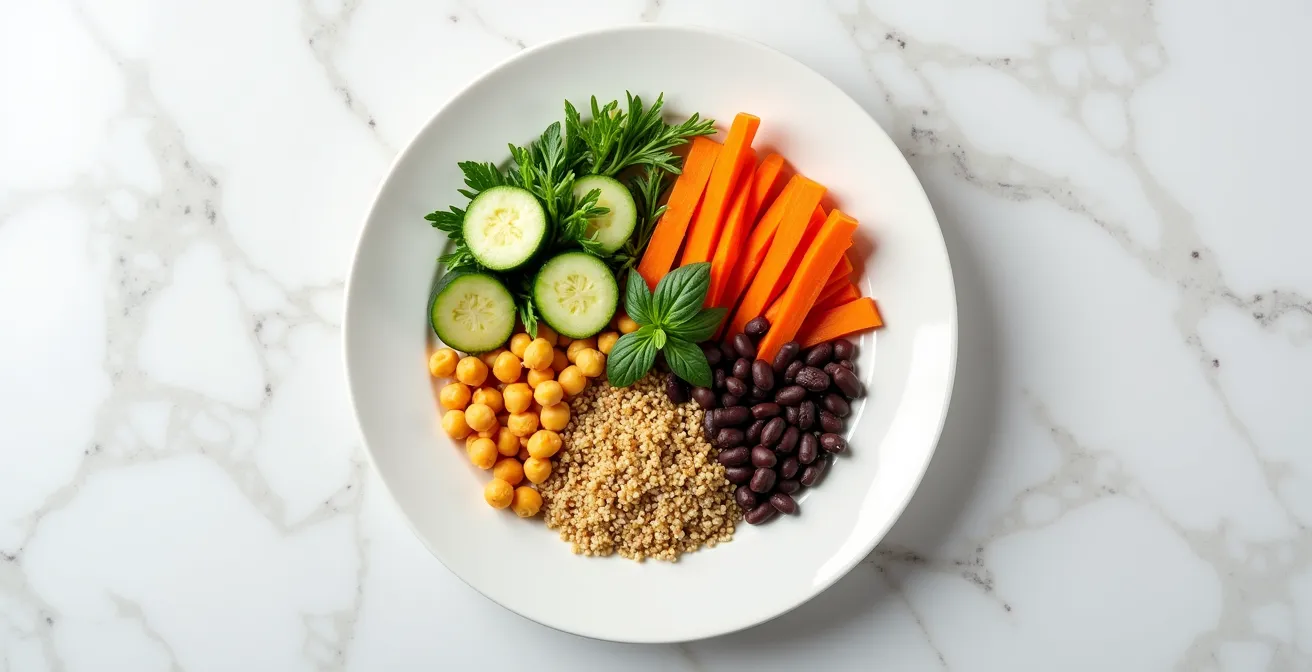
Many long-term vegans hit an energy wall because they follow the same rules that worked in their first year. This guide reveals that sustained vitality isn’t about dietary purity, but about proactively adapting your nutrition to your body’s evolving metabolic needs. We explore how to adjust for changing protein requirements, optimize nutrient absorption beyond basic supplements, and build a resilient nutritional strategy that lasts for decades, not just years.
The first few years of a vegan diet often feel like a honeymoon phase. Energy is high, your conscience is clear, and you’re exploring a vibrant world of new foods. But what happens when you’re a decade in and that initial vitality begins to wane? You might be following all the familiar advice—eating a variety of plants, taking a B12 supplement—yet a subtle, persistent fatigue creeps in. This is a common, yet rarely discussed, plateau for veteran vegans.
The standard advice, while well-intentioned, often fails to address the long-term physiological shifts that occur. The real key to thriving on a vegan diet for decades isn’t about stricter adherence or adding more “superfoods.” The secret lies in understanding and responding to your body’s evolving needs through metabolic adaptation. It’s about shifting from a static set of rules to a dynamic, personalized strategy that accounts for changes in nutrient absorption, protein synthesis, and overall digestive health as you age.
This guide moves beyond the basics. We will dissect the specific nutritional challenges that arise after years of plant-based eating and provide advanced, sustainable strategies to build true nutritional resilience. We will cover everything from sophisticated B12 monitoring to adjusting your plate for hormonal changes, navigating social situations without compromising your health, and overcoming the psychological traps that can sabotage your long-term commitment.
For those who prefer a visual summary, the following video offers a glimpse into creating a nutrient-dense beverage that complements the principles discussed in this guide, perfect for a pre- or post-workout boost.
To help you navigate these advanced concepts, this article is structured to build your knowledge step-by-step. The following summary outlines the key areas we will explore to help you transition from simply surviving as a long-term vegan to truly thriving.
Summary: A Longevity Framework for the Veteran Vegan
- Why Vitamin B12 Reserves Can Take 3 Years to Deplete?
- How to Structure Your Plate: The 50/25/25 Rule for Satiety
- Dining Out with Non-Vegans: Which Cuisines Offer the Best Balance?
- The Protein Adjustment: How Your Needs Change After Age 40
- The Risk of “Perfect Diet” Syndrome in Long-Term Vegans
- 5 Morning Habits for a Nutritional Vitality Boost Without Caffeine
- Are Raw Green Detox Elixirs Safe for Daily Consumption?
- Can a Vegan Diet Improve Athletic Performance in Endurance Sports?
Why Vitamin B12 Reserves Can Take 3 Years to Deplete?
One of the most insidious issues for long-term vegans is the slow, silent depletion of Vitamin B12. Your liver can store a significant amount of this crucial nutrient, which is why deficiency symptoms like fatigue, brain fog, and nerve tingling may not appear for two, three, or even five years after going vegan. This delay creates a false sense of security, leading many to believe their initial supplement routine is sufficient indefinitely. However, relying on a basic serum B12 test can be misleading, as it doesn’t always reflect the amount of B12 that is actively available to your cells.
For sustained health, a more sophisticated approach to monitoring is essential. This involves looking at more sensitive markers that indicate an early-stage functional deficiency. A 2024 study highlights the effectiveness of this approach, finding that vegans who supplemented properly showed adequate vitamin B12 status, with no differences in the cB12 index between them and meat-eaters. This proves that with the right strategy, deficiency is entirely preventable. The goal is not just to avoid clinical deficiency but to maintain optimal levels for peak cognitive and physical function year after year.
Action Plan: Advanced B12 Monitoring for Long-Term Vegans
- Test methylmalonic acid (MMA) levels annually: This is a highly sensitive marker of B12 status; levels should ideally be below 270 nmol/L.
- Monitor holotranscobalamin (HoloTC): Often called “active B12,” this is a more sensitive early marker of deficiency than total serum B12.
- Check homocysteine levels: Elevated homocysteine can be a sign of B12 (or folate) deficiency and is a risk factor for cardiovascular issues.
- Consider the cB12 index: This combines multiple biomarkers (B12, MMA, HoloTC, homocysteine) for the most accurate picture of your B12 status.
- Supplement strategically: A common recommendation is 50-100 micrograms daily or a larger dose of 2500 micrograms weekly, but your dosage should be guided by your test results.
How to Structure Your Plate: The 50/25/25 Rule for Satiety
Beyond micronutrients, mastering macronutrient balance is fundamental for sustained energy and satiety. A simple yet powerful framework for long-term vegans is the 50/25/25 rule. This principle guides you to fill your plate with 50% non-starchy vegetables, 25% plant-based protein, and 25% whole grains or starchy vegetables. This ratio ensures a high volume of fiber and phytonutrients from vegetables for gut health, adequate protein for muscle maintenance and satiety, and complex carbohydrates for steady energy release. It’s a visual cue that prevents the common pitfall of a carb-heavy “pasta and bread” vegan diet.
However, this rule is not static; it’s a foundation that should be adapted to your body’s changing needs, particularly as you age. The concept of metabolic adaptation means recognizing that your protein requirements may increase while your overall caloric needs might decrease. This flexible approach allows you to maintain muscle mass and metabolic health over the decades. The key is to see your plate not as a rigid formula, but as a customizable template for lifelong vitality.
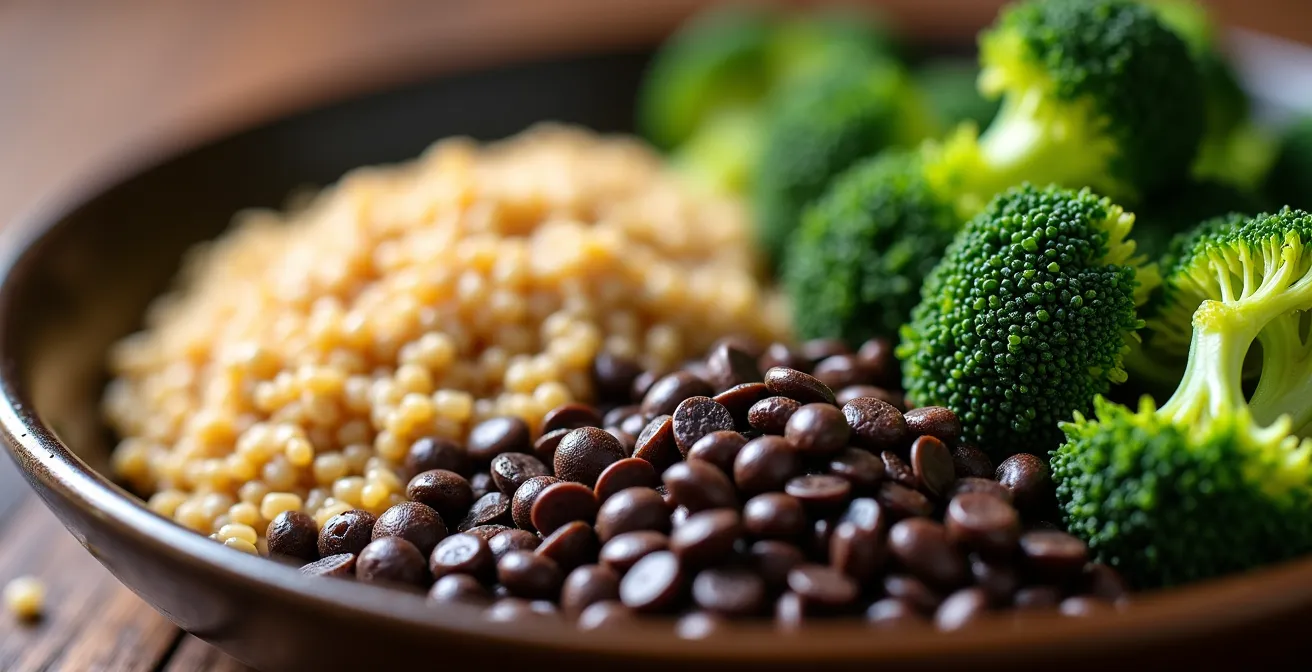
The table below, based on insights from resources like Pick Up Limes, illustrates how you can adjust the 50/25/25 rule to better suit different life stages, ensuring your nutritional intake evolves with you.
| Age Group | Vegetables | Protein | Whole Grains | Special Considerations |
|---|---|---|---|---|
| 20-40 years | 50% | 25% | 25% | Standard ratio works well for general health and energy. |
| 40-60 years | 45% | 30% | 25% | Increase protein slightly to support muscle maintenance as metabolism shifts. |
| 60+ years | 40% | 35% | 25% | Higher protein needs are crucial to combat age-related muscle loss; portions may be smaller. |
Dining Out with Non-Vegans: Which Cuisines Offer the Best Balance?
Maintaining nutritional balance at home is one thing; achieving it in a non-vegan world presents a different challenge. Social gatherings and dining out can feel like nutritional minefields for long-term vegans. However, with a strategic approach, you can enjoy these occasions without stress or compromise. The key is to focus on cuisines that are naturally rich in plant-based options. Cuisines like Ethiopian, Indian (South), Mediterranean (especially Lebanese or Greek), and Vietnamese often feature an abundance of vegetable, legume, and grain-based dishes that are either vegan by default or easily adaptable.
When faced with less vegan-friendly environments like a traditional steakhouse or diner, the strategy shifts from finding a complete dish to building one. This “Build-a-Meal” approach involves creatively combining side dishes to construct a balanced plate. It’s a perfect exercise in nutritional resilience—the ability to create a healthy meal in any environment. This mindset empowers you to focus on the social connection of sharing a meal, rather than the anxiety of finding the “perfect” vegan option.
Your ‘Build-a-Meal’ Strategy for Any Restaurant
- Steakhouses: Don’t despair. Order a large baked potato, a side salad (ask for oil and vinegar), grilled asparagus, and sautéed mushrooms.
- Classic Diners: Combine hash browns (ensure they’re not cooked in butter), toast with peanut butter or avocado, a fruit salad, and a bowl of oatmeal.
- Italian Restaurants: Request pasta with marinara or arrabbiata sauce and ask them to add extra vegetables like broccoli and spinach. A side of minestrone soup is often a safe bet.
- Bring Your Own Boosters: Always carry small containers of nutritional yeast and hemp seeds. They are lightweight and can instantly add a boost of B-vitamins and protein to any dish.
- Pre-emptive Snacking: If you know you’re heading to a place with limited options, have a protein-rich snack like hummus with veggies or a handful of nuts an hour before you go.
The Protein Adjustment: How Your Needs Change After Age 40
For vegans over 40, protein becomes a non-negotiable priority. After this age, the body naturally enters a state of mild “anabolic resistance,” meaning it becomes less efficient at using the protein we consume to build and repair muscle tissue. This can accelerate age-related muscle loss (sarcopenia) if not addressed proactively. For a long-term vegan, this doesn’t mean the diet is insufficient; it simply means the strategy must be refined. You need to focus on both the quantity and quality of your protein intake, ensuring each meal contains a significant source.
This involves prioritizing protein-dense foods like tofu, tempeh, edamame, lentils, and high-protein vegan powders. The goal is to distribute your protein intake evenly throughout the day, rather than concentrating it in one meal, to provide a steady stream of amino acids for muscle protein synthesis. As one review notes, the challenge is real, stating that “the substantial increase in portion sizes that is needed to consume an adequate amount of protein… from a strict vegan diet… is not feasible for many older adults.” This insight from research in the Advances in Nutrition Journal underscores the need for a targeted, not just a casual, approach to protein.
However, this challenge is entirely surmountable with the right planning. A recent randomized crossover trial demonstrated this effectively.
2024 Study: Vegan Diets and Muscle Synthesis in Seniors
A study involving participants with an average age of 72 found no difference in muscle protein synthesis rates between those on a vegan diet for 10 days and those on an omnivorous diet. This shows that a well-planned vegan diet can be just as effective as an omnivorous one for building muscle in older adults. As a significant bonus, the vegan group also experienced marked improvements in LDL and total cholesterol levels, highlighting the diet’s cardiovascular benefits.
The Risk of “Perfect Diet” Syndrome in Long-Term Vegans
One of the most overlooked challenges of a long-term vegan lifestyle is not physical, but psychological. The constant pressure to eat “perfectly”—avoiding all processed foods, balancing every macro, and optimizing every micronutrient—can lead to a form of disordered eating known as orthorexia, or an unhealthy obsession with healthy food. This “perfect diet” syndrome creates chronic stress and anxiety around food choices, which can negate the health benefits of the diet itself. The fear of making a “mistake” can lead to social isolation and a rigid, joyless relationship with food.
The antidote is to cultivate dietary flexibility and self-compassion. Adopting an approach like the 90/10 rule can be transformative. This involves focusing on eating nutrient-dense, whole plant foods 90% of the time, while allowing 10% for flexibility—for that vegan cookie, a meal out with friends that isn’t perfectly balanced, or simply for convenience. This mindset shifts the goal from perfection to sustainability. It recognizes that a truly healthy diet is one that supports not only your physical body but also your mental and social well-being for the long haul.
A vegan of 10+ years shares: ‘I realized my obsession with perfect macros was causing more stress than any nutritional benefit. Implementing the 90/10 rule – 90% whole foods, 10% flexibility – made my diet sustainable and removed the constant anxiety about every meal choice.’
– Long-term vegan’s perspective
5 Morning Habits for a Nutritional Vitality Boost Without Caffeine
How you start your day sets the nutritional tone for the hours that follow. For long-term vegans looking to boost vitality without relying on caffeine, a consistent morning routine can make a profound difference. These habits are designed to hydrate your body, balance your blood sugar, and optimize your digestion from the moment you wake up. Instead of reaching for coffee, which can mask underlying fatigue, this routine addresses the root causes by supporting your body’s natural energy systems.
The focus is on gentle, supportive actions that enhance nutrient bioavailability. For example, starting with electrolytes helps with cellular hydration, while a savory, protein-rich breakfast prevents the blood sugar spike and crash associated with sweet, carb-heavy morning meals. Adding a source of choline, like sunflower lecithin, supports brain health and metabolism. Even the simple act of chewing thoroughly can dramatically improve your body’s ability to extract nutrients from your food. These small, consistent steps compound over time to build a foundation of deep, sustained energy.
Your Morning Vitality Routine
- Hydrate with Electrolytes: Start your day with 16oz of water mixed with 1/4 tsp of sea salt and the juice of half a lemon to replenish electrolytes lost overnight.
- Eat a Savory Breakfast First: Within 30 minutes of waking, eat a protein-rich, savory meal like a tofu scramble with nutritional yeast to stabilize blood sugar.
- Incorporate Choline: Add 1 tablespoon of ground flaxseed or sunflower lecithin to your breakfast. Choline is vital for nerve function and metabolism.
- Gentle Morning Movement: Perform 5 minutes of gentle twisting yoga poses before eating to stimulate digestion and wake up your system.
- Practice Mindful Chewing: Aim to chew each bite of your breakfast 20-30 times. This pre-digestion process significantly reduces the burden on your digestive system and enhances nutrient absorption.
Are Raw Green Detox Elixirs Safe for Daily Consumption?
In the quest for optimal health, many long-term vegans turn to daily green juices or raw smoothies, believing them to be the ultimate vitality elixir. While these can provide a concentrated dose of vitamins, daily consumption of large quantities of raw greens is not without its risks. Many raw vegetables, especially in the cruciferous family (kale, spinach, collards), contain compounds like oxalates and goitrogens. Oxalates can bind to minerals like calcium and iron, impairing their absorption, while goitrogens can interfere with thyroid function in susceptible individuals.
Lightly cooking your greens—through steaming, sautéing, or blanching—dramatically reduces these anti-nutrients, making the minerals more bioavailable and the food easier to digest. As leading plant-based nutrition expert Dr. Michael Greger of NutritionFacts.org suggests, warmth and cooking can be allies in nutrient absorption.
A warm, blended, and cooked vegetable soup often provides more bioavailable nutrients and is gentler on the digestive system than a cold, raw, fiber-heavy smoothie.
– Dr. Michael Greger, NutritionFacts.org
This doesn’t mean you must abandon your smoothies entirely, but it calls for a more balanced approach. Consider rotating raw and cooked greens, or favoring a warm, blended soup over an icy raw smoothie, especially during colder months or if you have a sensitive digestive system. The table below outlines the key differences in nutrient availability and potential risks.
| Factor | Raw Greens | Lightly Cooked Greens |
|---|---|---|
| Oxalate Content | High (can impair mineral absorption) | Reduced by 30-50% through steaming |
| Goitrogen Levels | High in cruciferous vegetables | Significantly reduced by heat |
| Vitamin C | Maximum retention | Some loss (10-20%) |
| Digestibility | Harder on the digestive system | Easier to digest and absorb |
| Volume needed | Large amounts are required for nutrient density | Nutrients are concentrated, making it easier to consume enough |
Key Takeaways
- Long-term vegan vitality requires adapting your diet to your body’s changing needs, not just following basic rules.
- Advanced B12 monitoring (using markers like MMA and HoloTC) is crucial as stores deplete slowly over years.
- Protein needs increase after 40 due to anabolic resistance; focus on protein density and distribution.
- Embrace flexibility with a 90/10 approach to avoid the stress and anxiety of “perfect diet” syndrome (orthorexia).
Can a Vegan Diet Improve Athletic Performance in Endurance Sports?
While some worry about energy levels on a long-term vegan diet, a well-planned plant-based approach can actually provide a significant competitive edge, particularly in endurance sports. One of the key advantages lies in enhanced recovery. Whole plant foods are naturally rich in anti-inflammatory compounds and antioxidants, which can help reduce exercise-induced inflammation and muscle soreness. This allows athletes to recover faster between training sessions, leading to more consistent training volume and progressive overload over time. This finding is supported by research on endurance athletes, which found that those on whole-food, plant-based diets reported reduced recovery times.
Furthermore, a vegan diet rich in complex carbohydrates—the primary fuel for endurance exercise—is ideal for maintaining optimal glycogen stores. The strategy of carbohydrate periodization is particularly effective for vegan athletes. This involves tailoring carbohydrate intake based on training intensity and duration, ensuring the body has the fuel it needs when it needs it most. By focusing on nutrient-dense carbohydrate sources like sweet potatoes, oats, and quinoa, athletes can maximize their performance and recovery potential, turning their long-term vegan diet into a powerful asset.
Carbohydrate Periodization Strategy for Vegan Athletes
- High-Carb Days (7-10g/kg of body weight): Use on days before a competition or during peak training. Focus on easily digestible carbs like sweet potatoes, oats, and quinoa.
- Moderate-Carb Days (5-7g/kg): The standard for regular training days. Incorporate brown rice, whole-grain pasta, and fruits.
- Lower-Carb Days (3-5g/kg): Prioritize during rest or recovery days. Your carbohydrates will come primarily from vegetables and legumes.
- Time Your Carbs: Consume a carbohydrate-rich meal 2-4 hours before training to ensure your glycogen stores are full.
- Optimize Post-Workout Recovery: Combine a fast-acting carb with protein within an hour of finishing. A simple and effective option is a few dates with a scoop of nut butter.
Thriving on a vegan diet for more than a decade is not a passive process. It is an active, evolving journey of learning and adapting. By moving beyond the initial rules and embracing a more nuanced understanding of your body’s long-term needs—from advanced B12 monitoring to strategic protein adjustments and mindful eating habits—you can build a foundation of vitality that lasts a lifetime. The goal is to create a sustainable, resilient, and joyful relationship with food that supports you through every stage of life. To truly personalize this journey, the next logical step is to conduct a thorough audit of your current nutritional habits and identify areas for adaptation.
Frequently Asked Questions About Long-Term Veganism
What hidden animal products are common in Thai food?
Fish sauce is prevalent in most Thai curries, pad thai, and stir-fries. Always request dishes made with soy sauce instead and confirm with the kitchen.
What should vegans watch for in Mexican restaurants?
Be aware that chicken broth is sometimes used to cook rice, and lard (animal fat) may be in refried beans. Additionally, some establishments add cheese or cream to guacamole, so it’s always best to ask.
Are Indian vegetarian dishes always vegan-friendly?
No, many Indian vegetarian dishes are not vegan. Ghee (clarified butter) is used extensively in cooking, and paneer (a type of cheese) is a common ingredient. Always specify “no ghee, no paneer, no dairy” when ordering.