In summary:
- Shift your mindset from a consumer to a “wardrobe investor” by focusing on the Cost Per Wear (CPW) of each item.
- Master strategic thrifting by targeting specific neighborhoods and learning to identify high-quality natural fibers by touch.
- Reduce your environmental impact at home by adopting cold-wash, air-dry methods for synthetics to minimize microplastic shedding.
- Plan your purchases around off-season sales and create a dedicated “ethical fashion fund” to make quality pieces affordable.
- Dispose of unwanted clothing responsibly using a hierarchical approach: sell first, swap second, and donate directly as a last resort.
You open a closet overflowing with clothes, yet the familiar feeling sinks in: “I have nothing to wear.” That closet is a graveyard of impulse buys, of trendy pieces worn once or twice, of the fleeting high of a bargain followed by the lingering guilt of waste. You love fashion, but you’re increasingly aware of the environmental and ethical cost of the fast fashion cycle. You want out, but the world of sustainable fashion seems prohibitively expensive, reserved for those with designer budgets.
Most advice on this topic revolves around simple platitudes: “shop secondhand,” “buy less,” or “learn to mend.” While well-intentioned, this advice often fails to address the core conflict for a fashion lover on a budget: how do you build a stylish, expressive wardrobe without a constant influx of newness and without breaking the bank? It ignores the thrill of the hunt and the desire for quality that fast fashion promises but never truly delivers.
But what if the secret to quitting fast fashion wasn’t about deprivation, but about strategy? What if you could reframe yourself from a passive consumer into a savvy wardrobe investor? The key isn’t just buying less; it’s about mastering the economics of your closet. It’s about understanding the true value of a garment, not just its price tag, and learning the systems that allow you to acquire beautiful, long-lasting pieces for less than you’re currently spending on disposables.
This guide will walk you through that strategic shift. We’ll deconstruct the hidden costs of your clothes, from invisible microplastics to the myth of donation. More importantly, we’ll equip you with practical financial frameworks, targeted shopping tactics, and conscious care habits to build a sustainable wardrobe that truly reflects your style and your values.
This article provides a complete roadmap for your transition. The summary below outlines the key strategies we’ll explore, from understanding a fabric’s impact to mastering the art of the ethical purchase.
Summary: How to Quit Fast Fashion Without Breaking the Bank: A Stylish Guide to a Sustainable Wardrobe
- The Microplastic Risk of Washing Recycled Polyester Fleece
- How to Thrift High-Quality Basics in a Sea of Fast Fashion Junk?
- Cotton vs. Hemp: Which Natural Fiber Uses Less Water?
- Cost Per Wear: How to Justify Spending $100 on Ethical Jeans?
- When to Shop: Building a Capsule Wardrobe Season by Season
- The Truth About Textile Waste: What Actually Happens to Donated Clothes?
- Transitioning to a Cruelty-Free Lifestyle: Hidden Animal Products in Your Home
- The Truth About Textile Waste: What Actually Happens to Donated Clothes?
The Microplastic Risk of Washing Recycled Polyester Fleece
One of the most insidious and invisible costs of fast fashion is the microplastic pollution generated by synthetic fabrics. Your cozy fleece jacket or trendy athletic wear, often made from recycled polyester, might seem like a sustainable choice. However, the reality is that every wash releases a torrent of tiny plastic fibers into our waterways. This isn’t a minor issue; research shows a single polyester fleece garment can shed thousands of microfibers with every wash cycle. These micro-toxins are too small to be caught by wastewater treatment plants, ultimately contaminating oceans, wildlife, and even our own bodies.
The scale of the problem is staggering. In a landmark 2016 study commissioned by the company itself, Patagonia discovered that one of its fleece jackets could release up to 250,000 synthetic microfibers per wash. This revelation highlighted that even consciously-made synthetic clothing is part of the problem. While brands work on developing new fabric technologies, the most immediate power lies in our laundry rooms. By changing how we care for the synthetics we already own, we can drastically reduce our plastic footprint without spending a penny.
You can start immediately with these simple, no-cost adjustments to your laundry routine:
- Wash in cold water only: Hot water breaks down fibers and causes significantly more shedding.
- Skip the dryer: Air-drying is gentler on fabric and can prevent the release of up to 3.5 times more microfibers than washing alone.
- Wash less frequently: Spot clean small stains instead of running a full wash cycle.
- Use front-loading machines: Their tumbling action creates less friction than the agitator in top-loading machines.
- Choose liquid detergent: Powder detergents can be more abrasive, increasing fiber shedding during the wash.
How to Thrift High-Quality Basics in a Sea of Fast Fashion Junk?
Thrifting is the cornerstone of affordable sustainable fashion, but it can be an overwhelming experience. Racks are often crammed with flimsy, pilled, and stained fast fashion cast-offs, making the hunt for quality feel like a fool’s errand. The secret to success isn’t luck; it’s strategy. The most effective thrifters don’t look for brands or styles first. They hunt for quality materials. They train their hands to identify the feel of real wool, the smoothness of silk, and the crispness of high-quality cotton, ignoring the synthetic junk that surrounds them.
This “fabric-first” approach allows you to unearth timeless, durable pieces that have already stood the test of time. A 100% merino wool sweater or a well-made linen blouse from a decade ago will almost always outperform a brand-new polyester equivalent. Learning to identify these materials by touch is your greatest superpower in a thrift store.
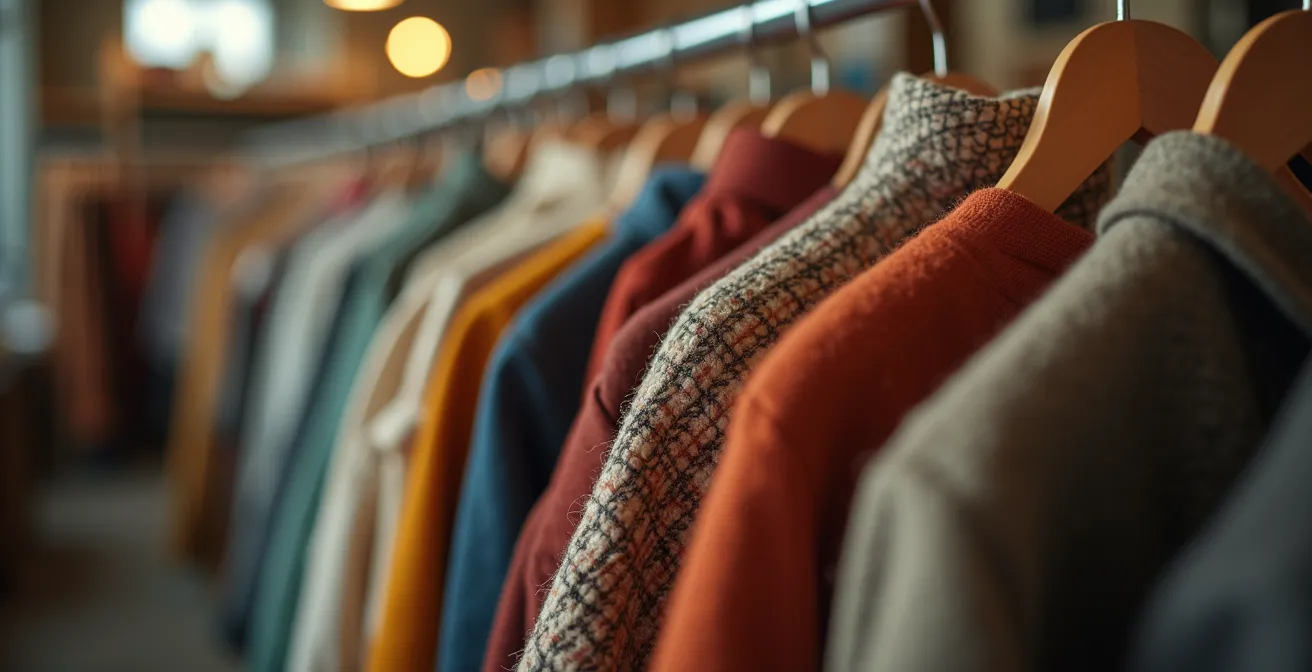
As the image shows, focusing on texture is key. By running your hands along the rack, you can quickly filter out the low-quality synthetics and zero in on garments with inherent value and longevity. To turn this skill into a successful haul, you also need to know where and when to look. Simply walking into any old thrift store is a recipe for frustration. A strategic approach is essential.
Your Action Plan: Strategic Thrifting for Quality Finds
- Target Your Locations: Focus on thrift stores in affluent neighborhoods, where donations are more likely to include designer pieces and natural fibers.
- Explore Estate Sales: Visit estate and church rummage sales to find vintage treasures like wool coats and silk scarves from generations that prioritized quality.
- Check Consignment Shops: Use consignment stores for a curated experience, as they pre-select for better brands and quality-check items for you.
- Filter Online Platforms: Use the material filters on online thrift sites like ThredUp to search specifically for “100% wool,” “silk,” or “linen.”
- Time Your Visits: Shop on Mondays or Tuesdays, as these are typically the days when new inventory, donated over the weekend, hits the floor.
Cotton vs. Hemp: Which Natural Fiber Uses Less Water?
As a wardrobe investor, choosing the right “stock”—in this case, the right fabric—is critical for long-term returns. When it comes to natural fibers, cotton is ubiquitous, but it’s also one of the thirstiest crops on the planet. A single conventional cotton t-shirt can require thousands of liters of water to produce. This positions hemp as a far more sustainable and, ultimately, more valuable alternative. Hemp requires significantly less water and land to grow and needs no pesticides, making it a clear winner from an environmental perspective.
But the benefits for a wardrobe investor go far beyond the initial environmental impact. Hemp is a superior long-term asset. While cotton is soft at first, it weakens with every wash. Hemp, on the other hand, is one of the strongest natural fibers available. It has a rugged initial feel but, like a good pair of leather boots, it softens and improves with each wash while retaining its structural integrity. This means hemp garments are built to last, not to be replaced.
A durability study directly comparing the two fibers found that hemp t-shirts maintained their shape and strength for two to three times longer than their cotton equivalents. The hollow structure of hemp fibers also offers superior breathability and natural antimicrobial properties, meaning the garments stay fresh longer and require less frequent washing—further reducing their environmental footprint and extending their life. When you choose hemp, you’re not just buying a piece of clothing; you’re investing in a durable good that will pay dividends in longevity and performance for years to come.
Cost Per Wear: How to Justify Spending $100 on Ethical Jeans?
The biggest mental hurdle to quitting fast fashion is the initial price tag. How can spending $100 on a pair of ethical jeans be “on a budget” when you can get a similar-looking pair for $20? The answer lies in shifting your core metric from ‘Price’ to ‘Cost Per Wear’ (CPW). This simple formula—CPW = Price of Item / Number of Times Worn—is the single most powerful tool for a wardrobe investor. It reveals the true cost of your clothes and exposes the false economy of cheap fashion.
Fast fashion is designed for disposability. In fact, studies show a fast fashion item is worn an average of only 7 times before being discarded. That $20 pair of jeans has a CPW of $2.85. Now, consider the $100 ethical jeans, made from durable, high-quality denim. If you wear them just twice a month for two years (48 wears), their CPW drops to $2.08. If you wear them for five years, the CPW plummets to under $1. The more you wear them, the “cheaper” they become. A great mental model is the “30 Wears Test”—before buying anything, ask yourself if you can see yourself wearing it at least 30 times.
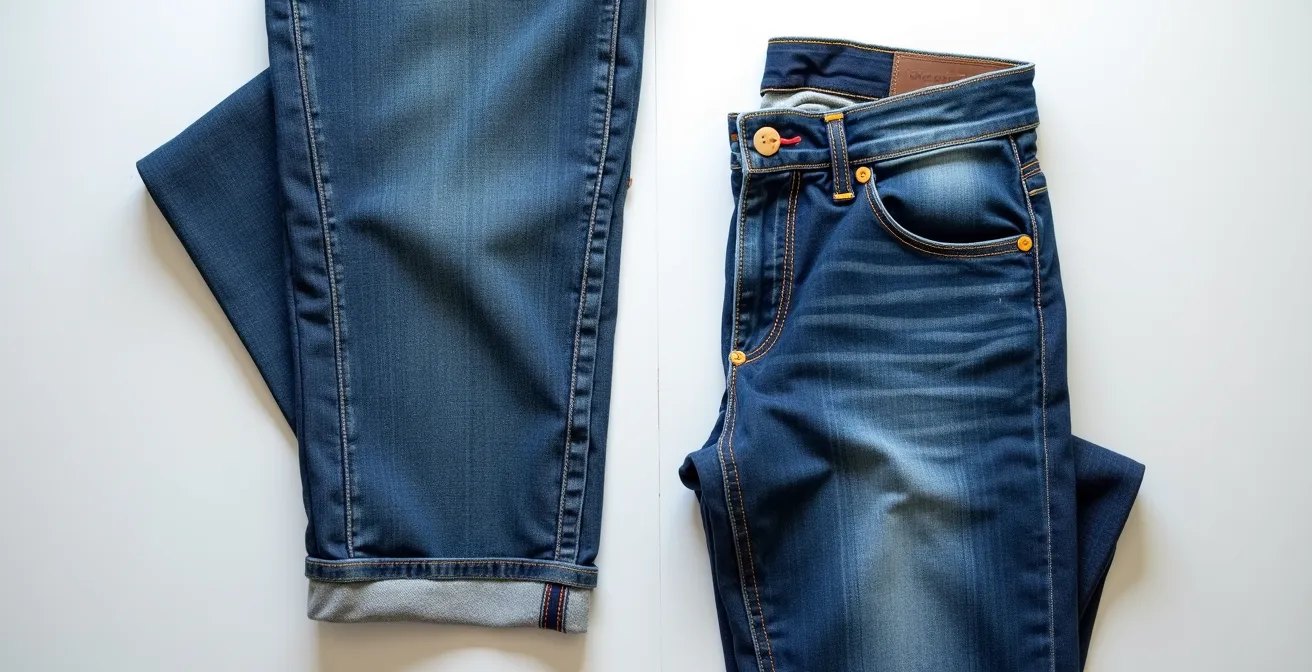
As this comparison shows, the initial investment in quality pays off in durability, fit, and timeless style, while the cheap alternative quickly degrades. To make this leap financially manageable, you need a system. Instead of impulse buying, you can channel that money into a dedicated fund.
- Calculate Past Spending: Review your bank statements to see what you spent on fast fashion last year.
- Open a Dedicated Account: Create a separate savings account specifically for ethical fashion purchases.
- Automate Your Savings: Set up an automatic weekly or monthly transfer equal to your old fast fashion budget.
- Research While You Save: Use the saving period to identify the ethical brands and specific pieces you truly want to invest in.
- Wait for Sales: Even ethical brands have sales. Waiting for these moments can maximize your budget and make high-quality pieces even more accessible.
When to Shop: Building a Capsule Wardrobe Season by Season
A successful wardrobe investor knows that *when* you buy is just as important as *what* you buy. The fast fashion model thrives on creating a constant sense of urgency with micro-seasons and weekly “new arrivals.” Breaking free means adopting a more patient and strategic approach to shopping, aligning your purchases with your actual needs and seasonal market cycles. The first step isn’t to shop at all; it’s to conduct a no-buy audit of your existing closet.
This process involves taking a temporary pause from all shopping to catalogue what you already own, experiment with new outfit combinations, and identify genuine gaps. Fashion blogger Emma Mathews documented her three-month no-buy audit, a process that completely transformed her relationship with her clothes. She catalogued all 147 items she owned, created 45 new outfits from existing pieces, and realized she only needed three items: a quality winter coat, a basic white t-shirt, and classic black jeans. This audit saved her an estimated $800 in impulse buys and tripled her average garment wear rate. An audit provides data, turning abstract desires into a concrete, minimal shopping list.
Once you have your list, the next step is to time your purchases strategically. The most significant discounts on high-quality, ethically-made pieces are almost always found at the end of a season. Buying a winter coat in March or a swimsuit in September requires patience, but it’s how you acquire investment pieces at a fraction of their original cost.
Use this calendar as your guide for strategic off-season shopping:
- February-March: Shop for ethical winter coats and boots at 40-60% off during end-of-season sales.
- April-May: This is the best time to find discounted wool sweaters and cold-weather accessories.
- August-September: Purchase high-quality summer dresses, sandals, and swimwear at significantly reduced prices.
- November: Look for Black Friday alternatives from ethical brands, which often offer rare 20-30% discounts on core items.
- January: Year-end inventory clearances can provide the deepest discounts on basics like t-shirts and denim.
The Truth About Textile Waste: What Actually Happens to Donated Clothes?
One of the most comforting myths of fast fashion is that donation is a get-out-of-jail-free card. We bag up our unwanted clothes, drop them in a bin, and feel good about giving them a “second life.” The devastating reality is that donation is often just a detour on the road to the landfill. A staggering 85% of all textiles end up in landfills each year, and a huge portion of that is composed of donated clothing that charities simply cannot sell, use, or process. The sheer volume of low-quality, synthetic fast fashion has overwhelmed the system.
Charities are flooded with unwearable garments, and what they can’t sell is often bundled into massive bales and shipped to developing countries. This practice, known as the global secondhand trade, can devastate local textile industries and ultimately results in these clothes ending up in landfills and waterways in places like Ghana and Chile. The idea that every donated item finds a happy new home is a dangerous misconception. Furthermore, consumer understanding of the retail supply chain is deeply flawed, which compounds the problem.
As Whitney Cathcart, co-founder of the 3D body scanning company 3DLOOK, points out, this misunderstanding extends beyond donations to returns. She notes the common misconception consumers have about the lifecycle of their purchases:
88 percent of consumers think that returns go right back on the shelf and are resold—which is rarely the case.
– Whitney Cathcart, 3DLOOK co-founder on consumer misconceptions
This highlights a systemic issue: our detachment from the end-of-life consequences of our consumption. The first step toward a solution is acknowledging that the donation bin is not a magic portal, but often the last stop before the dump.
Transitioning to a Cruelty-Free Lifestyle: Hidden Animal Products in Your Home
A truly conscious wardrobe extends beyond environmental impact to consider animal welfare. While avoiding obvious materials like leather and fur is a great start, a cruelty-free lifestyle requires a deeper look at the hidden animal-derived components lurking in everyday items. Many products marketed as “synthetic” or even “vegan” can contain binders, dyes, and finishes sourced from animals, making the transition more complex than it first appears.
A 2023 audit of common fashion items revealed just how pervasive this issue is. The investigation found that 42% of ‘synthetic’ sneakers used animal-based glues in their soles, 28% of red-dyed garments used cochineal (a colorant made from crushed beetles), and 15% of waterproof jackets were coated with beeswax. Even buttons can be coated with shellac, a resin secreted by the lac beetle. This means that even the most diligent consumer can be unknowingly participating in animal exploitation.
Navigating this landscape requires vigilance and knowledge, but thankfully, innovation is providing incredible, high-performance vegan alternatives for nearly every traditional material. As a wardrobe investor, familiarizing yourself with these next-generation fabrics allows you to make choices that are not only ethical but often superior in function. The key is to look beyond the marketing and understand the materials themselves.
This table outlines some of the most common animal-derived materials and their innovative, cruelty-free counterparts, as highlighted in a recent guide to sustainable materials.
| Traditional Material | Vegan Alternative | Pros | Cons |
|---|---|---|---|
| Leather | Piñatex (Pineapple Leaf) | Uses agricultural waste, biodegradable, durable | Higher initial cost, limited availability |
| Leather | Mushroom Leather (Mylo) | Grows in 2 weeks, customizable properties, biodegradable | Still scaling production, premium pricing |
| Wool | TENCEL Lyocell | From sustainable wood, moisture-wicking, biodegradable | Requires chemical processing |
| Silk | Peace Silk/Ahimsa Silk | Cruelty-free production, similar properties to regular silk | More expensive, limited suppliers |
| Down | PrimaLoft Bio | 100% recycled, biodegradable, better wet performance than down | Synthetic material, potential microplastic shedding |
| Cashmere | Soy Cashmere | Made from soy protein waste, incredibly soft, biodegradable | Less durable than animal cashmere |
Key Takeaways
- Adopt an Investor Mindset: Shift your focus from an item’s price tag to its “Cost Per Wear” (CPW) to understand its true long-term value.
- Become a Strategic Shopper: Stop impulse buying. Instead, conduct wardrobe audits and plan purchases around off-season sales to acquire quality for less.
- Master Material Literacy: Learn to identify high-quality natural fibers by touch when thrifting and understand the hidden environmental and ethical costs of both synthetics and animal-derived products.
- Embrace Responsible Disposal: Recognize that donation is not a cure-all. Prioritize selling, swapping, or repairing clothes before considering donation as a final option.
The Truth About Textile Waste: What Actually Happens to Donated Clothes?
Now that we’ve confronted the uncomfortable truth about textile waste, we can move from awareness to action. If the donation bin is the last resort, what are the better alternatives? A responsible wardrobe investor thinks about a garment’s entire lifecycle, including its exit strategy. This means creating a plan for your unwanted clothes that prioritizes value retention and true circularity over wishful recycling.
Instead of a single, catch-all solution, a more effective method is the Pyramid of Responsible Disposal. This is a hierarchical framework that guides you to the best possible outcome for each item, maximizing its chance of reuse and minimizing its likelihood of ending up in a landfill. By working your way down the pyramid, you ensure that every other option has been exhausted before you resort to the least effective one. This approach puts you in control and transforms disposal from a passive drop-off into an active, conscious process.
Here is the pyramid, from the most to least preferable option:
- First Choice: Sell. For items that are in-demand or from quality brands, sell them on platforms like Depop, Poshmark, or a local consignment shop. This is the best way to directly facilitate reuse while recouping some of your initial investment.
- Second Choice: Swap. Organize clothing swaps with friends, family, or community groups. This is a fun, social, and free way to refresh your wardrobe by trading your unwanted items for someone else’s.
- Third Choice: Donate Directly. If an item doesn’t sell or swap, donate it directly to a local shelter or charity that has a specific, stated need for that type of clothing. Call ahead to ensure your donation will be useful, not a burden.
- Fourth Choice: Use Brand Take-Back Programs. Many brands, from H&M to Patagonia, offer programs to take back their own products for resale or recycling. This is a good option for brand-specific items.
- Fifth Choice: Textile Recycling. For clothes that are too worn or damaged to be reworn, find a certified textile recycler through organizations like the Council for Textile Recycling. These facilities break down fibers to be used in insulation or other industrial products.
- Last Resort: General Donation Bins. Only after all other options have been exhausted should you use a general donation bin, with the full understanding that the item’s future is uncertain.
Start today. Pick one item you no longer love and walk it down the Pyramid of Responsible Disposal. By taking conscious control over the end of your clothing’s life, you take the final and most powerful step in quitting the fast fashion cycle for good.