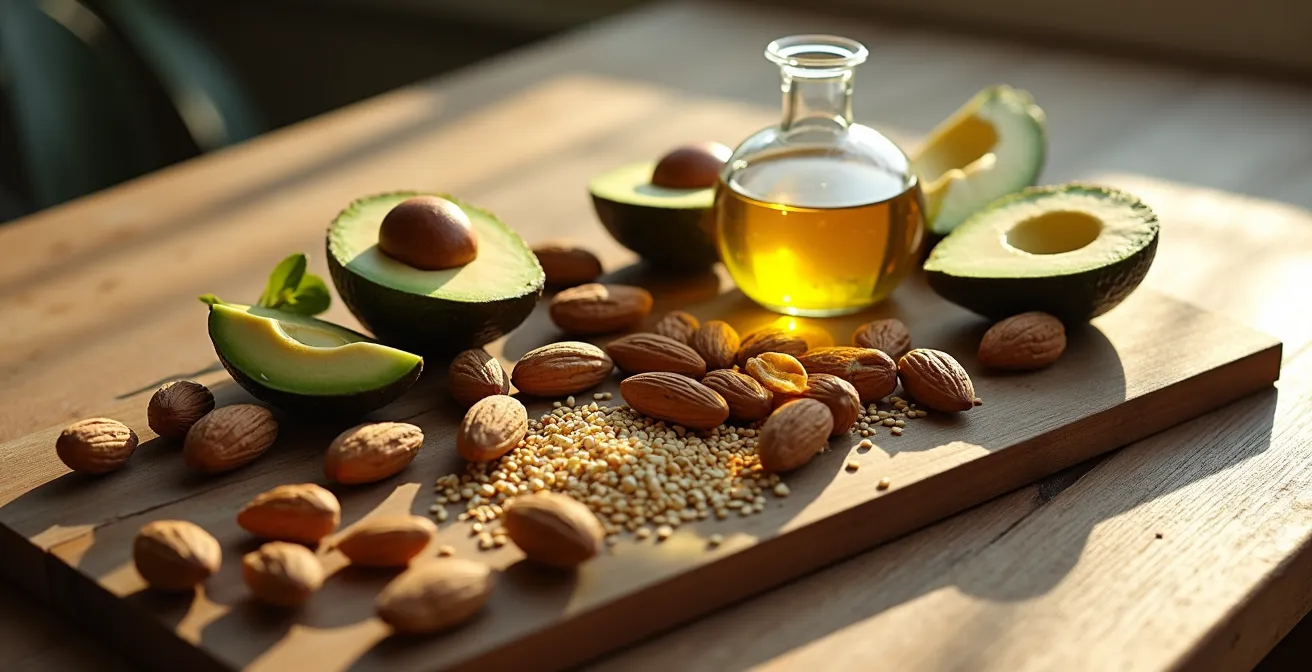
The effectiveness of plant sterols in lowering LDL cholesterol is significantly amplified when combined with soluble dietary fiber, offering a synergistic approach to lipid management.
- Plant sterols work by blocking cholesterol absorption in the gut, but their impact is dose-dependent and can be enhanced.
- A therapeutic dose of at least 2 grams of plant sterols daily is required to achieve a meaningful reduction in LDL, which can complement or serve as an alternative to statins for some individuals.
Recommendation: Focus on incorporating both sterol-fortified foods and high-fiber whole foods (like oats, beans, and apples) into your daily meals for a more powerful, holistic effect on your heart health.
Receiving a diagnosis of high cholesterol often presents a difficult choice: start a lifelong regimen of statins or attempt to manage it through diet and lifestyle changes alone. For many, the concern over potential statin side effects, such as muscle pain, makes dietary intervention the preferred first line of defense. The market is filled with “functional foods” promising heart health benefits, but navigating these claims requires a critical, evidence-based approach. Among the most researched of these ingredients are plant sterols and stanols.
While the common advice is to simply add sterol-fortified margarine or yogurt to your diet, this overlooks a crucial element for success. The true potential of these plant-based compounds is not realized in isolation. Their ability to lower harmful LDL cholesterol is significantly enhanced when they work in concert with another dietary powerhouse: soluble fiber. This synergistic relationship is the key to developing a robust, natural strategy for lipid management that goes beyond just one ingredient.
This guide provides a serious, evidence-based look at how plant sterols function, which ones are effective, and, most importantly, how to integrate them into a comprehensive dietary plan. We will examine the science behind their mechanism, the practicalities of swapping fats in your kitchen, and how the combination with fiber can create an effect greater than the sum of its parts. This is not about a single “miracle food,” but about building a strategic, sustainable dietary framework for long-term heart health.
To help you navigate this important topic, this article breaks down the key components of a successful plant sterol strategy. The following sections will guide you through the science, practical applications, and synergistic effects needed for effective cholesterol management.
Table of Contents: A Guide to Lowering Cholesterol with Plant Sterols
- HDL vs. LDL: Why Boosting “Good” Cholesterol Matters More?
- How to Swap Butter for Sterol-Fortified Margarine in Cooking?
- Genetics vs. Diet: Can You Lower Cholesterol if It runs in the Family?
- The Muscle Pain Complaint: Why Patients Look for Statin Alternatives?
- How Many Grams of Fiber Per Day to See a Drop in Cholesterol?
- Are You Getting Enough Essential Dietary Fiber for Heart Health?
- How to Swap Saturated Animal Fats for Healthy Plant Oils in Baking?
- Soluble Fiber Strategies to Manage Blood Sugar Spikes After Meals
HDL vs. LDL: Why Boosting “Good” Cholesterol Matters More?
For decades, the conversation around cholesterol has been simplified into “good” (HDL) versus “bad” (LDL). While increasing HDL is beneficial, the primary target for reducing cardiovascular risk remains lowering LDL cholesterol. LDL particles are responsible for transporting cholesterol to arteries, where they can accumulate and form plaques (atherosclerosis). However, the focus is now shifting from simply the quantity of LDL to its quality and behavior. Smaller, denser LDL particles are considered more atherogenic, meaning they are more likely to cause plaque buildup.
Plant sterols and stanols directly address the LDL issue by structurally resembling cholesterol and competing with it for absorption in the digestive tract. By blocking its absorption, they effectively lower the amount of LDL circulating in the bloodstream. A comprehensive meta-analysis of 124 studies confirmed that a daily intake of plant sterols can result in a 6-12% reduction in LDL cholesterol. This is a clinically significant drop that can be a powerful tool in your lipid-management arsenal.
Case Study: The Impact of Plant Stanols on LDL Particle Quality
Beyond just lowering numbers, evidence suggests plant stanols can improve the characteristics of LDL particles. A 6-month randomized controlled trial published in Arteriosclerosis, Thrombosis, and Vascular Biology involved 90 participants. Those consuming 3 grams of plant stanols daily not only saw their LDL cholesterol decrease by 9-12% but also experienced a significant reduction in LDL aggregation susceptibility. This indicates the LDL particles became less “sticky” and potentially less likely to contribute to artery-clogging plaques, highlighting a benefit that goes beyond a standard lipid panel.
This evidence underscores that the goal is not just a numbers game. An effective dietary strategy should aim to both lower the total amount of LDL and improve its characteristics, making it less of a threat to your cardiovascular system. Plant sterols are a key component in achieving that dual objective.
How to Swap Butter for Sterol-Fortified Margarine in Cooking?
One of the most practical ways to incorporate a therapeutic dose of plant sterols is by using fortified margarines or spreads in place of traditional fats like butter. Butter is high in saturated fat, which can raise LDL cholesterol, so making this swap provides a dual benefit: reducing saturated fat intake while actively adding a cholesterol-lowering compound. However, successful substitution, especially in baking, requires understanding the differences in their composition.
Fortified margarine has a higher water content than butter, which can affect the texture of baked goods. While this might result in a slightly softer cookie or cake, it is often a desirable outcome. For recipes where structure is less critical, the substitution is straightforward. Below is a guide to making the switch effectively.

As the visual comparison suggests, the two fats can appear similar, but their performance in the kitchen varies. Following specific guidelines ensures your culinary results are not compromised. Here are some practical tips for substituting fortified margarine for butter:
- Use a 1:1 ratio when substituting stick margarine for butter in most baking recipes.
- Due to the higher water content in margarine, you can expect a softer, more cake-like texture in cookies and cakes.
- For recipes that call for melted butter, such as brownies or some quick breads, you can directly swap it with melted fortified margarine.
- If a dough or batter seems too wet, consider reducing other liquids in the recipe by 1-2 tablespoons to compensate for margarine’s water content.
Genetics vs. Diet: Can You Lower Cholesterol if It runs in the Family?
A common point of frustration for individuals with high cholesterol is the role of genetics. Familial hypercholesterolemia (FH) is a genetic disorder that causes very high LDL levels from birth, significantly increasing the risk of premature heart disease. Many people with a strong family history of high cholesterol may feel that dietary changes are futile. While it is true that genetics can be a powerful determinant of baseline cholesterol levels, it is a misconception that diet has no role to play.
Even in the presence of a strong genetic predisposition, dietary interventions remain a critical component of management. They can work alongside, or in some cases reduce the necessary dose of, prescription medications. Plant sterols are particularly valuable in this context because their mechanism of action—blocking cholesterol absorption—works regardless of the body’s genetic tendency to overproduce cholesterol. They provide an external, non-pharmacological tool to lower the total cholesterol load.
The Cleveland Clinic’s nutrition department offers a clear and encouraging perspective on this, emphasizing that a therapeutic dose can make a substantial difference even when fighting against your genes. Their expert guidance reinforces that diet is not an all-or-nothing proposition but a powerful lever you can still pull.
Even if your genes are the main driver, a therapeutic dose of plant sterols can consistently lower your LDL by 10-15%. For someone with a baseline of 190 mg/dL, that’s a drop of nearly 30 points from diet alone.
– Cleveland Clinic Nutrition Department, Plant Sterols: How They Help Manage Cholesterol
This perspective is crucial. For someone with genetically high cholesterol, a 10-15% reduction from diet could be the difference that allows for a lower statin dose, potentially mitigating side effects. It reframes diet not as a cure, but as an indispensable part of a comprehensive management plan.
The Muscle Pain Complaint: Why Patients Look for Statin Alternatives?
Statins are highly effective at lowering LDL cholesterol and are a cornerstone of cardiovascular disease prevention. However, their use is not without potential drawbacks. The most frequently reported side effect is statin-associated muscle symptoms (SAMS), which can range from mild soreness to debilitating pain that impacts quality of life. This single complaint is a primary driver for patients seeking non-pharmacological alternatives or complementary therapies to manage their cholesterol.
Plant sterols offer a compelling alternative in this scenario because their mechanism of action is entirely different and not associated with muscle pain. They work locally within the intestine, whereas statins work systemically by inhibiting an enzyme in the liver. This distinction is critical. Furthermore, statin use has been linked to a reduction in the body’s levels of Coenzyme Q10 (CoQ10), a compound vital for muscle energy production, which is a suspected contributor to SAMS. Plant sterols do not have this effect.
A comparative analysis of the side effect profiles, based on available evidence, shows a clear advantage for plant sterols regarding muscle health. As an analysis in Scientific Reports outlines, combining a lower dose of statins with plant sterols can achieve significant LDL reduction while minimizing the risk of adverse effects.
| Aspect | Statins Alone | Plant Sterols/Stanols | Combined Therapy |
|---|---|---|---|
| LDL Reduction | 20-30% | 7-12% | 30-34% |
| Muscle Pain Risk | Common (10-25%) | None reported | Reduced with lower statin dose |
| CoQ10 Depletion | Yes | No | Yes (but less with lower dose) |
| Fat-Soluble Vitamin Impact | None | Slight reduction | Slight reduction |
It is important to note the one area where caution is advised with plant sterols: they can slightly reduce the absorption of fat-soluble vitamins, particularly beta-carotene. This is generally not clinically significant but can be easily offset by consuming a diet rich in colorful fruits and vegetables. For patients struggling with statin side effects, plant sterols represent a well-validated strategy to either supplement a lower, more tolerable statin dose or, in some cases of mild elevation, serve as a primary dietary intervention.
How Many Grams of Fiber Per Day to See a Drop in Cholesterol?
While plant sterols are effective, their power is magnified when consumed as part of a high-fiber diet. Specifically, soluble fiber plays a crucial role. This type of fiber, found in foods like oats, barley, beans, apples, and citrus fruits, forms a gel-like substance in the digestive tract. This gel traps cholesterol and bile acids, preventing their reabsorption into the bloodstream and forcing the liver to pull more cholesterol from the blood to make new bile.
To achieve a clinically meaningful impact on cholesterol, a specific daily intake is required. Health organizations generally recommend a total dietary fiber intake of 25-30 grams per day for adults. Of that total, at least 5-10 grams should come from soluble sources. For context, a cup of cooked oatmeal provides about 4 grams of fiber (2 of which are soluble), and a half-cup of black beans provides about 7.5 grams. Reaching this target requires a conscious effort to include fiber-rich foods in every meal.
Achieving this daily goal is a strategic process. It involves not only choosing the right foods but also timing and combining them for maximum effect. Gradually increasing your intake is also key to allow your digestive system to adapt and avoid discomfort like gas or bloating.
Your Action Plan: Daily Fiber Target Strategy
- Set a clear target: Aim for a total of 25-30g of fiber daily, with a minimum of 5-10g coming from soluble fiber sources to specifically target cholesterol.
- Incorporate key foods: Consume at least 3 grams of soluble fiber from oats (equivalent to three 28g servings of oatmeal) to target a measurable cholesterol reduction. Other sources include psyllium, beans, and brussels sprouts.
- Spread intake throughout the day: Consume fiber-rich foods with your main meals to optimize their cholesterol-blocking effect and improve blood sugar control.
- Create synergy: Combine soluble fiber foods with plant sterol sources in the same meal (e.g., oatmeal with fortified milk) to enhance their combined cholesterol-lowering benefits.
- Increase intake gradually: To avoid digestive discomfort, increase your daily fiber intake slowly, adding about 5g per week until you reach your target.
By systematically building up your fiber intake and pairing it with plant sterols, you create a powerful, multi-pronged dietary strategy that addresses cholesterol from multiple angles.
Are You Getting Enough Essential Dietary Fiber for Heart Health?
The importance of dietary fiber for heart health cannot be overstated, yet most people fall far short of the recommended daily intake. Fiber’s role extends beyond simple “regularity.” In the context of cholesterol management, soluble fiber acts as a crucial partner to plant sterols, creating a synergistic effect that is more powerful than either component alone. Understanding this mechanism is key to unlocking the full potential of your dietary strategy.
When you consume soluble fiber, it forms a viscous gel in your small intestine. This gel has two primary functions in cholesterol management. First, it physically traps dietary cholesterol and bile acids (which are made from cholesterol), preventing them from being absorbed into the bloodstream. They are then escorted out of the body as waste. This forces your liver to pull more cholesterol from your blood to produce new bile acids, thereby lowering your circulating cholesterol levels.
Second, this gel-like matrix creates an ideal environment for plant sterols to do their job more effectively. It slows down digestion and keeps the sterols intermingled with cholesterol, enhancing their ability to compete for and block absorption sites. As Dr. Michael Greger of NutritionFacts.org explains, this interaction is a perfect example of dietary synergy.
The reduction in fecal cholesterol excretion with soluble fiber creates a gel in the intestine that traps cholesterol, making it an easier target for plant sterols to block and escort out of the body.
– Dr. Michael Greger, NutritionFacts.org
Therefore, simply adding a sterol-fortified product to a low-fiber diet will not yield optimal results. To truly leverage the power of this intervention, you must ensure you are consuming an adequate amount of soluble fiber daily. This means prioritizing foods like oatmeal, barley, legumes, apples, and psyllium husk as foundational elements of your diet, not just as occasional additions.
How to Swap Saturated Animal Fats for Healthy Plant Oils in Baking?
Beyond fortified spreads, replacing saturated animal fats like butter and lard with healthier plant-based oils is another foundational step in a heart-healthy diet. Saturated fats directly contribute to higher LDL levels, so minimizing their intake is critical. Baking presents a particular challenge, as fats contribute to texture, flavor, and structure. However, with the right knowledge, you can make these swaps without sacrificing the quality of your baked goods.
Different oils have different properties, such as smoke point and flavor profile, which makes them suitable for various applications. For baking, neutral-flavored oils like canola or avocado oil are often preferred. The key is to adjust the quantity, as oil is 100% fat, whereas butter contains about 80% fat and 20% water and milk solids. This difference in composition must be accounted for.
Choosing the right oil also allows you to enhance the nutritional profile of your food. For example, using olive oil in savory baked goods adds beneficial monounsaturated fats and antioxidants. The following guidelines can help you navigate these substitutions confidently.
- For standard recipes calling for solid butter, a general rule is to replace it with 3/4 the amount of oil. For example, if a recipe calls for 1 cup of butter, use 3/4 cup of oil.
- In recipes that use melted butter, you can typically substitute oil using a 1:1 ratio.
- For high-heat baking, choose an oil with a high smoke point, such as avocado oil (520°F).
- If a recipe requires a solid fat for structure, like in flaky pastries or pie crusts, refined coconut oil (which is solid at room temperature) can be a better substitute than liquid oil.
- Don’t be afraid to use flavorful oils where they fit. A good quality olive oil can add a wonderful Mediterranean flavor profile to savory breads, muffins, and crackers.
By making these intelligent swaps, you actively reduce your intake of LDL-raising saturated fats while increasing your consumption of healthier unsaturated fats, further supporting your overall cardiovascular health goals.
Key Takeaways
- Plant sterols are an evidence-based tool for lowering LDL, but their effectiveness is maximized through a synergistic strategy combining them with soluble fiber.
- A therapeutic dose of at least 2 grams of plant sterols and 5-10 grams of soluble fiber daily is required to achieve a clinically significant impact on lipid levels.
- For individuals concerned about statin side effects like muscle pain, a dietary approach with sterols and fiber offers a viable complementary or alternative strategy for cholesterol management.
Soluble Fiber Strategies to Manage Blood Sugar Spikes After Meals
The benefits of a diet rich in soluble fiber and plant sterols extend beyond cholesterol management. This dietary pattern also plays a crucial role in managing blood sugar levels, a critical concern for many people with metabolic syndrome or type 2 diabetes—conditions that often coexist with high cholesterol. The same gel-forming action of soluble fiber that traps cholesterol also slows down the digestion and absorption of carbohydrates.
This slowing effect helps prevent the sharp spikes in blood glucose that can occur after a meal. By promoting a more gradual release of sugar into the bloodstream, soluble fiber improves glycemic control, reduces the strain on the body’s insulin response, and contributes to better overall metabolic health. This makes the fiber-sterol combination a particularly powerful strategy for individuals tackling multiple aspects of cardiovascular and metabolic risk simultaneously.
Case Study: The Dual Benefit of Fiber for Cholesterol and Blood Sugar
The interconnectedness of these benefits is well-documented. A study published in the journal Nutrients investigating patients with metabolic syndrome found that supplementation with soluble fiber led to significant health improvements. Specifically, patients with type 2 diabetes saw their total cholesterol fall by an average of 17.32 mg/dL, while those with metabolic syndrome experienced a drop of 14.99 mg/dL. This demonstrates the powerful dual benefit of a high-fiber diet in addressing both lipid and glucose regulation, confirming its role as a cornerstone of metabolic health.
Adopting this dietary approach means you are not just targeting one risk factor. You are implementing a holistic strategy that supports a healthier metabolic environment. By focusing on foods rich in soluble fiber and plant sterols, you are taking proactive steps to manage your cholesterol, stabilize your blood sugar, and reduce your overall risk for cardiovascular disease in a comprehensive and sustainable way.
By implementing these evidence-based dietary strategies, you can take significant and proactive control of your lipid levels and overall cardiovascular health. To effectively implement these changes in a way that is safe and tailored to your specific health profile, it is recommended to discuss a personalized dietary plan with your healthcare provider or a registered dietitian.