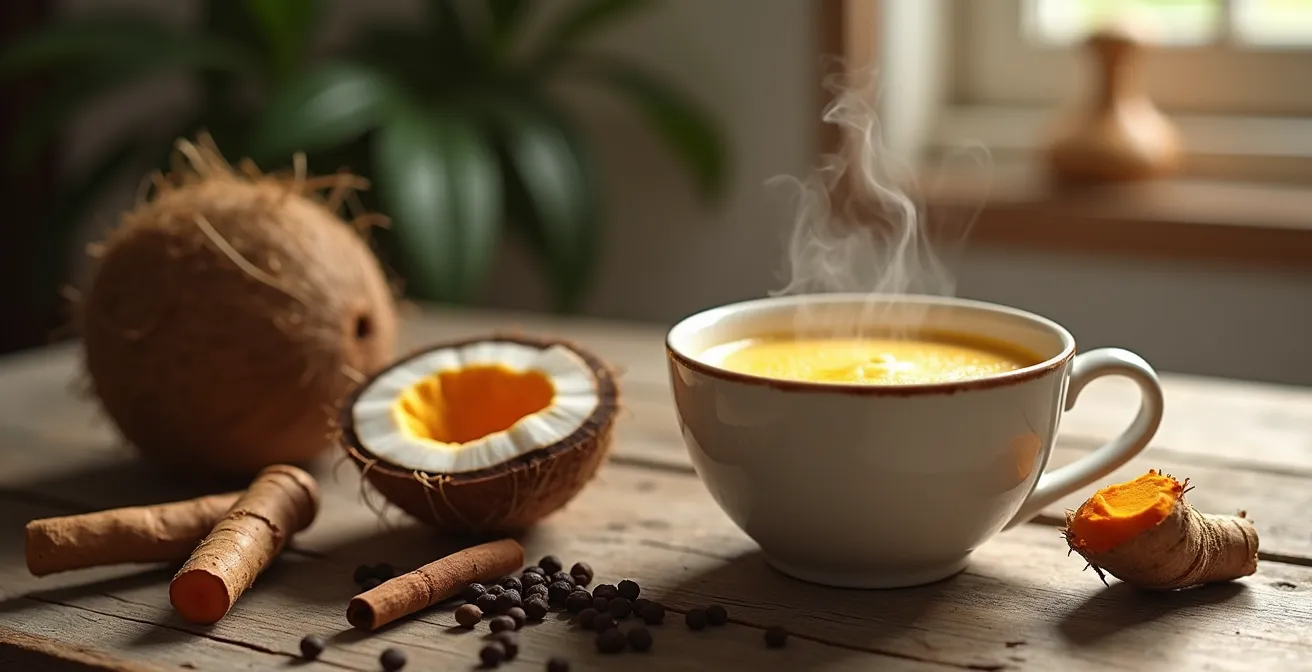
The true power of a golden latte for sleep and joint pain lies not in the recipe, but in the ritual and scientific synergy of its ingredients.
- Curcumin, turmeric’s active compound, requires black pepper and healthy fats (like those in coconut milk) for effective absorption.
- Timing is critical: consuming your latte 30-60 minutes before bed aligns with your body’s natural rhythms for maximum soothing benefit.
Recommendation: Transform your nightly drink into a mindful Ayurvedic practice by focusing on ingredient activation and holistic preparation to unlock its full therapeutic potential.
In the quiet hours of the night, when the world stills, many of us are left wrestling with an unquiet body—joints that ache with a low, persistent hum or a mind that refuses to surrender to sleep. You have likely heard whispers of a warm, golden elixir, a comforting mug of turmeric milk touted as a natural panacea. Many recipes exist, often treating it as just another trendy beverage. But this approach misses the profound, ancient wisdom woven into its creation.
The common advice—mix turmeric powder into warm milk—barely scratches the surface of its potential. It overlooks the crucial science of “curcumin activation,” the very process that transforms this simple spice into a potent anti-inflammatory agent. What if the key wasn’t just *what* you put in your mug, but *how* and *why* you combine each element? This is the heart of the Ayurvedic tradition, where preparing a golden latte is not a chore, but a healing ritual.
This guide will not just give you a recipe; it will initiate you into the practice of creating a truly therapeutic golden latte. We will move beyond the basics to explore the sacred synergy between ingredients, the ideal timing for consumption, and how to make this nightly drink a cornerstone of your wellness, quieting both body and mind. It’s time to learn how to unlock the full healing power held within this golden spice, transforming your bedtime routine into a deeply restorative experience.
Summary: Your Guide to Crafting a Therapeutic Golden Latte
- Why You Must Add Black Pepper to Your Turmeric Drink?
- The Staining Risk: How to Drink Turmeric Without Yellowing Teeth?
- Coconut Milk vs. Almond Milk: Which Fat Carrier Works Best for Curcumin?
- When to Drink Your Latte relative to Bedtime for Best Sleep?
- Fresh Root vs. Powder: Which Turmeric Form Is More Potent?
- Can a Whole Food Diet Reduce Chronic Inflammatory Markers in 8 Weeks?
- Which Dairy-Free Nut Milk Innovation Foams Best for Latte Art?
- Achieving Optimal Wellness: Balancing Diet, Sleep, and Stress Management
Why You Must Add Black Pepper to Your Turmeric Drink?
Simply stirring turmeric into milk is a missed opportunity. The star compound in turmeric, curcumin, is notoriously difficult for the body to absorb on its own. This is where a humble kitchen spice, black pepper, performs its magic. Black pepper contains piperine, an alkaloid that acts as a powerful bioavailability enhancer. It essentially opens the door for curcumin to enter your bloodstream instead of just passing through your digestive system.
Think of it as a partnership. Without piperine, you experience only a fraction of curcumin’s anti-inflammatory and antioxidant benefits. The piperine inhibits certain metabolic pathways in the liver and intestinal wall that would otherwise break down curcumin too quickly. This concept, known as bioavailability synergy, is a cornerstone of Ayurvedic formulations, where ingredients are paired not just for flavor, but for their ability to amplify one another’s healing properties.
Achieving this synergy isn’t guesswork; it involves specific ratios and methods to ensure you’re activating the turmeric effectively. For those seeking true therapeutic effects for joint relief or deeper sleep, understanding this principle is the first step in mastering your golden latte ritual. It elevates the drink from a simple comfort food to a potent, natural medicine.
Your Action Plan: Optimal Turmeric Activation
- Master the Ratio: Begin with a ratio of 100 parts turmeric to 1 part black pepper (e.g., 1 teaspoon of turmeric to a tiny pinch of finely ground pepper).
- Incorporate Healthy Fats: Ensure your latte includes a good source of fat, like coconut milk, as curcumin is fat-soluble. Aim for at least 15 grams of fat to aid absorption.
- Apply Gentle Heat: Briefly heating the turmeric and pepper in the fat/milk before consuming can further enhance the curcumin’s solubility and activation.
- Consider Ginger: Adding fresh or powdered ginger not only adds warmth and flavor but may also work synergistically with turmeric to enhance its anti-inflammatory effects.
- Prioritize Piperine: For maximum therapeutic benefit, some formulations use a concentrated approach of about 20mg of piperine for every 2 grams of curcumin.
The Staining Risk: How to Drink Turmeric Without Yellowing Teeth?
The vibrant, golden hue of turmeric is a sign of its potent curcumin content, but it’s also a powerful natural dye. A common concern for regular drinkers of golden lattes is the potential for it to stain teeth over time, dulling an otherwise bright smile. This is a valid worry, but it shouldn’t deter you from this healing ritual. With mindful practice, you can easily protect your teeth while still enjoying all the benefits.
The ancient practice of Ayurveda, which gave us golden milk, also offers a solution: oil. Curcumin is fat-soluble, meaning it binds to oils. This principle can be used to your advantage. Practices like oil pulling with coconut oil are traditionally used to cleanse the mouth, and a similar concept can be applied here. Rinsing your mouth with water immediately after finishing your latte is a good first step, but incorporating oil provides a more robust defense.
This protective barrier concept is beautifully simple. The oil provides a surface for the yellow pigments to cling to, preventing them from setting into the enamel of your teeth. By making this a part of your nightly routine, you integrate oral care with your wellness ritual, ensuring the benefits of your latte don’t come at an aesthetic cost.
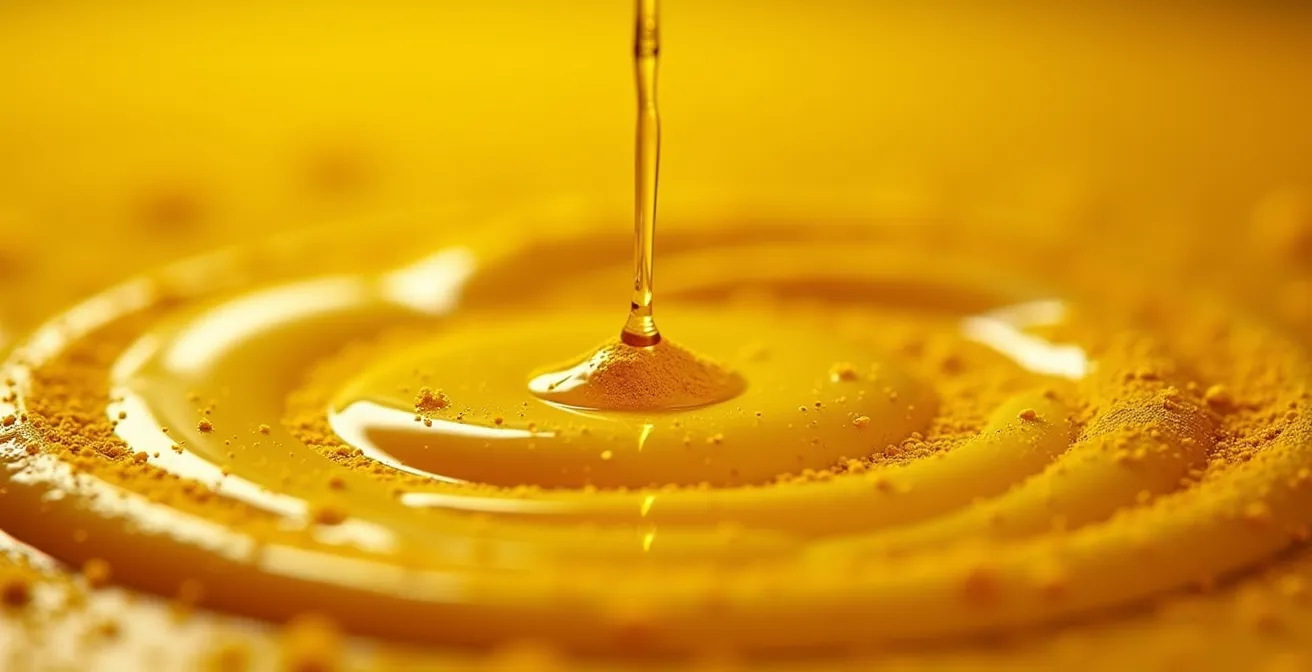
As you can see in the texture of the oil, its lipid structure is ideal for trapping the fine turmeric particles. You can drink your latte through a straw to minimize contact with your front teeth, but finishing with a quick rinse or brush is the most effective method. This small, conscious step preserves both your health and your smile.
Coconut Milk vs. Almond Milk: Which Fat Carrier Works Best for Curcumin?
When crafting your therapeutic golden latte, the choice of milk goes far beyond taste or creaminess; it is a strategic decision about the effectiveness of your “lipid carrier.” Because curcumin is fat-soluble, the type of fat in your milk directly impacts how well your body can absorb it. While many dairy-free milks are available, the battle for the best functional base often comes down to coconut milk versus almond milk.
Coconut milk is a clear winner from a therapeutic standpoint due to its high content of Medium-Chain Triglycerides (MCTs). These fats are structurally different from the long-chain fatty acids found in most other nuts, including almonds. As the AcuIntegra Research Team notes in their Curcumin MCT Formula Analysis, this structural difference has profound implications.
Because of their short chain structure, MCTs are quickly absorbed and metabolized by the liver and utilized by the body. They also promote the production of ketones, a favorite source of energy for the brain’s and muscles’ tissues.
– AcuIntegra Research Team, Curcumin MCT Formula Analysis
This rapid absorption means MCTs act as a highly efficient delivery system for curcumin, transporting it directly to the liver for processing. Almond milk, while a healthy choice, lacks MCTs and is less effective at this crucial task without the addition of other fats. The choice, therefore, depends on your goal: for flavor, either works; for therapy, coconut milk has a distinct biochemical advantage.
| Characteristic | Coconut Milk | Almond Milk |
|---|---|---|
| MCT Content | 10-15% of fat content | None |
| Primary Fat Type | Medium-Chain Triglycerides (MCTs) | Long-chain fatty acids |
| Lauric Acid | 50% of fat content | Not present |
| Absorption Speed | Rapid (directly to liver) | Standard |
| Ketone Production | High | Low |
| Curcumin Solubility | Enhanced by MCTs | Requires added fats |
When to Drink Your Latte relative to Bedtime for Best Sleep?
The timing of your golden latte ritual is not arbitrary; it is a key element of its effectiveness, especially for promoting deep, restorative sleep. This is the principle of chrono-nutrition: aligning what you consume with your body’s internal clocks, or circadian rhythms. Drinking your latte too close to bedtime might interfere with digestion for some, while drinking it too early may cause its soothing effects to wear off before you’re ready for sleep.
The goal is to allow the body enough time to digest the warm liquid and begin absorbing the calming compounds, so they are peaking in your system as you lie down. Turmeric has properties that can help lower anxiety and relax the body, while the gentle warmth of the drink itself is a signal to your nervous system that it’s time to wind down. This intentional timing transforms the act of drinking into a powerful sleep cue.
General consensus and traditional wisdom point to a specific window that balances digestion with therapeutic effect. According to analysis of traditional use, research indicates that drinking golden milk 30-60 minutes before bed is the optimal time. This window gives your body the perfect amount of time to process the latte. It allows the anti-inflammatory properties of curcumin to begin their work on soothing joints, and the calming properties to prepare your mind for rest, without making you feel overly full or causing digestive discomfort as you’re trying to drift off.
Treat this 30-to-60-minute period as a sacred transition. Prepare your latte mindfully, sip it slowly away from screens, and allow its warmth and healing essence to be the final act of your day before you retreat into slumber. This small adjustment can make a significant difference in the quality of your sleep.
Fresh Root vs. Powder: Which Turmeric Form Is More Potent?
In the quest for the most potent golden latte, a common question arises: is it better to use fresh turmeric root or the more convenient dried powder? Both forms contain the active compound curcumin and can be used to create a healing beverage, but they possess different properties that may influence your choice. The answer isn’t simply which is “better,” but which is better suited to your ritual and desired outcome.
Fresh turmeric root contains a higher concentration of volatile oils, such as turmerone, which are largely lost during the drying and grinding process that creates powder. Some studies suggest these oils have their own neuroprotective and anti-inflammatory benefits and may even enhance curcumin’s bioavailability. However, the curcumin concentration in fresh root can vary. In contrast, high-quality turmeric powder is often standardized to contain a consistent percentage of curcumin (typically 3-5%), offering more reliable dosing. For a quick and practical conversion, you can swap a 1-inch piece of peeled, grated fresh turmeric for ½ teaspoon of powder, though you should simmer the fresh root for a couple of extra minutes to fully extract its compounds.
Ultimately, fresh root offers a more complex, whole-plant medicine with a brighter, more peppery flavor. Powder offers consistency and convenience. If you have access to fresh, organic root, using it can create a wonderfully vibrant and potent latte. If you prioritize ease and consistent dosage, a high-quality, organic powder is an excellent and effective choice. The key is to source the best quality available to you.
| Property | Fresh Root | Powder |
|---|---|---|
| Curcumin Concentration | 2-5% by weight | 3-5% standardized |
| Additional Compounds | Turmerones, volatile oils | Reduced volatile compounds |
| Shelf Life | 2-3 weeks refrigerated | 2-3 years sealed |
| Preparation Method | Grate finely, simmer longer | ‘Bloom’ in fat first |
| Bioavailability | Enhanced by fresh oils | Consistent if quality sourced |
Can a Whole Food Diet Reduce Chronic Inflammatory Markers in 8 Weeks?
While a nightly golden latte is a powerful ritual for managing inflammation, its true potential is unlocked when it becomes part of a larger commitment to a whole-food, anti-inflammatory lifestyle. Chronic inflammation, the underlying cause of many modern ailments from arthritis to sleep disturbances, is often fueled by a diet high in processed foods, sugar, and unhealthy fats. A single drink cannot undo systemic imbalance; it must be a partner to a broader dietary shift.
A whole-food diet, rich in colorful fruits and vegetables, healthy fats from nuts and seeds, lean proteins, and powerful spices like turmeric and ginger, works to calm inflammation from the inside out. These foods provide the vitamins, minerals, and phytonutrients your body needs to regulate its inflammatory response. The golden latte, in this context, becomes a concentrated dose of the anti-inflammatory power you are cultivating throughout the day. For those with specific conditions, this approach can be life-changing. As Lisa Bryan of Downshiftology explains from her own experience with autoimmune conditions, the compounds in turmeric are uniquely effective.
In her analysis on Downshiftology, Lisa Bryan highlights this personal connection:
If you have an autoimmune condition (or several, like me) then you’ll love turmeric milk for its anti-inflammatory properties. Turmeric is one of Mother Nature’s top healing compounds and studies have shown that curcumin, the active ingredient in turmeric, can help certain autoimmune conditions by regulating inflammatory signals.
– Lisa Bryan, Downshiftology
Viewing your golden latte not as a magic bullet but as the crown jewel of an anti-inflammatory diet is the key. It is the ritual that seals the day’s commitment to nourishing and healing your body, working in concert with the wholesome foods that build your foundation of wellness.
Which Dairy-Free Nut Milk Innovation Foams Best for Latte Art?
For the modern latte enthusiast, the aesthetic appeal of a creamy, microfoam-topped beverage is part of the pleasure. Many have turned to “barista blend” nut milks, which are specifically formulated with added proteins and stabilizers to create a superior foam for latte art. While these can produce a beautiful result, from a purely therapeutic and Ayurvedic perspective, this focus on foam can be a distraction from the primary goal: healing.
The ability of a milk to foam is largely dependent on its protein and fat content. Barista blends often achieve this by adding ingredients that, while functional for foaming, do not contribute to the drink’s anti-inflammatory purpose. When we re-center our intention on creating a potent elixir for sleep and joint relief, the choice of milk should be guided by its ability to act as an effective lipid carrier for curcumin, not by its foaming capabilities.
This is where coconut milk, especially the full-fat canned variety, reclaims its prominence. While it may not foam as readily as a commercial almond barista blend, its rich content of Medium-Chain Triglycerides (MCTs) makes it a far superior vehicle for curcumin absorption. As noted in analyses of its properties, coconut milk stands out because it’s a natural source of these unique fats. MCTs are metabolized differently, providing a rapid and efficient pathway to deliver curcumin’s healing compounds throughout the body. Therefore, you are faced with a choice: prioritize aesthetics or prioritize therapeutic efficacy. For this nightly ritual, the internal benefit should always outweigh the external appearance.
Key Takeaways
- The effectiveness of your golden latte hinges on the synergy of turmeric, black pepper (piperine), and a healthy fat carrier like coconut milk.
- Timing is crucial: drink your latte 30-60 minutes before bed to align with your body’s natural rhythms for optimal sleep.
- Framing the preparation as a mindful, nightly ritual, rather than just making a drink, enhances its psychological and physiological benefits.
Achieving Optimal Wellness: Balancing Diet, Sleep, and Stress Management
True wellness is a delicate dance between diet, sleep, and stress management. Your nightly golden latte ritual is a beautiful and powerful anchor for this balance, but it is most effective when supported by a holistic lifestyle. It is a potent tool, but it is one tool among several that work together to create a state of profound well-being and resilience against chronic inflammation and sleeplessness.
The anti-inflammatory diet you embrace during the day provides the building blocks for health. The golden latte you sip at night delivers a concentrated dose of healing curcumin, specifically preparing your body for rest. As The Deep Sleep Co. research team highlights, the benefits are multi-faceted. The drink’s value for sleep is not just a myth; it’s rooted in the calming properties of its ingredients.
Turmeric can aid sleep and protect against sleep deprivation. Turmeric is said to help you relax and lower anxiety levels to help with sleep. Its calming properties also help to aid digestion which allows the body to sleep more soundly.
– The Deep Sleep Co. Research Team, Golden Milk Sleep Benefits Analysis
This calming effect must be protected by mindful stress management. An evening filled with stressful work or stimulating blue light from screens can counteract the soothing signals of your latte. By weaving the preparation and consumption of your drink into a larger wind-down ritual—one that includes gentle stretching, journaling, or quiet reflection—you create a powerful synergy that tells every cell in your body it is time to rest, repair, and heal.
Your Holistic Evening Wind-Down Ritual
- Digital Sunset: Begin your wind-down 90 minutes before your desired bedtime by turning off all electronic devices.
- Mindful Preparation: Prepare your golden latte with intention, focusing on the warmth and aroma as a transition from the day’s activities.
- Sip and Reflect: Sip your latte slowly while practicing gratitude journaling or simply sitting in quiet contemplation for 10 minutes.
- Gentle Movement: Follow your drink with a few gentle, restorative yoga poses or simple stretches to release physical tension.
- Conscious Breathing: Once in bed, practice a simple breathing technique, such as the 4-7-8 method, to calm the nervous system before sleep.
Embrace this knowledge to transform a simple beverage into a profound nightly ritual. By honoring the synergy of these ingredients and the wisdom of mindful preparation, you can unlock a deeper level of healing, paving the way for restful nights and more comfortable days.