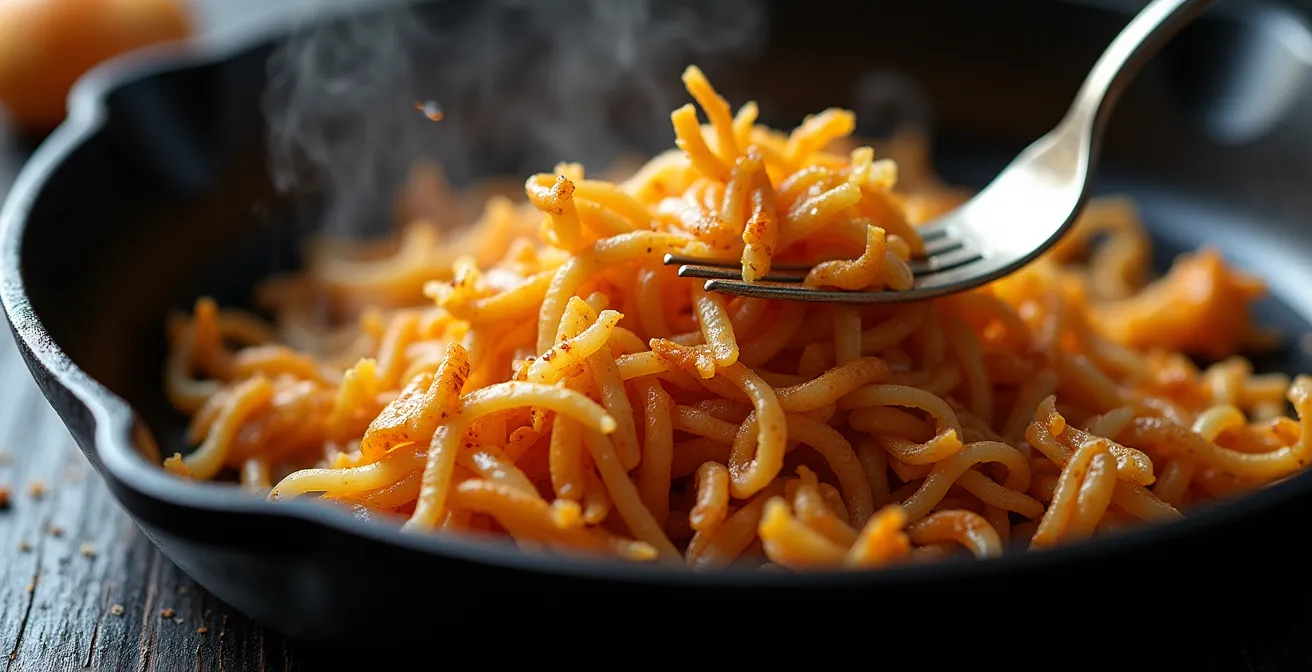
Achieving a convincing “meaty” texture with jackfruit has little to do with the sauce and everything to do with mastering moisture evacuation and targeted heat application.
- The critical first step is aggressively removing the canning liquid to create a neutral, absorbent base.
- A high-heat sear in a dry pan *before* adding any sauce is non-negotiable for creating texture and crispy edges.
Recommendation: Stop treating jackfruit like a meat that needs to be tenderized. Instead, treat it like a culinary sponge that must first be wrung out, then seared, and only then rehydrated with concentrated flavor.
If you’ve ever eagerly prepared a batch of pulled jackfruit tacos only to be met with a sweet, mushy, and altogether disappointing texture, you are not alone. Many home cooks abandon jackfruit after this first failed attempt, concluding it’s an inferior substitute for pulled pork. The common advice is to simply drown it in BBQ sauce or use more spices, but this only masks the core problem.
The issue isn’t the jackfruit; it’s the technique. Achieving that coveted “meaty,” pull-apart, and slightly crispy texture is not about mimicking meat but about understanding the unique properties of the fruit itself. It’s a game of texture engineering, focusing on three distinct phases: aggressive moisture evacuation, strategic fiber breakdown, and controlled caramelization. Forget what you think you know about slow-cooking pork. The path to perfect jackfruit is a different culinary road, but one that yields spectacular results when followed correctly.
This guide breaks down the science and technique behind transforming canned jackfruit from a mushy mess into the star of your tacos. We’ll move beyond generic advice to provide specific, technical troubleshooting for each stage of the process. Prepare to fundamentally change how you cook jackfruit.
Summary: A Chef’s Technical Guide to Perfect Jackfruit Texture
- Canned vs. Fresh: Which Jackfruit Works for Savory Dishes?
- How to Remove the Briny “Tin” Taste from Canned Jackfruit?
- The Sauté Mistake That Makes Jackfruit Tacos Mushy
- Why Jackfruit Needs More Spice Than Pork to Taste Good?
- How Long to Simmer Jackfruit for the Perfect “Pull”?
- Eating Casual Vegan Street Food Abroad: A Safety Guide
- Elevating Home Cooking with Plant-Based Culinary Arts Techniques for Dinner Parties
- The Art of Slow-Roasting Vegetables: Transforming Roots into Candy
Canned vs. Fresh: Which Jackfruit Works for Savory Dishes?
The first decision point in your jackfruit journey can determine the entire outcome. While you might see large, fresh jackfruit in markets, for savory meat-substitute dishes, this is not what you want. Ripe, fresh jackfruit is sweet, with a flavor profile akin to mango or banana, and a soft texture. It’s delicious in desserts, but it will never yield a savory, meaty result.
The correct choice for dishes like pulled “pork” or “chicken” is young, green jackfruit. This is the fruit in its unripe state, where the flesh is starchy, neutral in flavor, and possesses a remarkably fibrous, shreddable structure. You’ll almost always find this product canned or packaged in brine or water, which is ideal for our purposes. The canning process tenderizes the tough fibers just enough to give us a head start.
When shopping, look for cans explicitly labeled “young green jackfruit in brine” or “in water.” Avoid “jackfruit in syrup” at all costs, as it’s the ripe, sweet version and is completely unsuitable. The brine is the most common and is perfectly fine, as we will address how to handle the “canned” taste in the next step. The key takeaway is that the can is not a compromise; for savory cooking, it is the superior choice for achieving the right foundational texture.
Choosing the right can is the first, and arguably most important, step in engineering the perfect texture. It sets the stage for everything that follows.
How to Remove the Briny “Tin” Taste from Canned Jackfruit?
So, you’ve got the right can: young, green jackfruit in brine. The first and most common mistake is to simply drain, shred, and cook. This locks in a subtle but noticeable metallic or briny flavor that no amount of spice can fully mask. The goal of this step is aggressive moisture evacuation to create a neutral flavor base and a texture ready for searing.
Start by rinsing the jackfruit chunks thoroughly under cold water. As you rinse, break them apart with your hands. You’ll notice the firmer core sections and the softer, stringy parts. Shred these pieces, removing and discarding any tough, inedible seeds or pod casings you find. Now comes the most critical part: squeezing. Simply pressing it with your hands is not enough. To achieve the necessary dryness for a good sear, you need to be methodical.
Wrapping the shredded jackfruit in a clean tea towel or, ideally, a few layers of cheesecloth, allows you to wring out an astonishing amount of liquid. Twist and squeeze until the jackfruit is significantly drier and more compact. This single step does more to prevent a mushy outcome than anything else.
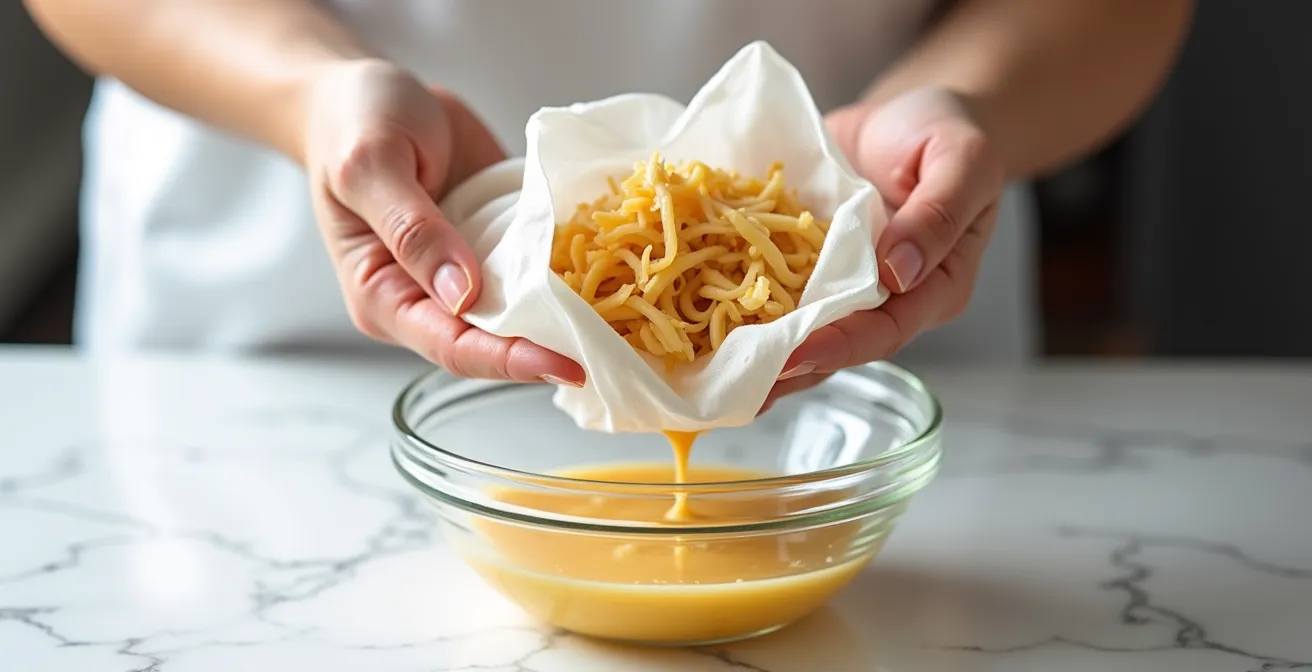
As you can see, the amount of expelled liquid is significant. For maximum efficiency and the best texture, some chefs go even further. According to an analysis of different squeezing methods, using a potato ricer or masher yields the most uniform dryness, making it the superior technique for texture preparation.
| Method | Effectiveness | Time | Texture Result |
|---|---|---|---|
| Hand Squeezing | Moderate | 2-3 min | Uneven moisture |
| Cheesecloth | Good | 5 min | Better uniformity |
| Potato Ricer/Masher | Excellent | 3-4 min | Optimal dryness |
By effectively removing this initial moisture, you not only eliminate the briny taste but also prepare the fibers to crisp up during cooking, rather than steaming in their own liquid.
The Sauté Mistake That Makes Jackfruit Tacos Mushy
The single biggest mistake that leads to mushy jackfruit happens in the pan. Most recipes have you add the shredded jackfruit to a pan with onions and garlic, then immediately pour in your sauce or broth. This is a critical error. By adding liquid too soon, you are essentially steaming the jackfruit, which results in a soft, waterlogged texture. The secret is to create a Maillard reaction first.
The goal is to sear the dry, squeezed jackfruit in a hot pan *before* any liquid is introduced. This creates crispy, browned edges that provide textural contrast and a deeper, savory flavor. As food writer Laura Rege notes for The Kitchn, the essential motion is to “Get a skillet hot, add a bit of oil, and cook, stirring occasionally, until the fruit is golden.” This browning is not just for color; it’s a foundational texture-building step.
Get a skillet hot, add a bit of oil, and cook, stirring occasionally, until the fruit is golden
– Laura Rege, The Kitchn – Jackfruit Tacos Recipe
To do this like a professional, you need to resist the urge to stir constantly. Let the jackfruit sit in the hot pan to develop a crust. This is where the magic happens, transforming the stringy pieces into something with a genuinely satisfying, chewy-crispy bite. Only after you have achieved these golden-brown edges should you consider adding your sauce or simmering liquid.
Action Plan: Auditing Your Sauté Technique
- Pan Temperature: Did you pre-heat your skillet to medium-high or high before adding the jackfruit? A lukewarm pan will steam, not sear.
- Moisture Level: Was your jackfruit thoroughly squeezed and dry to the touch before it hit the pan? Any excess water will prevent browning.
- Initial Contact: Did you add the jackfruit in a single layer and let it cook undisturbed for 2-3 minutes to form a crust? Constant stirring is counterproductive at this stage.
- Browning Check: Did you see visible golden-brown, crispy edges on the jackfruit strands before you even thought about adding sauce or other liquids?
- Final Sear: Did you consider turning the heat up at the very end of cooking (after the sauce has reduced) for a final 2-minute blast to re-crisp the edges?
By prioritizing this searing step, you are fundamentally changing the jackfruit’s cellular structure, creating a texture that can stand up to sauce instead of dissolving into it.
Why Jackfruit Needs More Spice Than Pork to Taste Good?
Another common complaint is that jackfruit tastes bland. Home cooks often use the same amount of seasoning as they would for a similar quantity of pulled pork and are left underwhelmed. The reason for this lies in the fruit’s composition. Unlike pork, which has its own inherent savory flavor and fat, jackfruit is a neutral, low-fat canvas. It’s a flavor sponge, not a flavor source. This means it requires a more deliberate and layered approach to seasoning, a concept we can call flavor adsorption.
The key is building deep, savory umami notes that meat possesses naturally. This can’t be achieved with just chili powder and cumin. You need to introduce ingredients rich in glutamates. Think soy sauce or tamari for fermented depth, nutritional yeast for a cheesy and nutty background note, and mushroom powder for an earthy richness. These ingredients provide the savory backbone that jackfruit lacks.
Furthermore, the way you add spices matters. A professional technique to maximize flavor is “blooming” your spices. This involves toasting the dry spices in the hot oil in your pan for 30-60 seconds before adding any other ingredients. This process releases their volatile compounds, making them exponentially more aromatic and flavorful. Adding a final layer of smoked paprika at the end of cooking will impart a smoky, meaty flavor that beautifully mimics slow-cooked meats.
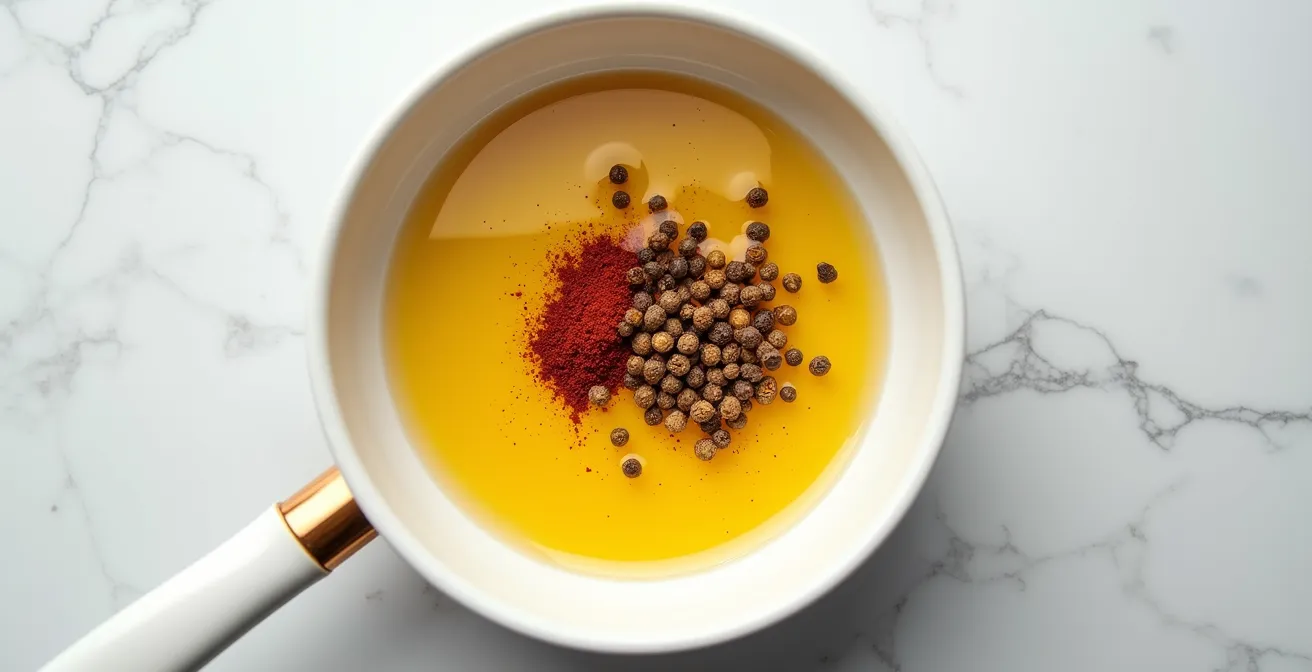
Building these layers is essential. A great guide to vegan umami suggests a five-layer approach to ensure a complex and satisfying flavor profile that allows the jackfruit to become truly savory and delicious.
By understanding that jackfruit requires you to *build* the flavor from the ground up, rather than simply enhance an existing one, you can create a final dish that is profoundly savory and anything but bland.
How Long to Simmer Jackfruit for the Perfect “Pull”?
Once you’ve seared your jackfruit and built your flavor base with spices and umami-rich liquids, the final texture is determined by the simmer. The goal here is twofold: to allow the jackfruit to absorb all the flavors of the sauce, and to break down the remaining connective fibers so it becomes perfectly tender and “pullable.” The duration of this simmer is a balancing act.
Too short a simmer, and the jackfruit remains too firm and doesn’t shred easily. Too long, especially with the lid on the entire time, and it can break down too much, reverting back to the dreaded mushy state. The ideal simmer time is typically between 20-25 minutes. A good technique is to start with the lid on for the first 10-15 minutes to trap steam and tenderize the fibers. Then, remove the lid for the final 10 minutes to allow the sauce to reduce, thicken, and cling to the jackfruit pieces, concentrating the flavor.
For those looking for an even better result with crispy edges, a hybrid method is king. After simmering for 20 minutes, spread the jackfruit on a baking sheet and broil or bake at a high temperature for 10-15 minutes. This final blast of dry heat caramelizes the sugars in the sauce and creates incredible crispy “burnt ends,” providing the ultimate textural contrast. For a detailed breakdown of different cooking times and their results, this comparison from Minimalist Baker is an excellent resource.
| Method | Time | Lid Status | Result |
|---|---|---|---|
| Quick Simmer | 15 min | Off | Firm, less tender |
| Standard Simmer | 20-25 min | On then off | Tender, shreddable |
| Simmer + Bake | 20 min + 10-15 min broil | Mixed | Crispy edges, perfect pull |
As a shortcut, some chefs use a pressure cooker, which can achieve a perfect pulled texture in as little as 3 minutes at high pressure. However, the simmer-then-bake method remains the gold standard for achieving that perfect blend of tender, shreddable interior and crispy, caramelized exterior.
Eating Casual Vegan Street Food Abroad: A Safety Guide
What makes street food like authentic Mexican carnitas or smoky barbecue so irresistible? It’s the texture. It’s the satisfying chew, the crispy edges, and the tender, pull-apart quality. When we try to replicate these dishes at home with plant-based ingredients, our “safety guide” should be focused on one thing: avoiding the disappointment of a poor textural imitation. The experience of eating street food “abroad” is a journey outside our culinary comfort zone, and making jackfruit tacos should be approached with the same adventurous spirit and technical respect.
The first rule of this safety guide is to honor the texture of the original dish. If you’re aiming for carnitas, you’re looking for tender strands of meat simmered in fat and then crisped up. For our jackfruit version, this means the dry sear and the final bake/broil step are non-negotiable. This is how you create those coveted crispy bits (known as “doradito” in Spanish) that are the hallmark of great carnitas.
The second rule is to manage expectations and work with the ingredient’s strengths. Jackfruit will not magically develop the collagen and fat of pork. Therefore, your “safety” lies in building flavor and texture through other means. This includes a robust, multi-layered spice blend and the addition of a small amount of fat (like coconut oil or a neutral vegetable oil) during the searing phase to help with browning and mouthfeel. Treating the jackfruit with the same seriousness as a piece of meat is the key to a safe and satisfying journey to delicious vegan street food at home.
By following these safety guidelines, you ensure your homemade vegan street food doesn’t just taste good, but feels authentic and satisfying to eat.
Elevating Home Cooking with Plant-Based Culinary Arts Techniques for Dinner Parties
Taking your jackfruit tacos from a casual weeknight meal to a dish worthy of a dinner party is about applying final touches rooted in culinary arts. Once you have mastered the core texture of the jackfruit, the elevation comes from contrast, presentation, and polish. This is where you move from just a cook to a true plant-based chef.
First, consider textural contrast. Your perfectly cooked jackfruit is tender, chewy, and crispy. What does it need? Something fresh, crunchy, and creamy. A quick-pickled red onion offers a sharp, acidic crunch. A creamy avocado-lime crema or a cashew-based sour cream provides a cooling, rich counterpoint to the spices. A simple slaw of shredded cabbage and carrots, very lightly dressed, adds a clean, raw crunch that elevates the entire experience. These aren’t just toppings; they are integral components of the finished dish.
Next, think about presentation. Don’t just scoop the jackfruit into a taco shell. Warm your corn tortillas on a dry comal or skillet until they are pliable and fragrant. Place a generous portion of the jackfruit, then artfully add your toppings. A final sprinkle of fresh cilantro, a crumble of vegan cotija cheese, and a lime wedge on the side shows intentionality. You are not just serving food; you are composing a plate. This level of care is what your guests will notice and appreciate.
By applying these basic culinary arts principles, you transform a simple concept—pulled jackfruit tacos—into a sophisticated and impressive plant-based main course that will delight even the most skeptical omnivores at your table.
Key takeaways
- Young, green jackfruit in brine is the only correct choice for savory, meaty dishes; avoid fresh or syrup-packed varieties.
- The most critical step to prevent mushiness is aggressively squeezing all liquid from the rinsed jackfruit before it touches the pan.
- You must sear the dry jackfruit in a hot pan to create a brown, crispy crust *before* adding any sauce or liquid to build texture.
The Art of Slow-Roasting Vegetables: Transforming Roots into Candy
While jackfruit is a fruit, not a root, the core principle of “The Art of Slow-Roasting”—transforming an ingredient through heat to concentrate its flavor and alter its texture—is the perfect lens for our final step. Just as slow-roasting turns a hard carrot into a sweet, caramelized “candy,” a final blast of dry heat can transform your simmered jackfruit into something truly special.
After your jackfruit has simmered and absorbed the sauce, it is tender and flavorful, but it lacks the final textural dimension. This is where we apply the roasting principle. Spread the saucy jackfruit onto a parchment-lined baking sheet in a relatively even layer. Don’t crowd the pan. Then, place it under a hot broiler or in a very hot oven (425°F / 220°C) for 10-15 minutes.
During this final phase, a culinary transformation occurs. The edges of the jackfruit strands begin to char and crisp up. The sugars in your sauce caramelize, creating dark, intensely flavorful “burnt ends” that are the textural highlight of any great pulled meat dish. This step mimics the crispy exterior of slow-roasted pork shoulder or the coveted “bark” on a brisket. It provides the final, crucial layer of textural complexity that separates good jackfruit tacos from great ones.
By embracing this “slow-roasting” philosophy in a final, high-heat step, you complete the transformation. You have successfully engineered a plant-based filling that is not just a substitute, but a delicious, texturally fascinating dish in its own right.