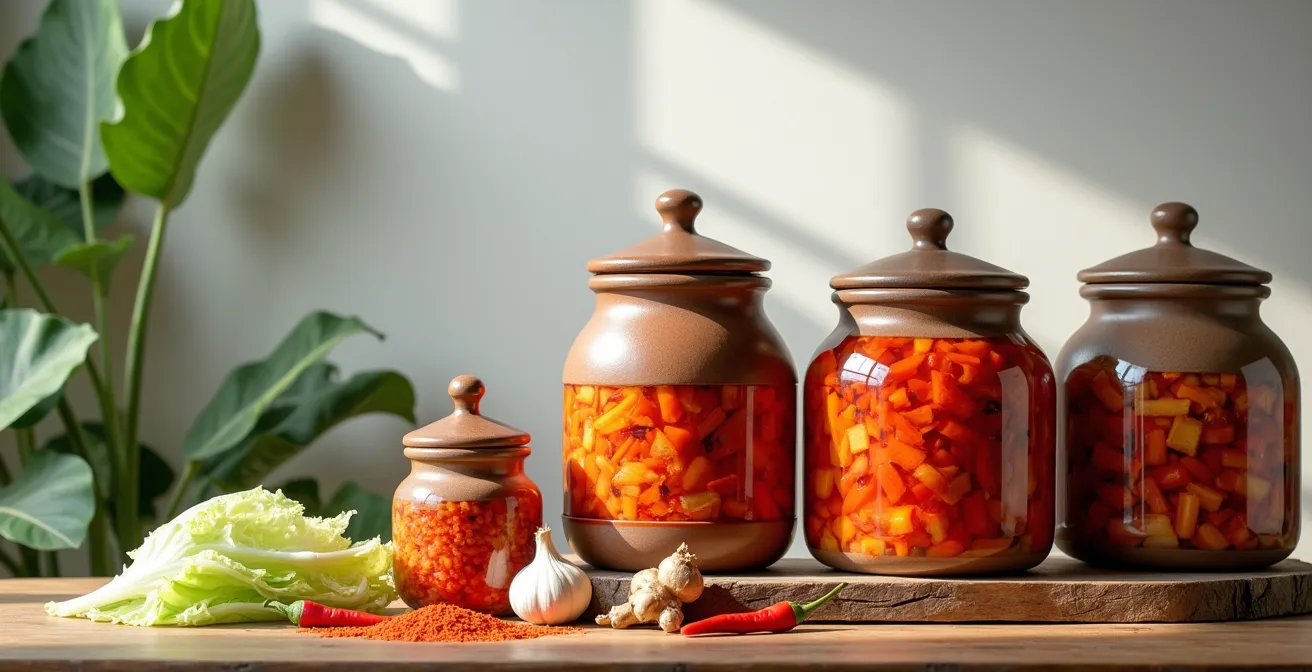
Making authentic kimchi isn’t about finding the perfect recipe; it’s about mastering the living science that has preserved food for millennia.
- The microbial diversity in homemade kimchi offers health benefits far beyond what isolated probiotic pills can provide.
- Safety is not a matter of luck, but of controlling three key variables: jar sterility, the correct salt, and keeping produce submerged.
Recommendation: Start with a small batch, trust your senses (smell and sight), and use pH strips for ultimate confidence in your ferment.
The desire to make kimchi at home often springs from a deeper place than just wanting a spicy side dish. It’s a connection to a rich culinary history, a way to participate in a tradition that has nourished cultures for centuries. Many culinary enthusiasts are drawn to the idea of capturing seasonal abundance in a jar, transforming a humble cabbage into a complex, living food. Yet, this ambition is frequently met with hesitation. The internet is filled with conflicting advice and frightening images of failed experiments, leading to a pervasive fear of spoilage, foodborne illness, or simply creating something inedible.
Most guides offer a simple recipe, a list of steps to follow by rote. They might mention that fermentation is healthy, but they rarely explain the intricate dance of microorganisms that you are invited to conduct. This leaves the home fermenter powerless, unable to troubleshoot or adapt. The real key to mastering traditional fermentation lies not in memorizing a recipe, but in understanding the principles behind it. It’s about learning the ‘why’ behind the ‘how’. When you understand the science of creating a safe, acidic environment, you move from being a recipe-follower to a confident microbial steward.
This guide departs from the simple step-by-step format. Instead, it will empower you by demystifying the core scientific and traditional pillars of safe fermentation. We will explore why the living ecosystem in your jar is superior to a sterile pill, how to create the perfect clean environment, and how to use salt as your most crucial tool. You will learn to read the signs of a healthy ferment, control its flavor development, and even use these ancient techniques to support your modern health goals. By the end, you will have the knowledge not just to make kimchi, but to do so safely, consistently, and with a deep appreciation for the craft.
To guide you on this journey from enthusiast to practitioner, this article is structured to build your knowledge from foundational benefits to advanced techniques. Follow along to master each critical aspect of safe and successful home fermentation.
Summary: Mastering Traditional Fermentation: How to Make Kimchi at Home Safely?
- Why Traditional Fermentation Beats Store-Bought Probiotic Pills?
- How to Sterilize Jars for Long-Term Fermentation in 3 Steps?
- Sea Salt vs. Iodized Salt: Which One Ruins Your Fermentation Process?
- Mold or Kahm Yeast: How to Identify if Your Ferment Is Dangerous?
- When to Move Your Ferment to the Fridge to Stop the Sourness?
- How to Cultivate a Diverse Microbiome After a Course of Antibiotics?
- Marine Algae in the Kitchen: Beyond Sushi and Salads
- Why Organic Fermented Protein Sources Are Superior for Sensitive Digestion?
Why Traditional Fermentation Beats Store-Bought Probiotic Pills?
In our modern quest for wellness, probiotic pills are often marketed as a convenient shortcut to gut health. However, these isolated strains in a capsule are a world away from the vibrant, complex ecosystem found in traditionally fermented foods like kimchi. A jar of homemade kimchi is not just a food; it’s a thriving microbial community. Specific research shows that kimchi contains 9-10 log CFU per gram of Lactic Acid Bacteria (LAB), a concentration that meets and often exceeds therapeutic levels found in commercial supplements. But the benefits extend far beyond sheer numbers.
The true power of fermented foods lies in their biodiversity and the matrix in which they live. Unlike a pill containing one or two strains, kimchi is a poly-microbial ferment. It hosts a synergistic team of bacteria that work together, creating a more resilient and diverse impact on your gut microbiome. This process yields benefits that a supplement simply cannot replicate:
- Complex Microbial Ecosystem: Wild fermentation cultivates multiple strains of beneficial bacteria, such as Leuconostoc, Weissella, and various Lactobacillus species. These strains work in concert, performing different roles at different stages of fermentation, creating a more robust final product.
- Postbiotic Production: The fermentation process is a tiny biological factory. As the bacteria consume sugars in the cabbage, they produce a wealth of beneficial byproducts known as postbiotics. These include organic acids like butyrate (a key energy source for colon cells), essential vitamins (like B vitamins and Vitamin K2), and digestive enzymes that are absent in a standard probiotic pill.
- Food Matrix Protection: The fibrous structure of the cabbage acts as a natural protective vessel. This food matrix shields the beneficial bacteria as they travel through the harsh acidic environment of the stomach, ensuring more of them arrive alive in your intestines where they can do their work.
- Co-evolution Advantage: For millennia, humans have consumed fermented foods as a primary method of preservation. Our digestive systems have co-evolved with these microbial communities, making them a more natural and recognizable source of gut support than recently developed, lab-grown supplements.
Choosing to make and eat traditionally fermented kimchi is choosing a holistic approach to gut health, one that values biodiversity, nutrient creation, and a deep, evolutionary connection to our food. It’s an investment in a living food that offers far more than any pill ever could.
How to Sterilize Jars for Long-Term Fermentation in 3 Steps?
Before you introduce the beneficial bacteria you want, you must first create a clean slate. Proper sterilization is not about creating a sterile, lifeless void; it’s a critical step in microbial stewardship. Its purpose is to eliminate or drastically reduce the population of unwanted molds, yeasts, and bacteria that could outcompete the desirable Lactic Acid Bacteria (LAB) or spoil your ferment. A clean jar ensures that the microbes responsible for making delicious, safe kimchi are the ones that dominate from the very beginning. The feeling of pristine, steam-cleaned glass is the first tangible step toward a successful ferment.
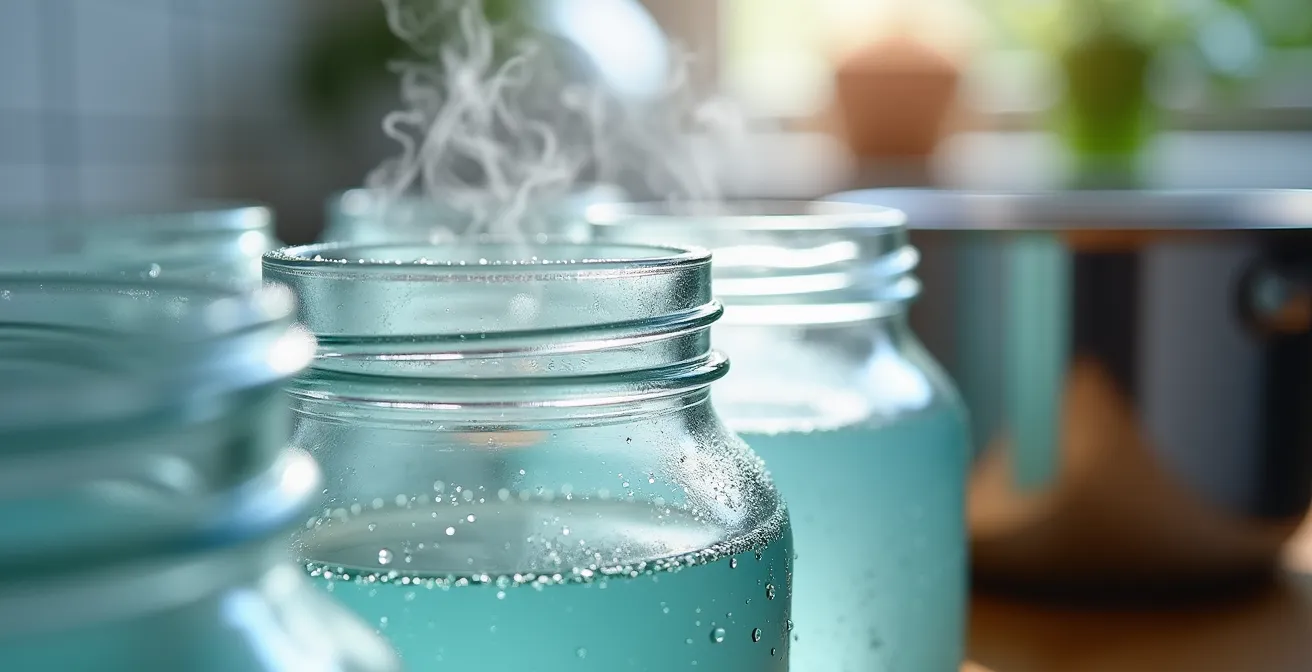
While the goal is the same, not all methods offer the same level of assurance. The method you choose may depend on the equipment you have available and how seriously you take your fermentation craft. For long-term preservation, where the kimchi might be stored for months, achieving a high level of cleanliness is paramount. Choosing the right method is the first act of control you have over the final product.
To help you decide, this comparison breaks down the most common methods used by home fermenters. As this trusted guide to traditional kimchi implicitly suggests, a clean start is non-negotiable.
| Method | Effectiveness | Pros | Cons | Best For |
|---|---|---|---|---|
| Boiling Water | 85-90% | Accessible, no chemicals, inexpensive | Risk of jar breakage, incomplete sterilization | Beginners with basic equipment |
| High-Heat Dishwasher | 90-95% | Convenient, consistent temperature | Rinse aid residue can kill bacteria | Those with modern dishwashers |
| Acid Sanitizers (Star San) | 95-99% | Most reliable, no rinsing needed | Requires purchase, brewing knowledge | Serious fermenters |
For most home kimchi making, which is often consumed within weeks or a few months, a thorough cleaning with hot, soapy water followed by a rinse and air dry, or a cycle in a high-heat dishwasher (without rinse aid), is sufficient. The naturally low pH environment of kimchi provides a strong secondary layer of safety. However, understanding these more rigorous methods builds your foundation as a serious practitioner.
Sea Salt vs. Iodized Salt: Which One Ruins Your Fermentation Process?
Salt is not just for flavor in fermentation; it is the primary tool for controlling the microbial environment. When you salt cabbage for kimchi, you are doing two critical things: drawing water out of the vegetable’s cells through osmosis to create a brine, and, most importantly, creating an environment that is inhospitable to spoilage microbes while giving a competitive edge to the salt-tolerant Lactic Acid Bacteria (LAB) you want to encourage. The type of salt you use, therefore, is not a minor detail—it’s a decision that can make or break your ferment.
The main antagonist in this story is iodized table salt. While the iodine added to this salt is beneficial for human thyroid health, it is an antimicrobial agent. Its presence can inhibit or even kill the very bacteria that are essential for the fermentation process to begin. This leads to a sluggish or completely failed ferment, leaving the door open for undesirable microbes to take hold. As a respected guide points out, the consequences are not just microbial but also sensory. According to research highlighted in the Live Eat Learn Kimchi Guide:
Iodized salt may prevent fermentation and can lead to a metallic taste
– Research findings, Live Eat Learn Kimchi Guide
So, what should you use instead? The best choices are pure, non-iodized salts. Sea salt, kosher salt, or pickling salt are all excellent options. These salts are free from iodine and anti-caking agents that can cloud your brine and interfere with the process. The key is to check the label: if it contains anything other than “salt” (sodium chloride), it’s best to avoid it for fermentation. By choosing the right salt, you are not just seasoning your food; you are actively curating the microbial culture of your kimchi.
Mold or Kahm Yeast: How to Identify if Your Ferment Is Dangerous?
There is no moment more fraught with anxiety for a home fermenter than lifting the lid after a few days to find a film of something growing on the surface. Is it a harmless yeast or a dangerous mold? This is the single greatest fear that deters people from fermentation, but learning to distinguish between them is a core skill of the craft. The key difference lies in their appearance and smell. Mold is dangerous and means the batch must be discarded. It typically appears as fuzzy, hairy, or “spidery” patches and can be white, green, blue, black, or pink. It will often have a foul, musty, or “rotten” smell.
On the other hand, you may encounter Kahm yeast. This is a common, wild, and generally harmless yeast that forms a flat, waxy, or crinkly white film on the surface of the brine. It might smell slightly yeasty or even a bit like a brewery, but it won’t smell foul or rotten. While it can impart a slightly off-flavor if left to grow unchecked, it is not considered dangerous. The standard practice is to simply skim it off the surface with a clean spoon and ensure the rest of the vegetables are still submerged in the brine.
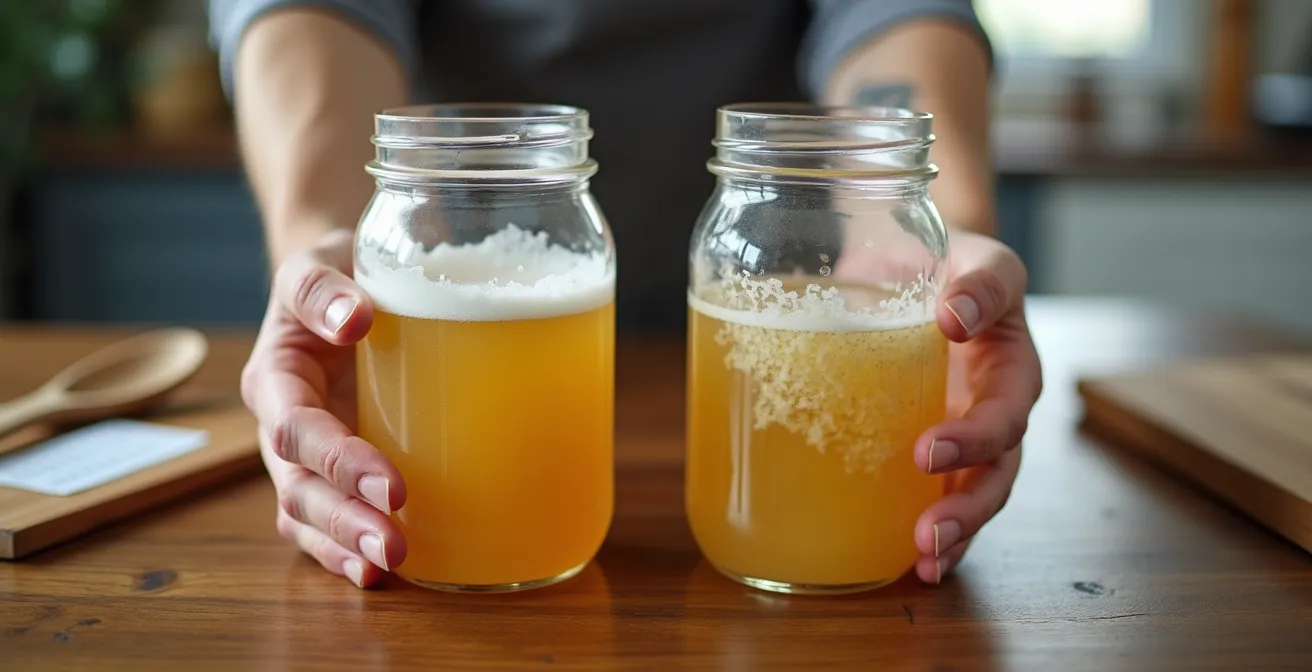
Beyond visual inspection, the ultimate indicator of safety in kimchi is its pH level. Successful fermentation by Lactic Acid Bacteria produces lactic acid, which dramatically lowers the pH of the brine. Once the kimchi pH drops below 4.6, the environment becomes inhospitable to most dangerous pathogens, including *Clostridium botulinum*. Using simple pH strips, you can verify this. An ideal, well-fermented kimchi will have a pH between 4.2 and 4.5. This scientific checkpoint provides definitive peace of mind. Prevention, however, is the best strategy. The three pillars of mold prevention are keeping vegetables submerged to limit oxygen exposure, maintaining a proper salt concentration (2-3% by weight), and fermenting at a stable, cool temperature.
Your 5-Point Fermentation Safety Check
- Visual Inspection: Examine the surface growth. Is it fuzzy and colorful like green, black, or blue (mold/danger), or is it a flat, crinkly white film (kahm yeast/safe)?
- Aroma Test: Carefully smell the ferment. Does it have a foul, rotten, or musty odor (discard), or does it smell pleasantly sour, tangy, and yeasty (safe)?
- Submersion Check: Verify that all solid vegetables are fully submerged beneath the brine. Any piece exposed to air is a potential site for unwanted microbial growth.
- pH Verification: For ultimate confidence, use a pH test strip. A pH level safely below 4.6, and ideally between 4.2-4.5, confirms a successful and safe acidic fermentation.
- Record & Decide: Based on the checks, make a clear decision. If dangerous mold is present, the entire batch must be discarded. If only kahm yeast is found, skim it off and continue fermentation.
When to Move Your Ferment to the Fridge to Stop the Sourness?
Fermentation is a dynamic process, not a static recipe. The flavor of your kimchi evolves daily, and you, the fermenter, have control over its final taste profile. The primary variable you can manipulate is temperature. Fermentation happens much faster at room temperature and slows to a near halt in the cold of a refrigerator. Moving your kimchi to the fridge is the principal way to “press pause” on the fermentation, locking in the flavor at a stage you enjoy. So, when is the right time?
There are two main ways to decide: by time and by taste. As a general rule of thumb, many fermentation experts recommend 1-2 days at room temperature before moving the jar to the fridge. This initial period is crucial for the Lactic Acid Bacteria to become active and start the acidification process that makes the kimchi safe. However, a more intuitive and empowering method is to learn the stages of flavor development and choose the one that best suits your palate. The process of flavor architecture can be understood through this timeline:
- Day 1-2 (Salty & Fresh): The kimchi will taste very salty and still have the raw crunch of fresh cabbage. The fermentation is just beginning.
- Day 3-5 (Tangy & Effervescent): This is the most active phase. You’ll see bubbling as CO2 is produced, and the flavor will become noticeably tangy and bright. The texture will soften slightly.
- Day 5-7 (Balanced Sour): The vigorous bubbling subsides. The flavor deepens into a balanced, pleasant sourness. For many, this is the optimal flavor for fresh kimchi.
- Day 7+ (Deep & Funky): As fermentation continues, the flavors become more complex, deep, and pungent or “funky.” This aged profile is highly prized by fermentation enthusiasts and is excellent for use in stews and fried rice.
The best indicator is to taste it! Starting on day 2, open the jar (carefully, as pressure may have built up) and taste a small piece of cabbage each day. When it reaches a level of sourness you love, that is the perfect moment to move it to the refrigerator. This simple act puts you in complete control of your kimchi’s final flavor.
How to Cultivate a Diverse Microbiome After a Course of Antibiotics?
Antibiotics are a modern medical miracle, but their broad-spectrum action can be like a wildfire in the delicate ecosystem of our gut, wiping out both harmful and beneficial bacteria. Rebuilding a diverse and resilient microbiome after a course of antibiotics is a critical step toward restoring long-term health. While probiotic pills are a common suggestion, traditional fermented foods like kimchi offer a more holistic and effective path to recovery, providing a wide array of microbial species to recolonize the gut.
The key is a gentle, phased approach. Immediately after finishing an antibiotic course, the gut lining can be sensitive. Introducing highly acidic, intensely flavored ferments might be too much. Instead, a strategic reintroduction of fermented foods is recommended to gently rebuild the microbial community. This approach is supported by scientific understanding of how these foods work.
A Phased Approach to Microbiome Recovery
Research into kimchi’s probiotic properties shows its incredible diversity, containing a wide range of LAB genera, including Leuconostoc, Weissella, and Lactobacillus. To leverage this for post-antibiotic recovery, a two-phase approach is effective. Phase 1 (Immediately Post-Antibiotics): Begin by introducing gentle, “young” ferments. This could be kimchi that has only fermented for 1-2 days and is still more fresh than sour. Other options include milk kefir or mild yogurt. Phase 2 (1-2 Weeks Later): As your system readjusts, you can introduce more robust and complex ferments. This includes aged, more sour kimchi, which brings a different and more complex profile of bacteria to help build a deeply diverse and resilient microbial community. Homemade, wild-fermented kimchi is particularly valuable here, as it offers a greater diversity of strains than most commercial versions.
By following this thoughtful strategy, you use the power of traditional foods not just as a supplement, but as a tool for actively and intelligently rebuilding one of your body’s most vital systems. It transforms the act of eating into a conscious act of restoration.
Marine Algae in the Kitchen: Beyond Sushi and Salads
When we think of kimchi, we rightly focus on cabbage, chili, and garlic. But the art of traditional Korean fermentation is one of nuance and depth, often incorporating ingredients that add layers of flavor in subtle but powerful ways. Marine algae, particularly seaweeds like kombu (kelp), are a perfect example. Far from being just for sushi and salads, these ingredients are a traditional secret weapon for building a profound sense of umami—the savory fifth taste.
This practice is rooted in a deep understanding of natural flavor compounds. As traditional practitioners knew long before the science was understood, certain ingredients could make food taste more savory and satisfying. This wisdom is now backed by science, and the technique is beautifully simple. According to Korean Culinary Heritage Studies:
Adding a strip of kombu (kelp) to the kimchi brine is a traditional Korean technique to infuse deep, natural umami flavor
– Traditional Korean fermentation practices, Korean Culinary Heritage Studies
The kombu contains high levels of natural glutamic acid, the compound responsible for umami. As the kimchi ferments, this flavor infuses into the brine, giving the final product a complex, savory background note that you might not be able to pinpoint but would certainly miss if it were gone. But this is just one way to incorporate the nutritional and flavor powerhouse of marine algae into your ferments.
- Traditional Method: Add one 2-inch strip of dried kombu per quart of kimchi when you are mixing the paste. It can be removed before jarring or left in.
- “Sea-chi” Innovation: For a truly unique ferment, use rehydrated seaweeds like wakame or sea spaghetti as a primary ingredient alongside or instead of cabbage. This creates a kimchi that is incredibly rich in minerals and has a unique, slightly chewy texture.
- Nutritional Boost: Add a small amount of powdered algae, such as 1/4 teaspoon of spirulina or chlorella, to your kimchi paste. This will add a significant nutritional boost but be warned: it will also affect the color (turning it darker or greenish) and add a distinct “ocean” flavor. It’s best to start with very small amounts.
By experimenting with marine algae, you are not only enhancing the flavor of your kimchi but also connecting with a more nuanced and resourceful aspect of culinary tradition, using ingredients from the sea to elevate a dish from the land.
Key Takeaways
- True mastery of kimchi comes from understanding the ‘why’ (the science) behind the ‘how’ (the recipe).
- Safety in fermentation is not a matter of luck but is ensured by controlling variables like jar cleanliness, correct salt type, and keeping vegetables submerged.
- The flavor profile of your kimchi is under your control; use temperature and time as tools to achieve the level of sourness you prefer.
Why Organic Fermented Protein Sources Are Superior for Sensitive Digestion?
Traditional kimchi recipes often contain more than just vegetables. A key element for authentic flavor and umami is the inclusion of fermented seafood, such as saeu-jeot (fermented shrimp) or fish sauce. While these ingredients are crucial for the classic taste profile, they also serve a vital, often overlooked, digestive purpose. The fermentation process acts as a form of pre-digestion, breaking down complex proteins into smaller, more easily absorbable amino acids. This makes them significantly easier on the digestive system, especially for those with sensitivities.
This principle of pre-digestion is why many people who struggle with certain foods can comfortably enjoy their fermented counterparts. The microbial activity has already done a large part of the digestive work before the food even enters your body. As studies on food fermentation show, these fermented proteins are less likely to cause the digestive distress that can sometimes be associated with unfermented protein sources. The bacteria and enzymes present in the ferment break down the protein structures, unlocking their nutrients and reducing potential irritants.
This concept is also fantastic news for those following a vegan diet. The same principle of pre-digestion applies to plant-based proteins. To replicate the umami depth of fish sauce while reaping the same digestive benefits, vegan kimchi recipes often turn to other fermented protein sources. Fermented soy products like miso paste or traditional Korean doenjang (soybean paste) are excellent substitutes. They provide that same rich, savory flavor and contain proteins that have already been transformed by fermentation, making them gentle on the gut. Choosing organic sources for these ingredients also ensures you are avoiding pesticide residues, which is particularly important when you are trying to cultivate a healthy microbial environment, both in your jar and in your gut.
You now possess the foundational knowledge not just to follow a kimchi recipe, but to truly understand it. You can create a safe environment, select the right ingredients, and guide the fermentation to create a final product that is both delicious and uniquely yours. The next logical step is to put this knowledge into practice. Start with a small batch, trust your senses, and embrace the rewarding journey of a fermentation practitioner.