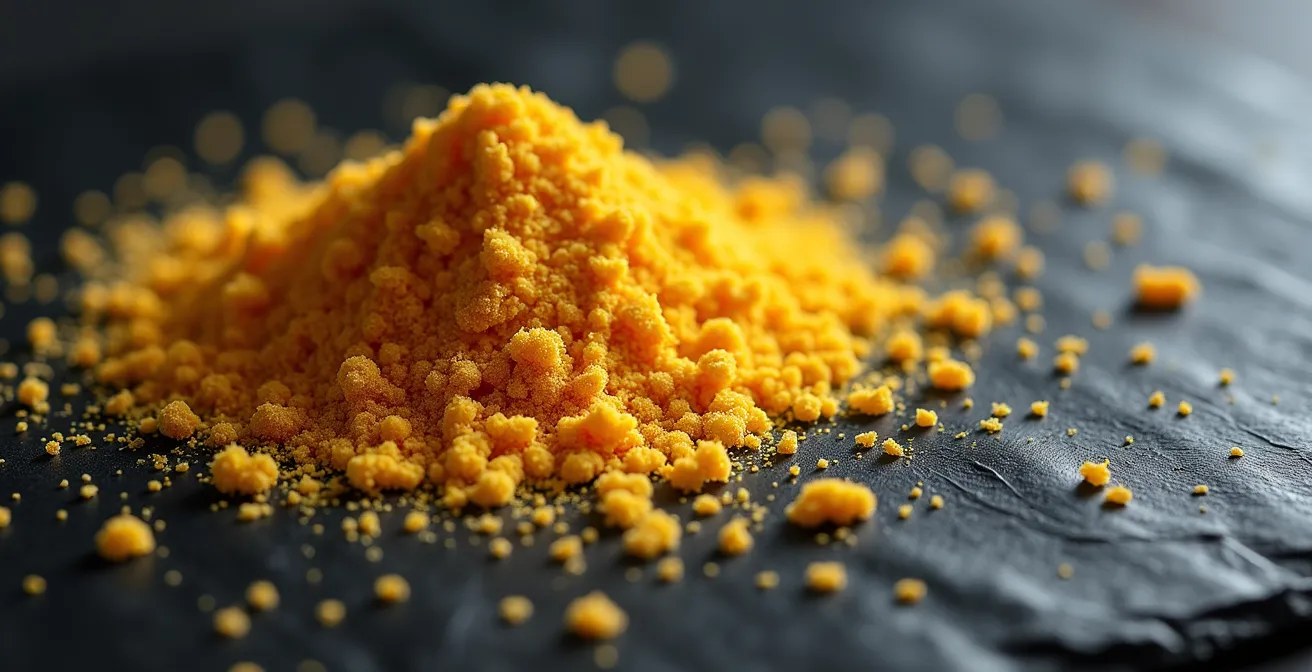
Mastering nutritional yeast goes beyond sprinkling it on popcorn; it’s about understanding its properties to engineer perfectly cheesy, savory flavors and textures.
- The “cheesy” taste comes from naturally occurring glutamic acid, the compound responsible for the umami sensation.
- Achieving the right sauce consistency is a science of ratios—not guesswork—pitting nooch against cashews and liquid.
Recommendation: Start by identifying if you need fortified (for B12) or unfortified (for purer flavor) yeast, as this single choice impacts both nutrition and taste.
If you’re new to plant-based cooking, you’ve likely encountered it: a container of flaky, yellow powder with a curious name—nutritional yeast. Affectionately nicknamed “nooch,” this deactivated yeast is a cornerstone of the vegan pantry, heralded for its cheesy, nutty, and savory flavor. Many guides will tell you to simply sprinkle it on popcorn or pasta, but this barely scratches the surface of its potential. This isn’t brewer’s yeast, which is a bitter byproduct of beer-making, nor is it active baker’s yeast used for leavening. Nutritional yeast is a unique culinary ingredient grown specifically for its flavor profile.
But true mastery lies not in just knowing *what* to do with it, but *why* it works. The secret to transforming a handful of cashews into a luscious cheese sauce or giving roasted vegetables an irresistible depth isn’t magic; it’s a matter of chemistry and technique. Forget the vague advice to “add to taste.” The key is to understand its properties: how it creates umami, how to protect it from its mortal enemy (humidity), and how to calculate precise ratios for predictable, delicious results.
This guide will walk you through the science and strategy of using nooch like an expert. We’ll explore the critical choice between fortified and unfortified varieties, decode its umami power, and provide the formulas you need to engineer everything from a thin nacho dip to a thick, spreadable cheese. Get ready to move beyond the sprinkle and truly unlock the savory power of nutritional yeast.
Summary: Your Complete Guide to Cooking with Nutritional Yeast
- Fortified vs. Non-Fortified: Which Nutritional Yeast Should You Buy?
- Why Nutritional Yeast Creates an Umami Sensation on the Tongue?
- The Clumping Risk: How to Store Nooch to Keep It Pourable?
- How to Calculate the Ratio of Nooch to Cashews for Cheese Sauce?
- How Much Nutritional Yeast Is Too Much for One Meal?
- Marine Algae in the Kitchen: Beyond Sushi and Salads
- Using Raw Cashews to Create Dairy-Free Cheeses and Creams
- The Art of Slow-Roasting Vegetables: Transforming Roots into Candy
Fortified vs. Non-Fortified: Which Nutritional Yeast Should You Buy?
Your first decision at the store is the most crucial one: grabbing a bag labeled “fortified” or “unfortified.” This choice fundamentally changes the nutritional content and, for some, the taste of the product. Fortified nutritional yeast is the most common type. It has synthetic vitamins added during processing, most notably Vitamin B12. Since B12 is primarily found in animal products, this makes fortified nooch a valuable supplement for those on a strict vegan or plant-based diet.
On the other hand, unfortified nutritional yeast contains only the vitamins and minerals that are naturally produced by the yeast as it grows. It does not contain added B12. Purists often seek out the unfortified version for its “purer,” cleaner cheesy flavor, as some find that fortified versions can have a slight metallic or vitamin-like aftertaste. The right choice depends entirely on your goal: are you using nooch primarily as a B12 supplement, or are you seeking the purest savory flavor for your culinary creations?
To make the decision clearer, this comparison breaks down the key differences. As a comparative analysis shows, while the core product is the same, the additions make a significant difference.
| Feature | Fortified | Unfortified |
|---|---|---|
| B12 Content | Added synthetically | None naturally present |
| Taste | May have metallic aftertaste | Purer, cleaner taste |
| Additives | Synthetic vitamins added | 100% natural |
| Shelf Life | 2 years | 2 years |
Why Nutritional Yeast Creates an Umami Sensation on the Tongue?
The “cheesy” flavor attributed to nutritional yeast is not actually cheese at all, but a powerful sensation known as umami. This is the fifth basic taste, alongside sweet, sour, salty, and bitter. Umami is often described as a savory, meaty, or brothy flavor that creates a mouth-watering feeling and adds immense depth to food. It’s the taste you get from parmesan cheese, soy sauce, mushrooms, and ripe tomatoes. The secret to nooch’s umami power lies in its amino acid profile.
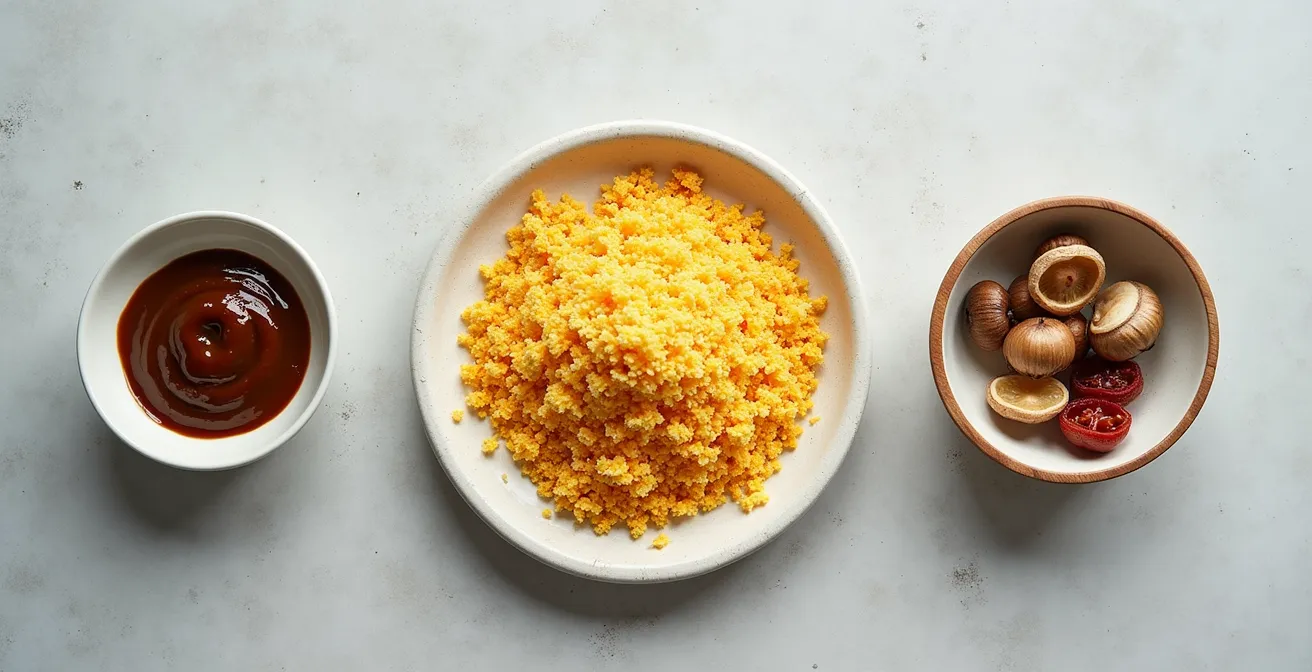
As a complete protein, nutritional yeast contains all nine essential amino acids. Critically, it is particularly rich in one specific compound: glutamic acid. When yeast cells are deactivated by heat, their proteins break down, releasing free glutamic acid. When this compound hits your taste buds, it triggers the umami receptors, sending a “savory” signal to your brain that we interpret as cheesy or nutty. According to a study of its amino acid profile, this high concentration of glutamic acid is what makes it a powerhouse ingredient for creating satisfying, dairy-free dishes.
Understanding this mechanism is the key to unlocking its potential. You aren’t just adding a “cheese substitute”; you are strategically deploying a potent source of umami to build complex and deeply satisfying flavors from the ground up. This is the foundational principle of its culinary magic.
The Clumping Risk: How to Store Nooch to Keep It Pourable?
You’ve opened a fresh bag of nutritional yeast, used a few tablespoons, and a month later you reach for it only to find a solid, yellow brick. The number one enemy of nutritional yeast is moisture. The fine, dry flakes are hygroscopic, meaning they readily absorb moisture from the air. When this happens, they stick together, forming hard clumps that are difficult to break up and measure accurately. This is especially problematic in humid climates or if the container is stored near a source of steam, like a dishwasher or a boiling pot on the stove.
Proper storage is not just about maintaining freshness; it’s about preserving the texture and usability of the product. A clumpy block of nooch is frustrating and can lead to waste. The goal is to keep it in a cool, dark, and—most importantly—completely dry environment. An airtight container is non-negotiable. This prevents air and humidity from getting in, keeping the flakes separate, pourable, and ready to use at a moment’s notice.
If clumping does occur despite your best efforts, don’t throw it out. A quick pulse in a completely dry blender or spice grinder can often break up the clumps and restore its powdery texture. To prevent this issue from the start, follow a strict storage protocol.
Your Action Plan: Preventing Nooch Clumps
- Transfer Immediately: As soon as you open the bag, transfer the nooch to a glass or plastic airtight container.
- Choose a Cool, Dark Pantry: Store the container away from light and heat sources like the stove, oven, or sunny countertops.
- Consider the Fridge in Humidity: If you live in a very humid climate, storing the airtight container in the refrigerator is an effective strategy to prevent moisture absorption.
- Use a Dry Spoon: Never dip a wet or damp measuring spoon into the container, as this introduces moisture directly.
- Break Up Clumps Mechanically: If clumps form, pulse the yeast gently in a dry blender or food processor for a few seconds to restore its fine, pourable texture.
How to Calculate the Ratio of Nooch to Cashews for Cheese Sauce?
Creating the perfect dairy-free cheese sauce is a science of texture engineering. The difference between a thin, pourable nacho dip and a thick, spreadable cheese for crackers isn’t arbitrary—it’s a direct result of the ratio between your three key ingredients: raw cashews, nutritional yeast, and liquid (water or unsweetened plant milk). Simply guessing the amounts is a recipe for disappointment, leading to sauces that are too watery, too pasty, or lacking in cheesy flavor.
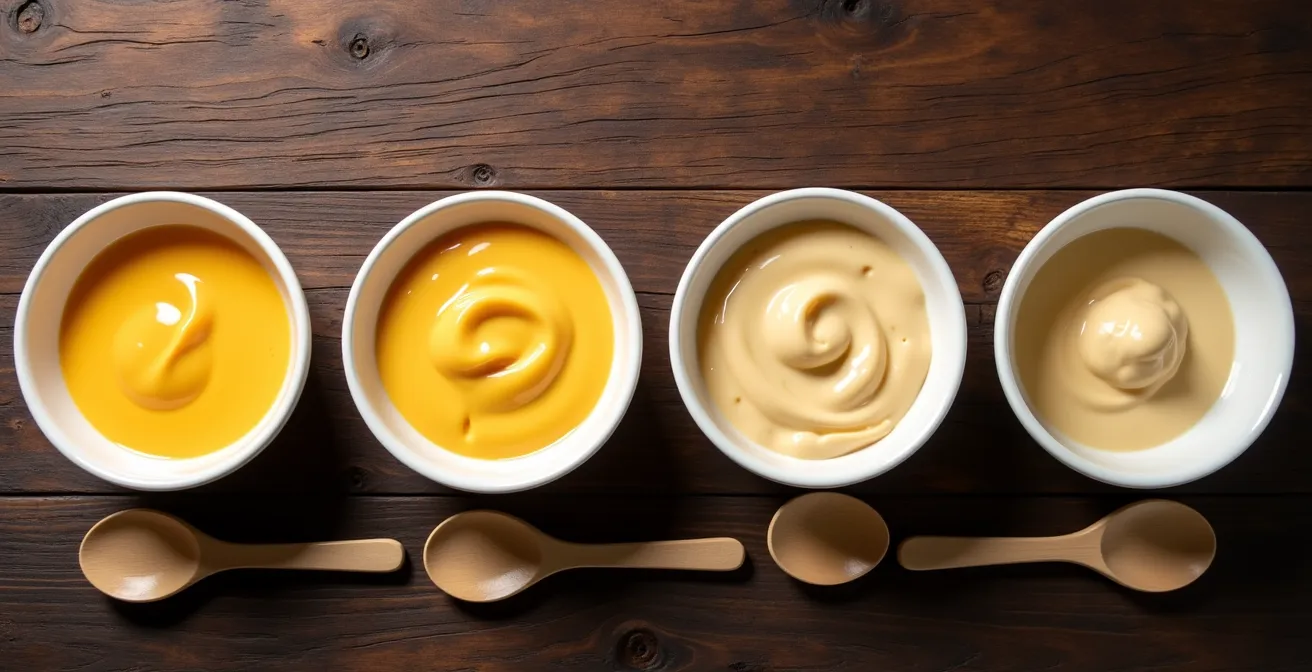
The cashews provide the creamy, fatty base, while the nutritional yeast delivers that essential umami punch. The liquid, of course, controls the final viscosity. To achieve consistent results, you must approach it with a formula. As a general rule, a 1:2 ratio of nutritional yeast to cashews (by volume) is a great starting point for a multi-purpose, creamy sauce. For example, 1/2 cup of nooch for every 1 cup of soaked cashews. From there, you adjust the liquid to dial in the exact consistency you desire.
To move beyond guesswork and start creating specific textures on demand, you can use established formulas. The following table, based on proven cheese sauce consistency ratios, provides a reliable starting point for four different common applications.
| Sauce Type | Cashews | Nutritional Yeast | Liquid |
|---|---|---|---|
| Thin Nacho Dip | 1 cup | 1/4 cup | 1.5 cups |
| Mac & Cheese Sauce | 1 cup | 1/2 cup | 1 cup |
| Thick Spread | 1 cup | 1/3 cup | 3/4 cup |
How Much Nutritional Yeast Is Too Much for One Meal?
With its savory flavor, it can be tempting to add nutritional yeast with abandon. While it is generally very safe, there is a limit to how much you should consume in a single sitting, especially if you are using a fortified variety. The primary concern is not the yeast itself, but the high levels of certain B vitamins added during fortification, particularly Niacin (Vitamin B3). While essential for health, excessive amounts of niacin can cause uncomfortable side effects like skin flushing, itching, or an upset stomach in sensitive individuals.
The recommended daily intake for most adults is around two tablespoons, an amount unlikely to cause issues while providing a good dose of vitamins. However, some recipes for cheese sauces or soups can call for 1/2 cup or more. It’s important to be mindful of serving sizes. For instance, a recipe with 1/2 cup of nooch that makes four servings means each person is consuming two tablespoons, which is perfectly fine. The issue arises when consuming a very large serving of a nooch-heavy dish.
The established Tolerable Upper Intake Level (UL) for niacin for adults is 35 mg per day from supplements or fortified foods. Because fortification levels can vary by brand, it’s a good practice to check the nutritional panel. Critically, some testing has revealed that a single serving of some brands can exceed this limit. If you are sensitive to niacin or consume large quantities, opting for an unfortified nutritional yeast can be a wise choice, as it eliminates the risk of exceeding the niacin threshold.
Marine Algae in the Kitchen: Beyond Sushi and Salads
Once you’ve mastered the umami power of nutritional yeast, the next level is to create umami synergy. This is the principle that combining different umami-rich ingredients creates a flavor profile that is far more complex and satisfying than any single ingredient on its own. One of the most potent partners for nutritional yeast is the family of marine algae, or sea vegetables. While many people only know nori from sushi, the world of edible seaweed is vast and offers a spectrum of savory, oceanic flavors that pair beautifully with nooch.
Think of it as building a flavor chord. Nutritional yeast provides a cheesy, nutty base note. Adding a sea vegetable like dulse, which has a smoky, bacon-like savoriness, or kombu, which is intensely brothy and rich, adds layers of complexity. This combination is particularly effective for creating vegan “seafood” flavors or simply adding an unidentifiable depth to soups, stews, and seasonings.
You can start by creating simple seasoning blends. For example, grinding dulse flakes with nutritional yeast and a pinch of smoked paprika creates a fantastic “seafood” seasoning for sprinkling over roasted potatoes or tofu scramble. Mixing powdered kombu into your nooch-based broth gives it an instant, profound depth that mimics a long-simmered stock. This is about moving beyond one-note cheesiness and into the realm of sophisticated flavor-building.
Using Raw Cashews to Create Dairy-Free Cheeses and Creams
Raw cashews are the undisputed partner-in-crime for nutritional yeast when it comes to creating dairy-free creams and cheeses. Their high-fat content and mild flavor create a perfectly smooth, rich canvas for the nooch to paint its savory, cheesy notes upon. However, not all cashew prep is created equal. The method you use to soften your cashews before blending has a direct and significant impact on the final texture of your sauce or cream, a crucial detail in your texture engineering efforts.
The most common method is a long, overnight cold soak. Submerging the cashews in water for 8 hours or more in the refrigerator results in the richest, creamiest base. This method is ideal when you are making thicker preparations like a firm cheese alternative or a decadent dessert cream, where a luxurious mouthfeel is paramount. The slow hydration process fully saturates the nuts, leading to a superior blend.
But what if you need a cheese sauce right now? This is where the quick-soak hot water method comes in. Covering the cashews with boiling water and letting them sit for just 15-30 minutes provides a much faster alternative. This method is particularly effective for creating ultra-smooth sauces. The heat helps to break down the fibers differently, often resulting in a silkier, less grainy texture when blended, which is perfect for a pourable nacho cheese or a creamy pasta sauce. The choice of soaking method should be as deliberate as your choice of nooch-to-cashew ratio.
Key Takeaways
- Choose Wisely: Your first step is deciding between fortified nooch (for a B12 boost) and unfortified (for the purest flavor).
- Embrace Umami: The “cheesy” taste is glutamic acid. Partnering nooch with other umami sources like mushrooms or seaweed creates deeper, more complex flavors.
- Master the Ratios: Consistent sauce texture is not luck; it’s a calculated ratio of cashews, nooch, and liquid.
- Mind the Dose: Stick to around two tablespoons daily to get the benefits without overdoing it on fortified niacin.
The Art of Slow-Roasting Vegetables: Transforming Roots into Candy
While nutritional yeast shines in sauces and creams, its magic extends far beyond the blender. One of its most underrated applications is in roasting, where it acts as a powerful flavor enhancer and browning agent. When you toss root vegetables like carrots, sweet potatoes, or parsnips with oil and nooch before slow-roasting, you are doing more than just adding flavor. You are initiating a delicious chemical reaction that transforms them into something truly special.
The proteins in the nutritional yeast help to create a superior Maillard reaction on the surface of the vegetables. This is the same reaction that gives seared steak and toasted bread their deep brown color and complex, savory flavor. The result is vegetables with a beautifully caramelized, slightly crispy exterior and a sweet, tender interior. The nutty, cheesy flavor of the nooch perfectly complements the natural sweetness that develops in vegetables during slow-roasting.
There are two main techniques. You can add it to the marinade before roasting, allowing the flavor to penetrate slightly and aid in browning from the start. Alternatively, for a more potent flavor punch, you can toss the hot, freshly roasted vegetables with nutritional yeast the moment they come out of the oven. The residual heat and oil will help the flakes adhere, creating an irresistible final coating. Combining nooch with other spices like smoked paprika or garlic powder in a finishing dust takes this technique to another level.
Now that you’re armed with the science and strategy behind this vegan pantry staple, it’s time to put it into practice. Start experimenting in your own kitchen. Grab your cashews, fire up the blender, and begin engineering your perfect vegan cheese sauce today.