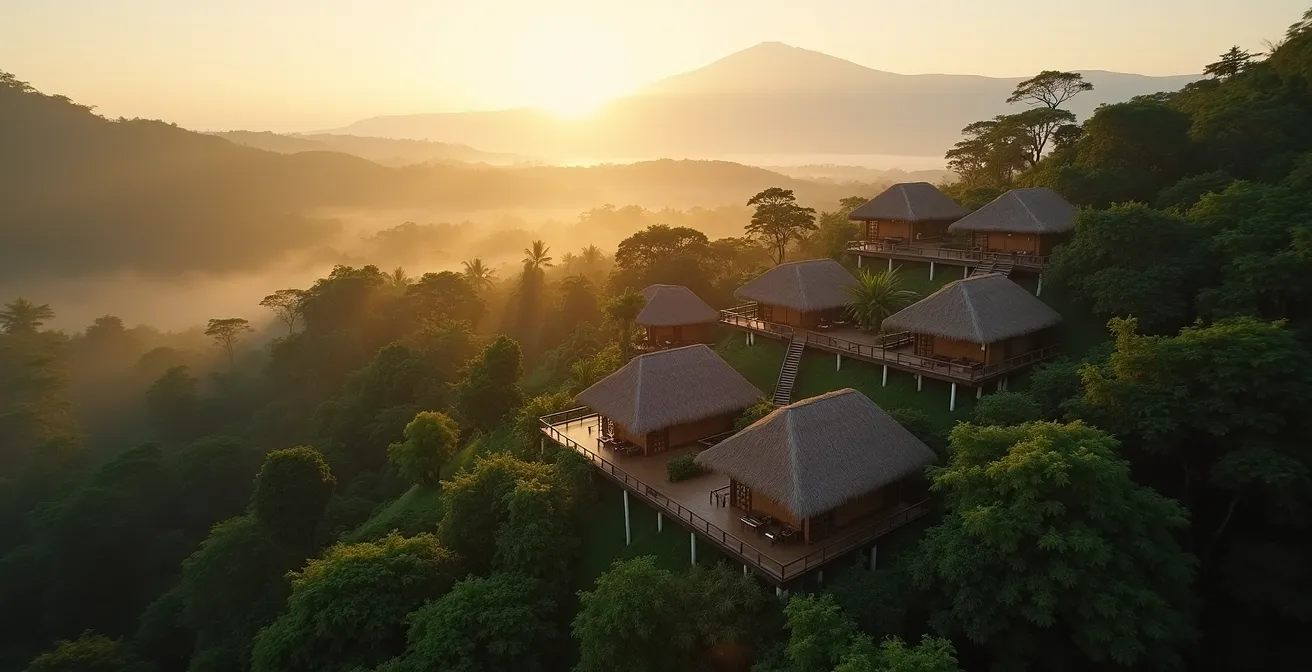
The fantasy of a serene jungle retreat crashes against reality without mastering basic “jungle logistics.”
- True wellness comes from preparing for the untamed elements, not just the yoga poses.
- From creature-proofing your room to picking the right clothes for 90% humidity, practical skills are paramount.
Recommendation: Shift your focus from planning an escape to preparing for an immersion; your comfort and transformation depend on it.
You see the pictures: a serene yoga pose against a backdrop of lush, emerald jungle, the caption promising a “life-changing Pura Vida experience.” For city dwellers dreaming of a wellness escape, Costa Rica feels like the ultimate sanctuary. The idea is to unplug, de-stress, and reconnect with nature. But there’s a disconnect between this idyllic marketing and the raw reality of the tropics. Most guides talk about what to see, but not how to live there, even for a week.
The common advice—pack light, drink bottled water—barely scratches the surface. It doesn’t prepare you for the profound, clothes-molding humidity, the startling discovery of a scorpion in your shoe, or the subtle cultural cues that go far beyond a cheerful “Pura Vida.” This lack of preparation can turn a dream retreat into a series of stressful, uncomfortable surprises. The very peace you came to find becomes elusive, lost in a battle against the elements you weren’t taught to handle.
But what if the key to a truly transformative retreat wasn’t just finding the right eco-lodge, but mastering the logistics of the jungle itself? This guide is built on that premise. We’re moving past the brochure to give you the practical, on-the-ground knowledge that seasoned travelers use. We will explore how to stay safe from jungle critters, manage extreme humidity, choose a retreat that actually matches your level of burnout, and interact authentically with the local culture. This isn’t about fear; it’s about empowerment. By preparing for the real jungle, you free yourself to fully embrace its magic.
This article provides a complete roadmap, covering everything from wildlife encounters to cultural etiquette. Explore the sections below to equip yourself with the essential knowledge for a seamless jungle adventure.
Summary: A Practical Guide to Costa Rica’s Jungle Retreats
- Scorpions and Spiders: How to Stay Safe in Open-Air Jungle Lodges?
- How to Pack for 90% Humidity Without Your Clothes Molding?
- Yoga vs. Adventure: Which Retreat Style Fits Your Burnout Level?
- Rainy Season vs. Dry Season: When Is the Best Price-to-Weather Ratio?
- How to Interact with Ticos Beyond the “Pura Vida” Cliché?
- Choosing Green Eco-Lodges: How to Spot Greenwashing in Hotels?
- Eating Casual Vegan Street Food Abroad: A Safety Guide
- Mastering Your Retreat: A Final Check on Conscious Travel
Scorpions and Spiders: How to Stay Safe in Open-Air Jungle Lodges?
The thought of sharing your beautiful open-air cabina with scorpions and spiders is often the first crack in the serene jungle fantasy. It’s a valid concern, but one that can be managed with knowledge and routine, not fear. First, it’s essential to understand the actual risk. While Costa Rica is home to a variety of arachnids, local species are not considered life-threatening. In fact, University of Costa Rica research confirms zero reported deaths from native scorpion stings. The danger is more about a painful surprise than a medical emergency.
The key is not to build fortresses but to develop smart habits. These creatures seek dark, undisturbed places. Your unpacked clothes on the floor, your hiking boots in the corner, and your unzipped suitcase are all five-star hotels for them. The solution is a simple but non-negotiable nightly and morning routine. This becomes your “jungle logistics” ritual, a mindful practice that replaces anxiety with proactive safety. It’s about respecting the environment you’re in and coexisting intelligently.
Case Study: A Real-World Scorpion Encounter
A traveler shared their experience of being stung by a scorpion at their cabina’s threshold in southern Costa Rica. The sting, which occurred through a flip-flop, was painful but manageable. The traveler used basic first aid, including meat tenderizer and Benadryl, and the incident resolved without needing major medical intervention. This real-life example highlights that while encounters are possible and uncomfortable, they are rarely the life-threatening events one might imagine, reinforcing the importance of being prepared but not panicked.
Adopting these habits allows you to relax and fully immerse yourself in the sounds and sensations of the jungle, knowing you’ve taken the right precautions. It’s the difference between sleeping with one eye open and drifting off to the symphony of the rainforest.
Action Plan: Your Jungle Cabin Safety Check
- Clothing & Shoes: Before dressing, vigorously shake out every piece of clothing, and thoroughly inspect the inside of your shoes and boots.
- Luggage Discipline: Keep your luggage and bags zipped shut at all times when not in use. This eliminates a primary hiding spot.
- Nightly Scan: Before bed, use a flashlight to scan the dark corners of your room, under the bed, and behind furniture.
- Bedding Check: Pull back and shake out your sheets and pillows before getting into bed each night.
- No Bare Feet: Never walk barefoot inside your lodge or around the grounds, especially after dark. Always wear sandals or shoes.
How to Pack for 90% Humidity Without Your Clothes Molding?
The humidity in Costa Rica is more than just a weather statistic; it’s a physical presence. It clings to you, your belongings, and especially your clothes. The typical advice to “pack light, breathable fabrics” is incomplete because it ignores the real enemy: mold and mildew. Cotton, a traveler’s staple, acts like a sponge in the jungle, absorbing moisture and refusing to let it go. A t-shirt that’s still damp 24 hours after washing is not just inconvenient; it’s a breeding ground for a musty odor that will follow you for the rest of your trip.
Effective “humidity management” starts with fabric selection. You must shift your mindset from what’s comfortable at home to what performs in a tropical climate. This means prioritizing materials that actively wick moisture away from your skin and dry at an accelerated rate. Synthetics are workhorses for adventure, but merino wool is the unsung hero of jungle travel. It’s naturally antimicrobial, meaning it resists odor and can be worn multiple times, and it manages moisture beautifully.

As the image above illustrates, high-performance fibers are designed to keep moisture on the surface, allowing it to evaporate quickly rather than soaking in. Beyond fabric, packing strategies like using compression sacks can help, but they must be paired with moisture-absorbing silica gel packets to be effective. Don’t let your dream retreat be soured by a suitcase full of smelly, perpetually damp clothes. Choosing the right materials is a core principle of jungle logistics.
This comparative table breaks down the performance of common fabrics in a high-humidity environment, helping you make informed packing decisions.
| Fabric Type | Moisture Management | Mold Risk | Drying Time | Best Use Case |
|---|---|---|---|---|
| Cotton | Highly absorbent | High – prone to mold | Very slow (24+ hours) | Avoid for jungle trips |
| Merino Wool | Wicks moisture well | Low – naturally antimicrobial | Moderate (4-6 hours) | Great for re-wearing multiple days |
| Synthetic (Polyester/Nylon) | Excellent wicking | Very low | Fast (1-2 hours) | Best for active adventures |
| Bamboo Blend | Good absorption | Medium | Moderate (3-4 hours) | Comfortable for casual wear |
Yoga vs. Adventure: Which Retreat Style Fits Your Burnout Level?
Not all burnout is created equal, and therefore, not all retreats are a universal cure. Choosing between a serene yoga-focused escape and a high-octane adventure retreat isn’t just a matter of preference; it’s about aligning the activity with the source of your exhaustion. This is the concept of “burnout alignment.” Making the wrong choice can be counterproductive. If you’re suffering from overstimulation, endless deadlines, and mental fatigue, a schedule packed with zip-lining and waterfall rappelling might only deepen your depletion.
Conversely, if your burnout stems from monotony, boredom, or feeling stuck in a rut, a week of silent meditation could amplify your anxiety rather than soothe it. How do you know if you need adrenaline-based or relaxation-based recovery? If your mind is racing and your nervous system is fried, you likely need serotonin-boosting activities that calm you down: yoga, breathwork, and quiet nature immersion. If your spirit feels dull and you lack motivation, you may need a dopamine hit from activities that reignite your spark: surfing, hiking challenging trails, or learning a new skill.
The risk of misalignment is real. Pushing an already exhausted body through intense adventure can lead to physical injury and deeper burnout. Forcing a restless mind into stillness can feel like a cage. Fortunately, many Costa Rican retreats recognize this and offer a middle ground. Hybrid programs that combine morning surf lessons with afternoon restorative yoga, or alternate high-energy adventure days with days of pure relaxation, provide a balanced approach. This allows for both physical release and mental restoration, catering to the complex nature of modern burnout.
Rainy Season vs. Dry Season: When Is the Best Price-to-Weather Ratio?
The conventional wisdom for Costa Rica is simple: visit during the dry season (December to April) for guaranteed sunshine. This advice, however, overlooks a crucial factor for the savvy traveler: the price-to-weather ratio. The dry season brings peak crowds and peak prices, while the “green season” (May to November) offers a more nuanced and often more rewarding experience. To dismiss half the year as “rainy” is to miss out on significant benefits.
During the green season, the landscape explodes into a vibrant, lush spectacle. Wildlife, particularly amphibians and birds, becomes more active and visible. The “rain” is often a predictable afternoon affair, a powerful downpour lasting a few hours that leaves mornings and evenings clear for activities. This predictability allows for effective planning. More importantly, it brings tangible rewards: hotels can be 30-40% cheaper, tours are less crowded, and the overall experience feels more personal and authentic.
The ultimate sweet spot might be the “veranillo” or “little summer.” This is a brief dry spell that often occurs in July and August, right in the middle of the green season. It offers the best of both worlds: the lush landscapes and lower prices of the rainy season, with a welcome break in the precipitation. By looking beyond the simplistic dry-vs-wet binary, you can strategically time your trip to maximize both your budget and your experience. This is a prime example of jungle logistics in action—using insider knowledge to engineer a better trip.
- Book during the shoulder seasons (May-June or late November) for up to 30% savings with good weather odds.
- Target the “veranillo” period (mid-July to mid-August) for a chance at dry season weather with green season prices.
- If you must travel in the dry season, book 4-6 months in advance to secure better rates.
- Consider the Caribbean coast in September-October, as its weather pattern is often opposite to the Pacific side.
- Actively search for “green season specials” from hotels, which often bundle free nights or activities.
How to Interact with Ticos Beyond the “Pura Vida” Cliché?
“Pura Vida” is more than a catchphrase; it’s a beautiful philosophy of life. But for a traveler seeking genuine connection, relying on it as your sole tool for interaction is like only knowing how to say “cheers” at a dinner party. True cultural exchange happens in the small, respectful gestures that show you’ve made an effort. While many Costa Ricans (known as Ticos) in tourist areas speak some English, making an effort in their language, even with a few key phrases, opens doors to warmer, more authentic interactions.
The “authenticity litmus test” here is moving from transactional communication to relational communication. It’s about showing respect for personal space and local customs. For example, instead of just walking into a small shop, pausing at the entrance and saying “con permiso” (with permission) shows profound respect. When receiving a recommendation for a local restaurant, responding with a heartfelt “qué bueno” (how great/good!) is far more engaging than a simple “thank you.” These nuances transform you from a passive consumer of tourism into an active and respectful guest.
This approach requires observation and a willingness to step outside your comfort zone. Learn to use “con mucho gusto” (with much pleasure) instead of “de nada” (you’re welcome), as it’s a warmer, more common local response. Learning these small things is an investment in your travel experience, leading to richer conversations, better recommendations, and the kind of genuine human connection that photos can’t capture.
- ‘Con permiso’: Use when passing someone closely or entering a small space. It means “excuse me” and shows awareness.
- ‘Qué bueno’: A great way to show genuine appreciation for a suggestion or good news.
- ‘Con mucho gusto’: The standard, warm reply to “gracias” (thank you).
- ‘La cuenta, por favor’: “The bill, please.” In Costa Rica, service is less intrusive, so you often need to actively ask for the check.
- ‘Upe!’: A unique and traditional way to announce your presence when arriving at a rural home, used instead of knocking.
Choosing Green Eco-Lodges: How to Spot Greenwashing in Hotels?
In a country celebrated for its environmental ethos, nearly every hotel claims to be “eco-friendly.” This makes it incredibly difficult for a conscious traveler to distinguish genuine stewardship from clever marketing, a practice known as greenwashing. Vague claims like “sustainable” or “green” on a website are red flags. True eco-lodges don’t just use eco-buzzwords; they provide specific, measurable proof of their commitment.
The first step in your “authenticity litmus test” is to look for data. A genuine eco-lodge will tell you *how* they are sustainable. Instead of saying “we save water,” they’ll say “we recycle 80% of our greywater for irrigation.” Instead of a generic “we support the community,” they’ll state “95% of our staff are from the local village.” Look for recognized third-party certifications, like Costa Rica’s own Certification for Sustainable Tourism (CST), which ranks businesses on a scale of 1 to 5. A self-awarded “Green Leaf” logo on a website means nothing.
A powerful example of authentic practice is the Golfo Dulce Retreat. They operate entirely off-grid, powered by a carbon-free hydro turbine. They use only reclaimed local hardwoods in their construction and protect over 1,000 acres of pristine rainforest. This is the gold standard: measurable impact, specific practices, and a philosophy that is woven into every aspect of their operation, not just sprinkled on their marketing materials. Your choice of lodging is one of the most impactful decisions you’ll make, and learning to ask the right questions is crucial.
This table helps you differentiate between real sustainability and marketing fluff. Use it as a guide when researching your stay.
| Genuine Eco-Practice | Greenwashing Red Flag | Questions to Ask |
|---|---|---|
| Specific metrics: ‘We recycle 80% of water’ | Vague claims: ‘Eco-friendly hotel’ | What percentage of resources do you recycle? |
| Local employment: ‘90% staff from village’ | No mention of local community | How many employees are from the local area? |
| Third-party certification (CST levels) | Self-awarded ‘green’ badges | Which recognized certifications do you hold? |
| Renewable energy sources specified | ‘Sustainable practices’ without details | What percentage of energy is renewable? |
| Conservation land ownership/protection | Photos of nature without involvement | Do you protect or own conservation land? |
Eating Casual Vegan Street Food Abroad: A Safety Guide
One of the best ways to experience Costa Rican culture is through its food, and you don’t need to visit fancy restaurants to do it. The local “sodas” (small, family-run eateries) and street vendors offer a delicious and authentic taste of the country. For vegan travelers, the landscape is surprisingly friendly, as many traditional staples are naturally plant-based. The key is knowing what to look for and how to order it.
The foundation of Costa Rican cuisine is rice and beans (arroz y frijoles), which forms the base of the national dish, Gallo Pinto. When ordering, simply ask for it “sin natilla y sin mantequilla” (without sour cream and without butter) to ensure it’s vegan. Another must-try is Patacones, which are savory, twice-fried green plantains, often served with black bean dip or guacamole. Look out for Yuca Frita (fried cassava) and various vegetable “picadillos” (hashes), but always confirm there is no meat (“sin carne”).
For navigating local markets and street stalls, having some local currency (Colónes) is a smart move. While many places accept US dollars, you’ll get a better price and make transactions smoother by using Colónes, especially at a farmer’s market. Don’t be shy about exploring the incredible variety of fresh fruit. From mangos to papayas and passion fruit, the fruit stands are a paradise. For a refreshing treat, try a “granizado”—shaved ice topped with fruit syrups—just be sure to stick to vendors that look clean and are popular with locals.
- Gallo Pinto: The classic rice and beans breakfast. Order without butter or sour cream.
- Patacones: Crispy, fried plantain discs. Naturally vegan and delicious.
- Yuca Frita: Fried cassava root, a great alternative to french fries.
- Granizados: Shaved ice with fruit syrups. A perfect way to cool down.
- Picadillos: Minced vegetable dishes. Ask for a vegetable-only version (“picadillo de papa” or similar).
- Fresh Fruit: Abundant and cheap at local fruit stands.
Key Takeaways
- The gap between the “wellness fantasy” and jungle reality is bridged by practical preparation, not just positive thinking.
- Mastering your environment (humidity, wildlife) is the first step to being able to relax within it.
- Authenticity, in both eco-lodges and cultural interactions, requires critical thinking and moving beyond surface-level clichés.
Mastering Your Retreat: A Final Check on Conscious Travel
You’ve now journeyed through the core components of jungle logistics. From the practicalities of scorpion-proofing your room and packing mold-resistant clothing to the nuances of choosing a retreat that truly fits your needs and interacting with local culture respectfully. Each piece is a vital part of a larger puzzle. The final, overarching theme is one of conscious choice. A truly transformative trip isn’t something that just happens to you; it’s something you co-create through deliberate preparation and mindful engagement.
This culminates in the most significant choice of all: where you lay your head at night. As we’ve explored, supporting a genuine eco-lodge over one that simply uses green marketing is a powerful act. It ensures your tourism dollars contribute to the conservation of the very environment you came to enjoy and support the communities that protect it. This is the ultimate expression of “Pura Vida”—a lifestyle that harmonizes with nature, rather than just consuming it as a backdrop.
By internalizing these lessons, you shift from being a passive tourist to an empowered, conscious traveler. You are no longer at the mercy of the elements or misleading advertising. You have the tools to navigate the jungle with confidence, connect with its people authentically, and make choices that align with your values. This preparation is the ultimate act of self-care, ensuring your retreat is not just a temporary escape, but a source of lasting resilience and connection.
Now, equipped with this knowledge, you are ready to move from planning to action. The next logical step is to research and book a retreat that aligns with these principles of authenticity and preparedness, ensuring your journey is as meaningful as it is memorable.