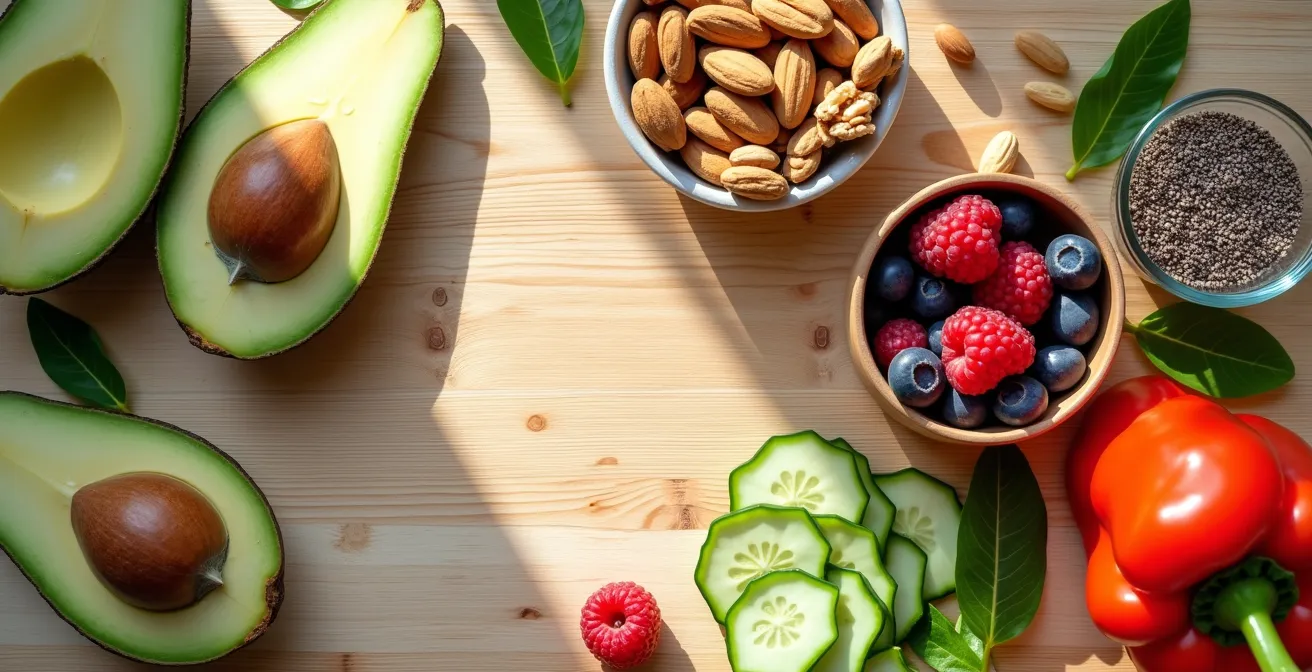
The afternoon energy crash isn’t a willpower problem; it’s a glucose management issue.
- Instead of focusing only on *what* you eat, the order of your food (veggies first) can dramatically flatten your glucose curve.
- Common habits, like drinking coffee on an empty stomach, can sabotage your energy by spiking stress hormones.
Recommendation: Shift your mindset from reactive snacking to proactive ‘energy architecture’ by pairing foods strategically and timing them to control your blood sugar for sustained mental focus.
That familiar 3 p.m. wave of exhaustion hits like clockwork. Your focus shatters, irritability sets in, and the siren song of the vending machine becomes irresistible. For many office workers and students, this “hangry” state feels like an unavoidable part of the day. The common advice is to grab a “healthy” snack, like fruit or a granola bar, or even just power through with more caffeine. We’re told to eat complex carbs and avoid obvious sugars, yet the energy rollercoaster continues.
But what if this entire approach is flawed? The cycle of spikes and crashes isn’t just about avoiding candy; it’s about understanding the delicate dance of insulin and glucose in your body. Seemingly innocent choices, like a glass of orange juice or a banana eaten alone, can trigger the very hormonal cascade you’re trying to prevent. The key isn’t just about the food itself, but its composition, the timing of your meals, and even the order in which you eat.
This is where we move beyond generic advice and into the realm of metabolic precision. The true secret to all-day energy isn’t found in a single “superfood,” but in mastering the principles of glucose curve management. It’s about structuring your meals and snacks to create a stable foundation for your brain and body, transforming food from a potential problem into your ultimate productivity tool.
This guide will deconstruct the mechanics behind glycemic crashes and provide a strategic framework for building stable, long-lasting energy. We will explore how to sequence your nutrients, make smarter fruit choices, neutralize the negative effects of coffee, and build a daily routine that supports consistent vitality and focus, not just for an hour, but for the entire afternoon.
To help you navigate these strategies, this article breaks down the core components of stable energy. You will find actionable tips and the science behind them, allowing you to build a personalized plan for lasting focus and mood stability.
Contents: Preventing the Afternoon Energy Crash
- Why Your Insulin Spikes Higher When You Drink Juice Alone?
- How to Use the “Vegetables First” Method to Flatten Glucose Curves?
- Berries vs. Bananas: Which Fruit Won’t Spike Your Blood Sugar?
- The Risk of Drinking Coffee on an Empty Stomach for Blood Sugar
- Eating Every 3 Hours vs. Intermittent Fasting: Which Stabilizes Mood?
- 5 Morning Habits for a Nutritional Vitality Boost Without Caffeine
- Soluble Fiber Strategies to Manage Blood Sugar Spikes After Meals
- How to Maintain a Balanced Vegan Diet for 10+ Years Without Fatigue?
Why Your Insulin Spikes Higher When You Drink Juice Alone?
That glass of “100% pure” orange juice seems like a healthy way to start the day, but it’s one of the fastest routes to an energy crash. When you drink fruit juice, you’re consuming a concentrated dose of sugar (fructose) without the one thing that makes whole fruit beneficial: fiber. Fiber acts as a natural brake, slowing the absorption of sugar into your bloodstream. Without it, the sugar hits your system like a tidal wave, forcing your pancreas to release a large amount of insulin to manage the surge. This overcorrection is what leads to the subsequent “crash” a couple of hours later, leaving you tired and unfocused.
The impact is more than just a feeling; it’s metabolically significant. When you strip the fiber away, the fructose is processed differently by the liver. In fact, a 2013 study in Diabetes Care found that moderate fructose consumption significantly impaired the liver’s ability to process glucose compared to glucose alone. This means your body has to work harder and release more insulin to do the same job, setting you up for a pattern of insulin resistance over time. This is the core mechanism of the energy rollercoaster: a sharp spike followed by a dramatic drop.
To break this cycle, you don’t have to eliminate juice entirely, but you must treat it strategically. The goal is to blunt the rapid sugar absorption. Here’s how:
- Never drink juice on an empty stomach. Always pair it with a source of protein or healthy fat, like a handful of almonds or a slice of cheese. These nutrients slow down digestion and the release of sugar.
- Dilute your juice. A simple 1:1 ratio of juice to water can cut the sugar concentration in half, making it much more manageable for your system.
- Choose whole fruit over juice. The best option is always the original package. Eating an orange instead of drinking its juice provides the fiber needed for slow, stable energy release.
How to Use the “Vegetables First” Method to Flatten Glucose Curves?
One of the most powerful and surprisingly simple strategies for managing blood sugar has nothing to do with *what* you eat, but the order in which you eat it. The “Vegetables First” method, also known as nutrient sequencing, is a cornerstone of metabolic precision. The principle is to start your meal with fiber-rich vegetables, followed by protein and fats, and save carbohydrates (like bread, pasta, or rice) for the very end. This simple change creates a “fiber mesh” in your stomach, which dramatically slows down the absorption of the glucose from the carbs you eat later.
This isn’t just a theory; it’s backed by compelling evidence. Cornell research demonstrates that this eating order can lead to a 29% lower blood glucose level at 30 minutes post-meal and an astonishing 37% lower level at 60 minutes. By simply rearranging your plate, you can flatten your glucose curve without changing the meal’s ingredients. This prevents the sharp insulin spike and the subsequent energy-draining crash, promoting sustained vitality and mental clarity throughout the afternoon.
Visually, this method transforms your meal into a strategic sequence. Instead of a chaotic mix of nutrients, you are creating a controlled release of energy.
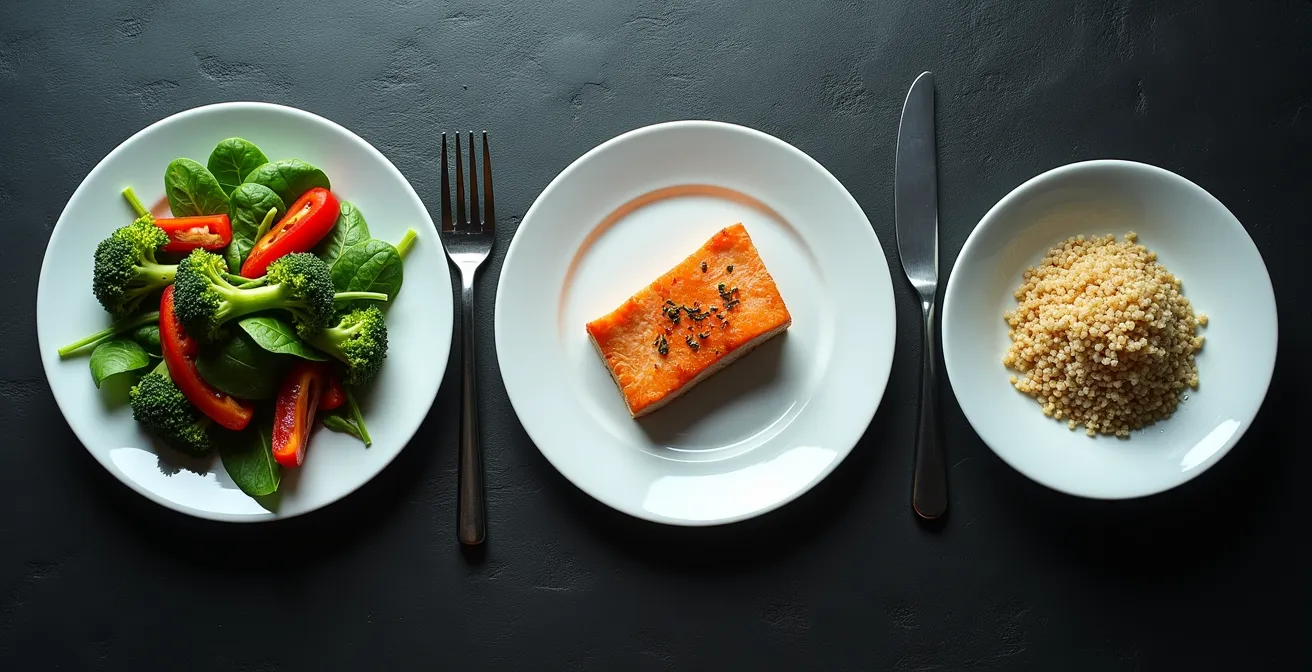
As the image illustrates, the sequence is clear: start with the salad or steamed broccoli, move on to the grilled chicken or fish, and finish with the portion of quinoa or sweet potato. This approach doesn’t require you to give up the foods you enjoy; it just asks you to eat them in a smarter order. It’s a free, evidence-based tool that puts you in control of your energy architecture, making it a foundational habit for anyone looking to eliminate the afternoon slump.
Berries vs. Bananas: Which Fruit Won’t Spike Your Blood Sugar?
The advice to “eat more fruit” is well-intentioned but often lacks the nuance needed for stable energy. Not all fruits are created equal when it comes to their impact on your blood sugar. The key differentiators are the Glycemic Index (GI), fiber content, and the presence of certain plant compounds called polyphenols. A perfect example of this contrast is the humble berry versus the popular banana. While both are healthy, one is far better for maintaining steady focus.
Berries—like raspberries, blueberries, and strawberries—are metabolic superstars. They have a very low GI, meaning their sugar is released slowly into the bloodstream. They are also packed with fiber, which further slows digestion. Bananas, especially ripe ones, have a medium-to-high GI. As a banana ripens, its starches convert to sugar, making a brown-spotted banana act more like a candy bar in your system than its green counterpart. This difference is critical for preventing the “sugar dip” that often follows a seemingly healthy snack.
A 2021 study in Nature Metabolism found that ‘sugar dips’ – drops in blood sugar a few hours after eating – can impact appetite and energy. People with the biggest dips, nicknamed ‘big dippers’, felt hungrier, less alert and consumed about 300 more calories than those with smaller dips.
– Dr. Carolyn English, Bond University Research
To avoid becoming a “big dipper,” choosing the right fruit and pairing it correctly is essential. The following table breaks down the key differences, providing a clear guide for your next snack decision. The data, compiled from sources like analyses of glycemic responses to food, shows a clear winner for energy stability.
| Factor | Berries | Bananas |
|---|---|---|
| Glycemic Index | 25-40 (low) | 51-62 (medium-high) |
| Fiber Content | 8g per cup | 3g per medium |
| Polyphenols | High (enzyme inhibition) | Moderate |
| Best Pairing | Greek yogurt | Almond butter |
| Ripeness Impact | Minimal | Major (green=30, brown=65 GI) |
The Risk of Drinking Coffee on an Empty Stomach for Blood Sugar
For many, the day doesn’t start until that first cup of coffee. However, drinking it on an empty stomach can be a major saboteur of your energy and mood stability. The issue isn’t the coffee itself, but its interaction with your body’s natural hormonal rhythm. When you wake up, your cortisol (the primary stress hormone) levels are naturally at their peak to help you feel alert. Caffeine is a powerful stimulant that also tells your body to produce more cortisol.
When you combine these two effects, you get an exaggerated cortisol spike. This is problematic because high cortisol levels signal your liver to release glucose into the bloodstream, preparing your body for a “fight or flight” response that never comes. This artificially raises your blood sugar, even without eating anything. In fact, research on stress hormones shows that cortisol levels can increase by up to 50% when caffeine is consumed during this natural morning peak. This can lead to feelings of anxiety or jitters, followed by a significant energy crash as your body works to bring blood sugar back down.
To enjoy your coffee without derailing your energy, you need to create a “buffer.” This means putting a small amount of food—specifically fat and protein—in your stomach before the caffeine hits. This simple act can dramatically mitigate the cortisol and glucose response. Implement this “Coffee Buffer Snack Protocol” to turn your morning ritual into a source of stable energy:
- Pre-Coffee Snack: 15-30 minutes before your coffee, eat a small, strategic snack. A handful of walnuts (7-8 halves) provides healthy fats, or one hard-boiled egg offers complete protein.
- Alternative Pairing: If a pre-snack isn’t possible, pair your coffee directly with a source of fat and protein, such as 1 oz of cheese or 2 tbsp of almond butter on a slice of low-carb toast.
- Track Your Response: Pay attention to how you feel 2-3 hours after your coffee. This will help you identify your personal pattern and confirm that the buffer strategy is working to keep you focused and stable.
Eating Every 3 Hours vs. Intermittent Fasting: Which Stabilizes Mood?
The debate over meal frequency is a common point of confusion. One camp advocates for eating small meals every 3 hours to “stoke the metabolic fire” and prevent hunger. The other promotes intermittent fasting (IF) to improve insulin sensitivity and give the digestive system a rest. For someone struggling with energy crashes and mood swings, which approach is better? The answer is: it depends on your current metabolic health. Neither is universally superior; they are tools to be used at different stages of building metabolic flexibility.
Metabolic flexibility is the ability of your body to efficiently switch between burning carbohydrates and fats for fuel. Someone who constantly experiences “hangry” episodes likely has poor metabolic flexibility and is heavily reliant on a steady stream of glucose. For this person, jumping directly into long fasts can be counterproductive, leading to severe hypoglycemia (low blood sugar), intense cravings, and mood instability. In this initial phase, the “every 3 hours” approach, using strategically balanced snacks (protein, fat, and fiber), is a crucial tool to stabilize blood sugar and eliminate reactive crashes.
However, the long-term goal isn’t to be dependent on constant eating. Once blood sugar is stable, the next step is to gradually introduce fasting periods to improve insulin sensitivity. This trains your body to become better at tapping into stored fat for energy.
Case Study: Building Metabolic Flexibility
Patients managing reactive hypoglycemia often start with frequent, small, balanced meals to prevent blood sugar from dropping too low. As their symptoms stabilize, they can begin to slowly extend the time between meals. This strategic transition allows their bodies to adapt. Over time, many are able to successfully adopt an intermittent fasting schedule, demonstrating significantly improved metabolic flexibility and insulin sensitivity, effectively breaking the cycle of reactive eating.
The key is a phased approach: first stabilize, then strengthen. Start by ensuring every snack and meal is balanced. Once you’ve eliminated crashes for a few weeks, you can begin to push your breakfast back by 30 minutes, or extend the time between lunch and your afternoon snack. This gradual process builds the resilient energy architecture needed for long-term mood and focus stability.
5 Morning Habits for a Nutritional Vitality Boost Without Caffeine
Building a day of stable energy starts the moment you wake up, long before you even think about breakfast. While caffeine provides a temporary jolt, true vitality comes from a foundation of proper hydration and nutrient timing. A morning routine focused on balancing electrolytes and establishing a protein-fat base can provide clean, sustained energy that lasts for hours, preventing the need for a mid-morning “pick-me-up.” The goal is to support your body’s natural waking rhythm, not override it with stimulants.
This proactive approach sets the stage for optimal glucose management throughout the day. It hydrates your cells, provides the building blocks for stable neurotransmitters, and prevents the blood sugar spike that can come from a carb-heavy breakfast eaten in a dehydrated state. Instead of reaching for a sugary cereal or pastry, a savory breakfast provides a slow-burning fuel source that promotes satiety and mental clarity.
Here are five simple, non-caffeinated morning habits to build your “energy architecture” from the ground up:
- Morning Elixir: Upon waking, drink 16oz of water with a pinch of sea salt and a squeeze of lemon. This helps replenish electrolytes lost overnight and kickstarts hydration.
- Savory Breakfast Foundation: Opt for a breakfast centered on protein and fat, such as two eggs with half an avocado and sautéed spinach. This provides a steady release of energy without an insulin spike.
- Post-Breakfast Movement: A short, 5-minute walk around the block immediately after eating helps your muscles utilize the glucose from your meal more efficiently.
- Hydration Checkpoint: Before 10 a.m., drink another 8oz of water, perhaps with a few trace mineral drops, to ensure you remain fully hydrated.
- Mid-Morning Stabilizer: If you feel a slight dip before lunch, have a small handful of nuts or seeds ready. This pre-emptive, balanced snack wards off a potential crash.
These rituals work together to create a resilient metabolic environment. They are small investments in the first few hours of your day that pay huge dividends in focus and productivity for the rest of it.
Soluble Fiber Strategies to Manage Blood Sugar Spikes After Meals
If there’s one “magic” ingredient for blood sugar control, it’s soluble fiber. Unlike insoluble fiber (which adds bulk), soluble fiber dissolves in water to form a thick, gel-like substance in your digestive tract. This gel acts as a powerful brake on digestion, significantly slowing the rate at which carbohydrates are broken down and sugar is absorbed into the bloodstream. Incorporating soluble fiber into your meals is one of the most effective strategies to blunt post-meal glucose spikes and extend feelings of fullness.
The effect of this “gel” is profound. It doesn’t just slow down sugar; it fundamentally changes your body’s hormonal response to a meal. With a slower release of glucose, your pancreas doesn’t need to pump out a massive surge of insulin. This gentler, more gradual insulin response is the key to preventing both the immediate spike and the subsequent crash. The science is clear: a small amount of fiber can have a disproportionately large impact. For example, Japanese research demonstrates that adding just 7.1 grams of dietary fiber to a meal can reduce the required insulin secretion by a remarkable 40%.
Integrating more soluble fiber into your diet is simple. Focus on incorporating these powerhouse foods into your daily meals and snacks:
- Oats and Barley: Start your day with oatmeal or add barley to soups and stews.
- Legumes: Beans, lentils, and chickpeas are excellent sources. Add them to salads or make them the base of a meal.
- Seeds: Chia seeds and flaxseeds are incredibly rich in soluble fiber. Add a tablespoon to a smoothie, yogurt, or sprinkle over a salad.
- Certain Fruits and Vegetables: Brussels sprouts, avocados, sweet potatoes, and apples (with the skin on) are all great choices.
By consciously adding a source of soluble fiber to each meal—especially one containing carbohydrates—you build a powerful defense against glycemic volatility, ensuring your energy remains stable and your focus sharp.
Key Takeaways
- The order of your food matters: eating vegetables and protein before carbs can lower glucose spikes by over 30%.
- Not all healthy foods are equal for energy; low-glycemic fruits like berries are superior to high-glycemic ones like ripe bananas.
- Strategic supplementation and nutrient timing are essential for long-term energy management, especially on a vegan diet.
How to Maintain a Balanced Vegan Diet for 10+ Years Without Fatigue?
Maintaining high energy levels on a long-term vegan diet presents a unique set of challenges, but it is entirely achievable with a strategic, proactive approach. The primary pitfall is not a lack of protein, but rather an insidious decline in key micronutrients that are less abundant or bioavailable in plant-based foods. Fatigue, brain fog, and a general lack of vitality are often the first signs of deficiencies in B12, iron, omega-3s (DHA/EPA), and vitamin D. A truly balanced vegan diet isn’t just about what you eliminate; it’s about what you consciously add and how you optimize absorption.
For example, while plants like spinach and lentils contain iron, it’s a form called “non-heme” iron, which is less easily absorbed than the heme iron found in animal products. Similarly, the body is inefficient at converting the plant-based omega-3 (ALA) into the crucial long-chain forms (DHA and EPA) vital for brain function. Relying solely on food for these nutrients over many years can lead to a slow depletion that undermines energy production at a cellular level.
Case Study: Energy Management in Long-Term Vegan Athletes
An analysis of vegan athletes who maintained high performance for over a decade revealed consistent supplementation strategies as the key to their success. They routinely supplemented with algae-based DHA/EPA (250-500mg), sublingual B12 (2.4mcg), creatine monohydrate (3-5g), and vitamin D3 (2000IU). When properly supplemented, these athletes showed no difference in energy levels or recovery times compared to their omnivorous counterparts, proving that strategic nutrient intake is the solution to long-term vegan vitality.
To avoid fatigue and thrive for a decade or more, a vegan diet must be built on a framework of nutrient optimization. This involves smart food pairings to enhance absorption, targeted supplementation, and regular monitoring.
Your Action Plan: Essential Vegan Energy Optimization Protocol
- Pair for Absorption: Always combine iron-rich foods (like spinach or lentils) with a source of vitamin C (like bell peppers or citrus) in the same meal to dramatically increase iron uptake.
- Reduce Anti-Nutrients: Pre-soak or sprout legumes, grains, and seeds for 12-24 hours. This can reduce phytates—compounds that block mineral absorption—by up to 60%.
- Supplement Smartly: Take a daily algae oil supplement (minimum 250mg DHA) with a meal containing fat to ensure adequate levels of this critical brain-healthy omega-3.
- Rotate Your Proteins: Don’t rely on one or two sources. Rotate between hemp seeds, quinoa, tempeh, lentils, and beans to ensure you get a full spectrum of essential amino acids.
- Test, Don’t Guess: Get blood tests quarterly or bi-annually to track key energy-related markers: ferritin (iron stores), vitamin B12, vitamin D, and zinc. Adjust your intake based on data.
Now that you are equipped with these strategies, the next step is to integrate them into a cohesive daily plan. Start by implementing one or two of these principles, such as the “Vegetables First” method or the “Coffee Buffer Snack,” and build from there to create a sustainable system for all-day energy and focus.