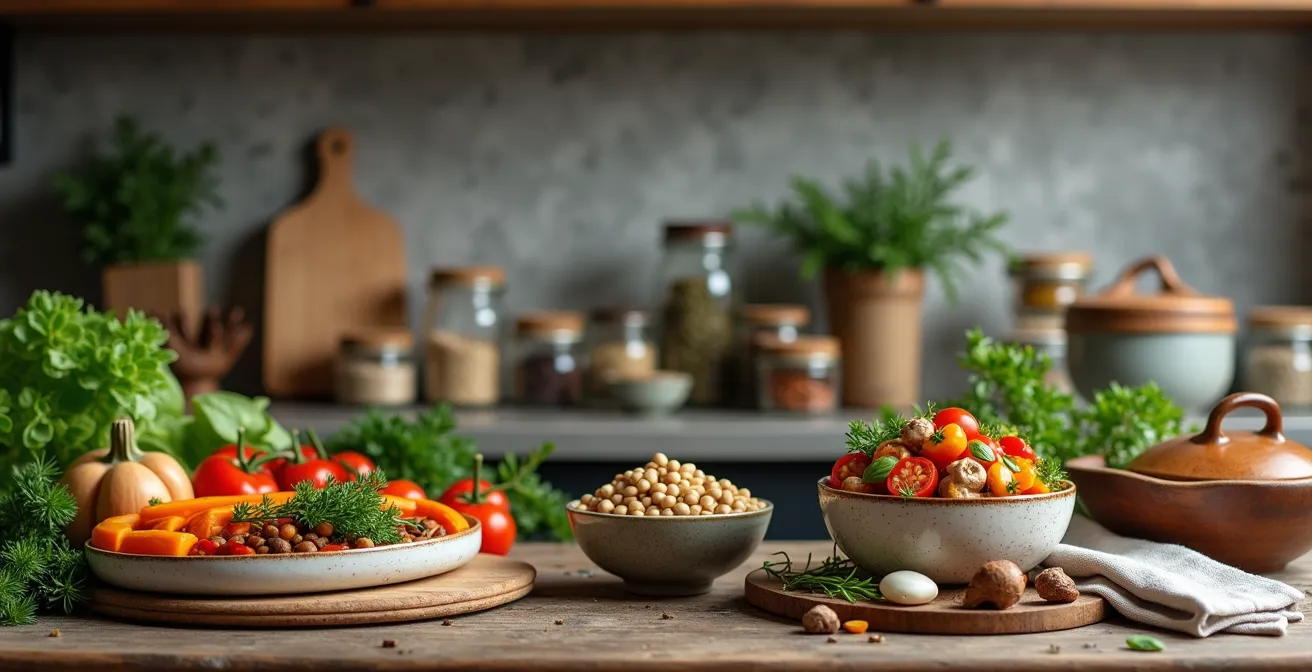
Adopting a plant-based diet doesn’t mean sacrificing your culinary heritage; it means becoming a ‘culinary translator’ to preserve the emotional core of your family’s most cherished dishes.
- The key is to understand the role an ingredient plays—its texture, flavor, and function—rather than just finding a direct substitute.
- Authenticity lies in the feeling a dish evokes, not a rigid ingredient list, allowing traditions to evolve and be shared across generations.
Recommendation: Start with one beloved family recipe and focus on translating one key element, like the richness of the fat or the texture of the meat, using the techniques in this guide.
The scent of a specific dish can transport you back decades. For many of us, especially those from rich culinary cultures like Italy, Mexico, or India, food is not just sustenance; it is memory, identity, and the language of family. The thought of giving up meat can feel like a betrayal of that heritage, a fear that your grandmother’s lasagna or your father’s famous stew will be lost forever. You’re told to find plant-based substitutes or create new traditions, but this advice often misses the point. It ignores the soul of the dish, the very thing that connects you to your past and your people.
This fear of losing a piece of yourself is valid. The common approach of simply swapping lard for margarine or ground beef for a commercial substitute often leads to disappointing results—a pale imitation that lacks the depth and character of the original. But what if the goal wasn’t replacement, but culinary translation? What if we could learn to read the story of a recipe, understand the function of each ingredient, and then find new, plant-based ways to tell that same story? This is not about erasing tradition, but about ensuring it has a future. It’s about becoming a food historian and an innovator in your own kitchen, creating a bridge between the generations before you and those to come.
This guide will walk you through that translation process. We will explore how to tackle the emotional challenge of serving adapted dishes to skeptical elders, deconstruct the science of fats and textures to replicate traditional mouthfeel, and redefine authenticity itself. You’ll learn the practical skills to build complex flavors and perfect iconic dishes, all while honoring the heart of your culinary heritage.
Summary: Reimagining Traditional Recipes Without Losing Their Soul
- The Grandmother Risk: Serving Vegan Versions to Traditional Elders
- Lard vs. Coconut Oil: How to Replicate the Mouthfeel of Traditional Fats?
- Can a Dish Be “Authentic” If You Change the Main Ingredient?
- When to Introduce New Traditions: Christmas or a Random Tuesday?
- How to Mimic the “Gamey” Taste in Plant-Based Stews?
- Mastering Pulled Jackfruit Tacos: How to Get the Meaty Texture?
- How to Transition a Family of 4 to Plant-Based Living on a Budget?
- Constructing the Perfect Vegetable Lasagna: Preventing the Watery Mess
The Grandmother Risk: Serving Vegan Versions to Traditional Elders
The moment of truth is often the most daunting: placing a plant-based version of a beloved family dish in front of a traditional elder, like your grandmother. It’s more than just a meal; it’s a test of respect, love, and continuity. The fear of rejection isn’t about the food itself, but what the food represents—a shared history. To navigate this, we must approach it not as a confrontation, but as an invitation. The key is to frame the new dish as an evolution that honors tradition, rather than a replacement that erases it. This is about building a generational bridge, showing that the family’s culinary soul can thrive in a new form.
Success lies in familiarity. Start by adapting dishes that are already close to being plant-based, like vegetable sides, or by using the exact same spice profile from a cherished family recipe. The goal is for the first bite to evoke the same comforting memory, even if the core ingredient has changed. Avoid labels like “vegan” or “plant-based” at first. Instead, talk about the flavors and the effort. “I tried to capture the way you make the sauce,” is far more effective than, “This is the vegan version.” It shifts the focus from what’s missing to what’s been preserved: the love and the legacy.
Action Plan: Introducing Plant-Based Dishes to the Family
- Start with Familiar Ground: Begin with side dishes that already lean plant-based, like roasted vegetables or salads, to build confidence and familiarity.
- Honor the Flavor Profile: Meticulously use the same spices and flavor bases from traditional family recipes to create an immediate sense of comfort and recognition.
- Frame as Evolution, Not Replacement: Present the dish as a new chapter that honors the original, explaining that you’re finding ways to continue the tradition.
- Enlist an Ally: Have a supportive and open-minded family member try the dish first and offer genuine, positive feedback in front of others.
- Focus on Flavor, Not Labels: Initially, avoid using the word “vegan.” Describe the dish by its delicious ingredients and the care you took to make it.
Lard vs. Coconut Oil: How to Replicate the Mouthfeel of Traditional Fats?
Traditional fats like lard, tallow, or schmaltz are not just cooking mediums; they are the architects of texture and the carriers of deep, savory flavor. Simply swapping them for a generic vegetable oil is why many plant-based adaptations fail. The secret is to understand the specific role of the fat you’re replacing. Is it creating flaky layers in a pastry? Is it providing a rich, creamy mouthfeel in a sauce? Or is it delivering a crisp, golden-brown finish? This is the heart of culinary translation: diagnosing the function before prescribing a solution.
For example, the crystalline structure of cold lard is what creates the coveted flaky layers in a pie crust. To replicate this, frozen grated vegan butter or solid coconut oil can perform a similar mechanical function. For the creamy richness that butter or schmaltz lends to a sauce or soup, a combination of cashew cream and nutritional yeast can provide a surprisingly similar body and umami depth. This approach moves beyond a simple 1:1 swap and into the realm of textural engineering. By identifying the fat’s purpose, we can choose a plant-based alternative—or a combination of them—that delivers the same satisfying experience, preserving the soul of the dish’s texture.

The following table, based on common culinary challenges, offers a starting point for your own textural experiments. It shows how different plant-based fats can be strategically deployed to replicate the mouthfeel of their traditional counterparts, as highlighted by insights from plant-based cooking experts.
| Traditional Fat | Plant-Based Alternative | Best Use Case | Key Benefit |
|---|---|---|---|
| Lard in pastry | Frozen grated vegan butter | Pie crusts, biscuits | Creates flaky layers |
| Butter for richness | Cashew cream + nutritional yeast | Sauces, soups | Creamy mouthfeel |
| Tallow for roasting | Coconut oil + liquid smoke | Roasted vegetables | Crispy exterior |
| Schmaltz for flavor | Mushroom-infused olive oil | Sautéing, finishing | Umami depth |
Can a Dish Be “Authentic” If You Change the Main Ingredient?
The word “authentic” is a loaded one in the culinary world. For many, a recipe is only authentic if it adheres to a strict, unchanging list of ingredients passed down through generations. By this definition, a plant-based bolognese or a meatless cassoulet is an impossibility, an imposter. However, this view often ignores the fluid, ever-evolving nature of food history. The “traditions” we hold dear were often born from innovation, adaptation, and the introduction of new ingredients from other cultures. As historical analysis shows, cuisines constantly evolve; for example, many dishes now considered traditionally British were themselves adaptations of foreign recipes.
Perhaps a more useful definition of authenticity lies not in the ingredients, but in the authenticity of emotion. Does the dish still evoke the same feeling of comfort, celebration, or home? Does it bring the family together around the table in the same way? If a vegetable lasagna, meticulously crafted to be rich and satisfying, brings the same joy as the original, it has preserved the soul of the dish. The authenticity is in the experience, not the recipe card. Food writer and recipe developer Nisha Vora touches on this adaptability in her work. Discussing Indian cooking, she notes how ingredients are often interchanged based on availability or preference. As she states in a post on her blog, Rainbow Plant Life:
Ghee is a type of clarified butter that originated in India. I’ve substituted vegan butter for ghee in many recipes, always with good results. And some Indian home cooks often just use oil instead of ghee, depending on the recipe.
– Nisha Vora, Rainbow Plant Life Blog
This perspective frees us from the tyranny of rigid rules and empowers us to become active participants in our culinary heritage. We are not merely curators of a museum; we are storytellers, and by adapting recipes, we are ensuring the story continues to be told.
When to Introduce New Traditions: Christmas or a Random Tuesday?
Strategy is everything when introducing adapted family recipes. Unveiling a plant-based turkey alternative as the centerpiece of Christmas dinner for the first time is a high-stakes gamble that can lead to tension and disappointment. The pressure is immense, both for the cook and for the family members who have deep-seated expectations for holiday meals. A far more effective approach is to separate the process of experimentation from the performance of tradition. A random Tuesday night is the perfect, low-stakes laboratory for perfecting your plant-based shepherd’s pie. It gives you the freedom to fail, tweak, and refine the recipe without the weight of a major family gathering on your shoulders.
Once you have a dish you are confident in, you can strategically introduce it into larger gatherings. The “Plus-One” strategy is an excellent method: serve the traditional dish alongside its new plant-based counterpart. This presents it as an option, not a replacement, lowering defenses and inviting curiosity. Starting with appetizers or side dishes is another way to build trust and prove that plant-based can be delicious. This gradual approach is not only about managing family dynamics; it aligns with broader societal shifts. Recent research on dietary transitions indicates that a significant portion of the population is already looking to reduce meat intake, with 39% of Europeans intending to do so. Your family’s journey may be part of a much larger, silent movement.
Here are some strategic approaches to timing:
- Low-Stakes Tuesday: Test and perfect new recipes on regular weekdays when there’s no pressure to perform.
- The “Plus-One” Strategy: During holidays, serve the traditional dish alongside a plant-based version, offering it as an exciting new choice.
- Appetizer Offensive: Introduce crowd-pleasing plant-based appetizers at gatherings to win over skeptics with the first bite.
- Build Confidence: Start with smaller, more casual family dinners to get feedback before tackling a major holiday event.
How to Mimic the “Gamey” Taste in Plant-Based Stews?
Replicating the deep, complex, and slightly “gamey” flavor of a long-simmered lamb or beef stew is one of the greatest challenges in plant-based culinary translation. This flavor isn’t a single note; it’s a chord, built from the Maillard reaction of browning meat, the richness of rendered fat, and the subtle mineral tang. To recreate it, we can’t rely on a single ingredient. Instead, we must become flavor architects, layering different elements to build a similar complexity from the ground up. This involves leveraging umami, earthiness, a hint of sweetness, and a touch of smokiness.
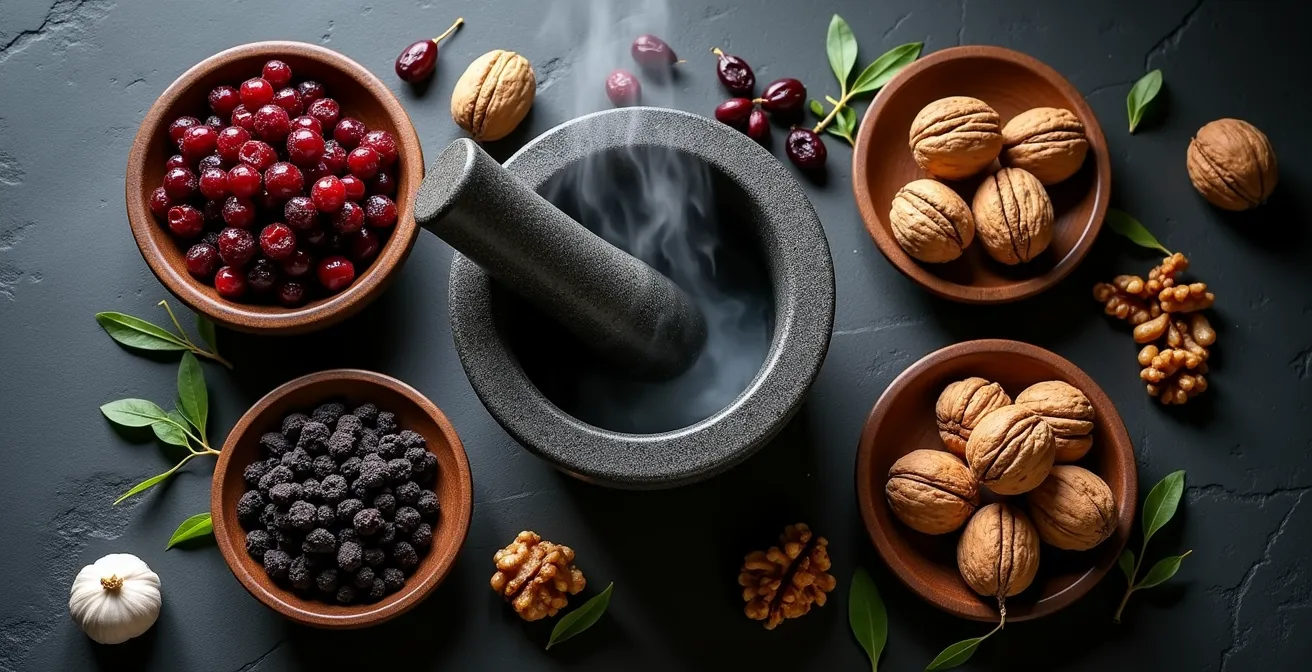
The foundation of this flavor architecture is umami. Ingredients like miso paste, nutritional yeast, tamari, and dried mushrooms (especially porcini or shiitake) are essential. Roasting vegetables like mushrooms and onions until deeply caramelized, a step often skipped, creates a foundational sweetness and depth. To mimic the slightly wild, earthy notes, small amounts of ingredients like juniper berries, dark beer, or even a teaspoon of black tea can be used. A touch of sweetness from dried fruit like cranberries or a hint of smokiness from smoked paprika or liquid smoke can round out the profile, creating a flavor that is not identical, but is equally deep, satisfying, and complex. This is showcased in advanced plant-based cooking, where techniques from different cuisines are combined to build profound flavor, like in a braised chickpea stew using both Indian spices and French techniques.
Building this flavor profile is an art. It requires tasting and adjusting, understanding that you are composing a symphony of flavors that, together, evoke the memory and comfort of a traditional stew.
Mastering Pulled Jackfruit Tacos: How to Get the Meaty Texture?
Pulled pork tacos are defined by their texture: tender, shreddable strands of meat with crispy, caramelized edges. Young, green jackfruit is a remarkable stand-in, but simply simmering it in sauce often results in a soft, one-note texture that falls short. The key to mastering pulled jackfruit is a multi-step process focused on moisture removal and texture layering. The jackfruit’s purpose in this culinary translation is to mimic the structure of slow-cooked meat, and that requires deliberate technique.
The most critical, and often overlooked, step is to treat the jackfruit before it ever touches a sauce. After draining and rinsing, the jackfruit must be thoroughly pressed to expel as much water as possible. Then, roasting or pan-searing the pieces until they begin to brown and their edges crisp up is essential. This step not only improves the final texture but also deepens the flavor. Only after this initial browning should the jackfruit be simmered or pressure-cooked in your chosen sauce. This allows the now-porous fruit to absorb the flavor without becoming waterlogged. For a truly next-level result, finish the sauced jackfruit under a broiler for a few minutes to recreate those irresistible crispy “bark” bits found in traditional pulled pork.
To perfect the meaty chew, consider these essential steps:
- Press and Drain: Thoroughly press the jackfruit to remove as much moisture as possible.
- Sear First, Sauce Later: Pan-sear or roast the jackfruit pieces before adding sauce to create foundational crispy edges.
- Pressure Cook for Flavor: Use a pressure cooker to force your marinade or sauce deep into the jackfruit’s structure.
- Finish with Heat: Spread the sauced jackfruit on a baking sheet and broil for 2-3 minutes to create a final layer of crispy, caramelized texture.
This focus on texture transformation is a hallmark of great vegan cooking. As one reviewer noted when trying a recipe from Rachel Ama’s cookbook, the right technique can make all the difference, resulting in a dish that is “warm, crisp, and comforting.”
How to Transition a Family of 4 to Plant-Based Living on a Budget?
A common misconception is that transitioning to a plant-based diet is an expensive endeavor, requiring costly meat alternatives and specialty products. While some substitutes can be pricey, a successful and budget-friendly transition for a family focuses on a different strategy: investing in flavor powerhouses and whole-food staples. The goal is to build a pantry that allows you to create rich, satisfying meals from inexpensive ingredients like legumes, grains, and seasonal vegetables.
Rather than replacing every meat-based meal with a commercial substitute, start with the “50/50 Method.” In dishes like chili, bolognese, or shepherd’s pie, replace half the ground meat with cooked lentils or finely chopped mushrooms. This immediately cuts costs, reduces meat consumption, and allows palates to gradually adapt. The real savings, however, come from bulk buying. Dried beans, lentils, rice, and oats are significantly cheaper than their canned or pre-cooked counterparts. A “Meal Prep Sunday” can be dedicated to cooking a large batch of these staples, which can then be transformed into various meals throughout the week. This approach is demonstrated in successful plant-based meal plans which rely heavily on versatile pantry staples, using the same core ingredients in different recipes to simplify shopping and reduce waste, as highlighted in a plan by Rainbow Plant Life.
A small, one-time investment in key flavor ingredients like miso paste, nutritional yeast, liquid smoke, and quality soy sauce can elevate simple beans and grains into deeply flavorful meals. Using vegetable scraps to create a rich, umami-packed broth eliminates the need for store-bought stocks and turns waste into a valuable asset. This budget-conscious approach isn’t about deprivation; it’s about smart, creative cooking that makes a plant-based lifestyle sustainable for the whole family.
Key Takeaways
- True culinary adaptation is about translating the ‘role’ of an ingredient (its texture, flavor, function), not just swapping it.
- A dish’s authenticity is better measured by the emotion and connection it evokes than by a rigid adherence to an ingredient list.
- Building complex, savory flavors in plant-based cooking is an act of ‘flavor architecture,’ layering umami, earthy, and smoky notes.
Constructing the Perfect Vegetable Lasagna: Preventing the Watery Mess
There are few culinary disappointments as profound as cutting into a beautiful vegetable lasagna only to have it collapse into a watery pool on the plate. This common pitfall stems from one primary source: the high water content of vegetables like zucchini, spinach, and mushrooms. The final, triumphant challenge in our journey of culinary translation is to master moisture management. A perfect, sliceable vegetable lasagna is a testament to understanding how ingredients behave under heat and how to build a stable, flavorful structure.
The first line of defense is to pre-cook the vegetables. Roasting them at a high temperature, rather than boiling or sautéing, is the most effective method. This not only expels a significant amount of water but also concentrates their flavor, adding a delicious caramelized depth to the final dish. Another professional technique is to use ingredients that actively absorb excess liquid during baking. A thin layer of uncooked semolina or fine breadcrumbs sprinkled between the vegetable and sauce layers can work wonders. Furthermore, using no-boil lasagna noodles is a strategic choice, as they are designed to absorb moisture from the sauce as they cook, contributing to a firmer structure. Finally, patience is a crucial ingredient. Letting the lasagna rest for at least 20-30 minutes after it comes out of the oven allows the starches and proteins to set, ensuring a clean, beautiful slice.
As one home cook exclaimed after trying a well-designed recipe, a lasagna built with these techniques can be a “quick and easy alternative to traditional lasagna” that becomes a new favorite, proving that structure and flavor can coexist beautifully. By mastering these techniques, you are not just making a better dish; you are proving that even the most challenging traditional recipes can be successfully and deliciously translated.
Start your journey today. Choose one recipe that holds a special place in your heart, and begin the rewarding process of translating its story for a new generation. This is how tradition truly stays alive.