In summary:
- Treat meal prep as a productivity system to reduce daily decision fatigue, not just a cooking chore.
- Adopt “component prep” (cooking grains, proteins separately) for greater flexibility and to avoid flavor burnout.
- Implement a “First-In, First-Out” (FIFO) system with clear containers to cut food waste by up to 25%.
- Organize your grocery list by store layout and use a “perimeter-first” strategy to shop in under 20 minutes.
For busy professionals, the most draining question isn’t a complex project at work; it’s the seemingly simple “What’s for dinner?” that arrives at 6 PM. After a full day of high-stakes decisions, the mental energy required to choose a recipe, check ingredients, and cook is non-existent. This leads to the default choice: expensive, unhealthy takeout. The cycle of ordering in, feeling guilty, and watching fresh groceries wilt in the fridge is a common source of stress and financial drain.
The standard advice—”make a grocery list,” “cook on Sunday”—often misses the root cause of the problem. These are individual tasks, not a cohesive system. They address the symptom (not having food ready) but not the disease: decision fatigue. The real challenge isn’t a lack of time to cook; it’s a lack of cognitive bandwidth to make yet another choice at the end of a long day.
But what if the solution wasn’t about finding more willpower, but about designing a home productivity system that eliminates these decisions entirely? This guide re-frames meal planning from a domestic chore into a strategic framework. We will treat your kitchen like an efficient operation, focused on minimizing cognitive load and maximizing output. By implementing a few core systems, you can reclaim hours of your week, save significant money, and finally break free from the tyranny of takeout.
This article will guide you through building that system, from batching core components and organizing your fridge like a professional kitchen to mastering grocery shopping and retaining flavor in prepped meals. Get ready to automate your dinners and win back your evenings.
For those who prefer a visual overview, the following video provides a great introduction to the core concepts of efficient food and meal preparation, complementing the systems detailed in this guide.
To help you navigate this comprehensive system, we’ve broken down the process into logical, actionable steps. The following summary outlines the key pillars of strategic meal planning we will explore.
Summary: A Systemic Approach to Conquering Meal Prep
- Why “What’s for Dinner?” Is the Most Stressful Question of the Day?
- How to Batch Cook Grains and Proteins on Sunday for the Whole Week?
- Glass vs. Plastic: Which Containers Keep Prepped Food Fresh Longer?
- The “Good Intentions” Mistake That Costs You $50 in Wasted Produce
- How to Organize Your Grocery List by Aisle to Shop in 20 Minutes?
- How to Store and Prep Versatile Dried Legume Bases for Weekly Meal Prep?
- Cooking with Whole Food Ingredients: 5 Rules for Maximum Flavor Retention
- How to Transition a Family of 4 to Plant-Based Living on a Budget?
Why “What’s for Dinner?” Is the Most Stressful Question of the Day?
The stress of the dinner-time question is not an imagined phenomenon; it’s a direct result of decision fatigue. Research shows that the average person makes over 200 decisions about food specifically every single day, out of more than 35,000 total choices. Each decision, no matter how small, depletes a finite reserve of mental energy. By the end of a workday filled with strategic thinking and problem-solving, your cognitive resources are at their lowest, making even a simple choice feel overwhelming.
This phenomenon, often called “menu anxiety,” is increasingly common. A 2024 study found that 86% of Gen Z, a demographic now well into the professional workforce, experience anxiety when ordering from a menu due to the pressure of making the “right” choice. For a busy professional, this translates into a paralyzing inability to decide what to cook, leading to the path of least resistance: ordering takeout. The problem isn’t a lack of cooking skills or desire for healthy food; it’s a critical depletion of the cognitive load required to execute a plan from scratch.
By failing to have a system in place, you force your tired brain to perform a complex sequence of tasks: choose a meal, check for ingredients, create a shopping list if necessary, and then execute the cooking process. Strategic meal planning is the system designed to front-load these decisions to a time when your cognitive energy is high (like the weekend), rendering weekday meal execution a frictionless, thought-free process.
How to Batch Cook Grains and Proteins on Sunday for the Whole Week?
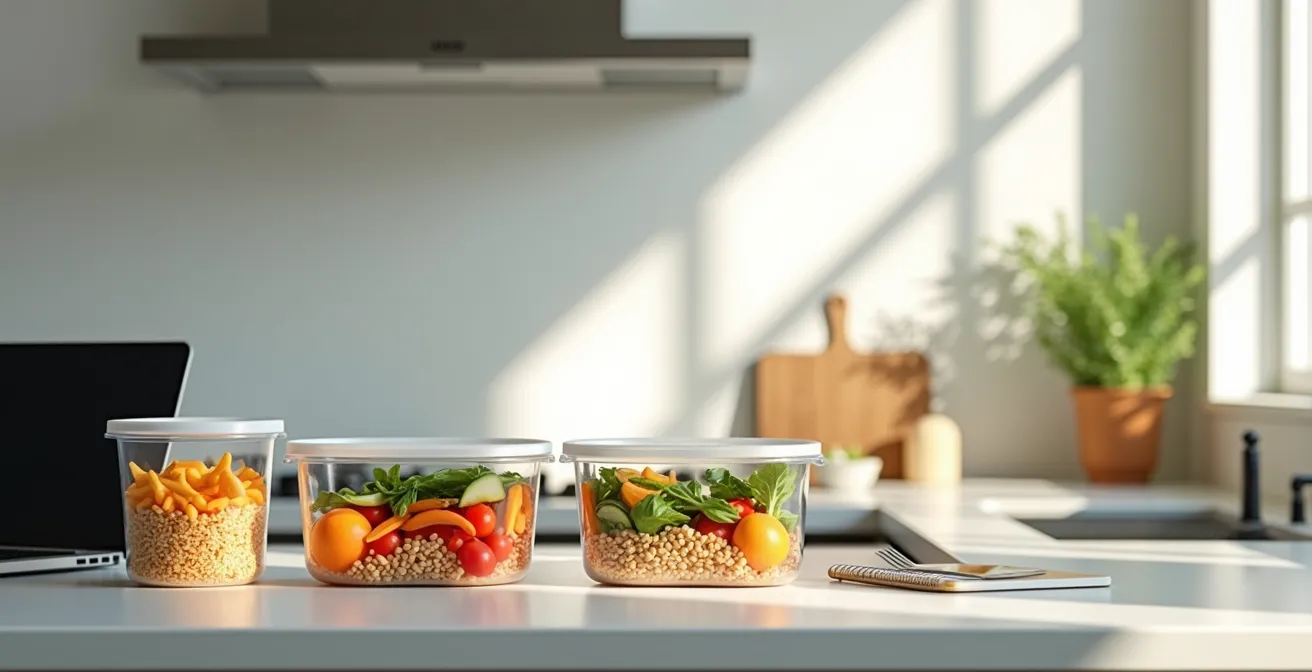
The most effective strategy to combat dinner-time decision fatigue is not traditional meal prep, where you cook five identical meals for the week. This approach often leads to flavor fatigue and rigidity. The superior system is “component prep.” Instead of full meals, you prepare versatile, unseasoned building blocks: a large batch of quinoa, a tray of roasted chicken breasts, a pot of black beans. This turns your fridge into a personal “bowl bar,” ready for assembly.
With component prep, the only weekday decision is how to combine the elements. Chicken, quinoa, and pre-chopped veggies can become a salad on Monday, a stir-fry on Tuesday, and a soup ingredient on Wednesday. This system offers the efficiency of batch cooking while retaining the flexibility needed to satisfy daily cravings and prevent monotony. It is particularly effective for individuals or couples, as it allows for customized meals from a shared pool of ingredients, answering the question of whether meal prep is “worth it” for one person.
This table illustrates the strategic advantage of adopting a component-based system over a more rigid, traditional approach.
| Method | Time Investment | Flexibility | Flavor Variety |
|---|---|---|---|
| Component Prep | 2-3 hours/week | High – mix & match | Prevents flavor fatigue |
| Traditional Meal Prep | 4-5 hours/week | Low – fixed meals | Can become monotonous |
The process is simple. Dedicate a two-hour block on Sunday. In this time, you can cook 2-3 grains (rice, farro), 2-3 proteins (lentils, shredded chicken, baked tofu), and wash and chop a variety of vegetables. Store each component separately. This initial investment of time completely eliminates the need for any significant cooking or decision-making during the hectic workweek.
Glass vs. Plastic: Which Containers Keep Prepped Food Fresh Longer?
An effective meal prep system relies on high-quality storage. The choice between glass and plastic containers isn’t just about preference; it impacts food longevity, flavor integrity, and your health. For most applications, glass containers are the superior choice for professionals. They are non-porous, meaning they won’t absorb odors or stains from foods like tomato sauce or curry. This ensures that Monday’s lentil soup doesn’t make Wednesday’s chicken salad taste faintly of cumin.
Furthermore, glass is inert and won’t leach chemicals into your food, especially when reheating. You can prep, store, reheat, and eat from the same container, drastically reducing cleanup time. While heavier than plastic, their durability and longevity make them a worthwhile investment. High-quality borosilicate glass can go from the fridge to the microwave or oven without risk of shattering. For freezer storage, vacuum-sealed bags are unparalleled for preventing freezer burn on proteins and batch-cooked legumes.
Beyond material, the key to an efficient storage system is uniformity and visibility. This is a principle borrowed directly from professional kitchens: First-In, First-Out (FIFO). A case study on professional kitchens shows that implementing a FIFO system with uniform, stackable, and transparent containers is critical for efficiency. At home, this means choosing one or two standard container shapes and sizes. This allows for neat stacking, maximizes fridge space, and lets you see everything at a glance. Professionals who adopt this system at home can reduce food waste by up to 25% and save significant time on meal decisions because they always know what needs to be used first.
The “Good Intentions” Mistake That Costs You $50 in Wasted Produce
The most common meal planning failure is the “good intentions” mistake: buying a cartful of beautiful, fresh produce with ambitious plans, only to watch it turn to liquid in the crisper drawer. This isn’t just frustrating; it’s incredibly expensive. U.S. households lose more than $2,000 per year to food waste, with a significant portion coming from spoiled produce. This waste is a direct result of a lack of system for managing inventory.
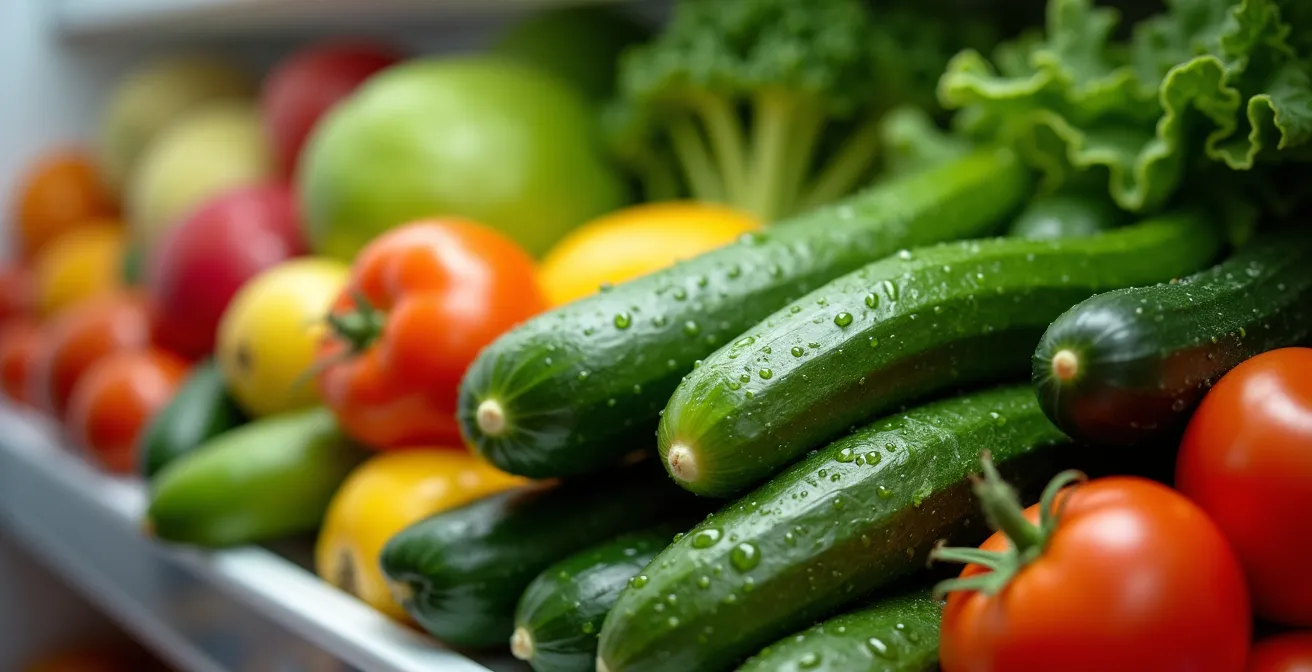
To solve this, you need to implement a Produce Triage System in your refrigerator. Just like in an emergency room, you must prioritize based on urgency. Your fridge should be organized into clear zones based on shelf life. This simple act of organization transforms your fridge from a produce graveyard into an efficient, zero-waste machine. It removes the guesswork of what to eat next and ensures you use what you have before it spoils.
By creating visual cues and simple rules, you eliminate the daily micro-decision of “what vegetable should I use tonight?” The system dictates the choice for you, preserving both your food and your mental energy.
Action Plan: Implementing Your Fridge Triage System
- Identify Zones: Designate visible “Use Now,” “Use Mid-Week,” and “Use Later” zones in your fridge. Use labels if necessary.
- Inventory & Sort: Upon returning from the store, sort all produce into the correct zones. Delicate greens and berries go in “Use Now”; peppers and cucumbers in “Mid-Week”; carrots and potatoes in “Later.”
- Establish Consumption Rules: Make it a household rule to always build meals from the “Use Now” zone first before moving to other zones.
- Plan Around Inventory: Before your next grocery trip, check the “Use Later” zone and build your meal plan around those items to ensure they get used.
- Schedule a “Zero-Waste” Meal: Designate one meal per week (e.g., Friday stir-fry, soup, or frittata) specifically to use up any and all remaining produce scraps.
How to Organize Your Grocery List by Aisle to Shop in 20 Minutes?
The grocery store is a minefield of decisions designed to make you spend more time and money. An unsystematic approach—wandering aisles with a vague list—is a recipe for impulse buys and wasted hours. To reclaim your time, your grocery list must be transformed from a simple checklist into a navigational tool. The most efficient method is to organize your list by store layout.
Most grocery stores follow a similar pattern: fresh produce on the perimeter, followed by dairy and proteins along the back wall, with packaged goods in the center aisles. By structuring your list to match this flow, you can move through the store in a single, efficient path without backtracking. This “Perimeter-First” shopping strategy ensures you fill your cart primarily with whole foods while only making surgical strikes into the center aisles for specific pantry items on your list. This tactic also helps you avoid decision-fatiguing hotspots like the snack and checkout aisles.
For maximum efficiency, leverage technology. A case study of busy professionals found that using a digital “master list” on an app like Trello, pre-sorted by their local store’s layout, allowed them to complete their shopping in under 20 minutes. This represents a 50% reduction from traditional shopping methods. Users simply activate the checklist weekly, adding specific items as needed. The system is pre-built; execution is nearly automatic. This systematic approach transforms a dreaded chore into a quick, predictable task.
How to Store and Prep Versatile Dried Legume Bases for Weekly Meal Prep?
Dried legumes—beans, lentils, and chickpeas—are the ultimate meal prep ingredient. They are incredibly inexpensive, nutritionally dense, and shelf-stable. However, many are deterred by long soaking and cooking times. The key to unlocking their potential is a modern pressure cooker, like an Instant Pot. This single piece of equipment is a game-changer for busy professionals.
Professional chefs and meal preppers have found that a pressure cooker can reduce dried bean cooking time from hours to under 30 minutes, with no pre-soaking required. One study found that batch-cooking legumes and freezing them in single-serving portions reduced weekly cooking time by 45% for working professionals. This allows you to create a “bank” of high-protein, high-fiber bases that can be used instantly throughout the week in salads, soups, tacos, and curries.
The system for prepping and storing them is critical for maintaining quality. The “Cook, Cool, Freeze Flat” method ensures your beans don’t turn to mush and are easy to store. After pressure cooking with minimal seasoning (salt only), drain the beans and spread them on a sheet pan to cool completely and rapidly. This prevents them from overcooking in their own residual heat. Once cool, portion them into freezer-safe bags, press out all the air, and freeze them flat. This creates thin, stackable “bricks” of beans that take up minimal freezer space and can be thawed quickly or even added directly from frozen into a simmering soup or sauce.
Key Takeaways
- The goal of meal planning is to eliminate daily decisions, not just to cook in advance. This saves critical mental energy.
- “Component prep” is more flexible and sustainable than traditional meal prep, preventing flavor fatigue and accommodating picky eaters.
- A systematic approach to grocery shopping (aisle-based lists) and fridge organization (FIFO) can cut shopping time by 50% and food waste by 25%.
Cooking with Whole Food Ingredients: 5 Rules for Maximum Flavor Retention
One of the biggest complaints about meal-prepped food is that it’s bland or tastes “old” by day three. This “flavor fatigue” can quickly derail even the best-laid plans. The solution lies in applying a few professional cooking principles to your prep and reheating process. Flavor isn’t just about what you add; it’s about how you develop and preserve it through technique.
The most important rule is to master the Maillard reaction. This is the chemical process that creates deep, savory flavor when food is browned. To achieve it, always pat proteins and vegetables completely dry before cooking and give them plenty of space in a hot pan. Crowding the pan steams the food instead of searing it, resulting in a bland, gray product. A few extra minutes here pays huge flavor dividends all week.
Another critical technique is to “weaponize your acids.” A squeeze of lemon juice or a dash of vinegar added just before serving can instantly brighten and revive the flavors of a day-old meal. Finally, build an “umami pantry” with items like miso paste, dried mushrooms, or nutritional yeast. A small amount of these ingredients can add a profound depth of savory flavor that makes prepped meals taste like they were made fresh. By separating flavor-building steps—searing during initial prep and adding fresh herbs and acids just before eating—you can ensure your meals are delicious from Monday to Friday.
Your Flavor Retention Checklist: 5 Rules from the Pros
- Master Browning: Always pat proteins dry and avoid crowding the pan to ensure a deep, flavorful Maillard reaction.
- Add Acid Last: Use a splash of lemon juice, lime juice, or vinegar just before serving to wake up and brighten leftover meals.
- Build an Umami Pantry: Stock long-lasting flavor boosters like miso paste, soy sauce, or nutritional yeast to add instant depth during cooking.
- Rest Your Proteins: After cooking, always let proteins like chicken or steak rest for 5-10 minutes before slicing to allow juices to redistribute, ensuring they stay moist upon reheating.
- Use Fresh Herbs Strategically: Add delicate herbs like cilantro, parsley, or basil after reheating, not during the initial prep, to preserve their vibrant flavor and color.
How to Transition a Family of 4 to Plant-Based Living on a Budget?
Implementing a new meal system can be challenging, especially with a family of varying tastes and preferences. Transitioning towards a more plant-based diet, which is both budget-friendly and healthy, requires a strategic, gradual approach. The key is to reduce friction and give family members, especially picky eaters, a sense of control.
The most successful strategy is the “Deconstructed Dinner” or “Bowl Bar.” Instead of serving a finished plate, you present the plant-based components prepared via your component prep system: a grain (rice), a protein (black beans), roasted vegetables (sweet potatoes, broccoli), and various toppings and sauces. Each family member then builds their own bowl. This approach dramatically reduces mealtime conflict by empowering individuals to choose what they like. Families implementing this strategy report up to 75% less mealtime conflict and greater acceptance of new foods.
For a gradual transition, use the “One-for-One Swap Method.” Start by replacing just one meat-based dinner per week with a plant-based favorite. In subsequent weeks, swap ingredients within familiar recipes, like using lentils instead of ground beef in bolognese sauce. As the family gets accustomed to these changes, you can introduce cuisines that are naturally plant-based, like Indian dal or Mediterranean mezze platters. This systematic, low-pressure approach makes the transition feel natural rather than restrictive. It also highlights a major benefit: plant-based proteins like beans and lentils typically cost 60% less than their meat equivalents, leading to significant budget savings.
Begin implementing these systems today to reclaim your evenings and eliminate decision fatigue for good. Your first step is to choose one system—component prep or an aisle-based grocery list—and execute it this week to see immediate results.