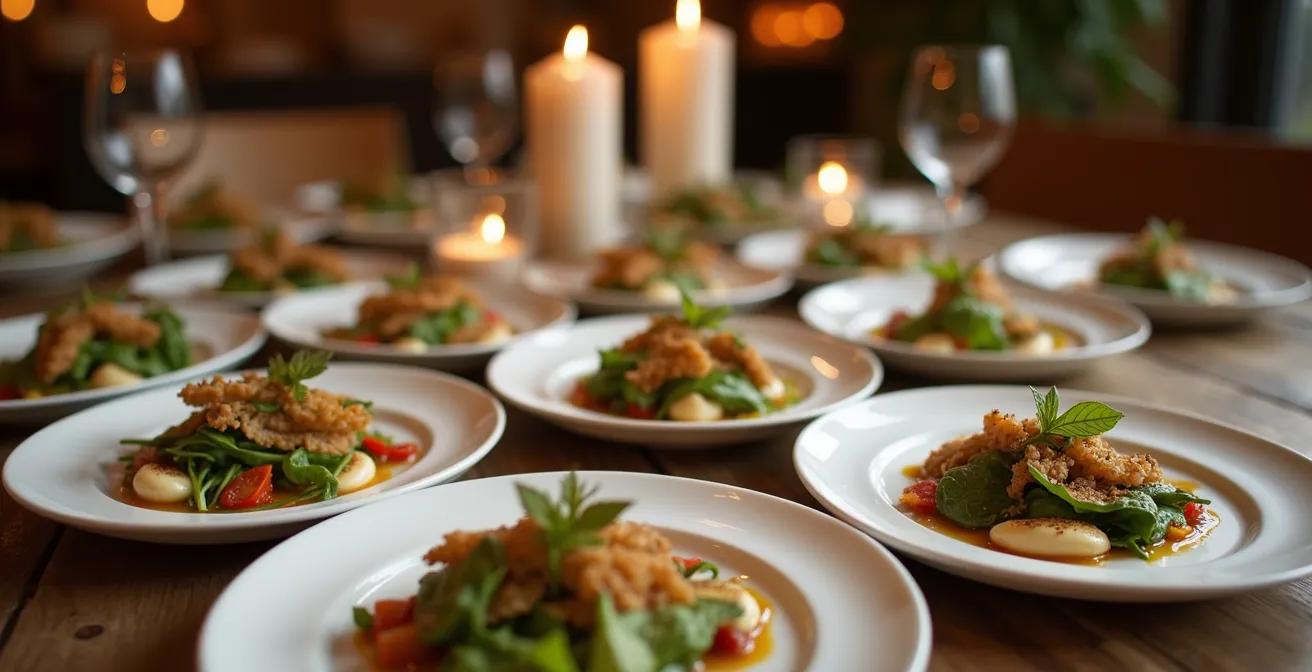
The secret to restaurant-worthy plant-based dishes isn’t finding the right meat substitute; it’s mastering the architectural principles of vegetables themselves.
- Texture is paramount: Deliberately contrasting textures (silky, crisp, raw) from a single vegetable creates dynamic, sophisticated plates.
- Flavor is built in layers: Using umami sources strategically and seasoning in stages transforms watery dishes into deeply savory experiences.
Recommendation: Stop thinking in terms of recipes and start thinking like a chef—by mastering the sequence, texture, and synergy of your ingredients.
For the ambitious home cook, presenting a plant-based meal at a dinner party can feel like a high-stakes performance. There’s the silent pressure to impress, to create something that feels luxurious and complete, and above all, to dispel the tired notion of “rabbit food.” You’ve likely mastered roasting vegetables and know your way around a basic vinaigrette. Yet, there often remains a gap between a pleasant vegan meal and an unforgettable culinary experience—the kind that leaves guests marveling at the ingenuity on their plate.
The common advice—use more spices, find a good meat substitute, add umami—only scratches the surface. These are components, not a philosophy. They fail to address the fundamental shift in thinking required when moving from traditional to plant-centric cuisine. The true artistry doesn’t lie in mimicking what’s absent, but in celebrating what is present. It’s about understanding the vegetable not just as an ingredient, but as a medium with its own inherent potential for texture, flavor, and structure.
But what if the key to elevation wasn’t a secret ingredient, but a series of professional techniques? What if you could learn to think about a carrot or a cauliflower with the same precision a classically trained chef thinks about a cut of meat or fish? This guide moves beyond recipes to reveal the core principles of plant-based culinary arts. We will deconstruct the professional approach to vegetable architecture, from mastering textural counterpoint to the science of seasoning and the strategy of sequential cooking. Prepare to unlock a new culinary language that will permanently change how you cook and how your guests experience plant-based dining.
To guide you on this journey of culinary transformation, this article is structured to build your skills progressively. The following sections will equip you with the foundational techniques and advanced concepts used in the world’s top plant-based kitchens.
Table of Contents: A Guide to Plant-Based Culinary Mastery
- Why Texture Is the Missing Element in Your Plant-Based Dishes?
- How to Break Down Large Vegetables Like a Pro for Consistent Cooking?
- Miso vs. Nutritional Yeast: Which Umami Booster Should You Use When?
- The Seasoning Error That Makes Plant-Based Stews Taste Watery
- In What Order Should You Cook Vegetables to Ensure Perfect Texture?
- What Professional Chefs Are Cooking Now: 5 Trends Shaping Modern Menus
- Haute Plant-Based Innovation: Molecular Techniques for Vegetables
- Is Vegan Fine Dining Worth the Price Tag for Non-Vegans?
Why Texture Is the Missing Element in Your Plant-Based Dishes?
In most home cooking, texture is an afterthought. In plant-based fine dining, it is the central organizing principle. A dish composed solely of soft elements, no matter how flavorful, becomes monotonous and forgettable after two bites. The palate craves contrast: the crunch of something raw against the silkiness of a purée, the crisp edge of a roasted component meeting the tender yield of something steamed. This is textural counterpoint, and it is the single most effective way to create a dish that feels complex and satisfying.
The professional mindset treats a single vegetable not as one ingredient, but as a source of multiple textures. A carrot, for example, can be a velvety purée, a crisp-edged roasted coin, and a delicate, shaved ribbon all on the same plate. This approach, which we can call vegetable architecture, moves beyond a simple recipe and into the realm of dish design. It’s how chefs create a journey of sensation in every mouthful, ensuring the diner remains engaged from start to finish. According to industry analysis, texture is a primary driver of food innovation, with a deep connection to how consumers perceive quality and enjoyment.
Forgetting to build this textural landscape is why many plant-based dishes, even with good flavor, can fall flat. They lack the structural integrity that makes a dish feel complete and thoughtfully composed. By focusing on creating at least two to three distinct textures, you immediately elevate your cooking from a simple preparation to a structured, intentional culinary creation.
Action Plan: The Texture Trio Method for Vegetables
- Select a single vegetable as your base (a carrot, cauliflower, or beet works best).
- Create element 1: Purée half the vegetable with a touch of plant milk until silky smooth.
- Create element 2: Roast a quarter of the vegetable at high heat (425°F / 220°C) until its edges are deeply caramelized and crisp.
- Create element 3: Shave the remaining quarter raw using a mandoline or vegetable peeler for a fresh, crisp element.
- Plate all three textures together, intentionally contrasting temperatures and mouthfeels for a dynamic experience.
How to Break Down Large Vegetables Like a Pro for Consistent Cooking?
Consistent results begin with consistent preparation. In a professional kitchen, the term “vegetable butchery” is used to describe the precise, intentional breakdown of large vegetables like cauliflower, cabbage, or winter squash. This isn’t just about chopping; it’s about understanding the vegetable’s anatomy to yield a variety of cuts, each suited for a specific cooking method. A common home-cooking mistake is to chop everything into a uniform, medium dice, which limits its potential and often leads to uneven cooking.
Take a head of cauliflower, for instance. A chef doesn’t see one vegetable; they see potential for multiple applications. The dense core can be sliced into thick, steak-like planks for pan-searing. The florets can be pulsed into “rice” for a delicate base or roasted for texture. Even the often-discarded leaves and stalk can be thinly sliced and roasted until crisp, providing a delicious garnish. This whole-vegetable approach not only minimizes waste but also maximizes the culinary possibilities from a single source.
This paragraph introduces the concept of vegetable butchery. To better understand this, the image below illustrates how a single cauliflower can be transformed into distinct culinary components.
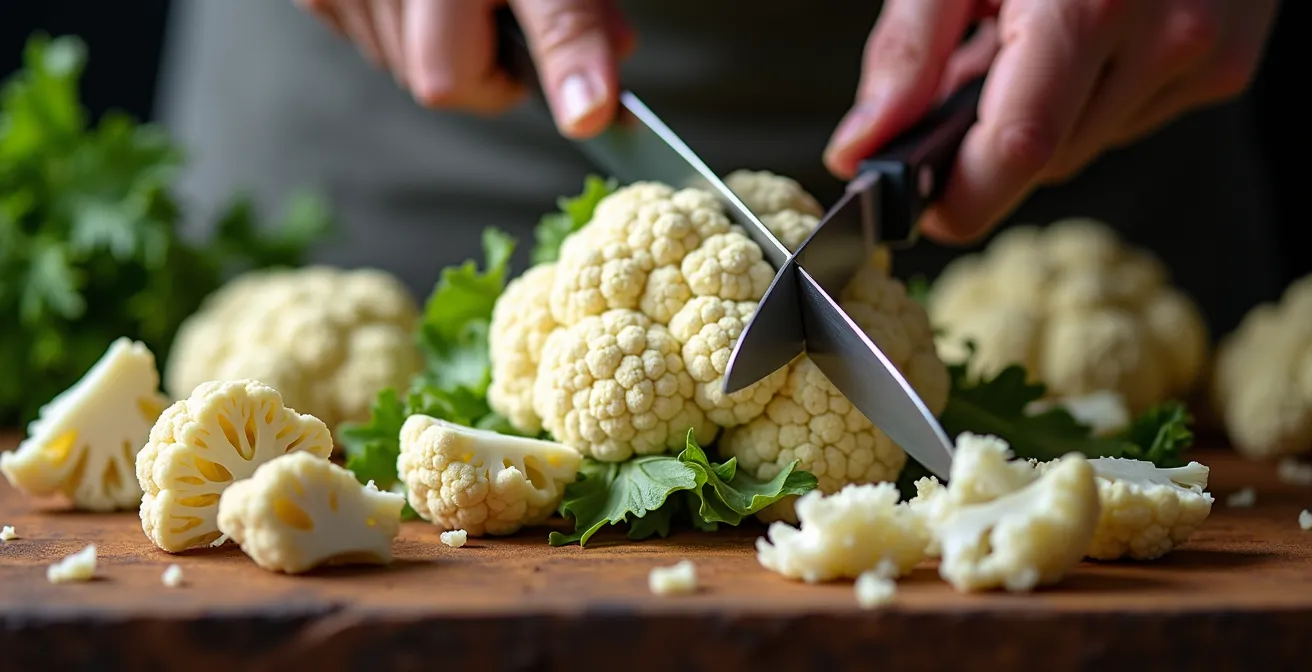
As this visual demonstrates, each cut has a purpose. The flat surface of the “steak” is perfect for achieving a beautiful, even sear. The small size of the “rice” ensures it cooks quickly and evenly. By mastering these specific cuts, you gain precise control over the final texture and presentation of your dish, ensuring every component is cooked to ideal perfection.
Miso vs. Nutritional Yeast: Which Umami Booster Should You Use When?
The term “umami” is frequently mentioned in plant-based cooking, but it’s often applied as a blunt instrument. Both miso and nutritional yeast are umami powerhouses, yet they function very differently. Using them interchangeably is a common error that can flatten the flavor profile of a dish. The key is to understand their distinct characters and deploy them with strategic intent. Think of them not as interchangeable, but as instruments in an orchestra: one provides the deep, resonant bass, the other the bright, soaring treble.
Miso, a fermented soybean paste, delivers a deep, salty, and complex bass note. Its flavor is best unlocked with heat and time, making it ideal for incorporating early in the cooking process. It excels in glazes, marinades, broths, and rich sauces, where it can meld with other ingredients to build a profound savory foundation. Nutritional yeast, on the other hand, provides a bright, cheesy, and nutty top note. Its delicate flavor is easily destroyed by high heat, making it a finishing ingredient. It is best used at the end of cooking or in cold applications, sprinkled over salads, stirred into creamy sauces, or used to create a “cheesy” crust on gratins.
This distinction is highlighted by plant-based cooking authority Nisha Vora, who advocates for a collaborative approach. As she explains:
Position them not as competitors, but as collaborators. Miso provides a deep, complex, fermented background note, while nutritional yeast adds a bright, cheesy, toasted top note.
– Nisha Vora, Rainbow Plant Life Cooking Philosophy
The following guide from a comparative analysis of umami ingredients provides a clear framework for when to use each component for maximum impact.
| Characteristic | Miso | Nutritional Yeast |
|---|---|---|
| Flavor Profile | Deep, fermented, salty bass notes | Bright, cheesy, nutty treble notes |
| Best Temperature | Hot applications (glazes, soups) | Cold/finishing (salads, toppings) |
| Texture Impact | Adds moisture and richness | Adds dry, flaky texture |
| Cooking Stage | Early to mid-cooking | Final garnish or low-heat mixing |
| Synergy Partners | Kombu, shiitake, soy sauce | Cashews, garlic, lemon |
The Seasoning Error That Makes Plant-Based Stews Taste Watery
One of the most common complaints about homemade plant-based stews and braises is that they taste “watery” or “thin,” lacking the deep, savory character of their meat-based counterparts. This is rarely due to a lack of ingredients, but rather a fundamental error in the timing of seasoning. Most home cooks season their dishes at the very end, tasting and adding salt until it seems right. In plant-based cooking, this is too late. Vegetables, particularly mushrooms, eggplant, and zucchini, contain a high percentage of water that dilutes flavor as it cooks out.
Professional chefs combat this by employing a three-stage seasoning method that builds flavor systematically from the very beginning. This approach doesn’t just add saltiness; it fundamentally changes the texture of the vegetables and concentrates their flavor, resulting in a sauce with body and depth. Seasoning only at the end is like painting on a wet canvas—the colors run and the final image is diluted. Building flavor in stages creates a rich, layered foundation that can stand up to long cooking times.
The process involves strategic seasoning at each critical phase of cooking to control moisture and build a savory base, known in French cuisine as a *fond*. Following this sequence is non-negotiable for achieving a rich, deeply flavored result instead of a bland, diluted stew. The method is as follows:
- Stage 1: Pre-seasoning for Moisture Control. Before they even hit the pan, high-water vegetables like mushrooms or eggplant should be tossed with salt and left to sit for about 30 minutes. This draws out a significant amount of water, allowing them to brown properly rather than steam.
- Stage 2: Building the Fond. The flavor base is created by deeply caramelizing aromatics and, crucially, tomato paste. Sautéing tomato paste for 5-7 minutes until it darkens to a brick-red color creates an intensely savory, umami-rich foundation.
- Stage 3: Seasoning the Liquid. The cooking liquid (broth, wine, etc.) should be seasoned as it’s added and brought to a simmer. This allows the salt and other flavors to penetrate the vegetables fully as they cook and as the liquid reduces, concentrating the taste.
A final professional touch is to taste and adjust not with more salt, but with a splash of acid, such as lemon juice or vinegar. This brightens the entire dish and makes the existing flavors pop without simply adding more sodium.
In What Order Should You Cook Vegetables to Ensure Perfect Texture?
The “one-pot meal” is a weeknight hero, but for a dinner party, it’s often a recipe for textural compromise. When all vegetables are added to a pan at once, the inevitable result is a mix of undercooked hardy roots and mushy, overcooked delicate greens. To achieve a dish where every single component is perfectly cooked, professional chefs employ sequential cooking: the practice of cooking each type of vegetable separately to its ideal point before combining them at the very end. This ensures every element shines.
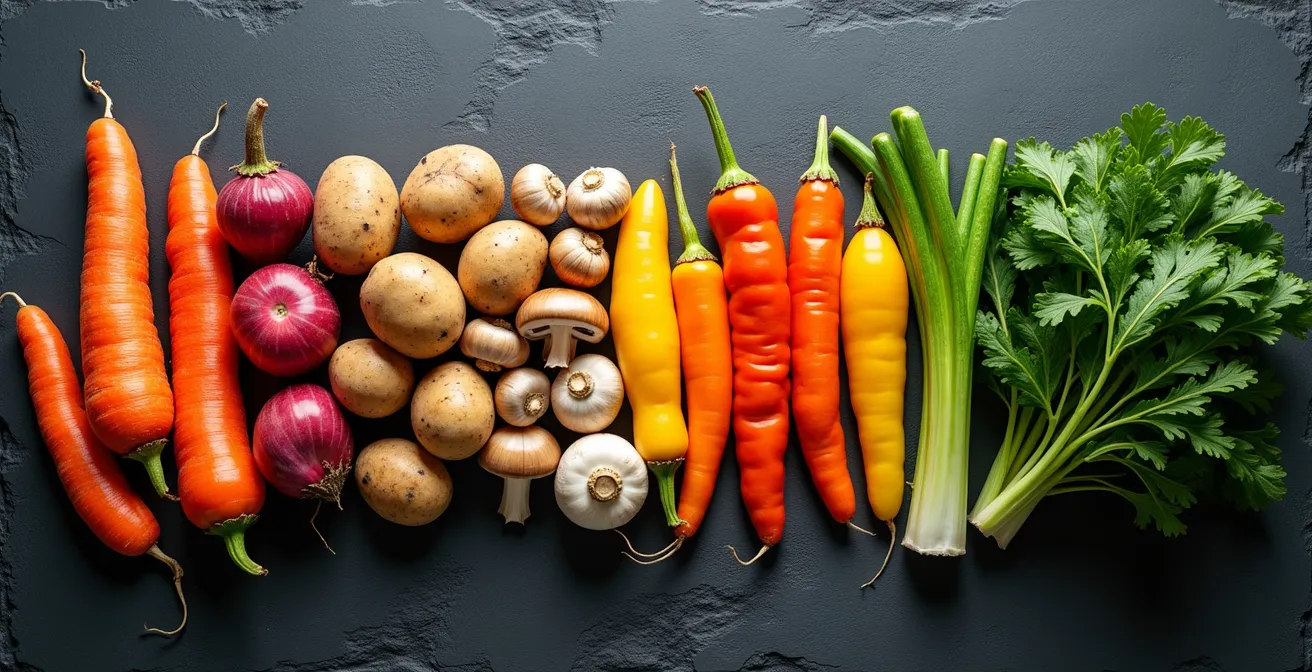
This method requires a mental shift from “what’s easiest?” to “what’s best for each ingredient?” It respects the unique properties of each vegetable. Dense root vegetables like carrots and potatoes need a longer, steady heat to become tender. Fungi like mushrooms need high, dry heat to release their moisture and brown. Delicate vegetables like zucchini or asparagus need a quick, intense sear to remain crisp-tender. Throwing them all together guarantees that none will be at their peak.
This image below illustrates the concept of grouping vegetables by density and cooking time, the core principle of sequential cooking.
This methodical approach is not as time-consuming as it sounds. It can be done in the same pan, working from the longest-cooking vegetable to the shortest. The result is a final dish that feels like a curated assembly of perfect parts, not a haphazard mix. It is the difference between a simple stir-fry and a composed, restaurant-quality plate.
Case Study: The Professional Sauté-Separately Method
Top kitchens demonstrate this principle daily. For a vegetable medley, a chef might start by roasting diced carrots for 15 minutes until tender and caramelized. In a separate pan, mushrooms are sautéed at high heat until their liquid evaporates and they turn golden brown. In the final minutes, zucchini is seared quickly in a very hot pan for just 2 minutes to get color while staying crisp. All three are then tossed together in a warm bowl with fresh herbs only in the final 30 seconds before plating. This prevents the common ‘one-pot compromise’ where carrots are still hard and zucchini has turned to mush.
What Professional Chefs Are Cooking Now: 5 Trends Shaping Modern Menus
The world of plant-based fine dining is a dynamic space of constant innovation. Staying aware of current trends can provide a powerful source of inspiration for the ambitious home cook. These are not fleeting fads, but shifts in philosophy that signal a deeper, more sophisticated approach to vegetable-centric cuisine. A key driver behind this innovation is the growing consumer demand for transparency and quality; one report indicates that a significant 75% of consumers are willing to pay a premium for products with clean-label ingredients, pushing chefs to create value through technique rather than additives.
These trends move away from imitation and toward celebrating the vegetable in its own right. They are about extracting the most flavor, creating novel experiences, and utilizing every part of the plant. Integrating even one of these concepts into your cooking can dramatically elevate your dishes and surprise your guests with modern, forward-thinking cuisine.
Here are five professional plant-based trends to master and adapt for your home kitchen:
- Single-Vegetable Tasting: This involves designing a complete dish or even a multi-course meal around a single “hero” vegetable. Imagine a plate featuring a celery root purée, roasted celery root, and a raw, shaved celery root salad—a deep dive into one ingredient’s versatility.
- Rapid Lacto-Fermentation: Chefs are moving beyond long ferments to quick, 24-48 hour lacto-fermentations. A quick-pickled vegetable, lightly fermented before being cooked, adds a subtle, complex tang and umami that can’t be achieved with vinegar alone.
- Vegetable-Based Beverages: The pairing is now part of the plate. Chefs create custom, non-alcoholic infusions, teas, and shrubs (drinking vinegars) from vegetable juices and scraps to complement each course, creating a holistic flavor experience.
- Byproduct Innovation: Waste is a resource. Potato peels are dehydrated and fried into crisp “chips,” carrot tops are blitzed into pesto, and aquafaba (chickpea water) is whipped into ethereal foams and meringues.
- Temperature Play: A truly dynamic plate engages all the senses, including the perception of temperature. This involves intentionally combining hot elements (a warm purée), cold elements (a chilled gel or sorbet), and room-temperature components (fresh herbs or oils) on the same plate.
Haute Plant-Based Innovation: Molecular Techniques for Vegetables
The term “molecular gastronomy” can conjure images of intimidatingly complex lab equipment and unapproachable science. However, at its core, it is simply about understanding the physical and chemical transformations of ingredients during cooking. Today, many of these “haute” techniques have been simplified and are surprisingly accessible to the ambitious home cook, offering new ways to manipulate the texture and form of vegetables and create stunning visual and sensory effects that were once the exclusive domain of three-Michelin-star restaurants.
These techniques are not about trickery; they are about unlocking new possibilities. A simple broth can be transformed into a firm, sliceable gel, adding a surprising textural element to a salad. A fruit juice can be turned into shimmering “caviar” that bursts in the mouth. As a report on food innovation highlights, plant-based textures are a major driver of innovation, with a focus on creating novel eating experiences. For the home cook, this is the frontier of creativity.
You don’t need a centrifuge or a rotary evaporator. With a few key ingredients, available online, and tools you likely already own, you can start exploring this new world of texture.
Case Study: Accessible Molecular Gastronomy at Home
Home cooks are now successfully adopting simplified molecular techniques. To create stable, airy foams without a pressurized canister, they are using soy lecithin and a standard immersion blender. To transform flavorful vegetable broths into firm gels that can be diced as a modern garnish, they are using agar-agar, a seaweed-based gelling agent. Furthermore, basic spherification, the technique of creating liquid-filled spheres, is being achieved with sodium alginate and calcium chloride to turn fruit and vegetable juices into stunning “caviar” pearls. These methods prove that advanced textural manipulation is no longer out of reach.
By experimenting with these accessible techniques, you are not just making dinner; you are engaging in edible art, creating dishes that are as intellectually stimulating as they are delicious.
Key Takeaways
- Mastering texture by creating deliberate contrasts (e.g., silky, crisp, raw) transforms simple vegetables into complex, sophisticated dishes.
- Professional results depend on methodical preparation: using sequential cooking and multi-stage seasoning is non-negotiable for perfect texture and deep flavor.
- True plant-based elevation is a distinct culinary art form focused on celebrating vegetables, not imitating traditional cuisine.
Is Vegan Fine Dining Worth the Price Tag for Non-Vegans?
As plant-based tasting menus command prices comparable to their traditional counterparts, a valid question arises, especially for omnivores: is it worth it? The answer lies in a paradigm shift. The value of vegan fine dining is not in what it replaces, but in what it reveals. It is an experience predicated not on absence, but on creativity, technique, and discovery. You are not paying for a lesser version of a traditional meal; you are paying to experience an entirely different, and equally valid, culinary language.
The financial investment reflects the immense skill, labor, and innovation required to transform humble vegetables into extraordinary dishes. The market itself validates this; the global plant-based texturants market was valued at $3.60 billion in 2024 and is projected to grow substantially, signaling a massive industry-wide investment in this form of culinary art. A chef might spend days developing a single component—fermenting, dehydrating, and rehydrating a beet to achieve a uniquely chewy, savory texture. This is a masterclass in transformation, and that is what you are paying for.
For the non-vegan, the experience can be particularly enlightening, offering a new perspective on ingredients they thought they knew. It’s an opportunity to see how far creativity can go when conventional centerpieces are removed. As one critic noted, it’s about appreciating a new art form on its own terms.
The meal was a masterclass in technique. I saw vegetables transformed through methods I’d never imagined—achieving textures and depths of flavor that rival any traditional fine dining experience. It’s not about replacing meat; it’s about discovering an entirely new culinary language that stands on its own merit.
– A non-vegan food critic perspective
Ultimately, the worth of vegan fine dining is measured in the expansion of one’s palate and culinary imagination. For the ambitious home cook, the lessons learned from such a meal—about texture, flavor layering, and ingenuity—are an invaluable investment in their own craft.
Begin your journey by choosing one technique from this guide—perhaps the Texture Trio Method—and apply it to a single vegetable this week. The path to mastery starts with a single, intentional step.