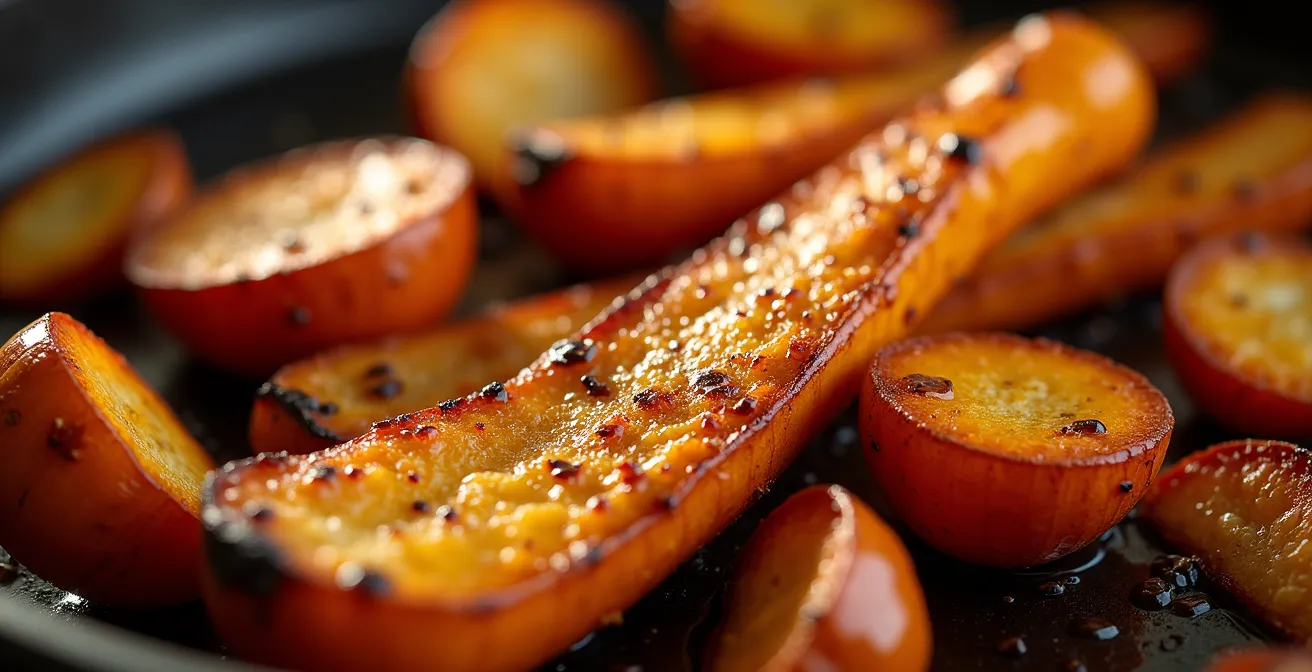
Forget everything you know about high-heat roasting. The secret to unlocking profound sweetness and depth in vegetables isn’t speed; it’s patience. By embracing low, gentle heat, you trigger specific chemical reactions that high temperatures bypass, transforming fibrous roots and bland florets into a form of vegetable confectionery with unparalleled flavor concentration.
For many, vegetables are a culinary obligation—a healthy but often boring component of a meal. Steamed until tender or boiled into submission, they rarely inspire excitement. The common solution, roasting, often defaults to a blast of high heat designed for speed, yielding vegetables that are cooked, yes, but whose potential remains untapped. This method merely heats the vegetable; it doesn’t truly transform it. You might get some browning on the edges, but the core flavor remains one-dimensional, a pale shadow of what it could be.
But what if the key wasn’t more heat, but less? What if the path to truly delicious vegetables—the kind that taste less like a chore and more like a treat—was a slower, more deliberate one? The art of slow-roasting is a counter-intuitive approach that focuses on thermal transformation over simple cooking. It’s about treating a humble carrot or parsnip with the patience of a pastry chef, using gentle, sustained heat to coax out its hidden sugars and develop a complex, caramelized flavor profile that high-heat methods can never achieve.
This guide will walk you through the science and technique of that transformation. We will explore why low temperatures create more sweetness, the ideal timing to achieve peak flavor, and the common pitfalls—like soggy results and the wrong choice of oil—that can sabotage your efforts. By the end, you will have the knowledge to turn the most basic root vegetables into something truly extraordinary.
Contents: The Path to Vegetable Candy
- Why Low and Slow Creates More Sweetness Than High Heat Roasting?
- 45 Minutes vs. 90 Minutes: When Do Carrots Reach Peak Flavor?
- The Crowded Pan Risk: Why Your Roasted Veggies Are Soggy?
- Olive Oil vs. Grapeseed: Which Oil withstands Long Roasting Times?
- How to Use Balsamic Glaze to Amplify Natural Sugars?
- Why Home Cooking Is the Ultimate Skill for Long-Term Health?
- Cooking with Whole Food Ingredients: 5 Rules for Maximum Flavor Retention
- Beyond the Recipe: Making Vegetable Roasting a Lifelong Skill
Why Low and Slow Creates More Sweetness Than High Heat Roasting?
The magic of slow-roasting lies in its ability to manipulate two key chemical processes: the Maillard reaction and caramelization. High-heat roasting (400°F/200°C and above) rushes these reactions, often burning the exterior before the interior has had a chance to develop. Slow roasting, typically between 300-350°F (150-175°C), provides the ideal environment for a deep, even, and complex flavor transformation. At these lower temperatures, moisture evaporates slowly and steadily from the vegetables, concentrating their natural sugars rather than just steaming them.
This patient heat is perfect for the Maillard reaction, the process responsible for the savory, “browned” flavors we love. This reaction, a dance between amino acids and reducing sugars, creates hundreds of new aromatic compounds. Crucially, research shows that the Maillard reaction proceeds rapidly from 140-165°C (280-330°F), the very heart of the slow-roasting temperature range. Instead of a quick, superficial browning, you get a profound, complex flavor development that permeates the entire vegetable.
As one professional chef’s analysis explains, this is how carrots can turn “candy-like” with a depth that surprises even the most skeptical eaters. The lower heat allows the vegetable’s own enzymes to break down complex carbohydrates into simpler sugars, providing more fuel for both the Maillard reaction and, eventually, true caramelization. The result isn’t just cooked; it’s a complete thermal transformation from a raw ingredient into a deeply flavorful confection.
45 Minutes vs. 90 Minutes: When Do Carrots Reach Peak Flavor?
Time is the second critical ingredient in slow-roasting, and more is almost always better. While a quick 45-minute roast at a higher temperature will cook a carrot, it won’t transform it. To achieve that coveted candy-like sweetness and meltingly tender texture, you need to give the vegetable time for its internal chemistry to work its magic. The journey from raw to sublime is a curve, not a straight line, with a distinct peak flavor that shorter cooking times miss entirely.
For most root vegetables like carrots, parsnips, and sweet potatoes, the sweet spot often begins around the 60-minute mark and can extend to 90 minutes or more, depending on the size of the pieces and the exact temperature. While some professional chefs recommend roasting vegetables for as little as 45-60 minutes at 325°F, extending that time allows for greater moisture evaporation and sugar concentration. At 45 minutes, a carrot is tender. At 90 minutes, its sugars have fully caramelized, its texture is velvety, and its flavor is profoundly deep and nutty.
This visual progression shows how the vegetable changes internally over time. The goal is to move beyond simply “cooked” to “deeply caramelized.”
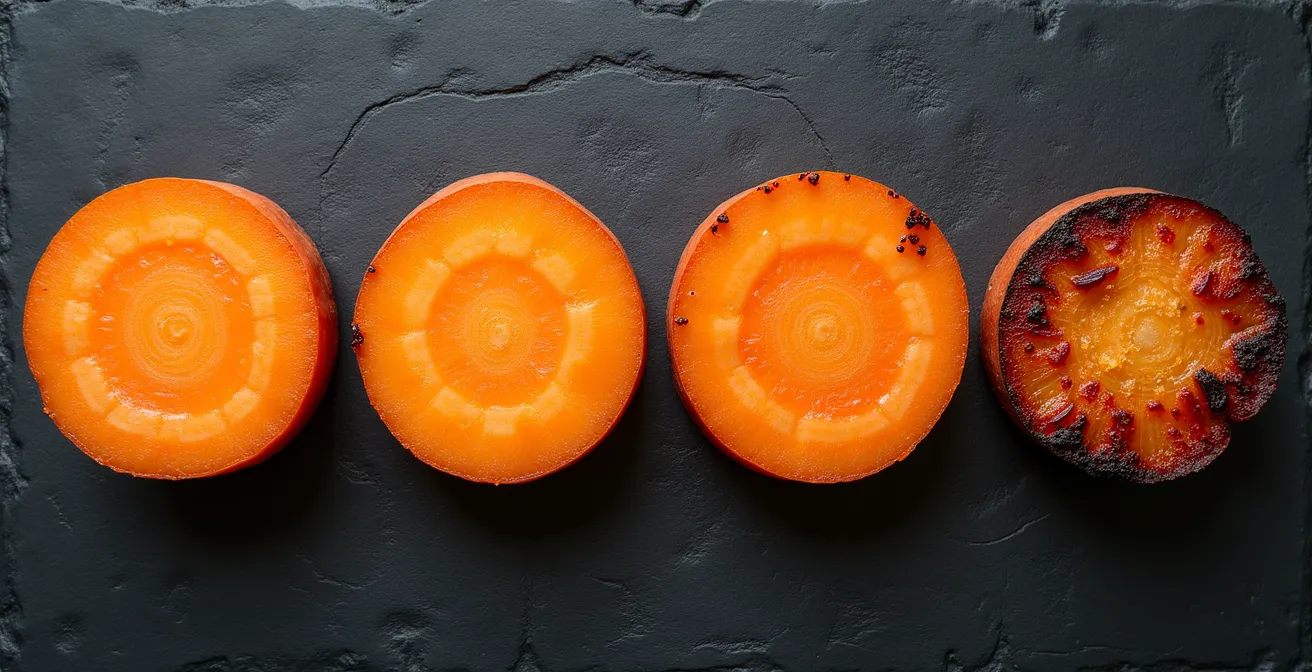
As you can see, the real transformation occurs in the later stages. The color deepens from pale orange to a rich, burnished amber, and the texture changes from firm to luxuriously soft. Don’t be afraid of the longer time; patience is what unlocks the vegetable’s ultimate potential. Your reward is a flavor and texture that a quick roast can never replicate.
The Crowded Pan Risk: Why Your Roasted Veggies Are Soggy?
You’ve set the perfect low temperature and committed to a long roasting time, but your vegetables still turn out limp and soggy. The most likely culprit is overcrowding the pan. This is perhaps the single most common mistake in vegetable roasting, and it fundamentally changes the cooking method from roasting to steaming. Roasting requires dry, circulating heat to crisp the exterior and concentrate flavors. When vegetables are packed too tightly on a baking sheet, they release moisture that gets trapped, creating a steamy, humid environment.
As food science experts confirm, crowded vegetables will steam in their own liquid instead of roasting in the oven’s dry heat. The result is a disappointing texture: soft, water-logged, and pale, with none of the delicious caramelized edges you were hoping for. To avoid this, always arrange your vegetables in a single, even layer with plenty of space between each piece. If you have a lot of vegetables, it’s far better to use two separate pans than to cram them all onto one.
The material of your pan also plays a significant role. Lighter, thinner pans can warp, and some materials conduct heat poorly, exacerbating the steaming issue. A heavy-gauge metal sheet pan is your most reliable tool for the job, as it conducts heat evenly and promotes browning.
This comparative analysis shows how different pan materials affect the final result. As the data from a recent comparative analysis of roasting techniques demonstrates, material choice is crucial.
| Pan Material | Heat Recovery | Result |
|---|---|---|
| Heavy-gauge aluminum | Quick recovery | Even browning |
| Glass/Ceramic | Poor conductors | Steam trapping, sogginess |
| Cast iron | Excellent retention | Superior caramelization |
For superior results, a heavy-duty aluminum sheet pan or a cast-iron skillet provides the best surface for achieving that perfect, deeply roasted flavor and texture. Giving your vegetables room to breathe is non-negotiable for success.
Olive Oil vs. Grapeseed: Which Oil withstands Long Roasting Times?
The choice of cooking oil is crucial in slow-roasting, but not for the reason most people think. A common myth suggests that extra virgin olive oil has a low smoke point, making it unsuitable for roasting. However, the smoke point is not the only, or even the most important, indicator of an oil’s stability under heat. For the low-and-slow method, what truly matters is an oil’s oxidative stability—its resistance to breaking down and creating harmful compounds over extended periods of gentle heat.
This is where fat composition becomes key. As extensive research into cooking oil stability shows, monounsaturated fats (like those in olive oil and avocado oil) and saturated fats are far more heat-stable than polyunsaturated fats (found in grapeseed, sunflower, and corn oils). Polyunsaturated fats are chemically fragile and can oxidize quickly, even at lower temperatures, which can produce off-flavors and unhealthy compounds during a long roast.
Contrary to the myth, extra virgin olive oil is an excellent choice. Its high concentration of stable monounsaturated fats and protective antioxidants makes it very resilient. In fact, recent stability studies demonstrate that extra virgin olive oil remains stable for over 24 hours at 110°C, well within our slow-roasting parameters. Therefore, a good quality olive oil not only adds flavor but is also a chemically sound choice for long cooking times. Grapeseed oil, despite its high smoke point, is less ideal due to its high polyunsaturated fat content.
How to Use Balsamic Glaze to Amplify Natural Sugars?
Once your vegetables have undergone their slow transformation, developing deep, concentrated flavors, you can introduce a final flourish to elevate them even further: a balsamic glaze. A glaze adds a layer of complexity, introducing acidity and a different kind of sweetness that complements the vegetables’ own caramelized sugars. However, timing is everything. Adding a sugary glaze too early in the roasting process is a recipe for disaster.
The sugars in balsamic glaze, honey, or maple syrup will burn at temperatures far lower than what it takes to fully cook a root vegetable. According to food chemistry research that indicates sugars begin to caramelize at 160°C (320°F), they can quickly go from caramelized to burnt and bitter if exposed to heat for too long. A 90-minute roast is far too long for these delicate sugars to survive intact.
The correct technique is to add the glaze only in the final 10-15 minutes of cooking. Roast the vegetables plain with just oil, salt, and pepper for the vast majority of the time (e.g., for the first 75-80 minutes of a 90-minute roast). Once they are tender and deeply caramelized, remove the pan from the oven, drizzle with the glaze, toss to coat, and return to the oven just long enough for the glaze to heat up, thicken, and cling to the vegetables without burning. This method ensures you get all the tangy-sweet benefits of the glaze without any acrid, burnt notes.
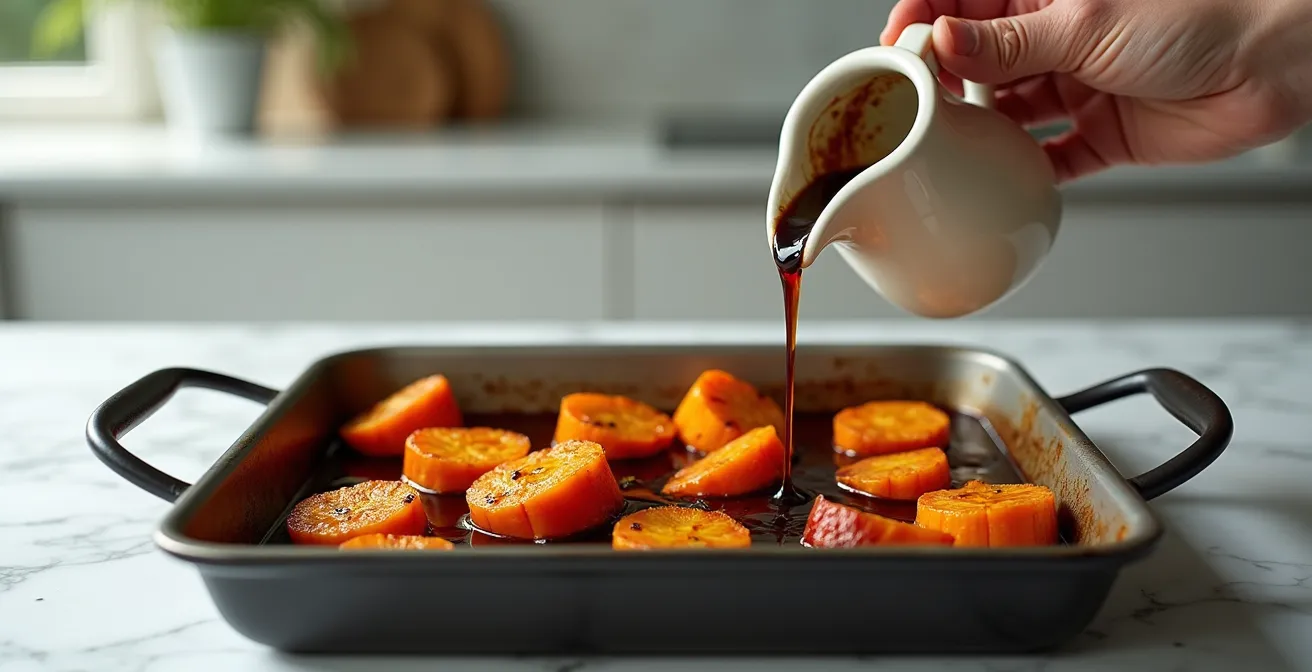
This final step should be done with care. Drizzle, don’t pour, to ensure a light, even coating. The goal is to accent the vegetables’ natural sweetness, not to overwhelm it in a sugary sauce.
Why Home Cooking Is the Ultimate Skill for Long-Term Health?
Mastering a technique like slow-roasting vegetables is more than just learning a new recipe; it’s acquiring a powerful skill that directly contributes to long-term health and well-being. When you cook at home, you have complete control over every ingredient—the amount of oil, salt, and sugar. This control is fundamental to building a healthy diet, but the real power lies in the ability to make healthy food taste genuinely delicious. This is where slow-roasting becomes a gateway skill.
By transforming vegetables into something deeply satisfying and crave-worthy, you naturally increase your desire to eat them. It reframes vegetables from a dietary “must” to a culinary “want.” This shift in perspective is critical for sustainable healthy eating. You’re no longer forcing yourself to eat bland broccoli; you’re looking forward to a tray of sweet, nutty, caramelized florets.
As health and food author Bruce Bradley notes, this technique is a game-changer for palatability:
Oven-roasting root veggies brings out their natural sweetness and makes them easier to digest. They’re a delicious way to not only increase your vegetable intake, but also to satisfy your sweet tooth!
– Bruce Bradley, Nature’s Candy: Roasted Vegetables
Case Study: Overcoming Picky Eating Through Roasting
The transformative power of slow-roasting is particularly effective in households with picky eaters. In one anecdotal study, parents reported a significant breakthrough after switching from steaming to roasting. Children who previously refused to eat vegetables like Brussels sprouts or carrots were willing to try—and enjoy—the roasted versions. The “candy-like” sweetness and less fibrous texture made the vegetables far more appealing, proving that flavor and preparation are often bigger barriers than the vegetable itself.
Ultimately, home cooking’s greatest health benefit is its ability to make the healthiest choices the most desirable ones. Slow-roasting is a cornerstone of that philosophy.
Cooking with Whole Food Ingredients: 5 Rules for Maximum Flavor Retention
The philosophy of slow-roasting is rooted in a deep respect for the ingredient. It’s about taking a simple, whole food—a carrot, a potato, a head of broccoli—and using technique not to mask it, but to reveal its most profound flavors. This approach requires you to step back and let the combination of patient heat and time do the work. It’s a minimalist philosophy that prioritizes flavor retention and enhancement over complex additions.
When you work with whole food ingredients, the goal is to do as little as necessary to achieve the most delicious result. This means resisting the urge to add a dozen different spices or heavy sauces from the start. A great slow-roast begins with just three things: the vegetable, a stable fat, and salt. Everything else is secondary. This “less is more” approach ensures that the flavor you’re tasting is the concentrated essence of the vegetable itself, not the seasoning you’ve added to it.
Adhering to this philosophy involves a few core principles that ensure you’re always working with the ingredient, not against it. These rules help you protect the integrity of the food and maximize its natural potential for flavor.
Your Action Plan: 5 Rules for Whole Food Flavor Retention
- Respect the Ingredient: Start with quality vegetables and see your role as an enhancer, not a cover-up artist. Let their natural sugars develop slowly and patiently.
- Use Minimal Additions: For the initial roast, rely on only high-quality oil and salt. These are tools for transformation, not just for flavor. Time is your most important ingredient.
- Choose Quality Oils: Opt for heat-stable, monounsaturated fats like olive oil. They protect the vegetable’s nutrients and contribute their own subtle, positive flavor notes without oxidizing over long cooking times.
- Control Temperature Precisely: Maintain a steady oven temperature in the optimal 300-350°F (150-175°C) range. This is the sweet spot for maximum flavor concentration without burning.
- Allow Adequate Time: Do not rush the process. Patience is what creates that signature candy-like sweetness and velvety texture. Plan for at least 60-90 minutes for most root vegetables.
By following these rules, you shift your mindset from simply “cooking vegetables” to orchestrating a thermal transformation that honors the whole food at its heart.
Key Takeaways
- True sweetness in vegetables is unlocked by low, slow heat (300-350°F), which promotes deep flavor development, not high-heat searing.
- Avoid soggy results by giving vegetables ample space on a heavy-gauge pan; overcrowding causes them to steam instead of roast.
- Choose heat-stable oils high in monounsaturated fats, like olive oil, for long roasting times, as they resist oxidation better than polyunsaturated oils.
Beyond the Recipe: Making Vegetable Roasting a Lifelong Skill
You now have the scientific principles and practical techniques to elevate your vegetable cooking from mundane to masterful. You understand the interplay of heat, time, space, and fat. You know why low-and-slow triumphs over high-and-fast for flavor, how to avoid the dreaded soggy pan, and when to add a final glaze for maximum impact. This knowledge moves you beyond simply following a recipe; it empowers you to think like a chef.
The true art of cooking lies in understanding these foundational techniques so deeply that they become second nature. The goal is not to memorize one recipe for roasted carrots, but to internalize the principles so you can apply them to any vegetable you bring into your kitchen—from parsnips and potatoes to Brussels sprouts and cauliflower. This is how a simple technique evolves into a lifelong culinary skill.
Embrace experimentation. Play with different cutting sizes, roasting times, and types of vegetables. Notice how a sweet potato transforms differently from a bell pepper. By making this technique your own, you equip yourself with the ability to consistently create healthy, deeply satisfying food that you and your family will genuinely crave. This is the ultimate return on your investment of time and patience.
Start today by choosing one humble vegetable from your kitchen. Give it the gift of patient heat and time, and witness its transformation. This simple act is the first step toward a more delicious and healthier way of eating.