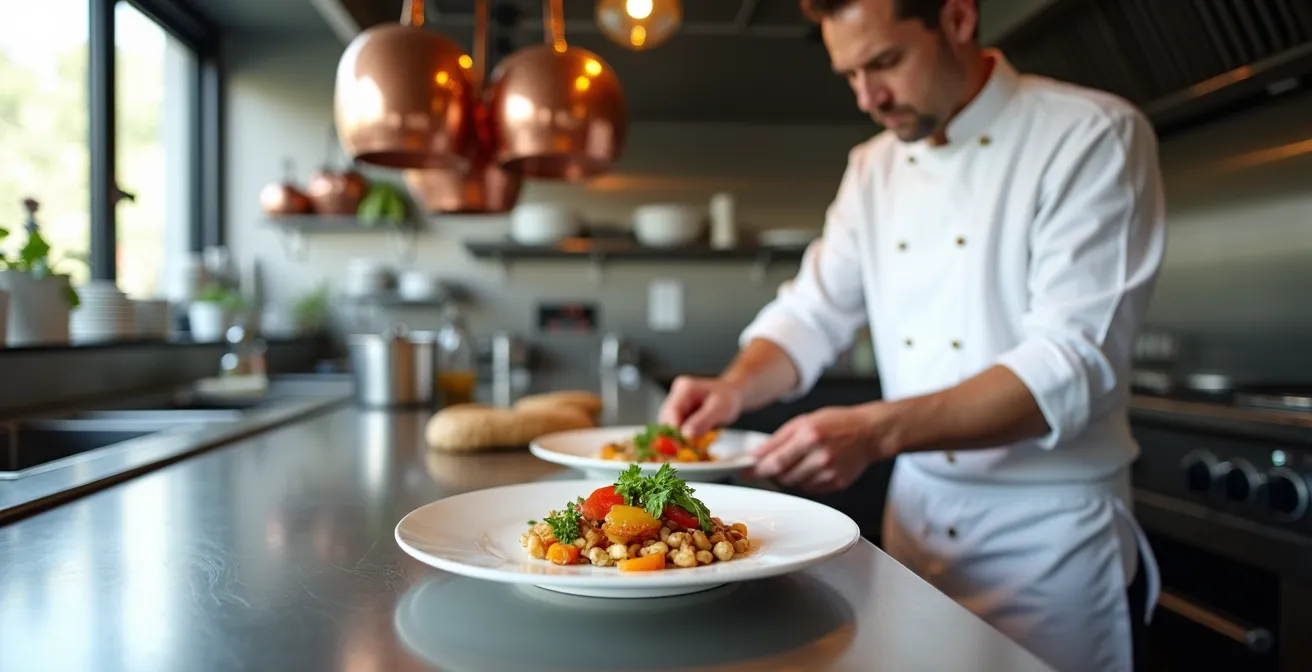
The biggest trend in professional kitchens isn’t a new ingredient; it’s a new mindset where chefs operate as meticulous systems thinkers, not just creators of luxury.
- Ethical considerations are now actively dismantling classic dishes like foie gras in favor of innovative, cruelty-free alternatives.
- Kitchens are run with scientific precision, from the “mise en place” that organizes every ingredient to molecular techniques that deconstruct and rebuild flavors.
- This new philosophy extends beyond the kitchen, transforming supply chains into agile, data-driven operations.
Recommendation: To truly understand modern cuisine, look past the final dish and recognize the underlying systems of ethics, science, and flavor architecture at play.
The conversation around culinary trends often fixates on the surface: the rise of a particular superfood, the rediscovery of an ancient grain, or the photogenic appeal of a new plating style. We celebrate plant-based menus and farm-to-table sourcing as novelties. But these are merely symptoms of a much deeper, more significant paradigm shift. The most profound transformation in gastronomy today isn’t happening on the plate, but in the mind of the chef.
The contemporary chef is evolving from a purveyor of decadent pleasures into a complex systems thinker. They are becoming architects of experience, orchestrating a meticulous process that balances ethics, scientific precision, and logistical mastery. This isn’t just about cooking anymore; it’s about building a cohesive, intentional, and responsible culinary universe from the ground up. The old ideas of simply creating delicious food are being challenged by a more holistic approach that questions the very origin and impact of every ingredient.
This article moves beyond the superficial to explore the operational and philosophical pillars shaping the modern menu. We will dissect how ethical choices are creating new icons of haute cuisine, how methodical organization forms the backbone of creativity, and how a scientific understanding of flavor is unlocking unprecedented taste experiences, particularly from plants. We will reveal how chefs build their “flavor bombs,” master the art of visual storytelling on the plate, and manage the complex logistics of a truly seasonal menu. It’s time to look at what professional chefs are *really* doing.
In this analysis, we’ll journey through the key transformations redefining the professional kitchen. From ethical choices to advanced techniques, you’ll gain an insider’s view of the systems and philosophies driving the future of food.
Summary: The New Rules of Modern Gastronomy
- Why Michelin-Starred Chefs Are Removing Foie Gras from Their Menus?
- How to Organize Your Home Kitchen Like a Professional Chef’s Station?
- Sous-Vide vs. Slow Roasting: Which Technique Extracts More Flavor from Roots?
- The Plating Mistake That Makes Gourmet Dishes Look Messy at Home
- How Chefs Build “Flavor Bombs” Without Using Animal Fats?
- Haute Plant-Based Innovation: Molecular Techniques for Vegetables
- The Logistics of Farm-to-Table Menus: What Does It Really Take?
- Is Vegan Fine Dining Worth the Price Tag for Non-Vegans?
Why Michelin-Starred Chefs Are Removing Foie Gras from Their Menus?
For decades, foie gras was the undisputed symbol of haute cuisine—a silken, decadent indulgence central to the canon of French gastronomy. Its removal from the menus of pioneering, Michelin-starred establishments is not a fleeting trend; it’s a profound statement about the rise of ethical gastronomy. This shift is driven by a new generation of chefs who see their role as extending beyond flavor to encompass moral responsibility for their ingredients’ origins. The public and industry backlash against the controversial practice of gavage (force-feeding) has reached a critical mass, making its inclusion a liability for a forward-thinking brand.
The move is also a creative catalyst. Instead of a loss, these chefs view it as an opportunity for innovation, challenging themselves to replicate the rich, umami-laden experience of foie gras using entirely plant-based ingredients. Michelin-starred French chef Alexis Gauthier, who famously removed the ingredient from his London restaurant, describes the motivation behind this culinary pivot:
So for months I experimented until I perfected my pièce de résistance: Faux Foie Gras… a delicious blend of ingredients like lentils, mushrooms, walnuts and Cognac; but, most importantly, no cramped cages and no force-feeding.
– Alexis Gauthier, Michelin-starred French chef
This trend is underpinned by significant market shifts. As evidence of changing priorities, a CNN report reveals that France faced a nearly 50% drop in foie gras production in 2022 due to avian flu outbreaks, which only accelerated the search for stable, ethical alternatives. By replacing this controversial classic, chefs are not just cleaning up their menus; they are redefining luxury as something that is not only delicious but also conscientious.
How to Organize Your Home Kitchen Like a Professional Chef’s Station?
The secret to a chef’s fluid efficiency in a chaotic service is not speed, but system. This system is called mise en place, a French term meaning “everything in its place.” It’s a philosophy of meticulous preparation and organization that turns a kitchen from a simple cooking space into a high-performance station. For the home cook, adopting this principle of culinary precision is the single most transformative step toward achieving professional-level results. It eliminates stress, reduces errors, and allows you to focus on the art of cooking rather than frantically searching for ingredients.
Organizing your kitchen like a professional station begins with a mental shift: see your counter not as one large surface, but as a series of dedicated zones for specific tasks—chopping, mixing, holding, and plating. This compartmentalization minimizes movement and prevents cross-contamination. Before the heat is even turned on, every ingredient for a dish is prepped: vegetables are chopped, spices are measured, and liquids are portioned into small bowls. This upfront investment of time pays dividends during the actual cooking process, creating a calm, seamless workflow.
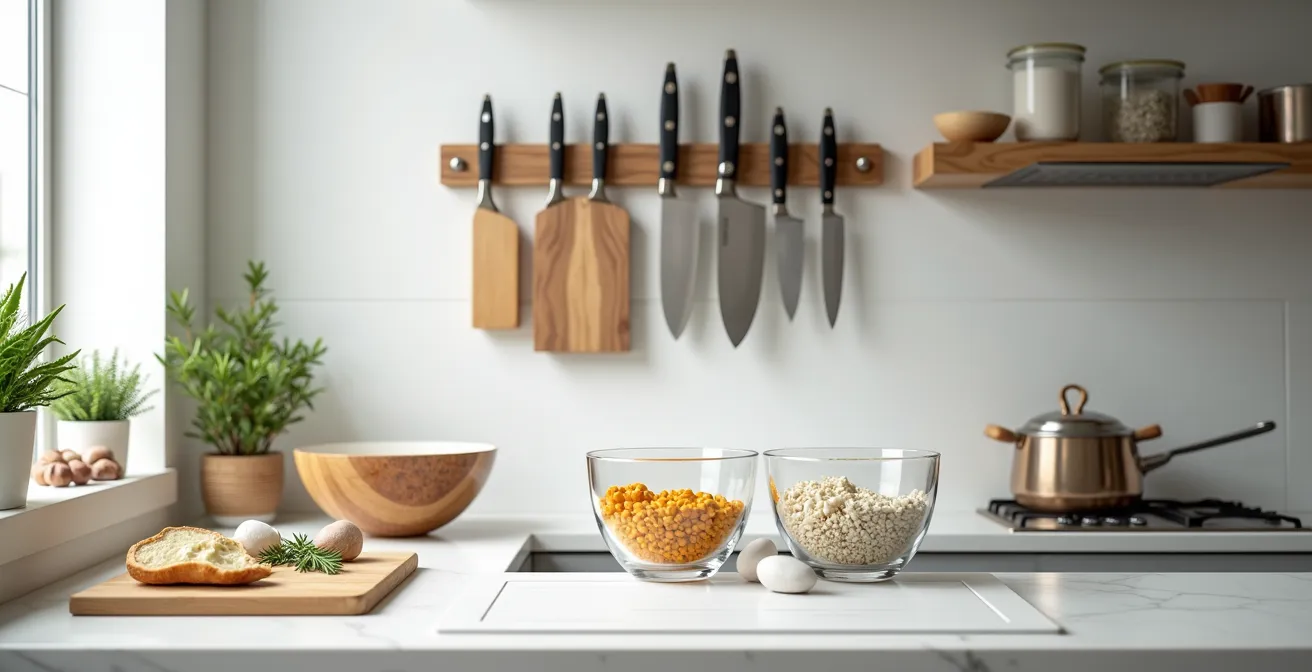
As the image above illustrates, a well-organized station is a model of clarity. Tools are strategically placed for easy access, with frequently used items like knives and spatulas within arm’s reach, while others are stored away. Containers are labeled, and a “clean as you go” mentality ensures the workspace remains uncluttered. This isn’t just about tidiness; it’s about creating an environment where a chef—or a home cook—can execute complex tasks with focus and grace.
Action Plan: Create a Professional Kitchen Station
- Establish designated zones: Create separate areas for prep, cooking, plating, and cleaning to minimize cross-contamination and movement.
- Implement mise en place system: Pre-measure and organize all ingredients in small containers before starting to cook.
- Position tools strategically: Keep frequently used items within arm’s reach and store knives on magnetic strips for safety and accessibility.
- Label everything with dates: Use masking tape and markers to track the freshness of prepped ingredients and reduce food waste.
- Clean as you go: Maintain a clean workspace by constantly wiping down surfaces and keeping a designated bowl for scraps.
Sous-Vide vs. Slow Roasting: Which Technique Extracts More Flavor from Roots?
The debate over cooking techniques often frames them as a competition, but for a modern chef, it’s about selection. The choice between sous-vide and slow roasting for root vegetables isn’t about which one extracts “more” flavor, but which one creates the *right* flavor profile for the dish. This is a core tenet of the chef as a systems thinker: understanding tools not as good or bad, but as instruments for achieving a specific, predetermined outcome. Each method manipulates heat and moisture differently to build a unique flavor architecture.
Slow roasting uses dry, high heat to trigger the Maillard reaction and caramelization, creating complex, nutty, and deeply browned flavors. The exterior becomes crispy and concentrated while the interior softens. Sous-vide, conversely, uses a precisely controlled low-temperature water bath. This gentle, anaerobic environment prevents the Maillard reaction but excels at preserving the vegetable’s delicate, intrinsic flavors and volatile aromatic compounds. It also breaks down cell walls uniformly, resulting in an exceptionally tender and consistent texture without moisture loss.
As this comparative analysis from culinary experts shows, the techniques serve entirely different purposes.
| Aspect | Sous-Vide | Slow Roasting |
|---|---|---|
| Temperature Range | 140-185°F (60-85°C) | 275-325°F (135-160°C) |
| Texture Result | Uniformly tender throughout | Crispy exterior, soft interior |
| Flavor Development | Preserves delicate, volatile compounds | Creates new flavors via Maillard reaction |
| Nutrient Retention | High vitamin retention | Lower vitamin retention |
| Best For | Supporting elements, pure flavors | Star components, complex flavors |
Case Study: J. Kenji López-Alt’s Carrot Experiment
In his widely followed experiments, Chef J. Kenji López-Alt demonstrates this principle perfectly. He shows how sous-vide carrots cooked at 183°F retain their vibrant color and pure, sweet carrot essence, ideal for a bright purée or a delicate side. In contrast, slow-roasted carrots develop caramelized edges and deeper, earthier notes, making them a robust standalone component. The conclusion is clear: neither technique is superior; they are simply different tools for different jobs.
The Plating Mistake That Makes Gourmet Dishes Look Messy at Home
You’ve sourced quality ingredients and executed the cooking techniques perfectly, yet the final dish on the plate looks amateurish and chaotic. The most common pitfall for home cooks isn’t a lack of artistic flair, but a misunderstanding of a fundamental design principle: the focal point. Professional chefs practice intentional plating, where every element is placed with purpose to guide the diner’s eye. The biggest mistake is not messiness, but visual noise.
This concept is articulated perfectly by professional chef and instructor Brian Lagerstrom, who notes a key difference between amateur and professional plating:
The most common mistake isn’t messiness, but visual confusion. Home cooks often fail to create a clear focal point on the plate, which should guide the eye toward the main element.
– Chef Brian Lagerstrom, Professional chef and YouTube cooking instructor
A successful plate tells a story. It has a hero (the main protein or vegetable), supporting characters (sauces, purées, garnishes), and a stage (the plate itself). The hero should be the clear star. Amateurs often make the mistake of giving every element equal visual weight, resulting in a composition where the eye doesn’t know where to land first. Professionals achieve clarity by using techniques like height, color contrast, and, most importantly, negative space—the empty areas on the plate that give the food room to breathe and stand out.
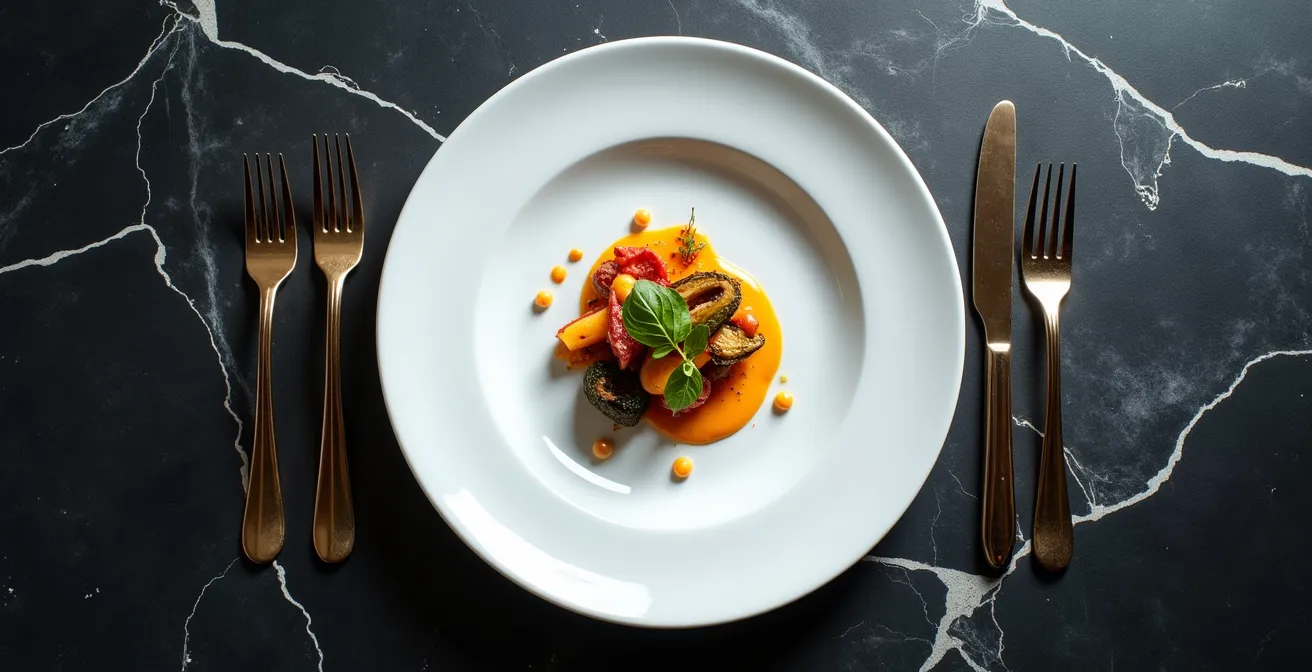
As seen in fine dining, using negative space is not about serving smaller portions; it’s a deliberate compositional choice. By grouping elements tightly in one area of the plate, a chef creates a dynamic tension that makes the food look more elegant and important. To fix messy plating at home, start by identifying the main element and make it the focal point. Arrange other components to support it, not compete with it, and always embrace the power of the empty space.
How Chefs Build “Flavor Bombs” Without Using Animal Fats?
One of the greatest challenges and triumphs of modern, plant-forward cuisine is the creation of deep, satisfying flavor without relying on traditional animal fats like butter, cream, or lard. Chefs are engineering plant-based “flavor bombs” by mastering the art of layering and concentration. This isn’t about simply substituting ingredients; it’s a complete reconstruction of flavor architecture using umami-rich, fermented, and reduced plant sources. This trend is a direct response to a booming market, with culinary industry analysis showing the global plant-based food market expanding significantly in recent years.
The secret lies in building flavor in stages, creating a complex foundation that hits every part of the palate. Instead of the singular richness of butter, chefs layer multiple sources of umami—the fifth taste associated with savoriness. A dish might start with a base of deeply browned mushrooms and onions, get a jolt of savory depth from miso paste or soy sauce, and be brightened with the acidity of fermented pickles or a sharp vinaigrette. It’s a symphony of tastes, not a solo performance.
This methodical approach requires a deep understanding of how different ingredients contribute to the overall flavor profile. Professional chefs employ a range of techniques to achieve this depth:
- Layering Fermented Ingredients: Using miso, soy sauce, tamari, and fermented black beans provides a powerful umami foundation that mimics the savoriness of meat.
- Creating Vegetable Reductions: Simmering vegetable stocks, especially those made from mushrooms or root vegetables, for hours concentrates their flavors into a syrupy, glaze-like consistency.
- Toasting Spices and Nuts: Toasting spices, nuts, and seeds before use awakens their essential oils, adding layers of aromatic complexity and textural richness.
- Balancing with Acidity: Incorporating different types of acid—such as citrus zest for brightness, vinegar for sharpness, and fermented foods for a funky tang—cuts through richness and balances the dish.
- Finishing with Aromatic Oils: A final drizzle of a high-quality, cold-pressed nut oil or a house-infused herb oil adds a burst of aroma and a luxurious finish right before serving.
By using these techniques, chefs can create dishes that are not just “good for vegan,” but are intensely flavorful and satisfying in their own right, proving that fat is just one of many tools in the flavor-building arsenal.
Haute Plant-Based Innovation: Molecular Techniques for Vegetables
While plant-based cooking becomes mainstream, the cutting edge of haute cuisine is pushing vegetables into a new realm with molecular gastronomy. Here, chefs act as scientists, using advanced techniques and specialized ingredients to deconstruct and reconstruct vegetables, unlocking textures and flavors that are impossible to achieve through traditional methods. This isn’t about making food look futuristic for the sake of it; it’s a deep exploration of a vegetable’s full potential. The goal is to intensify its natural essence or transform it into something entirely new, creating a truly novel sensory experience.
Techniques like spherification (turning liquids into gel-like spheres), gelification (creating stable gels from juices), and the use of foams and airs are applied to vegetable purées and infusions. Imagine a “pea caviar” that bursts in your mouth with the flavor of fresh spring peas, or a beet foam that delivers the vegetable’s earthy sweetness in a weightless cloud. This approach requires extreme culinary precision and a laboratory-like understanding of chemistry and physics.
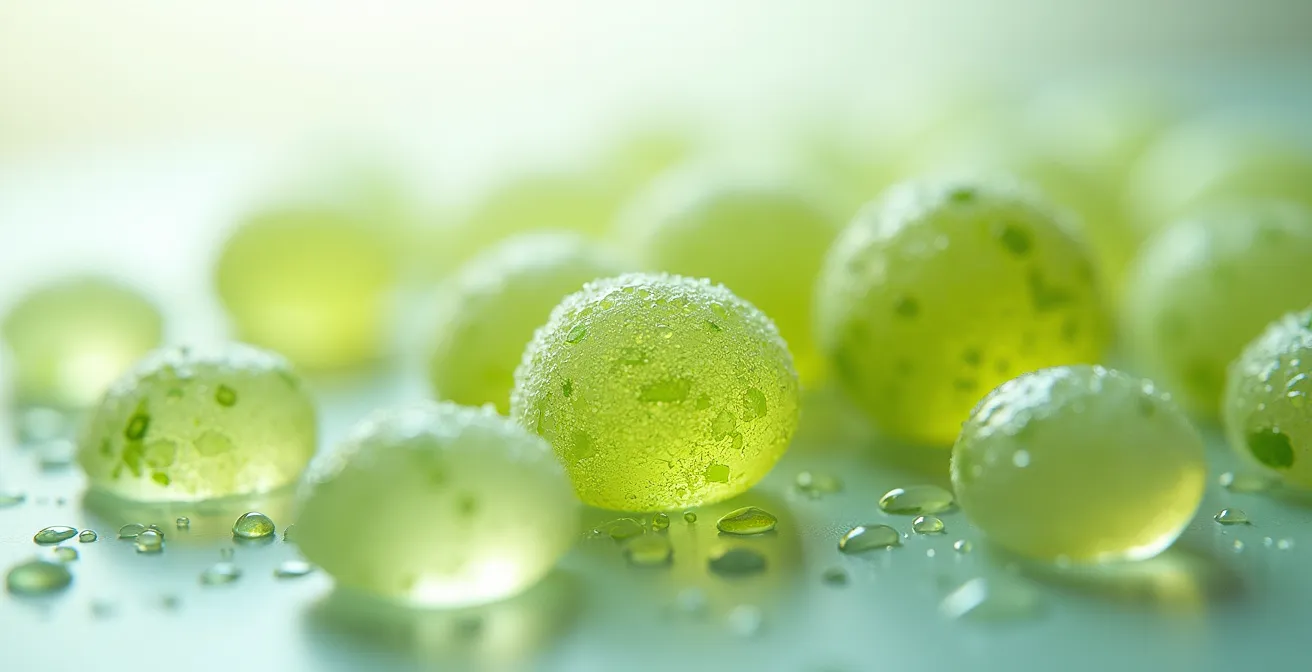
Beyond these textural transformations, chefs are using enzymes to fundamentally alter the composition of vegetables at a cellular level, a practice that blurs the line between cooking and biochemistry.
Case Study: Enzymatic Flavor Intensification
The Culinary Institute of Barcelona reports on a pioneering application where chefs use specific enzymes like pectinase and amylase to break down the cell walls of vegetables. This controlled process releases trapped aromatic compounds and natural sugars. For instance, this technique can be used to intensify a carrot’s inherent sweetness by up to 40% or convert a potato’s starches into simple sugars, completely changing its flavor profile without adding any external sweeteners. It is the ultimate expression of extracting the hidden potential within an ingredient.
This scientific frontier is what allows plant-based fine dining to command high prices and generate excitement. It represents a massive investment in research, equipment, and skill, turning a humble vegetable into the star of a complex, thought-provoking dish.
The Logistics of Farm-to-Table Menus: What Does It Really Take?
The term “farm-to-table” has become so ubiquitous that it’s often dismissed as a marketing buzzword. However, for chefs who genuinely practice it, it represents a monumental logistical challenge that requires a complete rethinking of how a restaurant operates. True farm-to-table is not about occasionally buying from a local farmer; it’s an all-encompassing philosophy that makes the chef a master of supply chain management, weather forecasting, and agile operations. This is where the chef as a systems thinker is most evident.
Unlike a traditional restaurant that orders standardized products from a large distributor, a true farm-to-table kitchen works with the volatile and unpredictable nature of small-scale agriculture. A sudden frost can wipe out an entire crop of tomatoes, and a rainy week can mean a shortage of delicate greens. This forces the chef to abandon the concept of a static, printed menu. Instead, the menu becomes a living document that can change daily, or even between lunch and dinner service, based entirely on what is available and at its peak freshness.
This operational model is less like a traditional kitchen and more like a tech startup, a sentiment captured in a recent culinary report:
Farm-to-table chefs operate like tech startups using agile methodology. The menu is not a fixed document but a living system that changes daily based on what’s available.
– Chef Training Institute Report, Culinary Trends Analysis 2024
This “agile” approach requires constant communication with farmers, a highly creative and adaptable kitchen team, and a front-of-house staff trained to explain menu changes to diners. It also embraces “full-plant” utilization to minimize waste, using carrot tops for pesto or pickling watermelon rinds. While the adoption of plant-based options is widespread— data from the Pacific Institute of Culinary Arts shows 48% of North American restaurants now offer them—the logistical commitment of a true farm-to-table system remains a much rarer and more difficult endeavor.
Key Takeaways
- The modern chef’s role has expanded from cook to “systems thinker,” managing ethics, science, and logistics.
- True innovation lies in the methodology and philosophy behind the menu, not just the ingredients themselves.
- Plant-based cuisine has become a hotbed for advanced culinary techniques, from flavor layering to molecular gastronomy.
Is Vegan Fine Dining Worth the Price Tag for Non-Vegans?
For a non-vegan diner, the prospect of paying a premium for a multi-course meal without any meat, fish, or dairy can be perplexing. The question “is it worth it?” often stems from a traditional valuation of food, where price is tied to the perceived luxury of the central protein. However, vegan fine dining asks us to adopt a new value system, one that aligns perfectly with the modern chef’s role as a systems thinker. The price tag is not for what’s *missing* from the plate, but for the immense expertise, innovation, and labor that is *added*.
A vegan fine dining experience is the culmination of all the trends we’ve discussed. It relies on ethical gastronomy, often eschewing all animal products. It demands extreme culinary precision and deep knowledge of flavor architecture to create satisfying dishes from plants. It frequently involves the high R&D costs of molecular techniques and relies on the complex, “agile” logistics of farm-to-table sourcing. The cost reflects the hours of labor spent on a single component, like a vegetable reduction that simmers for a day or a faux gras that takes months to perfect.
The growing commercial interest in this sector validates its appeal. For example, market research by FACT.MR indicates the vegan foie gras market alone is projected to see steady growth, signaling consumer willingness to pay for high-quality, ethical alternatives. So, for the non-vegan, the value proposition is not about replacing a steak. It’s about paying for an entirely different kind of experience: a masterclass in creativity, a demonstration of scientific artistry, and a taste of the future of food. It’s an opportunity to see just how much flavor and complexity can be drawn from the plant kingdom when placed in the hands of a true culinary artist and systems thinker.
The next time you explore a fine dining menu or step into your own kitchen, look for these systems at play. Understanding the ‘why’ behind the dish is the first step to truly appreciating the art and science of modern cuisine and making more intentional choices as a diner and cook.