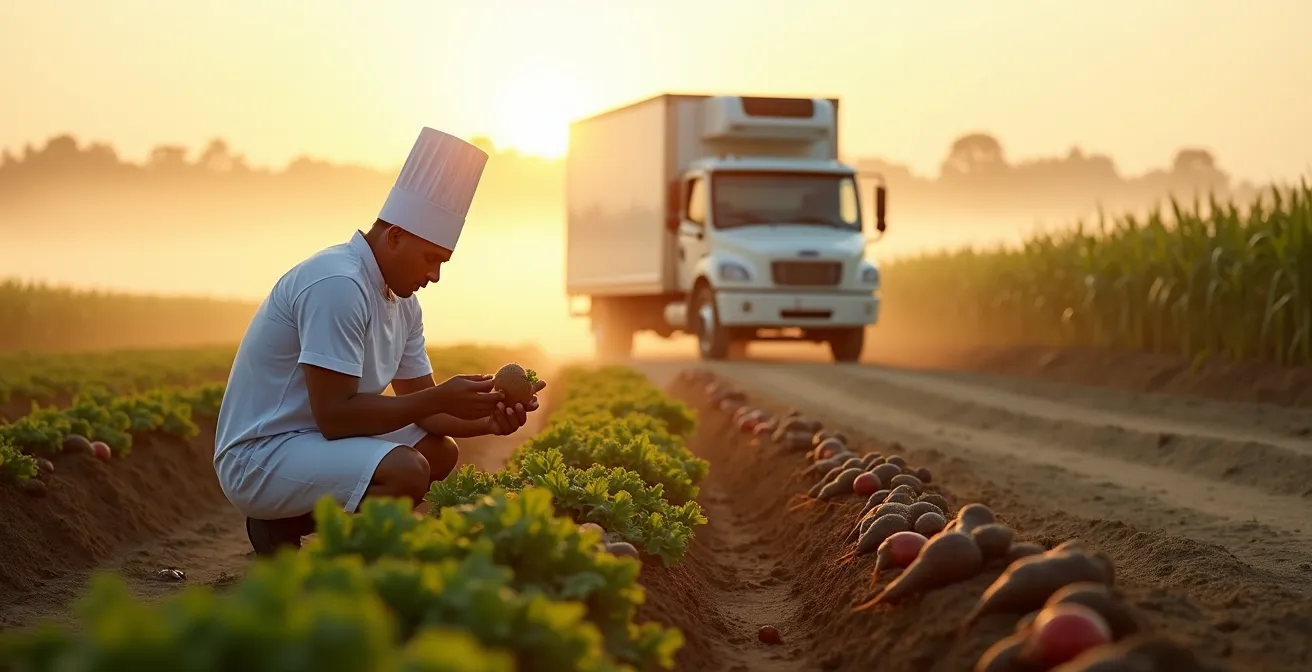
True farm-to-table isn’t a marketing slogan; it’s a high-stakes logistical operation where authenticity is proven by navigating supply chain friction, not just by proximity.
- The term “local” is unregulated, and a lack of organic certification often points to economic barriers for small farms, not poor practices.
- Genuine farm-to-table menus survive off-seasons through expert preservation and menu flexibility, not by sourcing from conventional suppliers.
Recommendation: Evaluate a restaurant’s farm-to-table claims not by the story on the menu, but by questioning its logistical resilience—how it handles seasonality, defines its sourcing radius, and justifies its pricing through transparent operational costs.
You see the words “farm-to-table” on a menu in the dead of winter and your skepticism flares up. Rightfully so. In a world where “local” and “fresh” have become marketing buzzwords, the journey from a farm to your plate is rarely a simple, romantic pasture-to-platter story. Most discussions praise the concept for its freshness or its support of local economies, but they gloss over the brutal realities of the supply chain. They don’t tell you about the “hungry gap,” the logistical nightmare of small-batch deliveries, or the economic pressures that can lead to outright fraud.
As someone who manages these supply chains, I can tell you that authenticity isn’t measured in miles alone. It’s measured in solved problems. The true farm-to-table restaurant isn’t just buying from a nearby farm; it’s a finely tuned operation built on personal relationships, aggressive seasonal planning, and a mastery of preservation techniques. The real story isn’t about a chef picking carrots from a garden; it’s about a complex system of risk management and logistical creativity.
This article moves beyond the marketing veneer. We will dissect the operational challenges that separate the genuine farm-to-table pioneers from the pretenders. We will explore the logistical definitions of “local,” understand the hidden costs that dictate menu prices, and reveal the strategies chefs use to deliver on their promise year-round. This is a behind-the-scenes look at the engine that runs authentic local dining, designed to arm you, the discerning diner, with the knowledge to spot the real deal.
This guide breaks down the core logistical pillars of an authentic farm-to-table operation. By understanding these behind-the-scenes challenges, you can better evaluate the promises made on any menu.
Summary: Decoding the True Farm-to-Table Supply Chain
- The Menu Risk: Why “Local” Doesn’t Always Mean “Organic” or “Safe”?
- What Is the Maximum Distance for a Restaurant to Claim “Local”?
- Why Chefs Must Visit Farms Personally to Guarantee Quality?
- How Do Farm-to-Table Restaurants Survive the “Hungry Gap” in Spring?
- Why You Pay 30% More for a True Farm-to-Table Salad?
- What Professional Chefs Are Cooking Now: 5 Trends Shaping Modern Menus
- How Your Local Grocery Choices Impact Sustainable Food Systems and Carbon Footprint?
- Is Vegan Fine Dining Worth the Price Tag for Non-Vegans?
The Menu Risk: Why “Local” Doesn’t Always Mean “Organic” or “Safe”?
The first point of friction in the farm-to-table promise is the gap between perception and reality. Diners often equate “local” with “organic” and “inherently safe,” but these are not interchangeable terms. From a logistical standpoint, the coveted USDA Organic seal is often a barrier for the very small-scale producers that true farm-to-table restaurants partner with. The process is both costly and time-consuming; organic certification can cost small farms anywhere from $500 to $10,000 annually. Many small farms follow organic or regenerative practices without pursuing the official, and expensive, certification. A chef’s personal vetting of a farm’s practices becomes more critical than a label.
Furthermore, the lack of a legal definition for “farm-to-table” creates an environment ripe for deception. This isn’t just speculation; it’s a documented problem. The allure of charging a premium for “local” food without investing in the difficult logistics has led to widespread fraud. An investigative series by the Tampa Bay Times uncovered a troubling pattern of restaurants making false claims. They exposed operations that listed farms as suppliers who had never sold to them, advertised out-of-season produce as “fresh from the field,” and even cited farms that had been out of business for years. In these cases, the food being served was often cheap, commodity-grade produce sourced from conventional, large-scale distributors.
Case Study: The Farm-to-Table Fraud Investigations
Journalist investigations at the Tampa Bay Times and San Diego Magazine found widespread fraud in the claims made by area farm-to-table restaurants. Cases included restaurants claiming to buy from farmers who deny ever having sold to them, serving food the cited farmer has never grown or which is out of season, and claiming to serve food from providers which have gone out of business years ago. In such cases the food actually served is usually non-local or even “commodity” food which is cheaper and more available out-of-season.
This highlights the central risk for the diner: you are placing your trust in the restaurant’s integrity. An authentic establishment invests time and resources into building and verifying its supply chain, while a fraudulent one simply co-opts the language. The difference lies entirely in the logistical and ethical commitment of the chef and owner, making personal verification and transparency paramount.
What Is the Maximum Distance for a Restaurant to Claim “Local”?
The word “local” is perhaps the most ambiguous term in the culinary world. Without a federally regulated definition, its meaning can stretch to fit a restaurant’s marketing needs. To put this in perspective, conventional produce often travels immense distances before reaching a distributor; on a national level, food travels an average of 1,500 miles. In this context, anything less can seem “local.” However, for a true farm-to-table ethos, the definition is a logistical decision balancing freshness, ingredient diversity, and transportation efficiency.
The most committed operations often work within a 100-mile radius, a standard that provides a good mix of potential farm partners without incurring excessive transport costs. This allows for direct relationships and relatively fresh delivery. However, this model can be restrictive, especially in regions with limited agricultural diversity or harsh climates. This logistical constraint has led to the adoption of more flexible sourcing models.
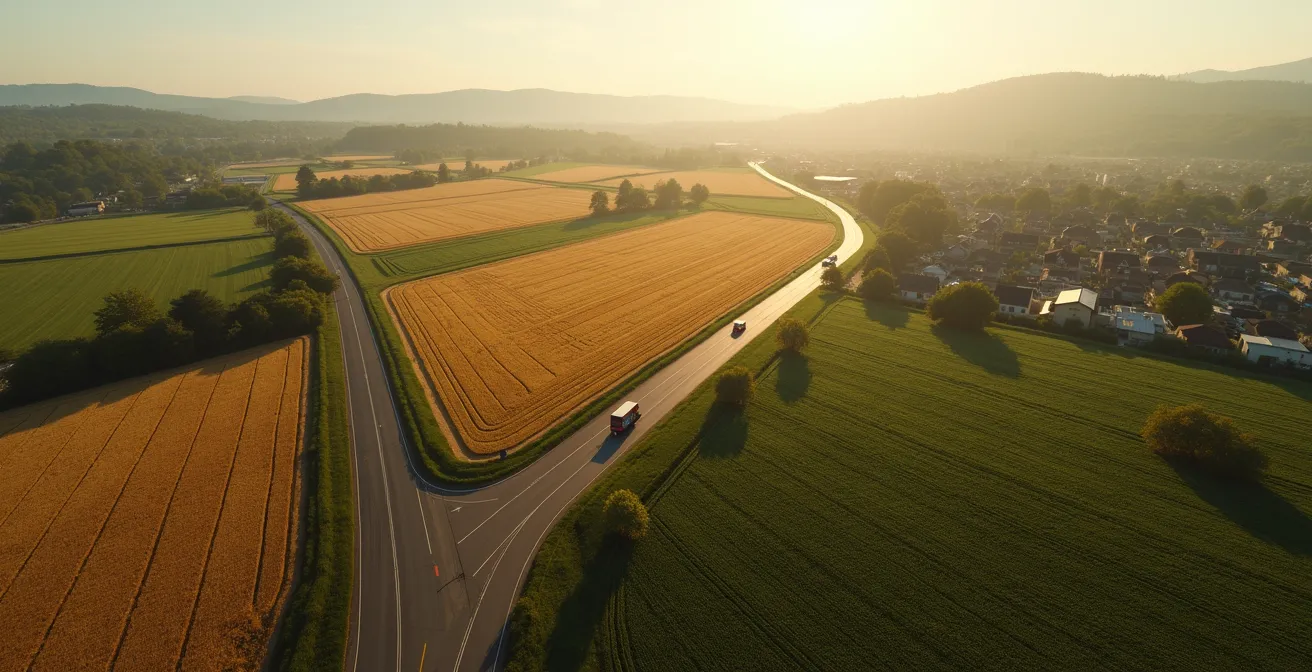
To navigate these complexities, chefs and supply chain managers think in terms of sourcing tiers rather than a single radius. A restaurant might be “hyperlocal” for its herbs and delicate greens (grown in an on-site or urban garden) while adopting a “regional” approach for staples, accessing a wider variety of ingredients from a multi-state cooperative. This pragmatic approach is about creating a resilient and diverse menu, not adhering to a dogmatic definition of distance.
The following table breaks down these logistical models, showing how different sourcing strategies serve different operational goals. This is the framework that truly defines a restaurant’s commitment to “local.”
| Approach | Geographic Range | Examples | Benefits |
|---|---|---|---|
| Hyperlocal | Within city limits | On-site gardens, urban farms | Maximum freshness, minimal transport |
| Regional Cooperative | Multi-state area | Singapore (Southeast Asia), Berlin (Poland/Netherlands) | Diverse ingredients, manageable logistics |
| Traditional Local | 100-mile radius | Direct farm partnerships | Balance of variety and freshness |
Why Chefs Must Visit Farms Personally to Guarantee Quality?
In a conventional food system, quality control is a standardized, impersonal process. Produce is graded by size, shape, and lack of blemishes. In the farm-to-table world, quality is a far more nuanced and personal affair. It’s about terroir, ripeness, and flavor—qualities that cannot be assessed from a spec sheet or a distributor’s catalog. This is why personal farm visits are not a romantic notion; they are a critical logistical necessity for any chef serious about quality.
These visits serve multiple purposes. First, they are the ultimate form of verification. By walking the fields, a chef can see the growing practices firsthand, confirming whether they align with the restaurant’s ethos, regardless of official certifications. It’s a due diligence step that protects the restaurant from the kind of fraud mentioned earlier. As Jorrie Bruffett, a VP at Pret A Manger, noted about their own sourcing efforts, direct engagement is non-negotiable: “We visit all our farms ourselves, but they have a long way to go here.” This statement, highlighted in a discussion on food journey tracking by Cornell, underscores the universal importance of this hands-on approach.
Second, these visits build a collaborative relationship that transcends a simple transaction. When a chef understands a farm’s capabilities and challenges, they can co-create menus. The farmer can suggest unique or heirloom varietals, and the chef can provide feedback on flavor profiles and desired ripeness. This partnership model allows for true culinary innovation, moving beyond just purchasing ingredients to actively shaping what is grown.
The Foundational Partnership: Charlie Trotter and The Chef’s Garden
Legendary chef Charlie Trotter was a pioneer in this collaborative approach. He was one of the first chefs in the U.S. to offer a dedicated vegetable tasting menu, a feat made possible through his deep partnership with The Chef’s Garden farm. Trotter worked hand-in-hand with the farm, not just to buy what they grew, but to influence what they planted and how they harvested. This established a model for chef-farmer collaboration that went beyond simple purchasing to become a true partnership in menu development and culinary innovation.
This direct relationship is the backbone of an authentic farm-to-table supply chain. It replaces the anonymous efficiency of the broadline distributor with a system built on trust, communication, and shared goals. It’s a significant investment of a chef’s most valuable resource—time—but it’s an investment that pays dividends in unparalleled quality and a truly unique menu.
How Do Farm-to-Table Restaurants Survive the “Hungry Gap” in Spring?
The most significant logistical challenge for any true farm-to-table restaurant is seasonality. Specifically, the period in late winter and early spring known as the “hungry gap” is the ultimate test of a chef’s commitment. This is the time when winter storage crops like potatoes and onions are running low, but the first spring crops like asparagus and peas have yet to arrive. For a restaurant reliant on local sourcing, this gap can mean an empty walk-in cooler. A restaurant that offers “fresh local” tomatoes in March is a major red flag, indicating they are almost certainly sourcing from conventional, long-distance suppliers.
Surviving this period requires moving beyond a simple “fresh is best” mentality and embracing a much older culinary tradition: preservation. A truly seasonal kitchen is also a year-round preservation workshop. The abundance of the summer and fall harvest is not just sold; it’s canned, pickled, fermented, dried, and frozen. This isn’t a hobby; it’s a core operational strategy to build a “pantry” that will carry the menu through the lean months. These preserved items become the flavor-packed backbone of winter and early spring dishes.
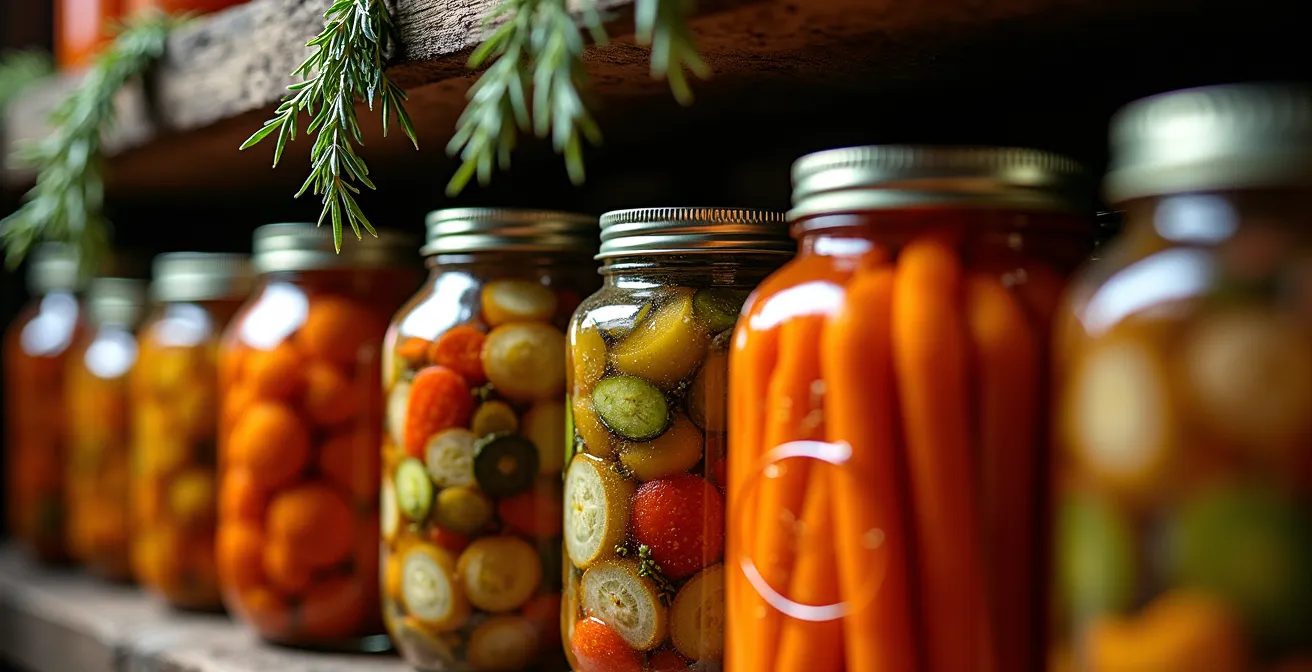
This strategy requires immense foresight and planning. It’s not just about preserving ingredients but also about designing a flexible menu structure. Menus are often built with a “core” of reliable preserved or overwintered items, supplemented by rotating “flex” specials that feature the fleeting availability of whatever fresh produce might appear. A chef might feature microgreens from a local greenhouse one week and the first ramps foraged from the woods the next. This dynamic approach is the hallmark of a kitchen that is genuinely in sync with its local ecosystem.
Action Plan: Surviving the Seasonal Supply Gap
- Implement Preservation Techniques: Master pickling, fermenting, and freezing to capture surplus produce and extend its shelf life through lean months.
- Design Flexible Menu Structures: Create a menu with a reliable “core” of preserved items and rotating “flex” specials to showcase hyper-seasonal ingredients as they appear.
- Use Predictive Analytics: Track historical seasonal availability data to proactively adjust menu offerings and plan purchasing before shortages occur.
- Develop Regional Partnerships: Build relationships with regional cooperatives to access diverse seasonal ingredients from slightly different climates, smoothing out local supply gaps.
This mastery of preservation and menu agility is what separates authentic farm-to-table establishments from those that simply pay lip service to the idea. It is a logistical and culinary feat that ensures an interesting, delicious, and truly seasonal menu, even when the local fields are bare.
Why You Pay 30% More for a True Farm-to-Table Salad?
The price premium on a farm-to-table menu item is often a point of contention for diners. The common assumption is that the restaurant is simply marking up a more expensive ingredient. While local, small-batch produce can be pricier, the “30% more” on your bill is not just for a tastier tomato. It’s paying for the entire inefficient, high-touch, and risk-laden logistical system required to get that tomato from the farm to your plate. You’re not just paying for the food; you’re paying for the logistical overhead of authenticity.
Conventional restaurants benefit from massive economies of scale. A single truck from a broadline distributor delivers everything from produce to proteins to paper towels in one efficient, consolidated drop. In contrast, a true farm-to-table restaurant might coordinate with a dozen different small producers. This means a dozen different invoices, a dozen phone calls to check availability, and a dozen separate, fuel-intensive deliveries. This “last mile” problem is incredibly inefficient and labor-intensive. The chef or kitchen manager’s time spent managing these relationships is a significant hidden labor cost baked into every dish.
Furthermore, sourcing from small farms carries higher risk and waste. A hailstorm can wipe out a farmer’s entire lettuce crop, forcing a chef to scramble for a replacement and reprint menus. Produce from small farms is often less uniform, meaning more trim loss in the kitchen. While consumer surveys suggest that over 75% of consumers are willing to pay more for local food, there’s a disconnect about what that premium actually covers. A fascinating 2023 study by Cambridge University Press initially found high price premiums for local food, but after correcting for biases, it suggested the actual premium consumers are willing to pay may be much smaller. This indicates that restaurants must absorb, or pass on, the significant operational costs that go beyond the ingredient itself.
When you buy that salad, you are subsidizing a less efficient but more resilient and transparent food system. The extra cost covers the chef’s time on the phone with a farmer, the fuel for a small van to deliver 20 pounds of asparagus, and the risk that a crop might fail. It’s the price of opting out of an industrialized system in favor of one built on direct relationships and higher quality.
Key Takeaways
- Authentic farm-to-table is defined by logistical execution—managing seasonal gaps, verifying suppliers, and absorbing higher operational costs—not just by proximity.
- The term “local” is unregulated, and its definition can range from a few miles (hyperlocal) to a multi-state area (regional cooperative), making a chef’s transparency crucial.
- Higher menu prices reflect the significant logistical overhead of a decentralized supply chain, including increased labor for supplier management, higher transportation costs, and greater risk of waste.
What Professional Chefs Are Cooking Now: 5 Trends Shaping Modern Menus
While the farm-to-table ethos is rooted in tradition, its execution is becoming increasingly sophisticated. The romantic image of a chef bartering at a farmers’ market is being replaced by a reality of data-driven logistics. To overcome the inherent inefficiencies of a decentralized supply chain, professional chefs and restaurant operators are now turning to technology. These are not trends about molecular gastronomy, but about the digital transformation of the local food system.
The biggest challenge has always been information: What does the farmer have? How much? When will it be ready? Answering these questions used to require a flurry of phone calls and text messages. Today, tech platforms are emerging to bridge this information gap. Real-time inventory platforms allow chefs to see farm availability at a glance and coordinate orders, while more advanced operations are deploying IoT (Internet of Things) sensors on farms to monitor soil conditions and predict harvest timing and quality. This move towards predictive analytics is a game-changer, allowing kitchens to plan menus with greater confidence.
Another major trend is the use of technology to guarantee authenticity, tackling the issue of food fraud head-on. Blockchain-based tracking systems are being piloted to create an immutable digital record of an ingredient’s journey from the farm to the table. A diner could theoretically scan a QR code on a menu to see the specific farm, harvest date, and transportation route of the chicken they are about to eat. This level of transparency builds immense trust and directly addresses the skepticism of discerning foodies. These innovations are reshaping the operational backbone of modern kitchens.
- Implement blockchain-based tracking systems for ingredient authentication and supply chain transparency.
- Use real-time inventory platforms to check farm availability and coordinate bulk ordering.
- Deploy IoT sensors and predictive analytics for harvest timing and quality optimization.
- Create data-driven forecasting systems to anticipate shortages and adjust orders proactively.
- Develop tech-enabled networks connecting multiple regional farms for resilient sourcing.
This infusion of technology is not about removing the human element; it’s about augmenting it. By automating the most tedious aspects of supply chain management, technology frees up chefs to do what they do best: build relationships with farmers and create exceptional food.
How Your Local Grocery Choices Impact Sustainable Food Systems and Carbon Footprint?
The logistical challenges faced by farm-to-table restaurants are a microcosm of the issues within our broader food system. When you choose to buy local, whether at a grocery store or farmers’ market, your decisions have a tangible impact on sustainability and the carbon footprint of your food. The primary benefit comes from shortening the supply chain, which directly combats food waste and reduces transportation-related emissions. In conventional supply chains, a staggering percentage of food loss occurs during post-harvest handling, storage, and transportation.
Long-haul transport not only burns fossil fuels but also requires extensive refrigeration and protective packaging, all of which have an environmental cost. More importantly, the time lag in a long supply chain necessitates that produce be picked before it’s fully ripe, diminishing its flavor and nutritional value. The conventional system is optimized for durability and transportability, not for quality or sustainability. By supporting local food systems, you are supporting a model that prioritizes freshness and minimizes the time and distance between harvest and consumption.
Innovative models are emerging that apply the farm-to-table philosophy on a larger scale, demonstrating how logistical redesign can have a massive impact. These systems are re-engineering the supply chain to eliminate the inefficiencies of traditional warehousing.
Case Study: The CrowdFarming “No-Stock” Logistics Hub
The CrowdLogistics hub by CrowdFarming in Valencia, Spain, operates on a dynamic, “just-in-time” principle. Unlike conventional warehouses that store produce for extended periods in energy-intensive cold chambers, their model is built for speed. After a customer places an order, produce arrives directly from the farm (picked that day or the day before), is immediately sorted and packaged, and is dispatched for delivery. This entire process, from farm arrival to shipment, takes only 1 to 3 days. This rapid turnover not only ensures maximum freshness but also dramatically reduces the energy consumption and greenhouse gas emissions associated with long-term cold storage.
This case study proves that a more sustainable food system is primarily a logistical challenge. Your choice to buy from a local farmer or a company with an innovative supply chain is a vote for a model that reduces waste, conserves energy, and delivers a higher-quality product. It’s a direct investment in a smarter, more resilient food future.
Is Vegan Fine Dining Worth the Price Tag for Non-Vegans?
After dissecting the immense logistical effort, the seasonal risks, and the transparent costs, we arrive at the ultimate question: is it all worth it? While this section title points to vegan fine dining, the question applies to any authentic farm-to-table experience, plant-based or not. Is the premium price tag justified for a non-vegan diner who could get a perfectly acceptable meal for less elsewhere? From a purely logistical perspective, the answer might be no. The system is, by design, less efficient.
However, the value proposition of true farm-to-table dining extends far beyond the ingredients on the plate. What you are paying for is not just food, but a bundle of intangible assets: trust, transparency, and a connection to a story. In an era of food fraud and opaque supply chains, a restaurant that can genuinely prove its sourcing offers a powerful form of assurance. The higher price is a fee for the peace of mind that comes from knowing the food is what it claims to be, sourced with integrity by a chef who has personally vetted their partners.
This creates a more meaningful dining experience. Knowing the story behind your food—the farm it came from, the challenges of its growing season, the chef’s creative process in transforming it—fosters a deeper appreciation for the meal. It shifts dining from a simple act of consumption to an engagement with a local ecosystem and a community of producers. This is the emotional return on your investment, a value that transcends the simple calculation of food costs. It’s the feeling of being part of a system that values quality and integrity over efficiency and anonymity.
So, is it worth it? If your goal is simply to eat, perhaps not. But if you are a diner who seeks not just a meal but an experience, who values authenticity, and who wants to support a more resilient and transparent food system, then the answer is an unequivocal yes. The price tag reflects the true cost of creating that experience, and for the discerning foodie, it’s a price well worth paying.
The next time you scrutinize a menu, you are now equipped to look beyond the marketing. Apply this logistical lens to ask sharper questions and choose restaurants that don’t just tell a good story, but demonstrate a true commitment to the complex reality of a farm-to-table promise.