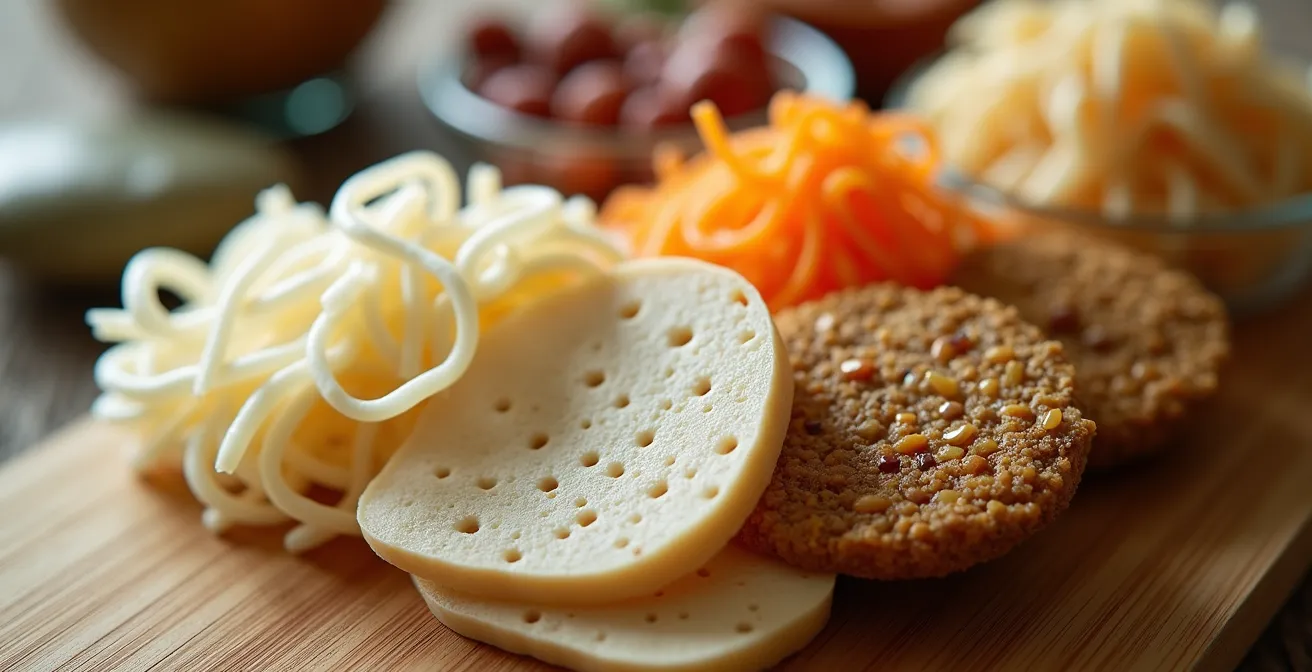
Fermented proteins are not just ‘easier to digest’; they are biochemically transformed to actively enhance nutrient absorption and heal the gut.
- Fermentation increases protein bioavailability, unlocking more nutrients from the same food.
- It creates entirely new, essential compounds like Vitamin K2 that are absent in the unfermented source.
- The process neutralizes ‘anti-nutrients’ like phytic acid and saponins that often cause digestive distress.
Recommendation: To truly benefit, focus on the right type of fermented food (e.g., natto for K2) and proper preparation (like steaming tempeh) to unlock their full potential for your sensitive system.
For anyone with a sensitive digestive system, finding a protein source that provides robust nutrition without causing bloating, gas, or discomfort can feel like an endless quest. You’ve likely tried countless plant-based powders and even premium whey isolates, only to find they still leave you feeling less than optimal. The common advice revolves around avoiding certain ingredients, but this often leads to a restrictive diet that can be difficult to maintain.
The conversation around digestive health often circles back to probiotics, but that’s only a small part of the story. The true breakthrough for sensitive individuals doesn’t lie in just adding beneficial bacteria, but in consuming foods that have been fundamentally transformed by them. This is where the power of fermentation comes into play. It’s a form of ‘pre-digestion’ that does more than just make food easier on your system; it unlocks a new level of nutritional value.
But what if the key to superior nutrition and digestive peace wasn’t about avoidance, but about embracing a specific category of foods? This guide moves beyond the generic advice. We will explore the biochemical craftsmanship of fermentation, revealing how this ancient process creates a superior protein source. We’ll examine the specific mechanisms that increase nutrient absorption, break down irritating compounds, and even synthesize new vitamins, offering a precision tool for managing a sensitive gut.
This article provides a comprehensive roadmap to understanding and utilizing these powerful foods. From the science of absorption to the practicalities of safe home preparation, you will discover how to make fermented proteins work for you.
Contents: The Superiority of Organic Fermented Proteins for Sensitive Digestion
- Why Fermentation Increases Protein Absorption by Up to 40%?
- How to Ferment Legumes at Home Without Risking Bacterial Contamination?
- Natto vs. Tempeh: Which Fermented Soy Product Has More Vitamin K2?
- The Histamine Error: Who Should Avoid Fermented Proteins?
- How to Mask the Strong Flavor of Fermented Proteins in Smoothies?
- How to Cook Nutrient-Rich Tempeh Without the Bitter Aftertaste?
- How to Cultivate a Diverse Microbiome After a Course of Antibiotics?
- Mastering Traditional Fermentation: How to Make Kimchi at Home Safely?
Why Fermentation Increases Protein Absorption by Up to 40%?
The primary reason fermented proteins are so beneficial for sensitive digestion is their enhanced bioavailability. Fermentation is essentially a process of pre-digestion. Microorganisms like bacteria and yeast break down complex proteins into smaller, more easily absorbable components, namely peptides and amino acids. This metabolic action significantly reduces the workload on your digestive system, which is crucial when gut function is already compromised.
Furthermore, this process actively deactivates “anti-nutrients.” Many plant-based proteins, particularly in legumes and grains, contain compounds like phytic acid and trypsin inhibitors. These substances can bind to minerals and block digestive enzymes, leading to poor nutrient absorption and digestive distress. Fermentation effectively neutralizes these anti-nutrients, unlocking the full nutritional potential of the food. It’s not just about what you eat, but what your body can actually absorb and utilize.
The impact of this biochemical transformation is substantial. Recent scientific findings highlight the dramatic improvement in the nutritional profile of fermented foods. For instance, specific bacterial strains used in fermentation have been shown to make a remarkable difference. In fact, research from 2025 demonstrates that Lactobacillus plantarum fermentation can lead to a 40% improvement in protein digestibility. This means your body gets more of the essential building blocks it needs for repair and energy, without the digestive strain.
How to Ferment Legumes at Home Without Risking Bacterial Contamination?
Bringing the power of fermentation into your own kitchen is an empowering step toward better gut health. However, creating a safe environment for beneficial microbes to thrive while keeping harmful pathogens at bay is paramount. The process, a form of microbial craftsmanship, relies on controlling a few key variables to ensure a safe and successful outcome. The goal is to create conditions that favor the growth of lactic acid bacteria (LAB), which naturally preserve the food and inhibit spoilage organisms.

As seen in the setup above, cleanliness and proper equipment are non-negotiable. Sterilized glass jars, clean utensils, and a dedicated, non-porous workspace minimize the risk of introducing unwanted contaminants. The two most critical factors you will control are salt concentration and pH level. Salt draws water out of the vegetables, creating a brine that protects the fermenting food from harmful bacteria while the beneficial LAB get established. As the LAB consume sugars, they produce lactic acid, which progressively lowers the pH of the environment, making it inhospitable to pathogens like C. botulinum.
Monitoring your ferment is an active process. Observing changes in smell, texture, and effervescence will tell you how the fermentation is progressing. Any signs of fuzzy, colorful mold (black, pink, or orange) are an indication of contamination, and the batch must be discarded. A white, film-like substance on the surface is often harmless Kahm yeast, but fuzzy mold is a clear danger sign. Following a structured safety protocol is the best way to ensure your homemade ferments are both delicious and safe.
Your Action Plan: Essential Safety Steps for Legume Fermentation
- Control Acidity: Maintain pH below 4.6 through adequate fermentation time. This acidic environment is the primary barrier against pathogenic bacteria growth.
- Use Proper Salinity: Implement a salt concentration of 2-3% by weight. This inhibits harmful bacteria during the crucial early stages of fermentation before lactic acid takes over.
- Maintain Optimal Temperature: Keep your fermenting legumes between 70-75°F (21-24°C). This temperature range is ideal for the rapid development of beneficial lactic acid bacteria.
- Monitor for Spoilage: Regularly inspect for sensory spoilage signs. Reject any batch that develops black, pink, or orange molds. A thin layer of white, non-fuzzy mycelium can be acceptable, but when in doubt, throw it out.
- Refrigerate for Storage: Once the desired level of acidity and flavor is reached, transfer the fermented product to the refrigerator. The cold temperature will significantly slow down the fermentation process and preserve it for weeks or months.
Natto vs. Tempeh: Which Fermented Soy Product Has More Vitamin K2?
While both natto and tempeh are celebrated fermented soy products, they offer vastly different nutritional profiles due to the specific microbes used in their creation. Tempeh, fermented with the fungus Rhizopus, is an excellent source of plant-based protein and fiber, with a firm texture and nutty flavor. It’s a fantastic meat substitute and is generally well-tolerated due to the fermentation process breaking down the soy proteins.
However, when it comes to Vitamin K2, natto is in a league of its own. This is a prime example of nutrient synthesis, where the fermentation process creates a vital nutrient that was not present in the original ingredient. Natto is made by fermenting soybeans with Bacillus subtilis, a unique bacterium with the prolific ability to produce an exceptional amount of Vitamin K2 in its most bioactive form, MK-7. This nutrient is crucial for directing calcium into bones and teeth and away from arteries, playing a key role in both skeletal and cardiovascular health.
As experts from NYrture New York Natto explain, the choice of microbe is everything:
Fermentation of natto produces vast amounts of Vitamin K2 (MK-7); while miso and tempeh do not. Vitamin K2 can only be produced by certain species of bacteria, most prolifically by the natto-fermenting bacterial species Bacillus subtilis. Miso and tempeh fermentations are mediated by fungi that do not generate Vitamin K2.
– NYrture New York Natto, Research article on fermented soy products
The distinction is clear when comparing them side-by-side. For those specifically seeking the powerful benefits of Vitamin K2 alongside their protein, natto is the unequivocal winner. Tempeh remains an excellent choice for digestible protein and fiber, but it cannot be relied upon as a source of this critical vitamin.
| Nutrient | Natto (per 100g) | Tempeh (per 100g) |
|---|---|---|
| Vitamin K2 (MK-7) | 900 µg | Not present |
| Unique enzyme | Nattokinase (cardiovascular benefits) | None |
| Fiber | 9g per cup | 7g per cup |
| Probiotic bacteria | Bacillus subtilis | Rhizopus |
| Histamine potential | Higher | Lower |
The Histamine Error: Who Should Avoid Fermented Proteins?
While fermented foods are a boon for most, there’s a crucial exception: individuals with histamine intolerance. Histamines are natural compounds produced during fermentation. For most people, an enzyme in the gut called diamine oxidase (DAO) efficiently breaks them down. However, for a subset of the population, this enzyme is deficient, leading to a buildup of histamines that can trigger symptoms like headaches, skin flushing, digestive upset, and nasal congestion.
It’s important to understand that this is not an allergy but an intolerance—a threshold issue. This sensitivity to fermentation byproducts affects a small but significant group; it’s estimated that roughly 1% of humans may have a reduced ability to process dietary histamines. For this group, consuming aged and highly fermented foods like sauerkraut, kimchi, or natto can lead to uncomfortable symptoms, mistakenly attributed to the food itself rather than the histamine load.
This doesn’t mean all fermented proteins are off-limits. The key is to understand your personal histamine threshold. Foods that are fermented for shorter periods or involve different microbial strains typically have lower histamine levels. Fresh, young ferments like kefir and yogurt are often better tolerated than aged ones. The strategy for someone with histamine sensitivity is not complete avoidance, but careful selection and mindful consumption. Starting with small portions of low-histamine fermented foods and monitoring your body’s response is the most sensible approach.
How to Mask the Strong Flavor of Fermented Proteins in Smoothies?
Let’s be honest: some of the most nutritionally potent fermented foods, like natto, come with a flavor profile that can be described as an “acquired taste.” The pungent, earthy, and sometimes ammoniacal notes can be a barrier for many, even those who are enthusiastic about the health benefits. The good news is that you don’t have to eat them straight. A well-constructed smoothie is the perfect vehicle for masking these strong flavors while still reaping all the nutritional rewards.
The secret lies in flavor balancing, using ingredients that can either complement or overpower the fermented notes. There are four key categories of ingredients to deploy: acid, fat, aromatics, and cold. Acidity, from sources like lemon juice or tart berries, cuts through the “funky” flavors and brightens the overall taste. Healthy fats, such as avocado or full-fat coconut cream, have a mellowing effect, coating the palate and softening the intensity of the fermented protein. Aromatic spices are your most powerful tool; potent flavors like raw cacao, cinnamon, or fresh ginger can effectively dominate the flavor profile.
Finally, temperature plays a surprisingly important role. Serving your smoothie extremely cold, using frozen fruits and a few ice cubes, helps to dull your taste buds’ perception of strong flavors. By combining these elements, you can create a delicious smoothie where the fermented protein is a silent, hard-working partner rather than the star of the show. Start with “gateway” combinations to ease your palate into it.
- Add acidic elements: A squeeze of lemon or lime juice, or a handful of tart berries like raspberries, can cut through earthy notes.
- Include healthy fats: A quarter of an avocado or a tablespoon of coconut cream will create a creamy texture that mellows strong flavors.
- Use aromatic spices: A teaspoon of raw cacao powder, a dash of cinnamon, or a small piece of fresh ginger can effectively mask and transform the taste.
- Serve extremely cold: Using frozen bananas or berries as the base for your smoothie dramatically dulls the perception of pungent flavors.
- Start with gateway recipes: Try pairing natto with frozen dark cherries and cacao, or blend tempeh with mango and a hint of ginger to begin.
How to Cook Nutrient-Rich Tempeh Without the Bitter Aftertaste?
Tempeh is a nutritional powerhouse, but its occasional bitter aftertaste can be off-putting and is a common reason people are hesitant to embrace it. This bitterness is primarily due to saponins, naturally occurring compounds in soybeans, and potentially some oxidized fatty acids from storage. The secret to delicious, nutrient-rich tempeh is a simple preparation step that neutralizes these compounds before you even begin your main cooking method: steaming.
Steaming the block of tempeh for just 10 minutes works wonders. This gentle, moist heat effectively breaks down the bitter saponins and “resets” the flavor, leaving you with a neutral, nutty-tasting canvas. This pre-cooking step also opens up the tempeh’s porous structure, making it much more receptive to marinades. After steaming, a gentle press to remove excess water is crucial for maximum flavor absorption.
The Chef’s Secret: Steam-Press-Marinate Method
Professional chefs consistently rely on a three-step process to guarantee flavorful, non-bitter tempeh. They report that steaming tempeh for 10 minutes is the most effective way to remove bitter saponins. This is followed by gently pressing the block between paper towels to remove excess water. This step is critical as it allows the “spongy” tempeh to absorb an oil-free, acid-based (like citrus or vinegar) and tamari-based marinade for at least 30 minutes, resulting in deeply flavorful dishes every time.
Once your tempeh is steamed and marinated, your choice of cooking method can further preserve its nutritional integrity. While pan-frying is common, high heat can damage the delicate polyunsaturated fats (PUFAs) in tempeh. Gentler methods like baking or air-frying are excellent for achieving a desirable texture while protecting the nutrients.
As a comparative analysis of cooking methods shows, steaming and baking offer the highest protein retention and best preservation of fats.
| Cooking Method | Protein Retention | Fat Integrity | Bitterness Reduction |
|---|---|---|---|
| Steaming | 95%+ | Preserved | High |
| Pan-frying | 85% | Damaged PUFAs | Moderate |
| Baking (350°F) | 90% | Well preserved | High |
| Air-frying | 92% | Good preservation | High |
How to Cultivate a Diverse Microbiome After a Course of Antibiotics?
A course of antibiotics can be a lifesaver, but it’s a blunt instrument. In the process of eliminating harmful bacteria, it also depletes the beneficial microbes that make up a healthy gut microbiome. This can leave your digestive system vulnerable and imbalanced, often leading to symptoms like bloating, irregular bowel movements, and a weakened immune response. Rebuilding this internal ecosystem requires a deliberate and strategic approach, where fermented proteins play a starring role.
The goal is to reintroduce a wide variety of beneficial bacteria. Instead of sticking to a single source, a microbiome recovery protocol should focus on diversity. This means rotating through different types of fermented foods. Each one contains unique strains of bacteria and yeast that contribute different skills to the gut community. For example, the strains in kefir are different from those in kimchi, which are different from those in tempeh. This rotational strategy helps to build a more resilient and diverse microbial population.
It’s also essential to provide food for these new microbial allies. This is where prebiotics come in. Prebiotic fibers—found in foods like garlic, onions, asparagus, and bananas—are indigestible by humans but serve as the preferred fuel for beneficial gut bacteria. Pairing your fermented protein intake with a diet rich in prebiotics creates a synergistic effect, helping the new microbes to establish themselves and thrive. This post-antibiotic period is a critical window to reset your gut health for the long term.
- Weeks 1-2 (Gentle Start): Begin with easily digestible, low-histamine fermented proteins. Drink small amounts of fresh kefir or eat plain, young yogurt to gently reintroduce beneficial bacteria.
- Weeks 3-4 (Introduce Rotation): Start a rotation strategy to build diversity. For example: Day 1: Kefir, Day 2: A small portion of kimchi, Day 3: Steamed tempeh.
- Weeks 5-6 (Concentrated Support): Add a high-quality fermented protein powder to a daily smoothie. This provides a concentrated source of bioavailable amino acids to support gut lining repair.
- Ongoing (Feed Your Flora): Consciously include prebiotic fibers at every meal. Add garlic to your cooking, slice banana into your yogurt, or snack on asparagus to nourish the newly introduced microbes.
- Monitor and Adjust: Pay close attention to your body. Track improvements in digestion, energy levels, and mood, as these are key indicators that your gut-brain axis is recovering.
Key Takeaways
- Fermentation is a biochemical process that enhances protein absorption and deactivates digestive irritants.
- Target specific nutrients by choosing the right food: natto is unparalleled for Vitamin K2, while tempeh is a versatile, high-fiber protein.
- Preparation is crucial: steaming tempeh eliminates bitterness, and understanding your histamine threshold is key for sensitive individuals.
Mastering Traditional Fermentation: How to Make Kimchi at Home Safely?
Making traditional ferments like kimchi is a rewarding way to take control of your gut health, but safety is paramount. The magic of kimchi fermentation lies in its self-regulating safety mechanism, driven by salt and the subsequent production of lactic acid. This process creates an environment that is naturally hostile to dangerous pathogens, most notably Clostridium botulinum, the bacterium responsible for botulism.
The first line of defense is salt. Salting the napa cabbage not only adds flavor and creates a crisp texture but, more importantly, it draws out water to create a brine. This salty brine inhibits the growth of most spoilage bacteria from the very beginning. As the beneficial Lactic Acid Bacteria (LAB) begin to thrive, they consume the natural sugars in the cabbage and other ingredients, producing lactic acid as a byproduct. This is the critical second stage of protection.
This acid production steadily lowers the pH of the kimchi. As noted in the case study of Korean kimchi production standards, this rapid acidification is the key to safety. Traditional vegetable fermentations rely on LAB to quickly lower the pH, creating an environment hostile to C. botulinum toxin production. Properly made, salted, and fermented kimchi is therefore generally safe from botulism. The target is to achieve a pH level that is inhospitable to pathogens. According to food safety experts, research confirms that adequate fermentation time allows beneficial lactic acid bacteria to lower the pH to safe levels, specifically below 4.6. This is the cornerstone of safe, traditional fermentation.
Now that you are equipped with the science and practical knowledge, you can begin to integrate these superior protein sources into your diet to support your digestive health. Start by properly preparing a block of tempeh or trying a low-histamine ferment like fresh kefir.
Frequently Asked Questions on Why Organic Fermented Protein Sources Are Superior for Sensitive Digestion?
Can people with histamine intolerance consume any fermented proteins?
Yes, with caution. It is best to start with fresh kefir or young yogurt, which tend to have the lowest histamine content among fermented proteins. Test your personal tolerance gradually with very small portions before attempting to consume more aged fermented foods like sauerkraut or aged cheese.
What symptoms indicate histamine sensitivity from fermented foods?
Common symptoms of histamine intolerance that appear within a few hours of consumption include headaches or migraines, digestive upset (like bloating or diarrhea), skin flushing or hives, and nasal congestion or a runny nose.
Are there ways to reduce histamine in fermented proteins?
You can manage your intake by consuming fermented foods when they are fresh rather than aged, as histamine levels increase over time. Additionally, you can pair these foods with natural antihistamines, such as quercetin found in onions and apples, and ensure you have adequate levels of DAO-supporting nutrients like vitamin B6 and copper in your diet.