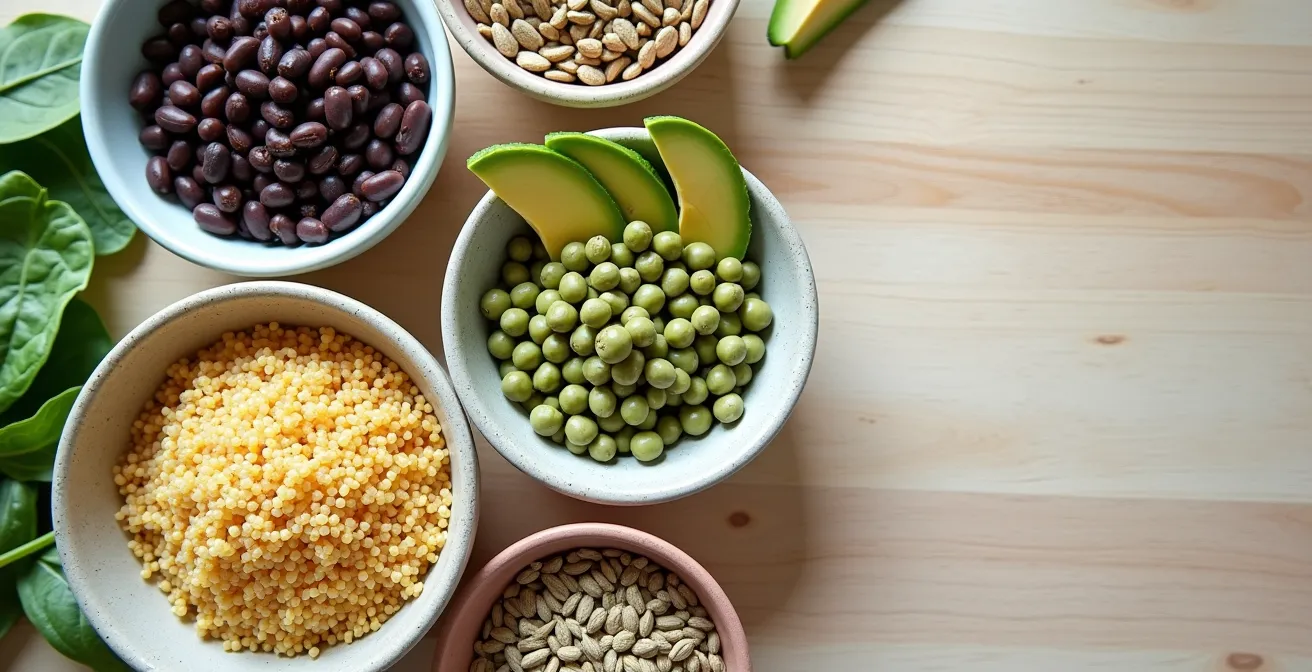
Contrary to a persistent myth, you do not need to meticulously combine plant proteins at every single meal. Your body intelligently maintains a reservoir of amino acids, known as the “amino acid pool,” drawing from it as needed throughout the day. This article explains the science that frees you from outdated dietary anxiety, allowing you to focus on a varied and enjoyable plant-based diet.
If you’ve ever felt a flicker of “protein anxiety” as a vegetarian or vegan, you’re not alone. The image is classic: a newcomer to plant-based eating carefully measuring out rice and beans, convinced this specific combination is the only shield against deficiency. This concern is rooted in a decades-old concept of “incomplete” plant proteins, a theory that suggested plant-based foods must be strategically paired within the same meal to provide all the essential amino acids your body needs. This idea, born in the 1970s, has shown remarkable staying power, causing unnecessary stress and complication.
But what if the fundamental premise of this frantic, meal-by-meal balancing act was flawed? What if the human body was a far more resilient and efficient system than this myth gives it credit for? The truth is, the nutrition community has long since moved on from this rigid theory. The key isn’t about forced food marriages on your plate, but about understanding a powerful internal mechanism your body uses every single day: the amino acid pool.
This guide is here to act as a myth-buster, armed with current nutritional science. We will dismantle the fear-mongering behind “incomplete protein” headlines by explaining the physiological reality of how your body processes protein. We will explore why your body’s internal protein recycling system is the real hero of the story. From there, we’ll shift from theory to delicious practice, covering how to prepare staple foods like quinoa, tempeh, and legumes not for “completion,” but for maximum flavor, digestibility, and nutritional benefit. It’s time to replace dietary anxiety with informed confidence.
To navigate this topic with clarity, this article breaks down the science, debunks the myths, and provides practical kitchen guidance. Discover how to build a robust, protein-sufficient diet with ease and enjoyment.
Summary: The Complete Guide to Plant-Based Protein Without the Myths
- Why Your Body Doesn’t Need Complete Protein at Every Single Meal?
- How to Cook Quinoa and Buckwheat to Maximize Fluffiness?
- Spirulina vs. Hemp Seeds: Which Topper Adds More Complete Protein?
- The Fear-Mongering Behind “Incomplete Protein” Headlines
- How to Pair Grains and Legumes for Maximum Digestibility?
- How to Cook Nutrient-Rich Tempeh Without the Bitter Aftertaste?
- How to Store and Prep Versatile Dried Legume Bases for Weekly Meal Prep?
- How to Calculate Macro-Nutrient Distribution for Muscle Gain on a Vegan Diet?
Why Your Body Doesn’t Need Complete Protein at Every Single Meal?
The entire premise of frantic protein combining hinges on a misunderstanding of how the body handles amino acids. It’s not a “use it or lose it” system that resets with every meal. Instead, your body maintains a sophisticated internal reservoir called the amino acid pool. This pool, located in your blood and tissues, is constantly being topped up from two sources: the food you eat and your body’s own highly efficient protein recycling program. This internal process is known as protein turnover.
Your body is not a passive recipient; it’s an active manager. In fact, research from the National Academy of Sciences shows that several times more protein is turned over daily within the body than is ordinarily consumed from diet. Your body breaks down its own tissues (like the lining of your intestine) and recycles those amino acids, adding them to the pool. When you eat, say, a bowl of lentils that’s lower in the amino acid methionine, your body simply dips into this pool to get the methionine it needs for protein synthesis. It might get it from the whole-wheat toast you had for breakfast or from its own recycled supply. The key is balance over a 24-hour period, not within a single meal.
This “nutritional buffer” system is what makes the protein combining theory obsolete. As long as you eat a varied diet of whole plant foods throughout the day, your body will have all the necessary building blocks. The fear of an amino acid “deficiency” from one meal to the next is physiologically unfounded. Your body is designed for efficiency and has the storage and recycling mechanisms to prove it.
How to Cook Quinoa and Buckwheat to Maximize Fluffiness?
Now that we’ve established you don’t need to stress about combining, let’s focus on making plant-based staples truly delicious. Quinoa and buckwheat are two powerhouses often called “pseudocereals” because they are technically seeds but are cooked and eaten like grains. Both are celebrated for containing all nine essential amino acids, but their true potential is unlocked in the cooking process, where texture is everything. The goal is light, fluffy, and distinct grains, not a mushy paste.
For perfect quinoa, the secret lies in three key steps. First, rinse it thoroughly under cold water. This removes saponins, natural compounds on the seed’s outer layer that can impart a bitter or soapy taste. Second, for a deeper, nuttier flavor, toast the dry, rinsed quinoa in your pot for a couple of minutes before adding liquid. This kickstarts the Maillard reaction. Finally, use a slightly reduced water ratio—about 1 part quinoa to 1.5 parts water is ideal. Bring to a boil, then simmer covered until the water is absorbed. The most crucial step is to let it rest, covered and off the heat, for at least 5 minutes before fluffing with a fork. This allows the steam to distribute and the grains to separate perfectly.
Buckwheat groats (the hulled kernels) benefit from a similar toasting technique. Whether you’re using raw or kasha (pre-toasted) buckwheat, a quick toast in a dry pan enhances their earthy flavor. For a fluffy pilaf-style dish, the key is to avoid over-stirring once the liquid is added, which can release starches and make it gummy. Cook it like rice, and you’ll be rewarded with a delightful texture that’s perfect for bowls and salads.
Spirulina vs. Hemp Seeds: Which Topper Adds More Complete Protein?
Once you have your delicious grain or salad base, protein-rich toppers are a fantastic way to boost nutrition and add texture. Two of the most popular options are spirulina and hemp seeds. Both are considered complete proteins, but they serve very different purposes in the kitchen and offer unique nutritional profiles. Choosing between them depends entirely on your goal for the meal.
Hemp seeds, or hemp hearts, are the clear winner for adding substance, healthy fats, and a satisfying, nutty crunch. According to nutritional analysis, just 30g of hemp seeds packs 10g of complete vegan protein and a significant 15 percent of your daily iron needs. They also boast an ideal ratio of omega-3 to omega-6 fatty acids. Their texture makes them perfect for sprinkling over salads, avocado toast, and grain bowls, or blending into dressings for a creamy consistency.
Spirulina, a blue-green algae, excels as a low-calorie, nutrient-dense powder. While it provides slightly less protein per serving (about 8 grams in two tablespoons), its main draw is its incredible density of vitamins, minerals, and the unique antioxidant phycocyanin. Its strong, sea-like flavor and vibrant green color mean it’s best disguised in smoothies or energy balls. It adds a powerful nutritional punch without adding significant calories or bulk, making it ideal for recovery shakes or a morning nutrient boost.
This comparative table breaks down the key differences to help you decide which topper is right for your next meal. While both are excellent, their costs and best uses vary significantly.
| Nutrient Factor | Hemp Seeds (30g) | Spirulina (2 tbsp) |
|---|---|---|
| Protein Content | 10 grams | 8 grams |
| Essential Amino Acids | All 9 present | All 9 present |
| Special Nutrients | Omega-3 & Omega-6 ratio, 15% iron | Phycocyanin, high iron density |
| Best Use Case | Salads, bowls (texture + fats) | Smoothies (low-calorie density) |
| Cost per 10g protein | $0.80-1.20 | $1.50-2.00 |
The Fear-Mongering Behind “Incomplete Protein” Headlines
The myth of protein combining didn’t just appear out of nowhere; it was popularized in the 1971 book Diet for a Small Planet. The author, Frances Moore Lappé, later recanted this specific advice, stating that she had overemphasized the risk. However, the fear had already taken root and continues to be perpetuated by sensationalist headlines and outdated nutritional information. This creates a cycle of “dietary anxiety” that is not only unnecessary but also counterproductive to promoting healthy, plant-based eating.
The scientific community has been pushing back against this fallacy for decades. One of the most significant corrections came from a prominent voice in plant-based nutrition, as Dr. John McDougall highlighted in a HuffPost article on the topic. He directly challenged the American Heart Association’s lingering doubts in the early 2000s, making a powerful and reassuring statement:
It is impossible to design an amino acid-deficient diet based on the amounts of unprocessed starches and vegetables sufficient to meet the calorie needs of humans.
– Dr. John McDougall, HuffPost Life
This underscores the core truth: if you are eating enough calories from a variety of whole plant foods, you will get enough protein and all essential amino acids. The real danger isn’t “incomplete” protein; it’s the misinformation that causes people to fear a healthy diet. Learning to spot nutritional red flags is a crucial skill for anyone navigating health information online.
Checklist: Spotting Nutritional Misinformation
- Identify Demonization: Be wary of claims that demonize entire food groups (like all grains or all legumes) without scientific nuance.
- Question “Secret” Knowledge: Scrutinize headlines promising “secrets” the medical establishment is supposedly hiding from you.
- Follow the Money: Check if the article’s primary purpose is to sell you expensive supplements, powders, or exclusive programs.
- Look for Nuance: Acknowledge that while some plants are lower in one amino acid, your body’s storage system (the amino acid pool) easily compensates for this throughout the day.
- Verify the Source: Prioritize information from accredited dietitians, peer-reviewed studies, and reputable health organizations over personal blogs or supplement companies.
How to Pair Grains and Legumes for Maximum Digestibility?
While we’ve established that pairing grains and legumes at every meal for protein completion is unnecessary, there’s still immense wisdom in these traditional combinations. The focus, however, should shift from protein anxiety to a more practical goal: enhancing digestibility and creating a balanced, satisfying meal. Many traditional cuisines intuitively pair foods in ways that make them easier on the digestive system and improve nutrient absorption.
For example, the classic pairing of beans and rice, found in cultures from Latin America to India, isn’t just about protein. Legumes can be challenging for some people to digest due to compounds like oligosaccharides. Traditional preparation methods help mitigate this. Soaking beans overnight and cooking them with digestive spices like cumin, fennel, ginger, or epazote (in Mexican cuisine) can significantly reduce bloating and gas. The simple, starchy nature of rice provides a gentle, easily digestible carbohydrate base that complements the fiber and protein-rich beans.
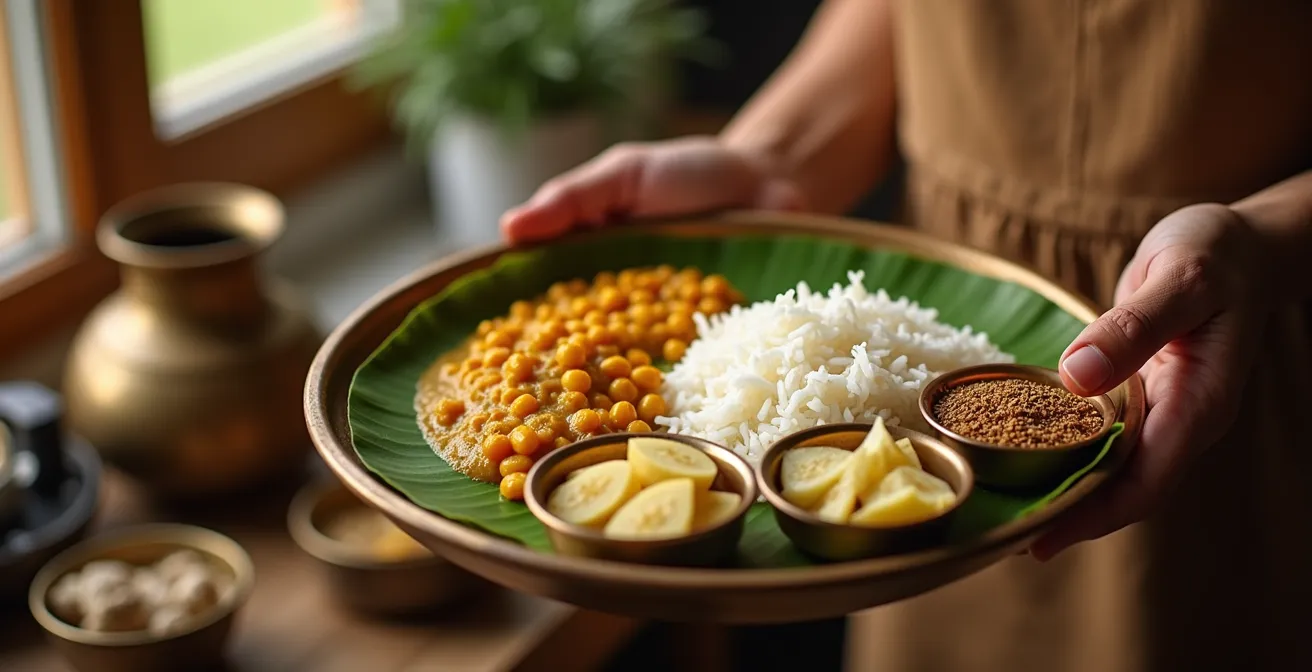
The goal is to think in terms of food synergy rather than rigid combination rules. Instead of asking “Is this meal complete?”, ask “How do these foods work together?”. Pairing a rich lentil curry (dal) with fluffy basmati rice creates a meal that is not only satisfying but also balanced in texture and flavor. The fiber from the lentils helps slow the absorption of carbohydrates from the rice, leading to more stable blood sugar levels. This holistic approach, rooted in centuries of culinary wisdom, is far more beneficial than the narrow focus on amino acid profiles at a single meal.
How to Cook Nutrient-Rich Tempeh Without the Bitter Aftertaste?
Tempeh, a firm cake made from condensed, fermented soybeans, is a nutritional powerhouse. A single 3-ounce serving can provide around 15 grams of protein, and thanks to the fermentation process, its nutrients are highly bioavailable. However, many people are put off by its occasionally bitter aftertaste. The good news is that this bitterness is easy to eliminate with one simple, extra step before you marinate or cook it.
The most effective method to remove any bitterness is to steam or simmer the tempeh block. Simply place the whole block in a steamer basket or a saucepan with about an inch of water. Let it steam or gently simmer for 10 minutes. This process not only removes the bitter compounds but also softens the tempeh, allowing it to better absorb the flavors of your marinade. After steaming, pat it dry, and it’s a blank canvas ready for your favorite sauce.
Once your tempeh is prepped, you can move on to adding flavor. A well-balanced marinade is key. For a versatile and delicious result, follow a simple formula that hits all the key flavor notes:
- Acid: Rice vinegar or citrus juice brightens the flavor.
- Salt/Umami: Soy sauce, tamari, or miso paste provides a savory depth.
- Sweet: A touch of maple syrup or agave helps with caramelization.
- Fat: Sesame oil or another neutral oil helps the tempeh brown and get crispy.
Slicing the tempeh thinly (about ¼ inch) before pan-frying at a high temperature will maximize the surface area for a delicious, caramelized crust, leaving no trace of bitterness behind.
How to Store and Prep Versatile Dried Legume Bases for Weekly Meal Prep?
Embracing a plant-based diet is made infinitely easier with a solid meal prep strategy. Rather than cooking from scratch every night, preparing a few versatile bases at the beginning of the week allows for quick, healthy, and protein-rich meals in minutes. The “batch cooking trinity” of a cooked grain, a cooked legume, and a go-to dressing is a game-changer. Storing these components correctly is crucial to maintain their freshness and safety throughout the week.
Dried legumes like chickpeas and black beans are incredibly economical and taste far superior to their canned counterparts. To prep them, soak them overnight, then cook a large batch until tender. A key tip for storage is to keep them in an airtight container in their cooking liquid in the refrigerator. This prevents them from drying out and keeps them plump and ready to use for up to a week. Most bean varieties provide about 15 grams of protein per 1 cup of cooked beans, making them an excellent base for any meal.
For longer-term storage, cooked beans freeze beautifully. The best method is to drain them, spread them in a single layer on a baking sheet, and freeze until solid. Once frozen, you can transfer them to a freezer bag. This prevents them from clumping together, so you can easily grab the exact amount you need for tacos, soups, or homemade veggie burgers.
Pairing your batch-cooked legumes with a versatile grain like quinoa and a simple tahini dressing creates endless meal possibilities. The table below outlines a sample weekly meal prep strategy for maximum efficiency and flavor.
| Base Component | Storage Method | Shelf Life | Weekly Uses |
|---|---|---|---|
| Cooked Chickpeas | In cooking liquid, refrigerated | 5-7 days | Hummus, salads, curry, roasted snacks |
| Cooked Quinoa | Airtight container, cooled completely | 5 days | Buddha bowls, breakfast porridge, salads |
| Tahini Dressing | Glass jar, refrigerated | 2 weeks | Sauce for all bowls, salad dressing, dip |
| Cooked Black Beans | Freeze flat on sheet, then bag | 3 months frozen | Tacos, soups, burgers, bowls |
Key Takeaways
- The ‘protein combining’ theory is outdated; your body maintains an ‘amino acid pool’ and balances proteins over a 24-hour period.
- Focus on a varied diet of whole plant foods throughout the day rather than specific food pairings at each meal.
- Proper cooking techniques (like rinsing quinoa and steaming tempeh) are more important for flavor and digestibility than for protein completion.
How to Calculate Macro-Nutrient Distribution for Muscle Gain on a Vegan Diet?
For most people eating a varied plant-based diet, tracking protein intake isn’t necessary. However, for athletes or individuals with specific goals like muscle hypertrophy, a more strategic approach to macronutrients can be beneficial. While the fear of “incomplete” protein is a myth, ensuring an adequate *quantity* of protein is crucial for repairing and building muscle tissue. Calculating your needs is straightforward and should always be considered alongside adequate carbohydrate and fat intake.
The recommended dietary allowance (RDA) for protein for the average sedentary adult is about 0.8 grams per kilogram of body weight. For those looking to build muscle, this number needs to be significantly higher. A widely accepted range for vegan athletes is between 1.6 to 2.2 grams of protein per kilogram of body weight. Individuals new to strength training can aim for the lower end of this range (1.6-1.8 g/kg), while more advanced athletes or those in a cutting phase may benefit from the higher end (2.0-2.2 g/kg).
However, protein is only one piece of the puzzle. Muscle growth is an energy-intensive process. Without sufficient carbohydrates, your body may start breaking down protein for energy (a process called gluconeogenesis), which is counterproductive to muscle building. Ensure you’re consuming 4-7 grams of carbohydrates per kg of body weight to keep your glycogen stores full and fuel your workouts. Similarly, healthy fats are vital for hormone production, including hormones involved in muscle growth. An intake of 0.8-1.2 grams of fat per kg of body weight is a good target to support overall health and athletic performance.
By focusing on variety, abundance, and proper preparation, you can build a strong, healthy body on a plant-based diet without the unnecessary weight of outdated nutritional myths. The science is clear: your body is an intelligent system. Trust it, feed it well with a diversity of whole foods, and let go of the protein anxiety for good. The next logical step is to apply this knowledge by exploring the variety of delicious, protein-rich plant foods the world has to offer.