In summary:
- Going cruelty-free beyond your diet means becoming an investigator to decode misleading marketing and complex regulations.
- Terms like “vegan formula” or “not tested on animals” don’t guarantee a product is 100% cruelty-free due to supply chain and legal loopholes.
- A practical approach involves auditing what you own, using up existing products, and making informed, gradual replacements rather than a wasteful purge.
- Reliable third-party certifications (like Leaping Bunny) are your best guide, but you can also learn to vet uncertified brands yourself.
You’ve successfully navigated the grocery store aisles, mastering a diet that aligns with your ethical values. Your plate is a testament to your commitment to a cruelty-free life. But what happens when you step out of the kitchen and into the bathroom? That foundation you love, the laundry detergent under the sink, the wool sweater in your closet—suddenly, the clear lines you drew around food become a complex web of uncertainty. The world of home goods and cosmetics is filled with vague claims, hidden ingredients, and confusing loopholes that can make even the most dedicated person feel overwhelmed.
Many people assume that a “vegan” label on a cosmetic product is enough, or that a simple “not tested on animals” claim tells the whole story. The reality is far more nuanced. The journey to a truly cruelty-free home isn’t about achieving overnight perfection or wastefully discarding everything you own. It’s about shifting your mindset from a passive consumer to a curious investigator. It’s about learning to deconstruct labels, understand the difference between certifications, and make empowered choices one product at a time.
This guide is your roadmap for that investigation. We will move beyond the platitudes and dive into the specifics, helping you decode the complex landscape of cruelty-free living. We’ll explore the truth behind animal testing regulations, compare the most trusted certifications, uncover the “vegan formula” trap, and provide practical strategies for auditing everything from your makeup bag to your wardrobe, all without breaking the bank or creating unnecessary waste.
To navigate this complex but rewarding journey, this article breaks down the essential areas you need to investigate. The following sections will equip you with the knowledge to make confident, truly cruelty-free choices for your entire home.
Summary: Your Investigative Guide to a Cruelty-Free Home
- Why “Not Tested on Animals” Doesn’t Always Mean Cruelty-Free in China?
- Leaping Bunny vs. PETA: Which Certification Is Actually Trustworthy?
- The “Vegan Formula” Trap: How Brands Mislead with Green Packaging?
- How to Find Drugstore Dupes for High-End Cruelty-Free Makeup?
- When to Throw Away Old Non-Vegan Makeup: Now or When Empty?
- Sustainable Fashion on a Budget: How to Quit Fast Fashion?
- Navigating Ethical Living: How to Handle Social Friction Without Losing Friends?
- Sustainable Fashion on a Budget: How to Quit Fast Fashion?
Why “Not Tested on Animals” Doesn’t Always Mean Cruelty-Free in China?
One of the most confusing aspects of cruelty-free shopping has long been the “required by law” animal testing policy in mainland China. For years, brands that wanted to sell their products in physical stores in China had to submit to mandatory animal testing, regardless of their policies elsewhere. This created a major ethical conflict: a brand could be cruelty-free in Europe and North America but complicit in animal testing to access the lucrative Chinese market. A “not tested on animals” label could be true for one market but false in another.
This made checking a brand’s market presence in China a crucial step for any conscious consumer. If a brand you loved was on shelves in Shanghai, it almost certainly wasn’t cruelty-free in the truest sense, as its parent company had consented to testing. However, the regulatory landscape is finally shifting. Significant changes have begun to dismantle this long-standing barrier to ethical consumerism.
The good news is that, according to recent regulatory changes since 2021, the mandatory pre-market animal testing for most general cosmetics has been lifted. Furthermore, the practice of post-market testing—where products were pulled from shelves for random safety checks—also appears to no longer involve animals. This is a monumental step forward, potentially allowing brands to sell in China without compromising their cruelty-free status. However, “general cosmetics” (like shampoo, lipstick, and lotion) are distinct from “special-use cosmetics” (like hair dye, sunscreen, and anti-aging products), which may still face different requirements. This distinction means that vigilance is still required.
Leaping Bunny vs. PETA: Which Certification Is Actually Trustworthy?
When you’re standing in a store, logos are your fastest way to make an ethical assessment. But not all bunnies are created equal. The two most prominent cruelty-free certifications in the beauty world are PETA’s Beauty Without Bunnies and the Leaping Bunny Program. While both signal a commitment against animal testing, they operate with different levels of rigor, which is crucial for an investigator to understand.
PETA’s certification primarily relies on a brand’s self-declaration. Companies sign a statement of assurance confirming that they and their suppliers do not conduct or commission any animal tests. While this is a good first step, it lacks a robust, independent verification process. The Leaping Bunny program, in contrast, is considered the gold standard for cruelty-free certification. It requires not only a declaration but also an independent audit of a brand’s entire supply chain. This means they actively verify that the raw material and ingredient suppliers are also compliant, leaving no room for loopholes. They also enforce a strict fixed cut-off date, meaning the brand and all its suppliers must not have tested on animals after a specific date.
The key differences in their verification methods, supply chain oversight, and parent company rules are critical. To make an informed choice, a direct comparison is the most effective tool for any home detective.
This table, based on information from guides like the one from Humane World, breaks down the core differences between the two major certifications.
| Certification Aspect | Leaping Bunny | PETA Beauty Without Bunnies |
|---|---|---|
| Verification Method | Independent annual audits | Written declarations from brands |
| Supply Chain Coverage | Entire supply chain audited | Brand statement covers suppliers |
| Parent Company Policy | Strict no-exceptions rule | Individual brands can be certified |
| Monitoring Frequency | Annual verification required | Periodic updates requested |
But what about the small, independent brands that may not have official certification? A lack of a logo doesn’t automatically mean a brand is unethical; it may simply lack the resources for the certification process. In these cases, you have to do the detective work yourself.
Your Action Plan: How to Vet an Uncertified Brand
- Directly Question the Brand: Email the company and ask for a written statement confirming their policies. Specifically ask if they, their suppliers, or any third parties test finished products or ingredients on animals.
- Verify Their Market Presence: Check if the brand sells its products in physical retail stores in mainland China. As we’ve seen, this can still be a red flag for certain product types.
- Demand Supply Chain Transparency: Ask how they ensure their ingredient suppliers are compliant with their cruelty-free values. A truly ethical brand will be transparent about this process.
- Cross-Reference Databases: Use trusted online resources and blogs (like Cruelty-Free Kitty or Ethical Elephant) to see if they have already investigated the brand. They often do the deep-dive research for you.
- Check for “Required by Law” Loopholes: Explicitly ask if they permit animal testing when required by law in any market they sell in. A truly cruelty-free brand will not.
The “Vegan Formula” Trap: How Brands Mislead with Green Packaging?
As you audit your home, you’ll encounter one of the most clever and misleading marketing tactics: the “vegan formula” claim. Brands often plaster their products with images of leaves, use earthy green packaging, and prominently display the word “vegan.” This is designed to make you *feel* like you’re buying an ethical product. However, a vegan formula does not automatically mean a cruelty-free brand.
The term “vegan” simply means the product does not contain any animal-derived ingredients. This is a statement about the *formula* only. The term “cruelty-free,” on the other hand, refers to the *testing process* and ensures that no animal testing occurred at any stage of development, either by the brand, its suppliers, or any third parties. A brand can have a 100% plant-based formula but still test that formula on animals in another country. This is the trap: brands use the positive connotations of “vegan” to create a halo effect that obscures their unethical testing policies.
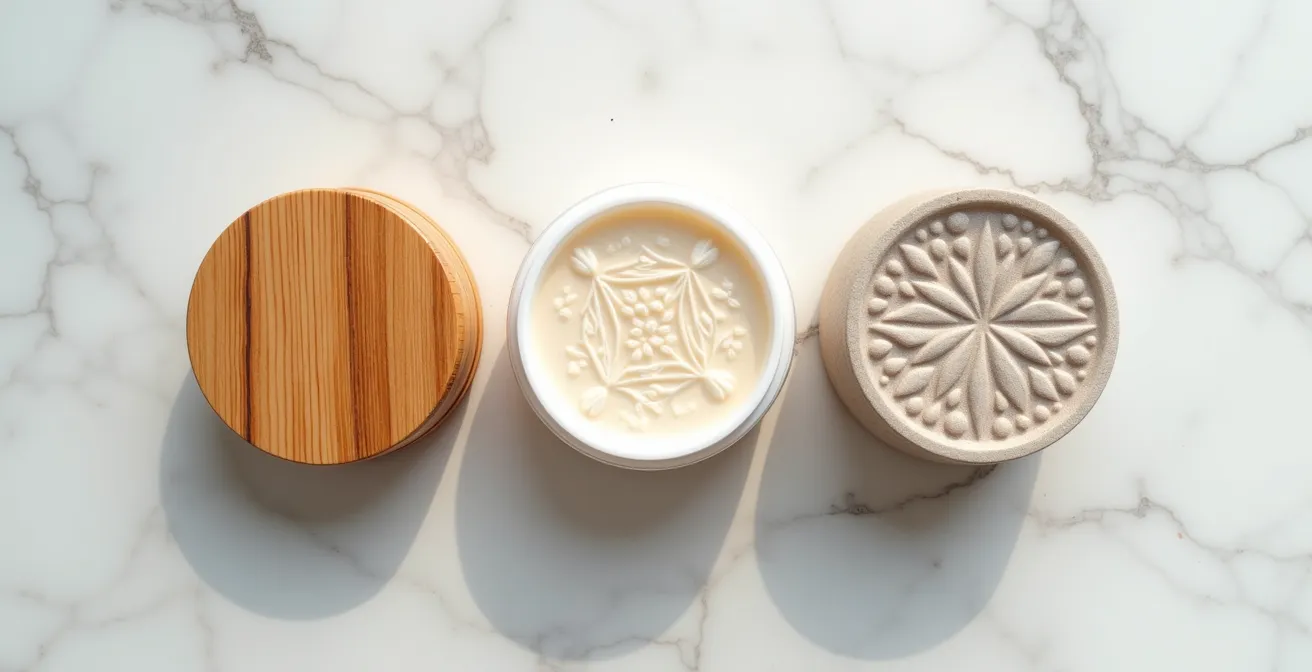
As the image above illustrates, brands leverage natural textures and imagery to imply an ethical stance that might not be true. The real investigation requires you to look past the packaging and check for cruelty-free certification. Furthermore, even if you are only focused on a vegan formula, you need to know what you’re looking for. Many common cosmetic ingredients are derived from animals but hide under unfamiliar names.
To avoid both the “vegan formula” trap and hidden animal products, you need to familiarize yourself with common ingredient aliases. The following list, with information verified by organizations like World Animal Protection, will help you decode those ingredient labels.
- Carmine / Cochineal / CI 75470: A red pigment made from crushed cochineal insects, commonly found in lipstick and blush.
- Lanolin / Aliphatic Alcohols: A moisturizing emollient derived from sheep’s wool, used in balms and creams.
- Guanine / CI 75170: A crystalline material derived from fish scales, used to create shimmer and iridescence in highlighters and eyeshadows.
- Casein / Sodium Caseinate: A protein derived from cow’s milk, sometimes used in hair conditioning treatments.
- Shellac / E904: A glaze secreted by the female lac bug, used to give a high-gloss finish to nails and hair.
How to Find Drugstore Dupes for High-End Cruelty-Free Makeup?
Transitioning to a cruelty-free lifestyle doesn’t mean you have to give up your favorite high-end products or break the bank. One of the most satisfying parts of being a home-goods investigator is becoming a “dupe detective”—finding affordable, cruelty-free alternatives at the drugstore that perform just as well as their luxury counterparts. This skill saves you money and expands your ethical shopping options.
The secret to finding a great dupe isn’t just about matching a color swatch; it’s about understanding the product’s formula and finish. A high-end foundation might have its magic in its silicone-based, matte-finish formula. Your mission is to find a cruelty-free drugstore foundation with a similar ingredient profile. This requires a methodical approach, but it’s easier than it sounds once you know the steps.
By following a simple method, you can deconstruct any high-end product and identify its most promising drugstore counterpart. This process empowers you to shop smart, no matter your budget.
- Analyze the Top Ingredients: Look at the first five ingredients of your high-end product. This tells you the base of the formula (e.g., water-based, silicone-based, oil-based).
- Identify the Finish: Note the product’s finish. Is it matte, dewy, satin, or luminous? This is a key performance characteristic you’ll want to match.
- Use Ingredient Comparison Tools: Websites like INCIdecoder or CosDNA allow you to paste an ingredient list and analyze the function of each component. This helps you understand what makes the product work.
- Cross-Reference with Cruelty-Free Databases: Once you have a potential drugstore dupe in mind, you must verify its cruelty-free status. Use a reliable database to ensure the brand meets strict ethical criteria. Many resources are dedicated to helping you shop truly cruelty-free no matter your budget.
- Read Reviews and Watch Videos: Search for reviews comparing the two products. Bloggers and YouTubers often do side-by-side comparisons that can confirm if the dupe is a true match in performance and color.
This detective work is supported by a community of experts who dedicate their time to maintaining these crucial databases. As the editorial team at Green Matters notes, these resources are invaluable for any ethical consumer.
Cruelty-Free Kitty and Ethical Elephant blogs — both of which operate meticulous databases of cruelty-free and vegan brands — are excellent additional resources.
– Green Matters Editorial Team, Green Matters – Cruelty-Free Living Guide
When to Throw Away Old Non-Vegan Makeup: Now or When Empty?
Once you’ve identified the non-cruelty-free items in your collection, you’ll face a common ethical dilemma: what do you do with them? Do you throw everything out immediately to maintain a “pure” collection, or do you use them up to avoid being wasteful? This is where the concept of “ethical triage” comes in—a practical, non-judgmental approach to managing your existing products.
The consensus among most ethical living advocates is clear: progress over perfection. The harm of animal testing has already been done when you purchased the product. Throwing away a barely-used item doesn’t undo that harm, and it creates unnecessary waste, which has its own environmental consequences. The most impactful action you can take is to commit to making better choices for all future purchases. Wasting a product doesn’t help animals; focusing your energy and money on supporting cruelty-free brands does.
So, what should you do with that expensive, non-vegan foundation that’s almost full? The most sustainable and pragmatic answer is to use it up. For other items, you have more options. If you have a barely-used lipstick or eyeshadow palette that you no longer feel comfortable using, consider sanitizing it and passing it to a friend or family member who will use it. Organizations like Project Beauty Share or local women’s shelters may also accept certain new or gently-used products. Some community theater groups are also grateful for donations of stage makeup. The key is to divert the item from the landfill whenever possible.
What about gifts? If a well-meaning friend gives you a gift that isn’t cruelty-free, thank them graciously for their thoughtfulness. You can then privately decide whether to use it up, regift it, or donate it. This can also be a gentle opportunity to educate them about your preferences for the future, perhaps by sharing the name of a cruelty-free brand you love.
Sustainable Fashion on a Budget: How to Quit Fast Fashion?
The principles of cruelty-free living extend far beyond cosmetics and into your closet. The fast fashion industry is not only notorious for its environmental impact and labor practices but also for its heavy reliance on animal-derived materials like leather, wool, silk, and down. Quitting fast fashion can feel like a daunting and expensive task, but just like with makeup, the key is a budget-conscious, strategic approach rather than a total wardrobe overhaul.
The first step is to slow down. Resist the urge to buy trendy, low-quality items. Instead, focus on building a “slow fashion” wardrobe with timeless, durable pieces. This often means buying fewer but better items. Thrifting and shopping at consignment stores are your best friends here. You can find high-quality, unique pieces at a fraction of their original cost, extending the life of existing garments and reducing demand for new production. Learning basic mending skills—like sewing a button or patching a hole—can also dramatically increase the lifespan of your clothes.
When you do buy new, investigate the materials. Many brands now offer innovative and sustainable alternatives to animal products that are far superior to the plastic-based “pleather” of the past. These next-generation materials address both animal welfare and environmental concerns.
Case Study: The Rise of Next-Generation Vegan Leathers
Innovative, plant-based materials are revolutionizing the fashion industry. Piñatex, a durable material made from pineapple leaf fiber waste, is now used by over 1,000 brands globally for everything from shoes to handbags. Mylo™, derived from mycelium (the root structure of mushrooms), has been adopted by luxury brands like Stella McCartney and Adidas for its soft, leather-like feel. Meanwhile, apple leather, created from the pomace waste of the juice industry, is becoming a popular choice for accessories. Unlike traditional PVC or polyurethane “vegan leathers,” these materials are largely biodegradable, tackling both the ethical and environmental problems of conventional leather.
Navigating Ethical Living: How to Handle Social Friction Without Losing Friends?
Transitioning to a cruelty-free lifestyle is a personal journey, but it often plays out in public. From explaining why you can’t use a friend’s lotion to navigating dinner invitations and holiday gifts, your new choices can create moments of social friction. The fear of being seen as difficult, preachy, or judgmental can be a significant source of anxiety. However, it’s entirely possible to stay true to your values without alienating the people you care about.
The key is to communicate with grace and positivity, focusing on what you *do* rather than what you *don’t*. Instead of simply rejecting something, use it as an opportunity to share something new. This is the “Positive Pivot”—a technique for turning a potentially negative interaction into a positive and educational one. It’s not about criticizing others’ choices, but about enthusiastically sharing your own discoveries. This approach invites curiosity rather than defensiveness.
Having a few pre-prepared, gentle scripts in your back pocket can make these situations feel much less intimidating. They provide a calm, confident way to state your preference while keeping the social dynamic friendly and open.
- For a non-vegan gift: “Thank you so much for thinking of me! I really appreciate the gesture. Lately, I’ve been exploring some amazing brands that focus on sustainability, I’d love to share what I’ve discovered!”
- For a dinner invitation: “I’d love to join! I’m trying out some new eating choices and I found this incredible vegan recipe I’m excited about. Would you mind if I brought a dish to share?”
- When asked for a product recommendation: “That brand sounds interesting! I’ve been focusing my routine on products that are fully cruelty-free. Have you heard about [alternative brand]? I’ve been so happy with their [product].”
By framing your choices as a positive journey of discovery, you open the door for others to learn without feeling judged. Your small, consistent actions send a powerful message that can inspire change in others.
When you choose ethical brands, industries take notice, because every sale sends a message that animals deserve respect. Together, our choices build momentum for a world where animals are protected and communities thrive on care, rather than harm. Small steps taken by many create a lasting impact.
– Humane World for Animals, A Consumer Guide to Cruelty-Free Products
Key Takeaways
- Investigation over assumption: A truly cruelty-free lifestyle requires looking beyond surface claims. Always verify a brand’s status with trusted certifications like Leaping Bunny or do your own research.
- “Vegan” does not equal “cruelty-free”: A product can be free of animal ingredients but still be tested on animals. These terms are not interchangeable.
- Adopt an ethical triage system: Don’t waste products you already own. Use them up and focus your energy and money on making better, informed choices for all future purchases.
Sustainable Fashion on a Budget: How to Quit Fast Fashion?
We’ve deconstructed misleading labels, learned to vet brands, and developed a strategy for managing the products we already own. The final step is to integrate these investigative skills into a holistic, sustainable lifestyle. Moving from a single audit to a habit of conscious consumption is where your choices create lasting change. This isn’t about a one-time purge but about building a new relationship with the things you bring into your home, from your mascara to your sweaters.
The core principle is to buy less, but buy better. Whether in beauty or fashion, this means prioritizing quality over quantity and timelessness over trends. It involves asking more questions before you purchase: Who made this? What is it made of? How was it tested? Will I use it for years to come? This mindset naturally leads you away from impulsive, disposable fast-fashion and toward thoughtful, durable investments. It encourages supporting small businesses, shopping secondhand, and celebrating the items you already have.
Embracing this lifestyle is a journey of continuous learning. New sustainable materials will be developed, regulations will change, and new, ethical brands will emerge. By staying curious and informed, you transform a potentially overwhelming task into an empowering and rewarding practice. Every dollar you spend is a vote for the kind of world you want to live in—one where transparency, compassion, and sustainability are the standard, not the exception.
Your journey to a cruelty-free home starts with a single step. Begin today by choosing one area—your makeup bag, your cleaning cabinet, or your closet—and start your first investigation. Your small, consistent actions are what build a more compassionate world.