Feeling trapped in a cycle of expensive, unhealthy takeout due to a lack of time or kitchen confidence? The solution isn’t about mastering complicated recipes. This guide reveals that true health autonomy comes from learning fundamental cooking systems—from meal planning to choosing the right tools—that make preparing nutritious food at home faster, cheaper, and simpler than ordering in.
You know the feeling. It’s the end of a long day, and the thought of figuring out what to cook, shopping for it, and then cleaning up feels completely overwhelming. In that moment, the siren song of a food delivery app is almost impossible to resist. It promises convenience, but it often delivers a meal high in hidden fats, sodium, and mystery ingredients, along with a side of guilt and a lighter wallet. For many, this cycle isn’t a choice; it’s a default setting born from a lack of confidence in the kitchen.
The common advice is to “just cook more” or “eat whole foods.” While well-intentioned, this ignores the real barriers: perceived lack of time, decision fatigue, and the intimidation of complex, picture-perfect recipes plastered all over social media. People don’t just need to know *that* home cooking is healthier; they need to believe they have the skills and systems to make it a sustainable reality in their busy lives.
But what if the secret to breaking free from takeout dependency wasn’t about becoming a gourmet chef overnight? What if the key was mastering a few fundamental principles that make home cooking consistently easier and more rewarding than ordering out? This is about shifting your mindset from recipes to systems, from complexity to simplicity. It’s about building a foundation of skill and knowledge that gives you ultimate control over your health, one simple, delicious meal at a time.
This guide is designed to be your coach. We will deconstruct the barriers holding you back and equip you with the core skills for true health autonomy. We’ll explore everything from the economics of restaurant food to the simple strategies that allow you to get a full dinner on the table faster than a delivery driver can find your address.
Summary: Why Home Cooking Is the Ultimate Skill for Your Long-Term Health
- Why Restaurants Use Seed Oils and How to Avoid Them at Home?
- Cast Iron vs. Non-Stick: Which Pan Lasts a Lifetime?
- Takeout vs. Home Cooking: The Real Price Difference Per Meal
- How to Cook a Full Dinner in the Time It Takes to Order Delivery?
- The “Pinterest Fatigue” Risk: Why Simple Meals Are Better Than Fancy Ones?
- Strategic Meal Planning for Busy Professionals: Saving 5 Hours Per Week
- Cooking with Whole Food Ingredients: 5 Rules for Maximum Flavor Retention
- Strategic Meal Planning for Busy Professionals: Saving 5 Hours Per Week
Why Restaurants Use Seed Oils and How to Avoid Them at Home?
One of the first steps toward health autonomy is understanding what goes into your food, especially the invisible ingredients like cooking oils. Restaurants, from fast-food chains to even high-end establishments, often rely heavily on refined seed oils like canola, soybean, corn, and sunflower oil. The reason is primarily economic: these oils are incredibly cheap, neutral in flavor, and have a high smoke point, making them ideal for deep-frying and high-volume cooking.
However, many of these oils have a high ratio of omega-6 to omega-3 fatty acids, which can contribute to inflammation when consumed in excess. At home, you have the power to break this cycle. It’s not about eliminating oils but about making strategic choices—developing what we can call “ingredient intelligence.” This means selecting the right oil for the right job, prioritizing healthier fatty acid profiles, and understanding how to store them to maintain their nutritional quality.
By choosing oils like extra virgin olive oil for dressings and low-heat cooking, or avocado oil for high-heat searing, you take back control. You’re no longer a passive consumer of a restaurant’s cost-saving measures; you are the active architect of your meal’s nutritional profile. This simple switch is a foundational skill in building a truly healthy kitchen system.
Cast Iron vs. Non-Stick: Which Pan Lasts a Lifetime?
Your cookware is a cornerstone of your kitchen system. The debate between cast iron and non-stick pans isn’t just about cooking performance; it’s about health, durability, and long-term value. Non-stick pans offer convenience with their easy cleanup, but their lifespan is notoriously short. The coating inevitably scratches and degrades, forcing a replacement every few years and raising concerns about potential exposure to PFAS chemicals, especially when overheated.
A well-maintained cast iron skillet, on the other hand, is an investment for life. With proper seasoning—the process of baking oil onto the surface to create a natural non-stick layer—it can be passed down for generations. It withstands incredibly high temperatures, moves seamlessly from stovetop to oven, and even enriches your food with a small, beneficial amount of dietary iron. It requires a little more care initially, but the payoff is a durable, versatile, and non-toxic cooking surface that only gets better with age.

Choosing cast iron is a perfect example of skill stacking. Learning to season and care for your pan is a small, one-time skill that pays dividends for a lifetime of cooking. It’s a deliberate choice to build a resilient kitchen, rather than relying on disposable convenience. This simple decision about what you cook on is as powerful as deciding what you cook in it.
The differences become stark when laid out side-by-side, making the long-term choice clear for anyone building a sustainable kitchen.
| Feature | Cast Iron | Non-Stick |
|---|---|---|
| Lifespan | 100+ years with care | 3-5 years average |
| Health Impact | Adds beneficial iron to food | Potential PFAS exposure at high heat |
| Temperature Range | Up to 500°F safely | Limited to 400°F |
| Maintenance | Requires seasoning | Easy cleanup |
| Cost Over Time | $30 one-time investment | $150+ over 20 years |
Takeout vs. Home Cooking: The Real Price Difference Per Meal
The “convenience” of takeout comes with a clear price tag on the receipt, but the true cost is often hidden. While a single home-cooked meal might seem to require a larger upfront grocery bill, the per-meal cost is dramatically lower. In fact, research from the University of Washington revealed that frequent home cooks spent about $60 less per month on food than those who ate out regularly. This financial saving is a direct reward for building an efficient kitchen system.
However, the most significant price difference isn’t measured in dollars but in health outcomes. Restaurant and takeout meals are engineered for hyper-palatability, often at the expense of nutrition. They typically contain far higher levels of calories, unhealthy fats, sugar, and sodium than a comparable meal made at home. This isn’t an opinion; it’s a measurable reality.
The contrast demonstrates that cooking at home isn’t just about saving money; it’s about avoiding a significant, hidden health tax. Each meal you prepare gives you a “health dividend” in the form of fewer empty calories and more nutrient-dense ingredients.
Case Study: The Johns Hopkins Look at Daily Consumption
Research from Johns Hopkins provided a stark comparison of daily intake. Adults who cooked dinner once a week or less consumed, on average, 2,301 calories, 84 grams of fat, and 135 grams of sugar daily. In contrast, those who embraced home cooking and made dinner six to seven times a week consumed only 2,164 calories, 81 grams of fat, and 119 grams of sugar on an average day. This illustrates a consistent, daily reduction in excess consumption simply by taking control of the cooking process.
How to Cook a Full Dinner in the Time It Takes to Order Delivery?
The number one barrier to home cooking is the perception that it takes too much time. But is that really true? The average delivery order involves browsing menus, placing the order, waiting for preparation, and the actual delivery time—often a 30 to 45-minute process. With an efficient kitchen system, you can have a fresh, healthy, and delicious meal on the table in that same window.
The key isn’t about rushing; it’s about workflow and parallel processing. Professional chefs don’t complete one task at a time; they have multiple things happening at once. You can apply the same logic. While the oven preheats, you gather your ingredients. While vegetables roast, you prepare a protein on the stovetop. This “Mise en Place” (everything in its place) approach turns cooking from a linear, time-consuming chore into a dynamic, efficient process.
Forget the idea that you need an hour of uninterrupted time. By mastering a simple, repeatable workflow, you can consistently beat the delivery driver. This skill transforms cooking from a burden into a powerful tool for reclaiming your evenings and your health.
Your Action Plan: The 30-Minute Dinner Strategy
- Minute 0-5: Preheat your oven to 425°F while gathering all ingredients from organized kitchen zones (pantry, fridge).
- Minute 5-10: Chop all your vegetables at once using efficient knife skills, avoiding piecemeal prep.
- Minute 10-15: Start your proteins (like chicken or fish) on the stovetop while placing the vegetables in the preheated oven.
- Minute 15-20: While the main components cook, prepare a simple sauce, dressing, or vinaigrette.
- Minute 20-25: Set the table and prepare any fresh garnishes (like herbs or lemon wedges) as everything finishes cooking.
- Minute 25-30: Plate the hot components and serve immediately, enjoying the meal at its optimal temperature and freshness.
The “Pinterest Fatigue” Risk: Why Simple Meals Are Better Than Fancy Ones?
In the age of social media, we are bombarded with images of complex, multi-component, restaurant-worthy meals. This can create “Pinterest Fatigue”—the feeling that if you can’t produce a masterpiece, it’s not worth trying at all. This mindset is a trap that leads directly back to the takeout menu. The truth is, for long-term health and consistency, simplicity is vastly superior to complexity.
The goal is not to impress, but to nourish. A simple meal built from a handful of high-quality, whole-food ingredients is nutritionally superior to almost any takeout option and far more sustainable to prepare night after night. The habit of consistent home cooking is what drives results. The evidence is compelling: a Johns Hopkins study found that 48% of participants who cooked dinner frequently also consumed fewer calories on the rare occasions they did eat out. The habit itself re-wires your choices.
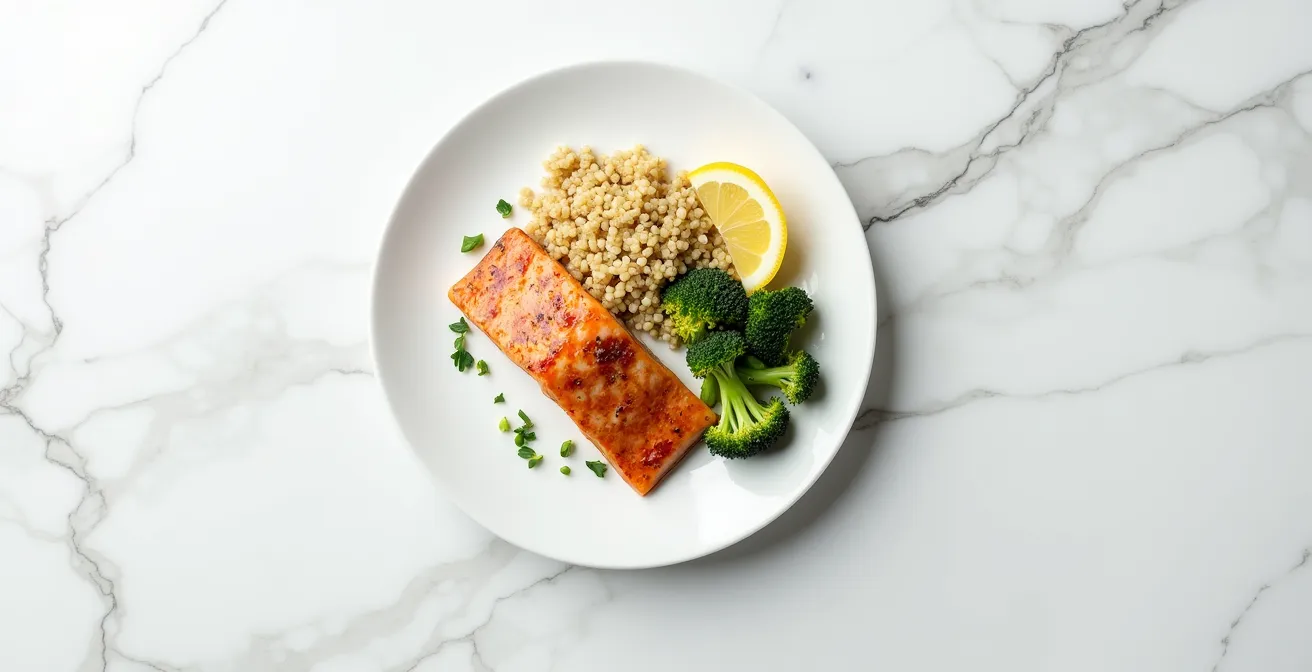
Instead of chasing elaborate recipes, focus on mastering a simple meal template: a lean protein, a fibrous vegetable, a healthy fat, and an optional complex carb. This framework eliminates decision fatigue and empowers you to create endless variations of balanced, satisfying meals without ever needing a formal recipe. It’s about building a repeatable system, not a one-off performance.
Strategic Meal Planning for Busy Professionals: Saving 5 Hours Per Week
For the busy professional, time is the most valuable currency. The daily question of “What’s for dinner?” is a significant source of mental drain and a major driver of takeout spending. Strategic meal planning is the single most effective system for reclaiming both your time and your mental energy. It’s not about rigid, boring meals; it’s about making one set of decisions on the weekend to free yourself from hundreds of small decisions during the week.
The core of this system is batch cooking. This technique involves preparing foundational ingredients in larger quantities ahead of time, which can then be assembled into various quick meals throughout the week. For example, cooking a large batch of quinoa on Sunday can become the base for a grain bowl on Monday, a side dish on Tuesday, and part of a stir-fry on Thursday. You cook once but eat three or four times with minimal extra effort.
This approach transforms your time in the kitchen from a daily chore into a high-leverage weekly investment. The two hours you spend on a Sunday afternoon can save you 30-45 minutes every single weeknight, easily adding up to five hours of reclaimed time per week. It is the ultimate productivity hack for your health.
The Power of Batch Cooking
Batch cooking allows you to maximize your time by preparing multiple meals in roughly the same time it would take to cook just one. The key is its versatility; by producing multipurpose meal components, you can create a wide variety of dishes. A batch of shredded chicken, for example, can be used in tacos, salads, soups, or sandwiches, preventing flavor fatigue and keeping your meals interesting and appealing all week long.
Cooking with Whole Food Ingredients: 5 Rules for Maximum Flavor Retention
Choosing whole food ingredients is the first step, but how you prepare them is what unlocks their full nutritional and flavor potential. Many home cooks miss out on incredible taste simply because they are unaware of a few basic culinary science principles. Mastering these rules elevates simple ingredients into something truly delicious, making healthy food something you crave, not just tolerate.
This “ingredient intelligence” is a critical skill. For instance, did you know that adding a healthy fat like olive oil to vegetables doesn’t just add flavor, but is essential for absorbing fat-soluble vitamins like A, D, E, and K? Or that a splash of acid, like lemon juice or vinegar, can help break down plant cell walls, making nutrients more available and brightening flavors? This knowledge is what separates bland “health food” from vibrant, satisfying cuisine. Adopting a diet rich in these well-prepared foods, like the Mediterranean diet, has profound benefits. In fact, numerous clinical trials have shown that a plant-based Mediterranean dietary pattern reduces the risk of heart disease, diabetes, and certain cancers.
These are not complicated chef secrets; they are simple, fundamental rules that anyone can apply to get more flavor and nutrition from their food. Learning them is another form of skill stacking that builds kitchen confidence and makes every meal more enjoyable.
- Rule 1: Add Healthy Fats to Vegetables. This enhances the body’s absorption of critical fat-soluble vitamins (A, D, E, and K).
- Rule 2: Use Acidic Ingredients Strategically. A splash of lemon juice or vinegar helps break down plant cell walls, tenderizing greens and making nutrients more bioavailable.
- Rule 3: Cook Tomatoes to Boost Nutrients. The process of heating tomatoes increases the bioavailability of the antioxidant lycopene by up to 35%.
- Rule 4: Cool Your Starches. Allowing cooked potatoes, rice, and pasta to cool creates resistant starch, a prebiotic fiber that feeds beneficial gut bacteria.
- Rule 5: Toast Spices Before Use. Gently heating whole or ground spices in a dry pan for a minute activates their essential oils, dramatically deepening their flavor and aroma.
Key Takeaways
- Lasting health comes from mastering simple cooking systems, not complex recipes.
- Choosing durable tools like cast iron and understanding ingredients like oils are foundational skills for an autonomous kitchen.
- Strategic meal planning, including batch cooking, can save you hours per week and eliminate daily decision fatigue.
Strategic Meal Planning for Busy Professionals: Putting Your 5-Hour Time-Saving System into Action
We’ve established the ‘why’ behind strategic meal planning; now it’s time for the ‘how.’ This is where theory becomes practice. A concrete weekly schedule is the scaffolding that makes your kitchen system work, turning good intentions into consistent, healthy meals. This is the final and most practical skill to master on your journey to health autonomy. The goal is to front-load your effort into a single, focused session so that your weeknights are free and effortless.
This system isn’t about eating the same bland meal every day. It’s about creating components that give you flexibility. Pre-chopped vegetables, cooked grains, and marinated proteins are your building blocks for fast, creative dinners. By freezing items in single-serving portions, you create your own healthy “convenience food” that’s ready whenever you need it.
This is the ultimate expression of a well-run kitchen system. It respects your time, nourishes your body, and permanently removes the stress of the daily “what’s for dinner” dilemma. This is how you win back your week and solidify your commitment to long-term health.
Your Weekly Time-Saving Schedule:
- Sunday (2 hours): This is your main prep session. Batch cook a versatile grain like quinoa or brown rice. Cook one or two lean proteins (e.g., grilled chicken, hard-boiled eggs). Chop a variety of vegetables like onions, bell peppers, and broccoli and store them in airtight containers.
- Pro Tip – Portioning: Use silicone muffin pans or ice cube trays to freeze perfect half-cup portions of cooked grains, beans, or even minced garlic and ginger in oil. Once frozen, pop them into a freezer bag for easy access.
- Wednesday (30 minutes): A quick mid-week refresh. Chop more delicate vegetables like leafy greens or prep a fresh sauce or dressing for the remainder of the week. This keeps your components fresh and your meals exciting.
- Throughout the Week: Keep a running grocery list on your fridge or phone. As soon as you use the last of an ingredient, add it to the list. This streamlines your next shopping trip into a quick, efficient errand.
You now have the framework and the fundamental skills to take back control of your kitchen. The journey to health autonomy begins not with a single, perfect meal, but with the first step toward building a better system. Start this week. Choose one strategy—whether it’s batch cooking a single grain or buying a cast iron pan—and put it into practice.