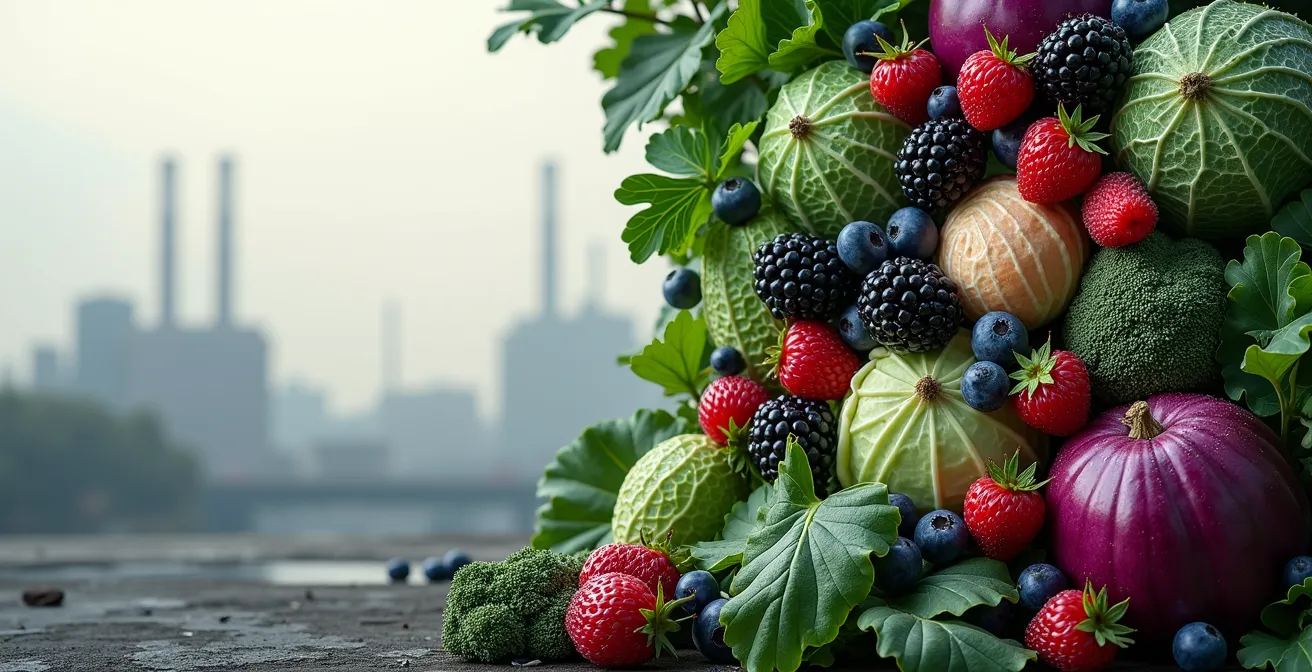
Your body is under constant attack from environmental pollutants, but a strategic, food-based approach can fortify its innate defenses and win the battle at a cellular level.
- Pollutant damage isn’t just superficial; it’s a deep cellular assault that accelerates aging by causing chronic inflammation and overwhelming your body’s repair systems.
- The most effective defense isn’t just eating antioxidants, but actively supporting your liver’s detoxification architecture, cultivating a robust gut microbiome, and timing nutrient intake around urban exposure.
Recommendation: Shift your mindset from passively consuming “superfoods” to actively building a resilient biological system that can neutralize environmental toxins before they do lasting harm.
Living in a modern city often comes with a persistent feeling of being drained, a low-grade fatigue that coffee can’t seem to fix. We blame long work hours or poor sleep, but what if the very air we breathe is waging a silent war on our bodies? We are constantly told to “eat more antioxidants” or “avoid pollution,” but this advice feels vague and powerless against the invisible threat of smog, heavy metals, and chemical contaminants that define urban life.
These generic tips fail to grasp the gravity of the situation. The fight against environmental toxins isn’t about adding a few more berries to your smoothie; it’s about understanding the cellular battlefield within you. Pollutants aren’t just irritants; they are triggers for a devastating process called oxidative stress, a primary driver of premature aging and chronic disease. The truth is, your body is already equipped with powerful, innate defense systems designed to handle these threats.
But what if the key wasn’t just to counter the damage after the fact, but to proactively reinforce your body’s own defensive walls? This guide moves beyond the platitudes to offer a new perspective. We will explore how to transition from being a passive victim of pollution to an active commander of your cellular health. It’s time to stop just defending and start fortifying.
This article will provide a strategic blueprint for reinforcing your body’s natural defenses. We will delve into the science of oxidative stress, the architecture of your liver’s detoxification pathways, and the critical role of your gut, providing you with actionable food-based strategies to protect your health in a toxic world.
Contents: The Complete Guide to Fighting Back Against Pollutant-Driven Aging
- Why Oxidative Stress Is the Primary Driver of Premature Aging?
- How to Support Your Liver’s Detox Pathways with Cruciferous Vegetables?
- Psychological Stress vs. Chemical Stress: Do They Damage Cells Differently?
- The Risk of Overtraining and Oxidative Damage in Endurance Athletes
- When to Prioritize Rest Over Workouts for Cellular Repair?
- Can a Whole Food Diet Reduce Chronic Inflammatory Markers in 8 Weeks?
- DIY vs. Store-Bought: Which Antioxidant Superfood Blends Actually Work?
- How to Cultivate a Diverse Microbiome After a Course of Antibiotics?
Why Oxidative Stress Is the Primary Driver of Premature Aging?
Oxidative stress is more than a buzzword; it’s a state of imbalance at the very core of your cells. It occurs when your body’s production of unstable molecules called free radicals overwhelms its antioxidant defenses. Environmental pollutants—like PM2.5 air pollution, heavy metals in water, and pesticides on food—are prolific generators of these free radicals. This isn’t just a minor issue; research shows that metabolic dysfunction affects 93% of Americans, a condition deeply intertwined with oxidative stress. This constant molecular assault is the engine of premature aging.
The damage manifests in ways that are both invisible and strikingly visible. A groundbreaking 2022 study in *Frontiers in Physiology* established a direct link between environmental pollutants and accelerated aging. Researchers found that these toxins trigger a state of chronic, low-grade inflammation, a process now termed “inflammaging.” This isn’t a hypothetical threat. The study detailed how pollutants like PM2.5 particles and heavy metals directly cause visible signs of aging, such as hyperpigmentation (age spots), skin lesions, and even hair thinning by shortening our cellular timekeepers, the telomeres.
Think of your body as a fortress under constant, multi-pronged attack. PM2.5 particles from traffic exhaust target your lungs and skin. Heavy metals like lead and mercury infiltrate your systems and disrupt the mitochondria, your cells’ power plants. Persistent organic pollutants from industrial chemicals accumulate in fatty tissues, creating a long-term source of oxidative damage. This is the cellular battlefield, and understanding the enemy is the first step to building a resilient defense.
How to Support Your Liver’s Detox Pathways with Cruciferous Vegetables?
Your liver is the master command center for detoxification, an incredibly sophisticated piece of biological machinery. It operates a two-phase system—the body’s detoxification architecture—to neutralize and eliminate toxins from environmental pollutants. Phase I enzymes begin the process by making toxins more water-soluble, but this can sometimes make them temporarily more reactive. Phase II is the critical follow-up, where enzymes attach another molecule to the toxin, rendering it harmless and ready for excretion. A bottleneck in Phase II is a major vulnerability, leaving you exposed to these reactive intermediates.
This is where cruciferous vegetables like broccoli, kale, cauliflower, and Brussels sprouts become strategic weapons. They are uniquely rich in a compound called sulforaphane, which is a potent activator of the Nrf2 pathway—the master regulator that switches on your body’s antioxidant and Phase II detoxification enzymes. Consuming these vegetables is like sending in reinforcements to ensure your liver’s assembly line runs smoothly and efficiently, preventing toxic buildup.
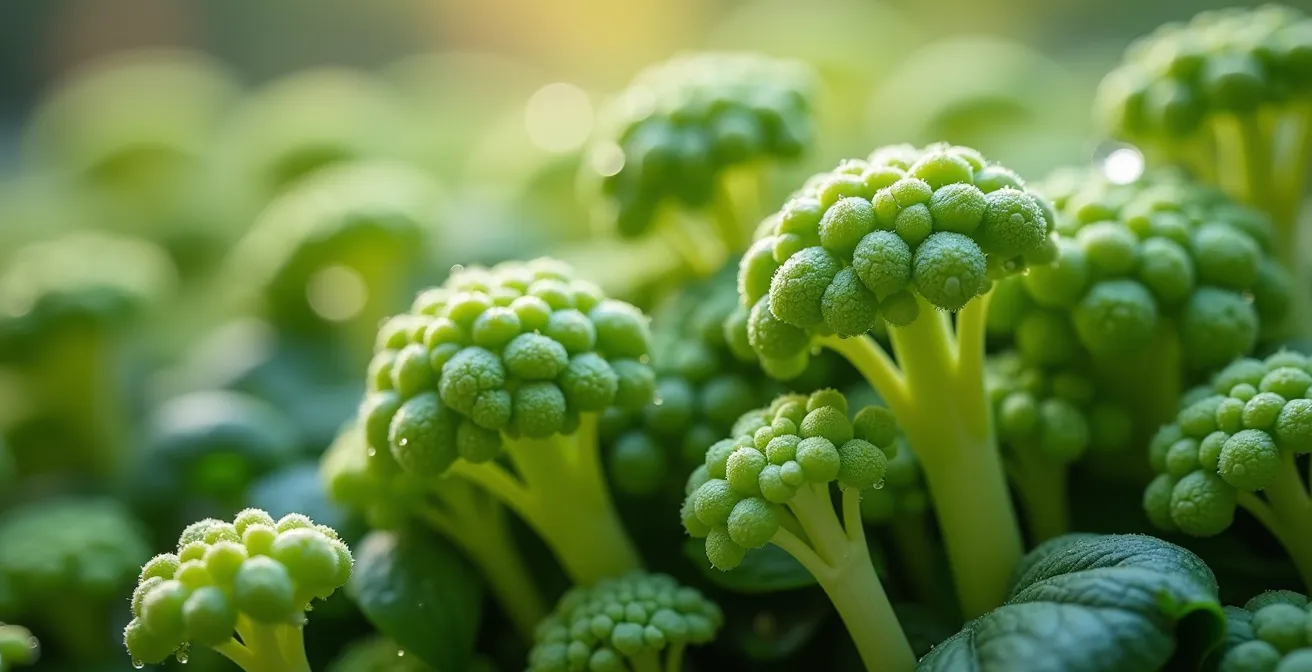
Simply eating these vegetables is good, but you can dramatically enhance their power. The formation of sulforaphane requires an enzyme called myrosinase, which is released when the plant is chopped or chewed. However, this enzyme is heat-sensitive. To maximize the benefit, here’s a pro tip: add a pinch of mustard seed powder to your cooked cruciferous vegetables. A 2024 study found that this simple trick can be incredibly effective, as research demonstrates that adding mustard seed powder to broccoli provides a source of myrosinase that can boost sulforaphane bioavailability by up to 3.8 times.
Psychological Stress vs. Chemical Stress: Do They Damage Cells Differently?
We often separate stress into categories: the psychological burden of a looming deadline versus the chemical burden of breathing polluted air. But on the cellular battlefield, these two enemies often collaborate to amplify their destructive power. While the initial triggers are different, their damaging pathways converge, creating a perfect storm of oxidative stress that your body struggles to overcome. This synergy is a critical, and often overlooked, factor in modern health decline.
As endocrinologist Dr. Robert Lustig explains, the two are dangerously intertwined. He notes:
Psychological stress via cortisol actively impairs the liver’s detoxification pathways, especially Phase II, making the body less effective at handling chemical stress and thus multiplying its damaging effects.
– Dr. Robert Lustig, The Doctor’s Kitchen Podcast, Episode 209
This isn’t just a theory. A stark clinical observation of depressed patients under suicide watch revealed that while they were losing overall weight from not eating, they were paradoxically gaining fat in their liver and around their organs. This demonstrates that psychological stress alone, through the hormone cortisol, can directly trigger metabolic dysfunction and cripple the liver’s ability to process toxins. In essence, mental stress lowers your defenses, making you more vulnerable to the chemical onslaught from your environment.
The ultimate proof of this convergence lies at the molecular level. Scientists have found that both high cortisol levels from psychological stress and exposure to chemical stressors like heavy metals activate the same master inflammatory switch in the cell. In fact, studies confirm that psychological stress and heavy metals activate the same NF-κB inflammatory pathway, showing a near-perfect overlap in how they generate cellular damage. They are not two separate problems, but two different triggers for the same fire.
The Risk of Overtraining and Oxidative Damage in Endurance Athletes
For the health-conscious urban dweller, daily exercise is a non-negotiable ritual. But this healthy habit contains a hidden paradox. While exercise is a potent antioxidant in the long term, the act of exercising in a polluted environment can dramatically increase your toxic load. Your breathing rate and volume skyrocket during a workout, causing you to inhale a much greater volume of airborne pollutants like PM2.5 particles and diesel exhaust.
The numbers are staggering. Research on environmental health has shown that the simple act of going for a run or bike ride in a typical urban setting can be a major exposure event. In fact, environmental research shows that exercising in polluted urban areas causes a 4-fold increase in the dose of inhaled pollutants compared to being at rest. This creates a double-whammy of oxidative stress: the natural stress from the exercise itself, compounded by a massive influx of free-radical-generating pollutants delivered deep into your lungs.

This doesn’t mean you should stop exercising. It means you must be strategic. The key is to time your nutritional defenses to support your body before, during, and after exposure. Avoid taking high-dose antioxidant supplements right around your workout, as this can blunt the beneficial “hormesis” effect of exercise. Instead, focus on whole-food-based strategies. For instance, consuming Vitamin C-rich foods like citrus or bell peppers a couple of hours before your workout can prime your defenses, while drinking tart cherry juice afterward can aid recovery by tamping down excessive inflammation.
When to Prioritize Rest Over Workouts for Cellular Repair?
In our productivity-obsessed culture, rest is often seen as a luxury or a sign of weakness. We push through fatigue, believing another workout or another hour of work is the path to success. But at the cellular level, rest is not optional—it is a critical and active process of repair and detoxification. When you’re under a high oxidative load from environmental and psychological stress, prioritizing rest over another high-intensity workout is not quitting; it is a strategic decision to allow your body to win the war.
The consequences of ignoring your body’s need for rest can be severe. A shocking 2020 study published in the journal *Cell* revealed just how vital this downtime is. Researchers found that prolonged sleep deprivation in fruit flies led to death, not from neural fatigue, but from a massive accumulation of reactive oxygen species (ROS)—a type of free radical—specifically in their gut. This demonstrates that sleep is the non-negotiable time when your body’s janitorial crews are working to clear out the oxidative debris accumulated during the day. Skipping rest is like letting the garbage pile up until the entire system breaks down.
Your body sends clear signals when its oxidative load is outpacing its repair capacity. The key is to learn to listen to these bio-signals instead of just looking at your training schedule. Paying attention to these metrics is a powerful way to practice systemic fortification. If you see these signs, it’s a clear message from your cells to prioritize recovery, sleep, and gentle movement over a strenuous workout:
- Your resting heart rate is elevated by 5 or more beats per minute above your baseline.
- Your Heart Rate Variability (HRV), a measure of stress resilience, has dropped by 10% or more.
- You feel persistent morning fatigue, even after getting a full night’s sleep.
- You experience delayed onset muscle soreness (DOMS) that lasts for three or more days after a minor workout.
- You notice an increased susceptibility to colds and infections, or find that small cuts are healing more slowly.
Can a Whole Food Diet Reduce Chronic Inflammatory Markers in 8 Weeks?
Yes, absolutely. A well-constructed whole food diet can dramatically reduce the chronic inflammatory markers associated with environmental pollutant exposure, with measurable changes often seen in as little as eight weeks. This isn’t about a single “magic” food, but about orchestrating a symphony of anti-inflammatory compounds, fiber, and nutrients that work together to cool the fires of inflammaging and support your body’s innate defense systems.
The power of a whole food approach lies in its multi-faceted attack on inflammation. First, it’s about what you’re adding. A diet rich in a variety of colorful plants provides a wide array of phytonutrients—compounds like flavonoids, carotenoids, and polyphenols—that act as antioxidants and signaling molecules. They don’t just neutralize free radicals; they actively communicate with your genes to down-regulate inflammatory pathways like NF-κB. Foods like wild-caught salmon and sardines provide omega-3 fatty acids, which are the direct precursors to the body’s own powerful anti-inflammatory molecules called resolvins.
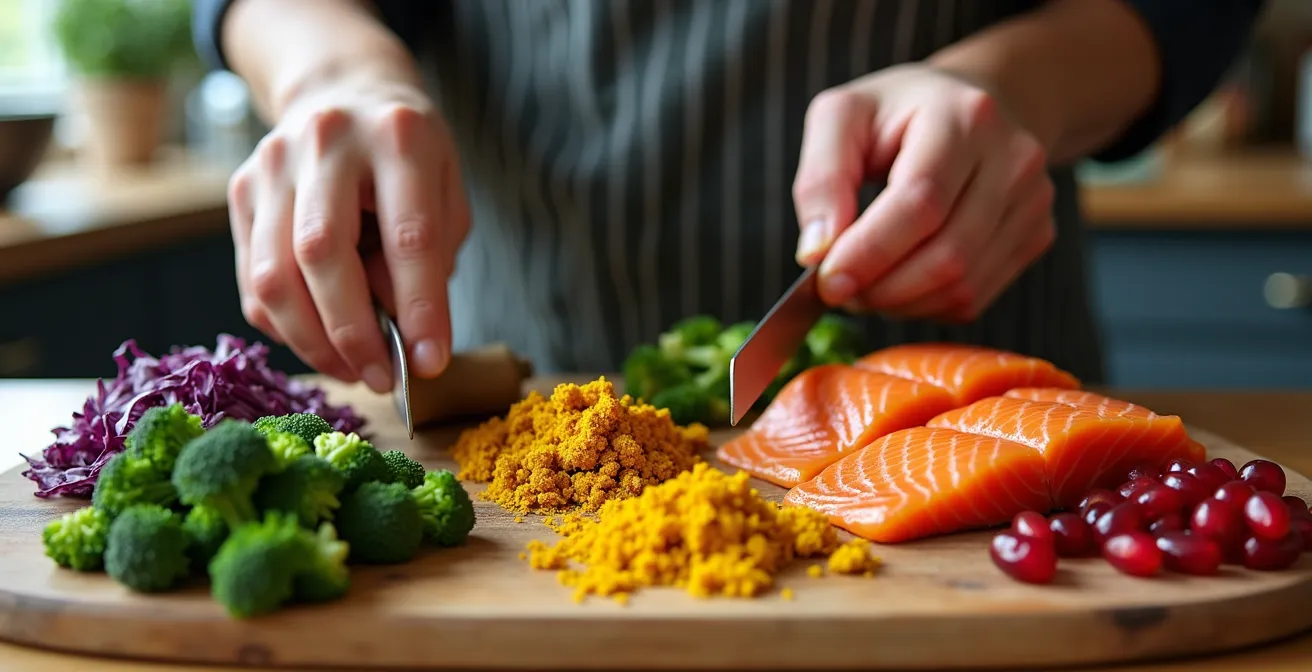
Second, and just as important, it’s about what you’re removing. Processed foods, refined sugars, and industrial seed oils are major drivers of inflammation. They can spike blood sugar, damage the gut lining, and provide the raw materials for pro-inflammatory pathways. By replacing these with nutrient-dense whole foods, you starve the fire of inflammation at its source. Furthermore, the high fiber content of a whole food diet is crucial. Fiber feeds the beneficial bacteria in your gut, which in turn produce short-chain fatty acids like butyrate—a potent anti-inflammatory compound that helps maintain the integrity of your gut barrier, your first line of defense against toxins.
DIY vs. Store-Bought: Which Antioxidant Superfood Blends Actually Work?
The wellness market is flooded with vibrant green and red powders promising a convenient blast of antioxidant power. While the idea is appealing, the reality is that many store-bought “superfood” blends are little more than expensive, oxidized dust. The journey from fresh plant to powdered supplement is fraught with peril for delicate phytonutrients, and time on the shelf is their greatest enemy.
The primary issue is potency degradation. Antioxidants, by their very nature, are reactive molecules. This is great when they are neutralizing free radicals in your body, but it also means they readily degrade when exposed to oxygen, light, and heat during processing and storage. In fact, the loss of potency can be dramatic. For example, some storage studies reveal that powdered antioxidants lose up to 40% of their potency after just six months on a shelf. Without a clear manufacture date on the package, you could be paying a premium for a product that has lost a significant portion of its protective power.
While a fresh, DIY blend made from whole foods is always superior, it’s not always practical. If you do opt for a store-bought product, you must become a savvy detective, learning to read between the lines on the label. Many products use cheap fillers and marketing tricks that hide a low-quality formula. Being empowered to spot these red flags is your best defense against wasting money and putting your trust in an ineffective product.
Your Audit Checklist: Spotting Ineffective Antioxidant Blends
- Proprietary Blends: Check if the label lists ingredients under a “proprietary blend.” This is a major red flag, as it allows companies to hide the exact dosage of each ingredient, often front-loading the blend with the cheapest components.
- Filler Ingredients First: Scan the first few ingredients. If you see things like sunflower lecithin, “natural flavors,” or other fillers listed before the actual superfoods, the product is likely low in active compounds.
- “Natural Flavors” listed: Be wary of this term. It is often used to mask the taste of oxidized, stale, or low-quality ingredients. A high-quality product should taste like the foods it’s made from.
- No Manufacture Date: Look for a “manufactured on” date, not just an expiration date. If you can’t tell how old the product is, you can’t assess its potential freshness and potency.
- Heat-Processing Indicators: Watch for terms like “spray-dried” or “instantized.” While common, these high-heat processing methods can significantly damage heat-sensitive nutrients and enzymes.
Key Takeaways
- Fortify Your Liver: Your liver’s Phase II detox pathway is a critical defense. Prioritize cruciferous vegetables and use hacks like adding mustard seed to boost their power.
- Defend Your Gut Barrier: A diverse microbiome is your first line of defense, binding toxins and reducing inflammation. Support it with a wide variety of plant fibers and fermented foods.
- Be Strategic, Not Just Active: Urban exercise increases pollutant exposure. Time your whole-food nutrient intake (Vitamin C, polyphenols) to prime your defenses before workouts and aid recovery after.
How to Cultivate a Diverse Microbiome After a Course of Antibiotics?
Your gut microbiome—the trillions of bacteria residing in your intestines—is far more than just a digestive aid. It is an active and essential organ of detoxification and a cornerstone of your innate defense systems. This microbial community forms a physical barrier along your intestinal lining, preventing toxins from entering your bloodstream. It also plays a direct role in metabolizing and neutralizing harmful compounds.
As a research team from *Frontiers in Nutrition* highlights, this defensive wall is critically important and dangerously fragile:
A healthy microbiome forms a physical barrier and metabolizes toxins, a defense which is ‘down’ after antibiotics, leaving the body vulnerable to environmental pollutants.
– Frontiers in Nutrition Research Team, Oxidative Stress and Food as Medicine
A course of antibiotics, while sometimes medically necessary, is like a forest fire for this delicate ecosystem. It wipes out both harmful and beneficial bacteria, leaving your primary defensive barrier compromised. This creates a window of vulnerability where environmental toxins, like heavy metals, have a much easier time being absorbed into your system. Rebuilding this ecosystem isn’t just about taking a generic probiotic; it requires a strategic approach focused on diversity.
The goal is to re-seed and nourish a wide variety of beneficial species. This involves a two-pronged strategy. First, introduce beneficial bacteria through fermented foods like kimchi, sauerkraut, kefir, and unsweetened yogurt. Different fermented foods contain different strains, so variety is key. Second, you must feed these new residents with a diverse array of prebiotic fibers from at least 30 different plant sources per week. Think onions, garlic, asparagus, artichokes, and a wide mix of fruits, vegetables, and legumes. Specific probiotic strains have even shown remarkable abilities; for example, clinical research demonstrates that the strain *Lactobacillus rhamnosus* has the capacity to bind to heavy metals in the gut, effectively preventing their absorption and helping to restore this critical first-line defense after antibiotic use.
Start building your cellular fortress today. The deliberate choice to nourish your body with these strategic foods is your most powerful act of defiance against a toxic world. Your health is in your hands.