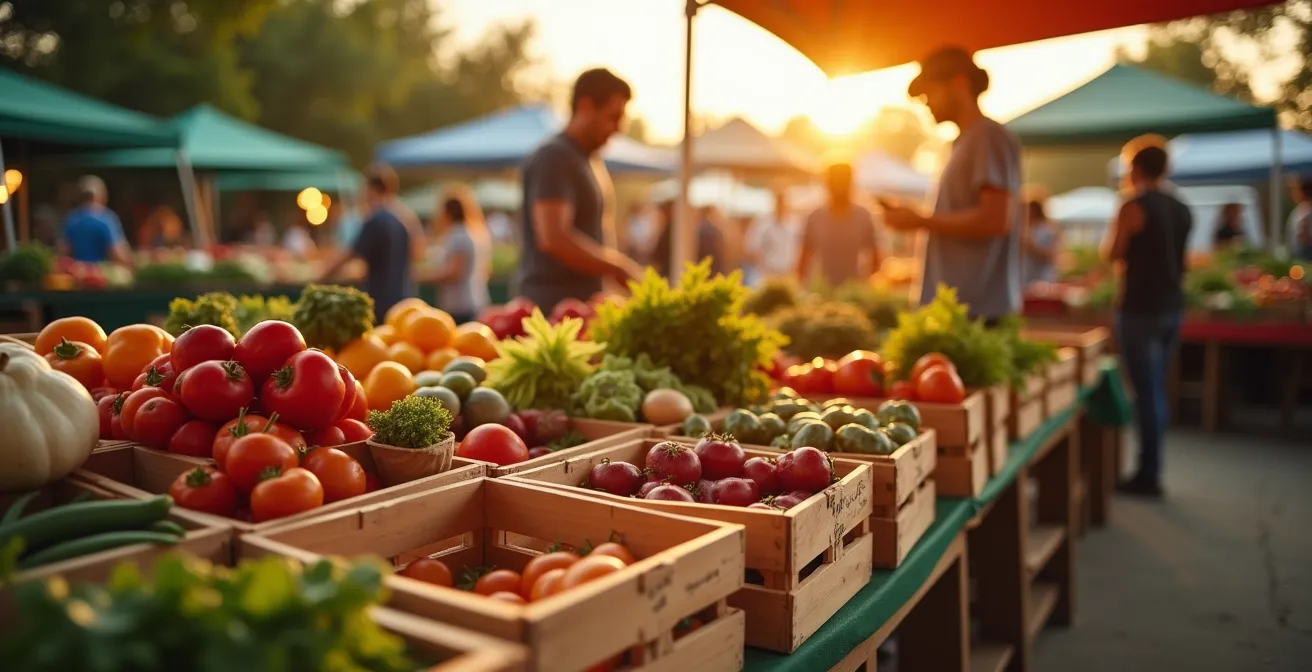
Contrary to popular belief, simply buying “local” or “organic” does not guarantee a lower environmental impact; the real key lies in understanding the entire production system behind your food.
- The energy used for production (like heated greenhouses) often creates a far larger carbon footprint than long-distance transportation.
- Waste, both in packaging and food scraps, is a massive and frequently overlooked contributor to greenhouse gas emissions.
Recommendation: Shift your focus from simple labels to a systemic view, prioritizing seasonal eating, minimizing all forms of waste, and scrutinizing the production methods behind your food choices.
As an environmentally conscious consumer, you stand in the grocery aisle weighing your options. The conventional wisdom is clear: buy local, choose organic, and avoid plastic. We’ve been told these are the golden rules for a sustainable kitchen, a straightforward path to reducing our carbon footprint. We fill our carts with produce from nearby farms and products in paper packaging, confident we’re making a difference. This approach, while well-intentioned, often overlooks the complex and sometimes counterintuitive realities of global food systems.
The problem is that these simple rules fail to account for the hidden variables—the “carbon trade-offs” inherent in getting food from farm to fork. What about the energy required to grow local tomatoes in a heated greenhouse during winter? Or the fact that some “eco-friendly” packaging is unrecyclable and contaminates waste streams? The true impact of our food is not just about food miles or a single certification; it’s a systemic footprint that includes land use, water consumption, processing, and the pervasive issue of waste.
But what if the key wasn’t just following rules, but understanding the system itself? This article moves beyond the platitudes to give you the data-driven insights of an environmental scientist. We will dissect the entire lifecycle of your food, revealing where the most significant impacts truly lie. By equipping you with a deeper “ingredient intelligence,” you can move from a follower of trends to a genuinely informed decision-maker. We’ll explore why local isn’t always better, how to decode misleading green packaging, and uncover the hidden costs of everyday items, empowering you to make choices that create a real, measurable positive impact.
This guide will navigate you through the critical data points and strategic shifts needed to align your grocery habits with your environmental values. Let’s delve into the science behind a truly sustainable plate.
Summary: A Data-Driven Path to a Lower-Impact Plate
- Why Buying “Local” Isn’t Always the Most Sustainable Choice in Winter?
- How to Achieve a Zero-Waste Kitchen Routine in 5 Simple Steps?
- Organic vs. Regenerative Agriculture: Which One Actually Saves the Soil?
- The “Green” Packaging Trap That Misleads 60% of Eco-Conscious Shoppers
- When to Buy Specific Produce: A Calendar to Minimize Environmental Impact
- Industrial Farming vs. Water Scarcity: The Hidden Cost of Your Burger
- The Truth About Textile Waste: What Actually Happens to Donated Clothes?
- Transitioning to a Cruelty-Free Lifestyle: Hidden Animal Products in Your Home
Why Buying “Local” Isn’t Always the Most Sustainable Choice in Winter?
The “buy local” mantra is perhaps the most cherished rule in the sustainable eating playbook. The logic feels irrefutable: fewer food miles must equal a smaller carbon footprint. While this is often true for seasonal produce grown in its natural climate, the equation flips dramatically when we demand out-of-season foods. The real culprit in our food’s carbon footprint is frequently production, not transportation. Consider the winter tomato. To grow it locally in a cold climate, a farmer must use a heated greenhouse, a process that consumes a staggering amount of energy.
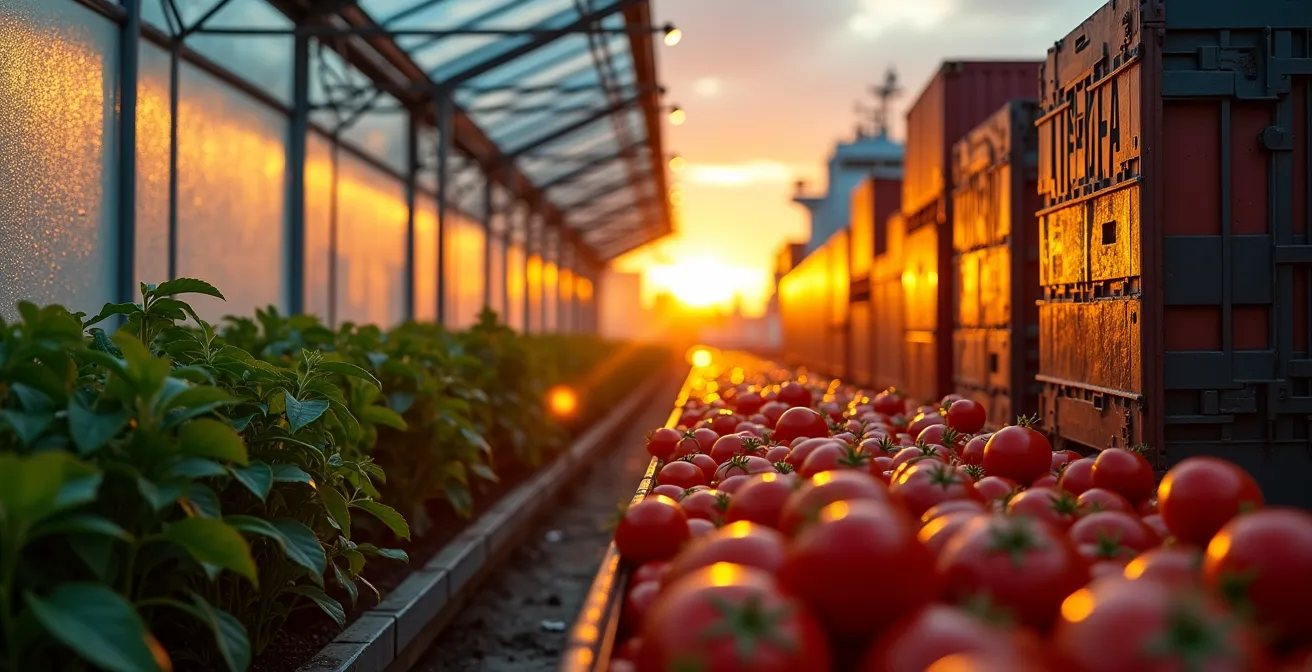
This visual metaphor highlights the critical carbon trade-off. The energy to heat the greenhouse often results in a far higher carbon footprint than shipping the same product from a region where it grows naturally in the sun. In fact, compelling research shows that tomatoes produced in Swedish greenhouses used ten times more energy than tomatoes imported from Southern Europe, where they grow in open fields. This demonstrates that where and how a food is grown matters immensely more than the distance it travels. A University of Michigan study further complicates the narrative, finding urban farms can have a higher carbon footprint than conventional agriculture due to infrastructure and management, though soil-grown urban tomatoes were a notable exception.
This doesn’t mean “local” is a useless metric. It’s a powerful tool when applied correctly—for in-season produce from farms using sustainable practices. But for true impact, our purchasing decisions must be guided by seasonality and production methods, not just proximity. Acknowledging these carbon trade-offs is the first step toward making genuinely informed choices.
How to Achieve a Zero-Waste Kitchen Routine in 5 Simple Steps?
While we debate production methods and transport, a colossal source of emissions is hiding in plain sight: our trash can. The environmental cost of food waste is catastrophic. When food is thrown away, we waste all the resources used to grow, process, and transport it. Worse, when it rots in a landfill, it releases methane, a greenhouse gas far more potent than carbon dioxide. Globally, over 1 billion tons of food—17% of all food available to consumers—is wasted annually, contributing up to 10% of all greenhouse gas emissions. Tackling this issue is not optional; it is an urgent priority for any meaningful climate action in the kitchen.
Achieving a zero-waste kitchen is not about perfection, but about implementing a conscious, systemic approach to managing resources. It requires shifting our mindset from “disposable” to one of “valorization,” where every scrap is seen as a potential resource. This means preventing waste before it even enters the home, managing what we have with intention, and responsibly handling what little is left over. By adopting a few key habits, you can dramatically reduce your household’s contribution to this global problem and create a more resilient and efficient kitchen.
The journey to zero waste is a practical one, built on observation, planning, and rediscovering traditional skills. The following plan provides a clear roadmap to transform your kitchen routine from a linear path to the landfill into a circular system of use and reuse.
Your Action Plan: The 5 Steps to a Zero-Waste Kitchen
- Pre-cycle: Actively choose packaging-free products and buy “ugly” or imperfect produce to prevent waste before it even enters your home. This is the most powerful step.
- Conduct a Kitchen Waste Audit: For one week, track everything you throw away. This will reveal your personal waste hotspots (e.g., vegetable peels, stale bread) and allow you to create targeted strategies.
- Master Preservation: Learn ancestral techniques like lacto-fermentation, dehydration, and pickling. These methods manage seasonal abundance and transform items on the verge of spoiling into delicious, shelf-stable foods.
- Practice Energy-Efficient Cooking: Embrace batch cooking to make multiple meals at once and use residual oven heat to warm plates or toast nuts, reducing energy waste from appliances.
- Implement Composting: For the few unavoidable food scraps like coffee grounds and eggshells, set up a composting system. This prevents methane emissions and creates a valuable nutrient-rich resource for soil.
Organic vs. Regenerative Agriculture: Which One Actually Saves the Soil?
The “organic” label has long been the consumer’s go-to shorthand for “better.” It guarantees the absence of synthetic pesticides and fertilizers, which is a significant win for local ecosystems and personal health. However, from a climate perspective, “organic” is only part of the story. It is a system of “do nots”—don’t use chemicals, don’t use GMOs. While valuable, it doesn’t inherently mandate practices that actively rebuild soil health or sequester carbon. This is where regenerative agriculture enters the conversation, shifting the focus from simply sustaining to actively restoring.
Regenerative agriculture is a holistic land management practice that leverages the power of photosynthesis in plants to close the carbon cycle. Its core principles include minimizing soil disturbance (no-till farming), keeping the soil covered with cover crops, and integrating livestock to mimic natural grazing patterns. These practices do more than just grow food; they build soil organic matter, enhance the water cycle, and increase biodiversity. As the UN Food and Agriculture Organization notes, this approach can turn farms into powerful carbon sinks.
Regenerative agriculture practices like no-till farming and cover crops actively draw carbon from the atmosphere and store it in the soil, turning farms into carbon sinks.
– UN Food and Agriculture Organization, Food and Climate Change Report 2024
This distinction is critical. While conventional agriculture is a major source of emissions, responsible for a huge portion of methane and nitrous oxide, regenerative practices offer a pathway to make farming a climate solution. It’s about seeing soil not as a dirt-based medium, but as a living ecosystem that is the foundation of our entire food system. When you support farms practicing regenerative techniques, you’re not just buying food; you’re investing in soil restoration, water conservation, and atmospheric carbon reduction.
The “Green” Packaging Trap That Misleads 60% of Eco-Conscious Shoppers
After carefully selecting your produce, the next battleground is packaging. Marketers are well aware of consumer desire for sustainable options, leading to a surge of “green” and “eco-friendly” claims on everything from snack bags to beverage containers. This is the “green packaging trap”—the use of materials and labels that seem environmentally friendly but whose end-of-life reality is far from it. Many well-intentioned shoppers are led to believe they are making a better choice, when in fact they may be contributing to a more complex waste problem.

The most common culprits are bioplastics (like PLA). Often labeled “compostable,” they give the impression of breaking down naturally. The reality is they only decompose in high-temperature industrial composting facilities, which are inaccessible to the vast majority of the population. When thrown in regular trash, they end up in a landfill like normal plastic. Worse, when mistakenly placed in recycling, they contaminate the entire stream of conventional plastics, rendering large batches unrecyclable. The solution isn’t to find the “perfect” package, but to understand the trade-offs of each material and prioritize reduction above all.
To navigate this complex landscape, a clear-eyed comparison of materials is essential. The following table breaks down the real-world impact of common packaging types, moving beyond marketing claims to reveal their true biodegradability, recycling reality, and carbon impact.
| Packaging Type | Biodegradability | Recycling Reality | Carbon Impact |
|---|---|---|---|
| Conventional Plastic | Non-biodegradable | Less than 10% actually recycled | High |
| Bioplastics (PLA) | Only in industrial composting facilities | Contaminates regular plastic recycling | Medium-High |
| Paper/Cardboard | Biodegradable | Widely recyclable | Low-Medium |
| Glass | Non-biodegradable | Infinitely recyclable | High transport emissions |
| Aluminum | Non-biodegradable | Highly recyclable (75%) | Low when recycled |
When to Buy Specific Produce: A Calendar to Minimize Environmental Impact
Synchronizing your diet with the seasons is one of the most powerful and intuitive strategies for reducing your food’s carbon footprint. Eating seasonally naturally guides you toward produce that is grown in its optimal conditions, minimizing the need for energy-intensive inputs like heated greenhouses or long-term cold storage. This approach directly addresses the production-side emissions that, as we’ve seen, often dwarf the impact of transportation. In fact, a surprising Our World in Data analysis reveals that transport accounts for just 5% of food system emissions globally. What you eat is far more important than where it came from.
Creating a seasonal eating strategy isn’t about rigid deprivation; it’s about embracing abundance and planning ahead. It involves enjoying fresh, local produce at its peak and using preservation techniques to extend that bounty into the leaner months. This creates a rhythm in the kitchen that connects you to natural cycles and builds food resilience. For items that don’t grow in your region at all, like coffee or bananas, the focus shifts to choosing sources with the best year-round growing conditions and ethical labor practices, rather than seeking out a flawed “local” alternative.
A mental calendar of produce helps to make this abstract concept concrete. By understanding the natural cycles of growth and harvest, you can build a pantry that works with nature, not against it. This isn’t just an environmental strategy; it’s a culinary one, as food eaten in its proper season invariably offers superior flavor and nutritional value. The following guide provides a framework for this seasonal approach.
A Strategic Guide to Seasonal Eating
- Spring: Focus on what emerges first. This is the time for tender leafy greens, asparagus, radishes, and early berries. Eat them fresh and preserve any excess through light pickling or freezing.
- Summer: This is the peak of abundance for most fruits and vegetables like tomatoes, zucchini, and peaches. Enjoy them liberally and use this time to can, freeze, and dry for winter consumption.
- Fall: Prioritize hardy storage crops. This season brings potatoes, onions, garlic, winter squash, and apples—items that can naturally last for months in a cool, dark place.
- Winter: Rely on your preserved foods and storage crops. Supplement with strategically chosen imports from regions where they are currently in-season and growing in optimal conditions.
- Year-round Exotics: For tropical items like coffee, chocolate, and bananas, prioritize certifications like Fair Trade and Rainforest Alliance from ideal growing regions over seeking out artificially grown local versions.
Industrial Farming vs. Water Scarcity: The Hidden Cost of Your Burger
The conversation about food’s environmental impact inevitably leads to meat, and for good reason. The production of animal products, particularly beef from industrial systems, has a disproportionately large effect on our planet’s resources. The impact goes far beyond methane emissions from the animals themselves. It encompasses a vast systemic footprint, including massive land use for grazing and, crucially, for growing feed crops like corn and soy. This intensive agriculture requires enormous amounts of water, a resource that is becoming increasingly scarce in many parts of the world.

The hidden cost of a single burger is measured not just in carbon, but in gallons of water and acres of land. This intensive model puts a severe strain on ecosystems, contributing to deforestation, soil degradation, and water depletion. The numbers are stark: a landmark meta-analysis published in *Science* found that producing a kilogram of beef emits 60 kilograms of greenhouse gases. In contrast, peas emit just 1 kilogram per kg. This isn’t an argument for global veganism, but an urgent call to recognize the immense resource intensity of our food choices. As University of Michigan research demonstrates that meats like beef produce 36 times more GHG per gram of protein than plant-based products, shifting toward more plant-rich diets is a non-negotiable part of the solution.
Reducing consumption of industrially-farmed red meat is one of the single most effective actions an individual can take to lower their personal carbon and water footprint. When you do choose to eat meat, opting for products from smaller-scale, pasture-raised, and regenerative systems can mitigate some of these impacts. However, the fundamental resource inefficiency remains. Acknowledging this reality is key to building a truly sustainable diet.
Key Takeaways
- The energy used for food production (e.g., heated greenhouses, fertilizer manufacturing) is often a much larger source of emissions than transportation.
- Food waste and packaging waste represent a massive, hidden environmental cost, releasing potent greenhouse gases and squandering resources.
- True sustainability requires a systemic view that analyzes the entire lifecycle of a product, from farm to landfill, rather than relying on simplistic labels.
The Truth About Textile Waste: What Actually Happens to Donated Clothes?
It may seem disconnected from your dinner plate, but the clothes you wear have a direct and insidious impact on the food you eat. Our modern wardrobes are dominated by synthetic textiles like polyester, nylon, and acrylic—all forms of plastic. Every time these garments are washed, they shed microscopic plastic fibers. These microfibers are too small to be caught by wastewater treatment plants and flow directly into our rivers and oceans. This creates a pervasive, invisible form of pollution that is contaminating our entire food system.
Once in the aquatic environment, these microfibers act like tiny sponges, absorbing toxins from the water. They are then ingested by plankton and small fish, and from there, they travel up the food chain. They bioaccumulate in the tissues of larger fish, shellfish, and eventually, humans. This means that the plastic from our fast-fashion t-shirts is literally ending up on our plates, introducing a cocktail of unknown chemicals into our bodies. As the Environmental Working Group has highlighted, this cycle represents a direct threat to food safety and human health.
Washing synthetic textiles releases microfibers into waterways, which are then consumed by marine life and re-enter the human food chain.
– Environmental Working Group, Textile Waste and Food Systems Report 2024
Even donating clothes doesn’t solve the problem. A huge portion of donated clothing is not resold locally but is bundled and shipped overseas, often becoming a waste burden for other countries or ending up in landfills where it continues to shed microfibers. To break this cycle, we must reduce our consumption of synthetic textiles, opt for natural fibers like organic cotton or wool, and use washing machine filters designed to capture microfibers. Understanding this connection is a critical piece of “ingredient intelligence”—recognizing that our systemic footprint extends beyond the kitchen.
Transitioning to a Cruelty-Free Lifestyle: Hidden Animal Products in Your Home
For many, a sustainable and ethical lifestyle includes minimizing harm to animals. This often starts with dietary choices, such as reducing meat consumption or adopting a vegetarian or vegan diet. The climate benefits of this shift are significant; UN data shows that switching to a plant-based diet can reduce an individual’s annual carbon footprint by up to 2.1 tons. However, animal-derived ingredients are not just found in obvious places like the meat and dairy aisles. They are hidden throughout our homes, including in many processed foods and common kitchen products where you would least expect them.
Making a full transition requires a deeper level of “ingredient intelligence” to spot these hidden components. Labels like “Cruelty-Free” and “Vegan” are a starting point, but they mean different things. “Cruelty-Free” typically refers to products not tested on animals, while “Vegan” means the product contains no animal-derived ingredients. A product can be one without being the other, adding a layer of complexity for the conscious consumer. For example, a cleaning product might be vegan but could have been tested on animals.
The challenge lies in identifying obscure ingredients that serve as binders, clarifiers, or colorants. From the insect-based dye used in a red-colored yogurt to the fish bladder used to clarify beer, these substances are often listed under technical names or E-numbers, making them difficult to recognize. This extends beyond food into household goods, where animal-based glues or fats can be found in everyday items. The first step in eliminating them is learning to identify them.
Frequently Asked Questions on Hidden Animal Products
What’s the difference between ‘Cruelty-Free’ and ‘Vegan’?
Cruelty-Free means no animal testing was performed on the product or its ingredients. Vegan means the product itself contains absolutely no animal-derived ingredients. It’s important to look for both certifications if you want to ensure a product aligns with both values.
What are some truly hidden animal-derived ingredients in food?
Beyond obvious gelatin, be vigilant for shellac (a resin from the lac bug, used to give a shiny coat to candy and apples), isinglass (derived from fish bladders and used to clarify some beers and wines), and carmine/cochineal (a red dye, E120, made from crushed insects).
Where else might animal products be hiding in my home?
Animal products are surprisingly common in non-food items. Many traditional glues are made from animal collagen. Some paints use casein (a milk protein) as a binder. And fabric softeners often contain tallow (rendered animal fat).
Your next meal is an opportunity to vote for a more sustainable future. The journey begins not with a complete overhaul, but with a single, informed choice. Start today by scrutinizing one item in your cart through this new lens of systemic impact, asking not just “where is it from?” but “how was it made?”